Crispy Saeu Jeon (The Korean Shrimp Pancake You've Been Sleeping On)
Whole shrimp pressed flat, dusted in flour, and sealed in a thin egg batter before hitting a hot oiled pan. Saeu jeon is one of Korea's most satisfying jeon — light, crispy at the edges, tender at the center, and done in 20 minutes. We broke down the technique so you stop getting soggy, overcooked shrimp.

“Saeu jeon is the kind of dish Korean home cooks make without thinking. Shrimp, flour, egg, pan. But the version most people end up with — rubbery shrimp, thick gluey coating, pale center, soggy bottom — is the result of three fixable mistakes. Get the oil hot enough, coat thin enough, and press flat enough, and you end up with something that disappears off the plate before it cools.”
Why This Recipe Works
Saeu jeon lives in a category of Korean cooking that looks deceptively simple and punishes overconfidence. Shrimp, flour, egg, oil. Four ingredients and one pan. The failure rate is high anyway — not because the dish is complicated, but because each of those four elements has exactly one job, and the margin for error on each is smaller than it looks.
The Coating Logic
Korean jeon is not tempura. It is not beer batter. It is not a fritter. It is a shrimp wearing the thinnest possible layer of egg, held in place by an even thinner layer of flour that exists only to give the egg something to grip. The moment the coating becomes the story, the jeon fails.
The flour goes on first — a proper dredge and then an aggressive tap-off. What you want left on the shrimp is barely visible: a faint, matte dusting that feels almost dry to the touch. The egg batter follows immediately. Use a thin egg beaten with a drop of sesame oil and a pinch of salt — not a thick slurry, not a seasoned batter mix. The egg should coat the shrimp like a membrane, not like a shell.
If you've used rice flour instead of all-purpose, you'll notice the coating crisps faster and stays lighter. It's the better choice if you have it. The starch granules in rice flour are smaller and absorb less oil during frying, which produces a crust that stays crisp as it cools instead of softening into a seal that traps steam.
The Heat Problem
The most common saeu jeon failure has nothing to do with technique and everything to do with timing. People wait until the pan looks hot, then add oil and immediately add shrimp. The oil is not hot enough. The egg batter absorbs fat instead of repelling it, the shrimp steam in their own moisture, and the result is pale and greasy.
A cast iron skillet solves part of this problem because its thermal mass means the temperature doesn't drop when cold shrimp hits the surface. But any pan can work if you give the oil enough time. The shimmer test is unreliable — oil shimmers well below 340°F. Use an instant-read thermometer once, calibrate what 350°F looks like in your specific pan and on your specific burner, and then you'll know by sight next time.
The One-Flip Rule
Jeon does not benefit from attention. It benefits from being left alone. Lay the shrimp flat, adjust the heat if needed, and do not touch them for two full minutes. During those two minutes, the egg sets, the crust develops, and the shrimp begins to release from the surface on its own as the Maillard reaction creates a barrier between the protein and the metal.
If you flip early, the egg tears and the shrimp sticks. If you flip repeatedly, you knock the crust loose in fragments. One flip, once the bottom is visibly golden and the edges have turned opaque, is all saeu jeon needs. The second side takes less time than the first because the shrimp is already mostly cooked through.
Why the Dipping Sauce Is Not Optional
Saeu jeon eaten plain tastes like well-executed fried shrimp. Saeu jeon with the dipping sauce tastes like a finished dish. The ratio of soy sauce to rice vinegar cuts through the richness of the egg coating, the gochugaru adds a low sustained heat that builds across bites, and the sesame seeds add a textural counterpoint that breaks the monotony of the crisp crust. The sauce takes 45 seconds to assemble and transforms the entire experience.
This is a dish where the whole is exactly equal to the sum of its parts — no more, no less. Respect each part and it delivers every time.
Where Beginners Mess This Up
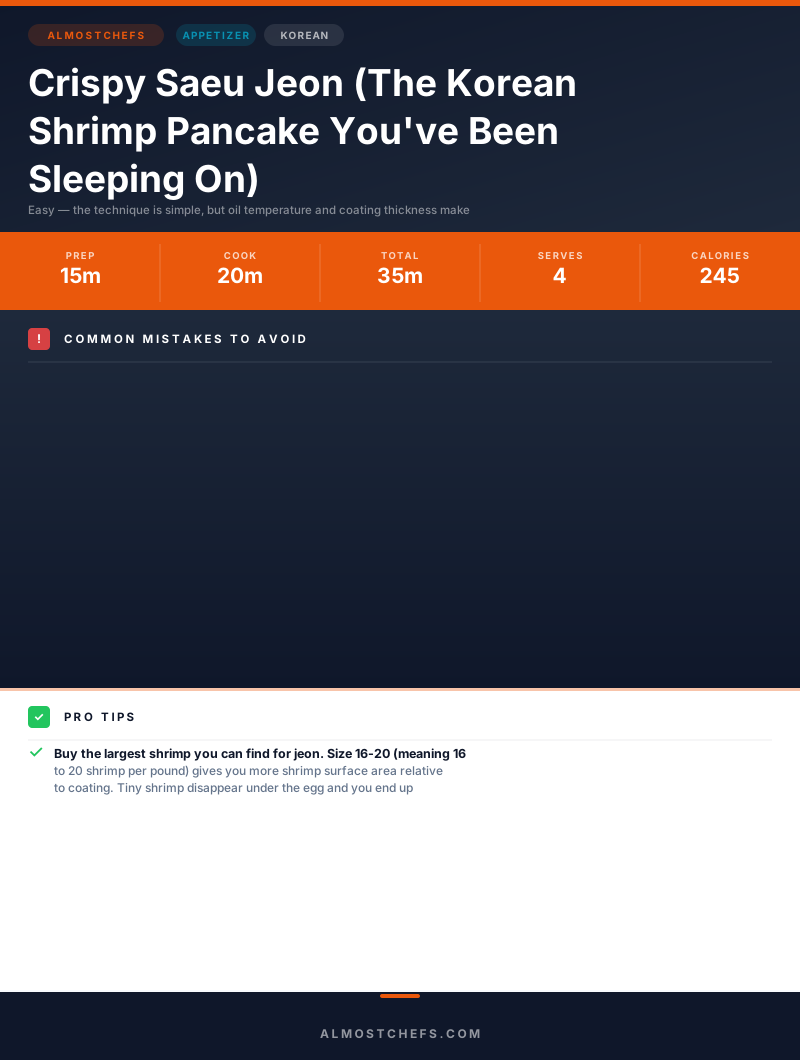
Before we start, read this. These are the 4 reasons your crispy saeu jeon (the korean shrimp pancake you've been sleeping on) will fail:
- 1
Oil that isn't hot enough: Jeon needs to hit a pan that's already hot — around 350°F. Add the shrimp to lukewarm oil and the egg batter absorbs the fat instead of crisping against it. You get greasy, pale pancakes that steam instead of fry. The oil should shimmer and a drop of water should spit immediately before you add anything.
- 2
Coating that's too thick: The flour dusting should be a whisper — tap off every grain you don't need. The egg wash should be thin, not a dense layer. Saeu jeon is about the shrimp, not the batter. A thick coat turns rubbery as it steams from the inside, muffling the texture of the shrimp underneath.
- 3
Not pressing the shrimp flat: Shrimp curve. A curved shrimp touching the pan only at its spine will brown at the spine and stay raw at the edges. Score the underside of each shrimp two or three times and press gently flat before it goes in the pan. Full surface contact equals even browning.
- 4
Flipping too early or too many times: Jeon needs to set before it can release. Flip too early and the egg tears and the shrimp sticks. Flip more than once and you knock the crust loose. One flip, once the bottom is visibly golden, is all you need.
🛠️ Core Equipment
- Wide, flat skillet or cast iron panYou need even heat across a large surface. A [cast iron pan](/kitchen-gear/review/cast-iron-skillet) holds temperature when cold shrimp hits the oil, preventing the temperature drop that causes steaming instead of frying.
- Instant-read thermometerOil temperature is the single biggest variable in jeon. 340–360°F is the sweet spot. Without a [thermometer](/kitchen-gear/review/instant-read-thermometer), you're guessing, and guessing usually means oil that's either too cold or already smoking.
- Wire rack over a sheet panResting fried jeon on paper towels traps steam under the crust and softens what you just worked to crisp. A rack lets air circulate on both sides and keeps the bottom as crisp as the top.
- Fish spatula or thin metal spatulaThe thin flexible blade slides cleanly under delicate egg-coated jeon without tearing the crust. A thick spatula drags and breaks.
Crispy Saeu Jeon (The Korean Shrimp Pancake You've Been Sleeping On)
🛒 Ingredients
- ✦1 pound large shrimp (16-20 count), peeled and deveined, tails removed
- ✦1/2 cup all-purpose flour, for dredging
- ✦3 large eggs
- ✦1 teaspoon sesame oil
- ✦1/2 teaspoon fine sea salt, divided
- ✦1/4 teaspoon white pepper
- ✦3 tablespoons neutral oil (vegetable or avocado), for frying
- ✦2 green onions, cut into 2-inch matchsticks (optional, for pressing into batter)
- ✦3 tablespoons soy sauce
- ✦1.5 tablespoons rice vinegar
- ✦1 teaspoon sesame oil
- ✦1/2 teaspoon gochugaru (Korean chili flakes)
- ✦1/2 teaspoon toasted sesame seeds
👨🍳 Instructions
01Step 1
Pat the shrimp completely dry with paper towels. Moisture is the enemy of a crisp crust.
02Step 2
Score the inside curve of each shrimp 2-3 times at a slight angle, cutting halfway through the flesh. Press each shrimp gently flat on your cutting board.
03Step 3
Season the shrimp lightly with a pinch of salt and white pepper. Set up your dredging station: flour on a plate, eggs beaten with sesame oil and a pinch of salt in a shallow bowl.
04Step 4
Working one at a time, dredge each shrimp in flour and tap off aggressively — you want the thinnest possible dusting, just enough for the egg to grab. Dip immediately into the egg wash, letting excess drip off.
05Step 5
Heat a wide skillet over medium-high heat. Add the neutral oil and heat until shimmering, about 340–360°F. Test with a drop of egg batter — it should sizzle and set immediately.
06Step 6
Working in batches, lay the coated shrimp flat in the pan in a single layer. Do not crowd. If using green onion strips, press a few onto the top surface of each shrimp before the egg sets.
07Step 7
Cook undisturbed for 2-2.5 minutes until the bottom is golden and the edges are opaque. Flip once with a thin spatula and cook 1.5-2 minutes more.
08Step 8
Transfer immediately to a wire rack. Do not stack.
09Step 9
Mix the dipping sauce: soy sauce, rice vinegar, sesame oil, gochugaru, and sesame seeds. Serve alongside the jeon while still hot.
Nutrition Per Serving
Estimates based on standard preparation. Adjustments alter macros.
🔄 Substitutions
Instead of Large shrimp...
Use Squid rings or scallops
Squid rings work beautifully — same thin coating, same quick cook time. Scallops need to be sliced thin (1/4 inch) so they cook through in the same window. Both need the same aggressive drying beforehand.
Instead of All-purpose flour...
Use Rice flour
Rice flour produces a noticeably crispier crust with a lighter texture. It also keeps the coating thin more naturally. Many Korean home cooks prefer it for jeon — if you have it, use it.
Instead of Neutral oil...
Use Perilla oil or a 50/50 blend with neutral oil
Perilla oil adds a distinctive nutty, herbal flavor to the crust that plays well with shrimp. Don't use it at full volume — it burns at lower temperatures than neutral oil.
Instead of Gochugaru in dipping sauce...
Use Togarashi or a pinch of cayenne
Gochugaru has a specific mild heat and fruity undertone. Other chili flakes work for heat but lose that characteristic Korean flavor note. Use half the quantity of cayenne — it's significantly hotter.
🧊 Storage & Reheating
In the Fridge
Store cooled jeon in an airtight container, separated by parchment layers, for up to 2 days. The crust will soften but reheat back to crisp.
In the Freezer
Freeze in a single layer on a sheet pan until solid, then transfer to a bag. Keeps for up to 1 month. Re-crisp directly from frozen in a dry skillet — no thawing needed.
Reheating Rules
Dry skillet over medium heat, 1-2 minutes per side, is the only reheat method that restores crunch. The oven at 375°F on a rack also works. The microwave produces rubber.
❓ Frequently Asked Questions
Why is my saeu jeon soggy in the center?
Either your oil wasn't hot enough or your coating was too thick. Cold oil causes the batter to absorb fat and steam from the inside instead of crisping against hot metal. Thick flour or excess egg batter traps moisture around the shrimp. Get the oil to 350°F and coat as thinly as possible.
Can I make saeu jeon ahead of time for a party?
Yes, with caveats. Cook the jeon up to 2 hours ahead and hold on a rack in a 200°F oven. They stay crisp longer than you'd expect. Any further ahead and you're reheating from the fridge, which works but requires a dry skillet and 1-2 minutes per side.
Do I need to devein the shrimp?
Yes. The vein is the digestive tract — it won't hurt you if you eat it, but it has a gritty texture and slightly bitter flavor that you'll notice in a dish with this little going on. It takes 30 seconds per shrimp with a paring knife or a deveining tool. Worth doing.
What's the difference between saeu jeon and saeu twigim?
Jeon uses an egg-based batter — thin, delicate, pan-fried in a shallow pool of oil. Twigim is deep-fried in a heavier flour or tempura-style batter. Jeon is lighter, more refined. Twigim is crunchier and richer. Both are valid; they're just different preparations of the same protein.
Why do I press green onion into the top of the shrimp?
It's visual and aromatic. The green onion cooks against the egg on the second flip, giving you flecks of bright color and a mild allium note that complements the shrimp. It's the traditional presentation for saeu jeon — skip it if you want, but it's a nice touch.
My shrimp keeps curling even after scoring. What am I doing wrong?
You need to score deeper — at least halfway through the flesh on the inner curve — and you need to press the shrimp flat on the board until it stays flat on its own before breading. If the score cuts are too shallow or too far apart, the connective tissue still has enough tension to curl the shrimp when heat hits it.
The Science of
Crispy Saeu Jeon (The Korean Shrimp Pancake You've Been Sleeping On)
We turned everything on this page into a beautiful, flour-proof PDF cheat sheet. Print it out, stick it to your fridge, and never mess up your crispy saeu jeon (the korean shrimp pancake you've been sleeping on) again.
*We'll email you the high-res PDF instantly. No spam, just perfectly cooked meals.
AlmostChefs Editorial Team
We translate the internet's most popular cooking videos into foolproof, beginner-friendly written recipes. We analyze multiple methods, test them in our kitchen, and engineer a single "Master Recipe" that gives you the best possible result with the least possible stress.