Perfect Roasted Turkey (Stop Ruining the Centerpiece)
A deeply browned, juicy whole roasted turkey with herb butter under the skin, aromatics in the cavity, and a foolproof method that eliminates dry breast meat forever. We analyzed the most-watched YouTube techniques to build one reliable approach that delivers crackling skin and even doneness across dark and white meat.

“Every year, millions of turkeys come out of the oven pale, dry, and quietly devastating. The bird gets carved, plated, and covered in gravy to mask the damage — and nobody says anything because it's a holiday. The problem is almost never the turkey. It's the technique. Three specific decisions determine whether your turkey is something people remember or something they politely eat: whether you dry-brine in advance, how you manage the breast-versus-thigh temperature gap, and whether you actually let it rest before carving. Fix those three things and you will never serve a bad turkey again.”
Why This Recipe Works
A roasted turkey is, at its core, a structural engineering problem disguised as a recipe. You are trying to bring two fundamentally different types of muscle tissue — white breast meat and dark thigh meat — to two different temperature targets simultaneously, in the same vessel, using the same heat source. The fact that this is possible at all is a minor miracle. The fact that most people fail at it anyway comes down to ignoring the physics.
The Dry Brine Advantage
Salting a turkey 24-72 hours in advance is the single highest-leverage thing you can do for the final result, and it costs nothing but time. When kosher salt contacts the surface of the meat, it draws moisture out through osmosis — you will see a small puddle of liquid on the baking sheet after the first few hours. Then, over the next 12-24 hours, that liquid is reabsorbed back into the muscle fibers, carrying dissolved salt (and dissolved flavor from any aromatics you added) deep into the tissue. This is fundamentally different from a wet brine, which adds water weight that dilutes the flavor and produces a waterlogged texture. A dry brine seasons the turkey at the cellular level while actually concentrating the meat's natural flavor.
The baking powder in the dry brine mixture is not a gimmick. It raises the pH of the skin surface, which accelerates the Maillard browning reaction at lower temperatures and creates finer, more numerous bubbles in the skin as it crisps. The result is a more deeply lacquered, crackle-finish exterior — the kind that you hear when you cut through it. Leave it out if you want, but you will notice the difference.
Managing the Temperature Gap
The breast-thigh gap is the core challenge of roasting any whole bird, and every serious turkey technique is fundamentally an answer to this one problem. The breast sits at the top of the bird, exposed to direct convective heat from three sides. The thighs sit lower, protected by the carcass, insulated by subcutaneous fat, and starting from a higher baseline moisture content. White breast meat turns dry and stringy above 165°F. Dark thigh meat needs 175°F to convert its connective tissue collagen into gelatin and become the tender, almost unctuous thing it should be.
The foil-tenting approach used in this recipe is the most reliable fix for a standard home cook. You protect the breast from direct heat for roughly two-thirds of the cook time, then remove the foil to let everything finish and brown together. More experienced cooks may prefer spatchcocking — removing the backbone with kitchen shears and pressing the bird flat before roasting — which eliminates the gap entirely by exposing every surface to identical heat. A roasting rack is essential either way; without it, the underside of the bird steams rather than roasts, the thighs take longer, and the gap widens further.
The Herb Butter Architecture
Butter rubbed on the outside of the turkey skin produces a gorgeous bronzed exterior. Butter pushed underneath the skin bastes the breast meat from the inside for the entire duration of the cook. These are two different tools solving two different problems, and this recipe uses both deliberately. As the butter under the skin melts, it migrates through the meat via capillary action, carrying fat-soluble flavor compounds from the fresh thyme, rosemary, sage, and garlic into every layer of the breast. The skin above stays crisp because the fat is releasing downward, not pooling on the surface.
The cavity aromatics — onion, garlic, lemon, fresh herbs — are not primarily a flavor delivery mechanism. They are a steam generator. As the internal cavity temperature rises, these aromatics release aromatic moisture that circulates through the hollow interior and gently flavors the inner surfaces of the dark meat from the inside out. The contribution is subtle but real, and it costs nothing except a few minutes of prep.
The Rest Is Not Optional
A cutting board covered in turkey juices is a cook's quiet admission that they carved too soon. Muscle fibers that have been contracting under high heat for three hours need time — real time, 30 to 45 minutes — to relax and reabsorb the liquid they expelled. The science is straightforward: heat causes muscle proteins to contract and squeeze liquid toward the center of the meat. As the temperature drops during rest, the pressure equalizes and that liquid redistributes. Cut into the bird at 165°F internal and the juices run freely onto the board. Cut into it at 130°F after a proper rest and they stay exactly where they belong — in the meat, not on the wood. The turkey holds its temperature longer than you expect. A 12-pound roast is a significant thermal mass. Trust it.
Where Beginners Mess This Up
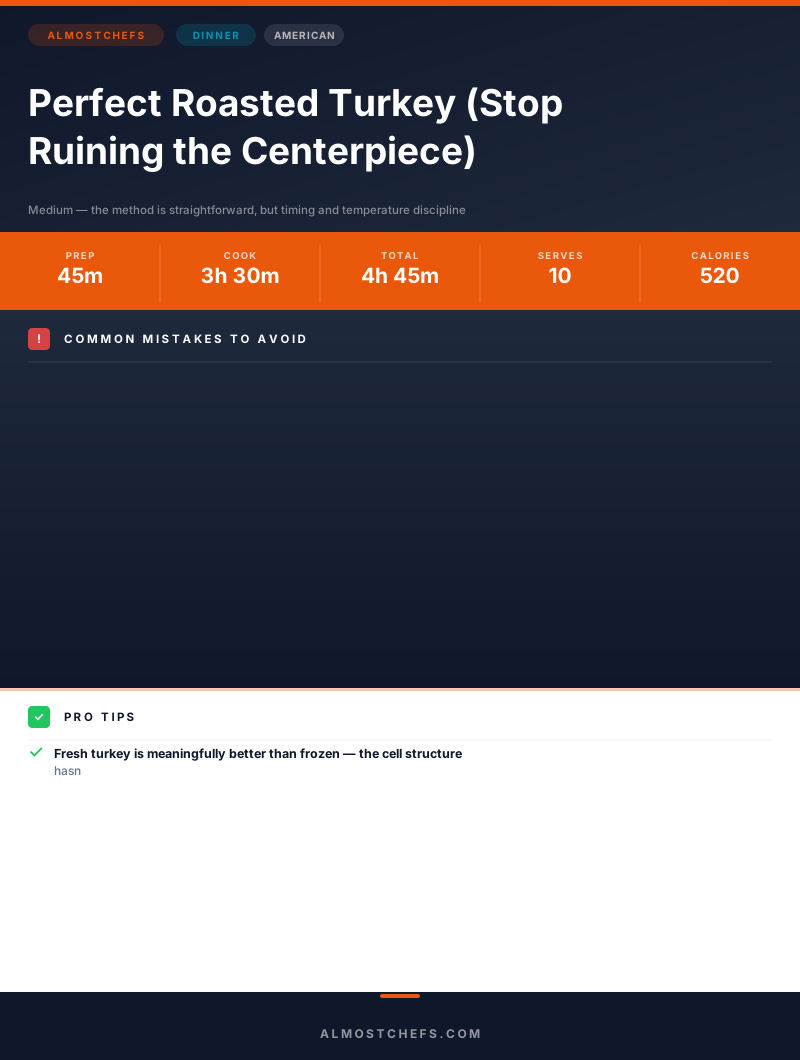
Before we start, read this. These are the 4 reasons your perfect roasted turkey (stop ruining the centerpiece) will fail:
- 1
Skipping the dry brine: Salt applied to the surface of the turkey 24-72 hours in advance draws moisture out through osmosis, then pulls it back in carrying dissolved salt and seasoning. This seasons the meat all the way to the bone and alters the muscle proteins so they retain more moisture during roasting. A turkey seasoned only right before it goes in the oven has salty skin and bland meat. The timing difference is measured in days, not minutes.
- 2
Not addressing the breast-thigh temperature gap: White breast meat is done at 160°F (165°F safe, but carryover handles the difference). Dark thigh meat needs 175°F to render its collagen and become tender. These two targets are 15 degrees apart — and they're sitting in the same bird in the same oven. If you roast the turkey flat with no intervention, the breast overcooks before the thighs finish. The fix: start the bird breast-side down, or shield the breast with foil for the first half of roasting.
- 3
Carving too soon: A turkey pulled from the oven and carved immediately loses 30-40% of its internal juices onto the cutting board. The muscle fibers are seized and contracted from heat — they need 30-45 minutes to relax and reabsorb that liquid. Rest the turkey uncovered on a rack (not tented in foil, which steams the skin soft) before a single cut is made.
- 4
Relying on the pop-up timer: The plastic pop-up thermometers built into commercial turkeys are calibrated to trigger at 185°F — well beyond dry. Throw it away. Use an instant-read thermometer and make your own call. You are smarter than the plastic widget.
The Video Reference Library
Want to see it in action? Here are the exact videos we analyzed and combined to build this foolproof recipe translation:

The primary method video — covers dry-brining timing, herb butter application, and the critical rest period. Excellent close-up of proper skin color at doneness.
2. How to Roast a Turkey — Full Walkthrough
A thorough walkthrough of the breast-down roasting technique and why starting inverted eliminates dry white meat. Clear temperature callouts throughout.
3. Thanksgiving Turkey — Crispy Skin SecretsFocused entirely on achieving lacquered, crackling skin — covers the role of baking powder in the dry brine, patting the skin dry, and final high-heat finishing.
🛠️ Core Equipment
- Roasting pan with rackElevating the turkey above the pan allows hot air to circulate completely under the bird, browning the bottom and cooking the thighs evenly. A turkey sitting directly on the pan bottom steams on the underside and takes far longer.
- Instant-read thermometerNon-negotiable. The only accurate way to know when both the breast and thighs have hit their respective targets. Insert into the thickest part of the thigh without touching bone.
- Pastry brush or basting brushFor applying herb butter under and over the skin. A brush gets into the crevices; your hands (useful too) can't distribute it as evenly across the flat breast surface.
- Kitchen twineTrussing the legs holds the bird in a compact shape that promotes even heat distribution and prevents the thin leg tips from burning before the center is done.
Perfect Roasted Turkey (Stop Ruining the Centerpiece)
🛒 Ingredients
- ✦1 whole turkey, 12-14 pounds, fresh or fully thawed
- ✦3 tablespoons kosher salt (for dry brine)
- ✦1 teaspoon baking powder (for dry brine)
- ✦1 teaspoon freshly ground black pepper
- ✦8 tablespoons (1 stick) unsalted butter, softened
- ✦2 tablespoons fresh thyme leaves, finely chopped
- ✦1 tablespoon fresh rosemary, finely chopped
- ✦1 tablespoon fresh sage, finely chopped
- ✦6 garlic cloves, minced (divided)
- ✦1 lemon, zested and halved
- ✦1 medium yellow onion, quartered
- ✦1 head of garlic, halved crosswise
- ✦4 sprigs fresh thyme
- ✦4 sprigs fresh rosemary
- ✦3 sprigs fresh sage
- ✦2 tablespoons olive oil
- ✦2 cups low-sodium chicken or turkey stock (for the pan)
- ✦Sea salt and freshly ground black pepper to taste
👨🍳 Instructions
01Step 1
24-72 hours before roasting, mix kosher salt and baking powder together. Pat the turkey completely dry with paper towels, including inside the cavity. Rub the salt mixture all over the exterior and inside the cavity. Place uncovered on a rack set over a baking sheet in the refrigerator.
02Step 2
Remove the turkey from the refrigerator 1 hour before roasting to take the chill off. Preheat the oven to 325°F with a rack in the lowest position.
03Step 3
Make the herb butter: combine softened butter with chopped thyme, rosemary, sage, minced garlic, and lemon zest. Mix thoroughly until evenly combined.
04Step 4
Gently separate the skin from the breast meat using your fingers, working carefully to avoid tearing. Push herb butter under the skin and spread it evenly over both breast lobes. Rub any remaining butter over the exterior of the bird.
05Step 5
Fill the cavity with the quartered onion, halved garlic head, halved lemon, and fresh herb sprigs. These aromatics generate fragrant steam inside the bird and subtly season the dark meat.
06Step 6
Truss the legs together with kitchen twine and tuck the wing tips underneath the bird to prevent them from burning.
07Step 7
Place the turkey breast-side up on a rack in a roasting pan. Drizzle olive oil over the top. Pour stock into the bottom of the pan.
08Step 8
Tent a sheet of aluminum foil loosely over the breast only, leaving the legs and thighs exposed. Roast at 325°F, removing the foil tent during the last 45 minutes to finish browning the breast.
09Step 9
Begin checking temperature at the 2.5-hour mark. Insert an instant-read thermometer into the thickest part of the thigh without touching bone. You are targeting 175°F in the thigh and 160°F in the thickest part of the breast. A 12-14 pound turkey typically takes 3 to 3.5 hours total at 325°F.
10Step 10
When both temperature targets are met, remove the turkey from the oven. Transfer to a cutting board or carving board and rest completely uncovered for 30-45 minutes. Do not tent with foil.
11Step 11
While the turkey rests, make pan gravy: pour the drippings through a fine-mesh strainer into a fat separator. Skim the fat, then whisk the drippings into a roux (equal parts butter and flour) and thin with additional stock to your desired consistency.
12Step 12
Carve the turkey by removing the legs first, then separating the drumstick from the thigh. Remove the wings. Slice the breast by cutting parallel to the breastbone. Serve immediately.
Nutrition Per Serving
Estimates based on standard preparation. Adjustments alter macros.
🔄 Substitutions
Instead of Unsalted butter (herb butter)...
Use Olive oil or refined coconut oil
Dairy-free option. Olive oil produces slightly less rich browning but bastes effectively. Skip the coconut oil if any guests are sensitive to its subtle sweetness.
Instead of Fresh herbs...
Use Dried herbs at one-third the quantity
Dried thyme, rosemary, and sage work in the herb butter, but reduce each to 1 teaspoon — dried herbs are far more concentrated. The cavity stuffing works better fresh; dried herbs in the cavity contribute little.
Instead of Whole turkey...
Use Turkey breast roast (bone-in)
Eliminates the breast-thigh temperature gap entirely. A 6-7 pound bone-in breast roasts at 325°F for 1.5-2 hours. All other techniques — dry brine, herb butter, rest — apply identically.
Instead of Kosher salt (dry brine)...
Use Fine sea salt at half the quantity
Fine salt is denser than kosher salt — using the same volume over-salts the bird. If substituting, use 1.5 tablespoons fine sea salt in place of 3 tablespoons kosher salt.
🧊 Storage & Reheating
In the Fridge
Carve all meat from the carcass and store in airtight containers for up to 4 days. Keep dark and white meat separate if possible — they reheat differently.
In the Freezer
Freeze carved turkey in portions for up to 3 months. Vacuum-sealed bags minimize freezer burn.
Reheating Rules
Place sliced turkey in a baking dish with a few tablespoons of stock. Cover tightly with foil and reheat at 300°F for 20-25 minutes. The added moisture prevents the meat from drying out during reheating. Microwaving works but produces uneven results — avoid it for anything more than a single serving.
❓ Frequently Asked Questions
How long does it take to thaw a frozen turkey?
Allow 24 hours of refrigerator thawing time for every 4-5 pounds of turkey. A 12-pound bird needs 2.5 to 3 full days in the fridge. Never thaw on the counter — the exterior enters the bacterial danger zone (40-140°F) long before the center thaws. Plan ahead. This is the step that derails the most holiday meals.
Do I need to baste the turkey?
No. Basting is a ritual that makes cooks feel productive while actively harming the result. Every time you open the oven door and ladle drippings over the bird, you drop the oven temperature by 25-50 degrees and you steam the skin soft. The herb butter under the skin does far more internal basting than any ladle ever could. Close the oven and leave it alone.
What temperature should the turkey be when done?
175°F in the thickest part of the thigh (without touching bone) and 160°F in the thickest part of the breast. These are not the same target because dark and white meat are structurally different. Thighs have more collagen that needs higher heat to render properly. If you chase a single temperature across the whole bird, you will always overcook one part.
Can I stuff the turkey?
Technically yes, but it creates a significant food safety problem. Stuffing must reach 165°F to be safe — and by the time the center of a stuffed cavity reaches that temperature, the surrounding breast meat is badly overcooked. Bake stuffing separately in a buttered dish where you control the temperature independently. You get better stuffing and better turkey.
Why is my skin coming out rubbery instead of crispy?
Two causes: moisture and heat. Either the skin was damp going into the oven (patting dry and the uncovered dry brine solve this) or the oven temperature was too low, generating steam instead of dry roasting heat. Verify your oven temperature with a separate oven thermometer — most home ovens run 15-25 degrees off their dial setting.
How much turkey do I need per person?
Plan for 1.25 to 1.5 pounds of whole turkey per person if you want meaningful leftovers. For a table of 8, that means a 10-12 pound bird minimum. For a table of 12, go 15-16 pounds. A whole turkey has a high bone-to-meat ratio — people consistently underestimate how little usable meat comes off a bird that looked enormous in the roasting pan.
The Science of
Perfect Roasted Turkey (Stop Ruining the Centerpiece)
We turned everything on this page into a beautiful, flour-proof PDF cheat sheet. Print it out, stick it to your fridge, and never mess up your perfect roasted turkey (stop ruining the centerpiece) again.
*We'll email you the high-res PDF instantly. No spam, just perfectly cooked meals.
AlmostChefs Editorial Team
We translate the internet's most popular cooking videos into foolproof, beginner-friendly written recipes. We analyze multiple methods, test them in our kitchen, and engineer a single "Master Recipe" that gives you the best possible result with the least possible stress.