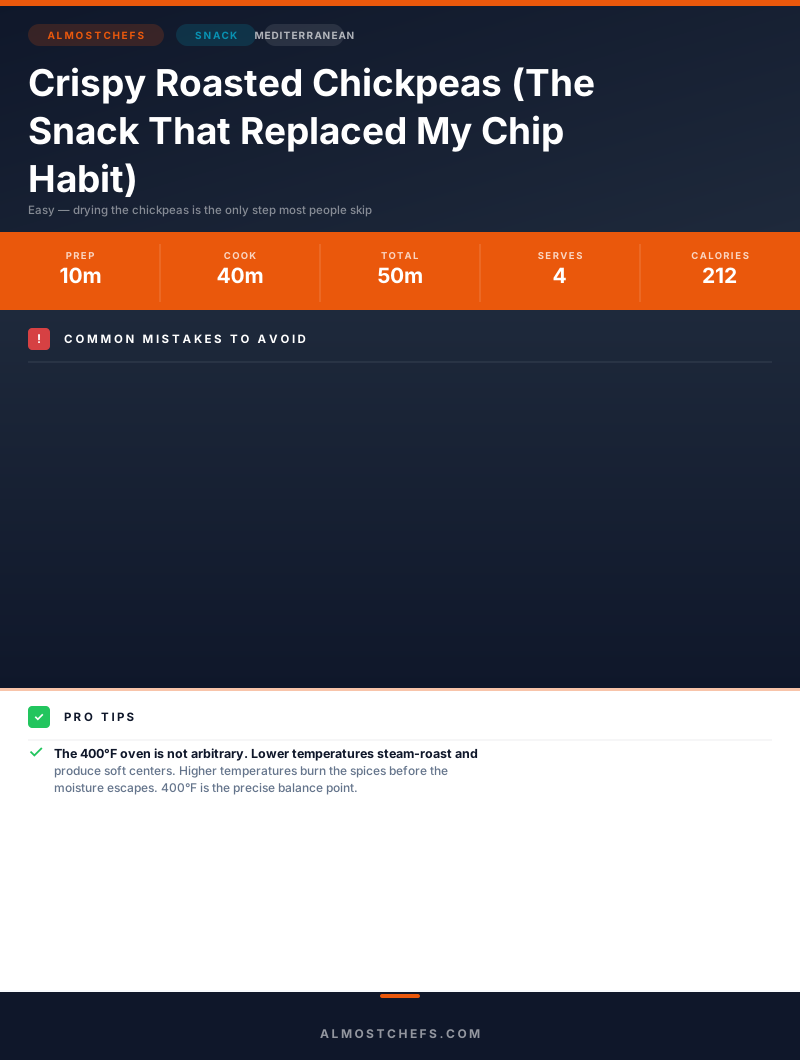
Crispy Roasted Chickpeas (The Snack That Replaced My Chip Habit)
Two cans of chickpeas, a handful of spices, and 40 minutes in a hot oven. We broke down exactly why most roasted chickpeas turn out soft and disappointing — and fixed every step so yours come out shatteringly crisp every time.

“Most roasted chickpeas are a lie. They come out of the oven crispy, you eat three, and by the time you've carried the bowl to the couch they're already turning chewy. That's not a seasoning problem. That's a moisture problem. Get the drying step right and everything else falls into place — a genuinely crunchy, protein-dense snack you'll make on repeat.”
Why This Recipe Works
Roasted chickpeas have a reputation problem. Home cooks make them once, they're soft by the time the bowl hits the table, and the recipe gets filed under "healthy food that doesn't actually work." The problem isn't the chickpea. The problem is moisture management — and most recipes treat it like an afterthought.
The Moisture Equation
A 15-ounce can of chickpeas contains roughly 40% water by weight. Drain them and you still have chickpeas that are thoroughly saturated — the moisture isn't just on the surface, it's built into the structure of the legume. When you roast a wet chickpea at 400°F, the exterior starts to dry while the interior is still a water reservoir. Steam pressure builds from the inside and softens the crust from below. You can feel it happening in real time as the "crispy" chickpeas you just pulled from the oven turn chewy the moment they cool.
The fix is aggressive pre-drying. A kitchen towel, firm pressure, and a full 10 minutes of resting time. Remove the loose skins while you're at it — they separate from the chickpea during roasting anyway and end up as papery wisps in your snack. Skinless chickpeas crisp more evenly because the surface is uniform and there's nothing to trap steam underneath.
Heat, Space, and Time
The rimmed baking sheet is doing more work than it appears to. Hot air needs to circulate around each chickpea independently. Crowd them together and they create a microclimate — their collective steam raises the local humidity and the oven can't evaporate it fast enough. Single layer, not touching, no exceptions.
Four hundred degrees is the correct temperature. Drop to 375°F and the roasting slows to the point where moisture escapes gradually while the chickpeas soften rather than crisp. Push to 425°F and the spices — particularly the paprika and cumin — begin to burn before the interior moisture has fully escaped. The 400°F range is where the drying speed and surface crisping rate align.
The shake at the 20-minute mark is not optional. Chickpeas that sit stationary against parchment develop a soft contact patch on the bottom. Shaking exposes that patch to direct heat and allows the remaining 15-20 minutes to finish the job. The kitchen towel test you applied before roasting and the rattle test at the end are the two honest checkpoints in this recipe.
The Lime Timing Rule
Acid disrupts the chickpea's crisped surface. Add lime juice before roasting and you've already lost — the surface proteins partially denature and the skin softens before the oven heat can set it. This is why the lime goes on at the end, directly onto hot chickpeas just out of the oven.
Heat is the key. Hot chickpeas are still porous — the lime juice and zest absorb immediately into the surface, the volatile oils in the zest bloom from the residual heat, and the whole thing sets as the chickpeas cool. Two minutes later, the surface has dried back down and the lime is integrated rather than sitting on top. Cold chickpeas won't absorb flavor nearly as well. Timing matters more than the ingredient itself.
The Spice Architecture
This spice blend is built in layers. Smoked paprika and cumin form the base — earthy, warm, familiar. Garlic and onion powder extend the savory backbone. Coriander and ginger add brightness and lift. Cayenne brings heat that arrives late. Turmeric is primarily doing color work at this concentration; its anti-inflammatory contribution is real but the flavor is background noise at a pinch-level quantity.
All of these go on before roasting except the lime. Fat-soluble spice compounds need heat and oil to bloom — coating the chickpeas with olive oil first, then adding the spice blend, ensures the flavors infuse rather than just sitting on the surface. The two-minute toss is not decorative. It's the step that makes the seasoning even.
Where Beginners Mess This Up
Before we start, read this. These are the 4 reasons your crispy roasted chickpeas (the snack that replaced my chip habit) will fail:
- 1
Not drying the chickpeas long enough: Canned chickpeas are packed in water. Even after draining, they hold significant internal moisture. If you roast wet chickpeas, that moisture steams them from the inside rather than letting them crisp. Five minutes on a towel is not enough — press them dry, roll them around, and let them sit for a full 10 minutes before they touch oil.
- 2
Overcrowding the baking sheet: Chickpeas need air circulation to crisp, not steam. A crowded pan turns into a sauna. Every chickpea needs personal space — single layer, not touching. If you doubled the recipe, use two pans. This is non-negotiable.
- 3
Adding lime juice before roasting: Acid introduced before roasting softens the chickpea skin and prevents crisping. The lime zest and juice go on immediately after they come out of the oven — hot chickpeas absorb flavor instantly without sacrificing crunch. This sequencing is the entire trick.
- 4
Pulling them too early: Pale golden chickpeas are not done. Deep golden-brown chickpeas that look slightly threatening are done. The last 10 minutes of roasting are when the magic happens — the exterior fully dehydrates and sets. Pull early and you get a snack that goes stale in an hour.
The Video Reference Library
Want to see it in action? Here are the exact videos we analyzed and combined to build this foolproof recipe translation:

The source video for this recipe. Clear technique for drying and seasoning, with good visual cues for when the chickpeas are actually done versus just warm.
2. Roasted Chickpeas — Flavor Variations
Walks through five different spice combinations using the same base technique. Useful once you've mastered the core method and want to experiment.
3. Air Fryer Chickpeas vs Oven — Side by SideDirect comparison of oven-roasted and air-fried results, with honest notes on texture differences and timing adjustments for each method.
🛠️ Core Equipment
- Large rimmed baking sheet ↗Rimless sheets let chickpeas roll off during the shake at the halfway point. The rim keeps everything contained while still allowing hot air to circulate.
- Parchment paper ↗Prevents sticking and speeds cleanup. Foil retains too much moisture underneath the chickpeas — parchment breathes better.
- Clean kitchen towel ↗Paper towels work but absorb slowly. A cotton or linen towel lets you press firmly and roll the chickpeas around, removing far more moisture in far less time.
- Large mixing bowl ↗You need room to toss vigorously. A bowl that's too small means half the spices end up on the counter.
Crispy Roasted Chickpeas (The Snack That Replaced My Chip Habit)
🛒 Ingredients
- ✦2 cans (15 oz each) chickpeas, drained and patted dry
- ✦2 tablespoons extra virgin olive oil
- ✦1 teaspoon ground cumin
- ✦1 teaspoon smoked paprika
- ✦1/2 teaspoon garlic powder
- ✦1/2 teaspoon onion powder
- ✦1/4 teaspoon cayenne pepper
- ✦1 teaspoon sea salt
- ✦1/2 teaspoon black pepper
- ✦1/2 teaspoon ground coriander
- ✦Zest of 1 lime
- ✦2 teaspoons fresh lime juice
- ✦1/4 teaspoon ground ginger
- ✦Pinch of turmeric
👨🍳 Instructions
01Step 1
Drain the canned chickpeas thoroughly and spread them on a clean kitchen towel. Press down firmly, roll them around, and let them sit for 10 minutes to remove as much surface moisture as possible.
02Step 2
Preheat your oven to 400°F and line a large baking sheet with parchment paper.
03Step 3
Transfer the dried chickpeas to a large mixing bowl and drizzle with olive oil. Toss to coat evenly.
04Step 4
Combine all dry spices — cumin, smoked paprika, garlic powder, onion powder, cayenne, salt, pepper, coriander, ginger, and turmeric — in a small bowl and mix well.
05Step 5
Pour the spice blend over the oiled chickpeas and toss vigorously for 2 minutes until every chickpea is fully coated.
06Step 6
Spread the seasoned chickpeas in a single layer on the prepared baking sheet. They should not be touching or overlapping.
07Step 7
Roast for 20 minutes, then remove from the oven and shake the pan firmly to turn the chickpeas.
08Step 8
Return to the oven and roast for an additional 15-20 minutes until deeply golden brown and crispy throughout. They should rattle when you shake the pan.
09Step 9
Remove from the oven and immediately sprinkle the lime zest and fresh lime juice over the hot chickpeas. Toss to coat.
10Step 10
Let the chickpeas cool on the baking sheet for 5 minutes. They will continue to crisp as they cool.
11Step 11
Transfer to an airtight container once fully cooled. Store at room temperature for up to 5 days.
Nutrition Per Serving
Estimates based on standard preparation. Adjustments alter macros.
🔄 Substitutions
Instead of Extra virgin olive oil...
Use Avocado oil or coconut oil
Avocado oil adds a subtle buttery note and has a higher smoke point, which is actually ideal for 400°F roasting. Coconut oil adds mild sweetness but may cause slight sticking — use parchment regardless.
Instead of Sea salt...
Use Himalayan pink salt or nutritional yeast
Nutritional yeast is the more interesting swap — it adds a savory, umami-forward dimension that reads almost cheesy. Use 1 tablespoon in place of 1 teaspoon salt and adjust seasoning from there.
Instead of Ground cumin and smoked paprika...
Use Curry powder or za'atar
Za'atar produces a Mediterranean herbed profile with sesame undertones. Curry powder shifts everything warmer and earthier. Both work at the same 1-teaspoon quantity.
Instead of Canned chickpeas...
Use Home-cooked dried chickpeas
Dried chickpeas cooked from scratch have a firmer, more even texture and cleaner flavor. Soak overnight, cook until just tender (not mushy), then dry thoroughly before roasting. The extra effort is noticeable in the final crunch.
🧊 Storage & Reheating
In the Fridge
Not recommended — refrigerator humidity softens the crust within hours. Room temperature is always better for this snack.
In the Freezer
Freeze cooked chickpeas before the lime finish. Thaw at room temperature, re-roast at 375°F for 8-10 minutes, then add the lime. Texture recovers reasonably well.
Reheating Rules
Spread on a baking sheet and roast at 375°F for 5-8 minutes. The oven is mandatory here — the microwave converts crunchy into rubbery instantly.
❓ Frequently Asked Questions
Why are my roasted chickpeas soft instead of crunchy?
Almost always a moisture problem. Either the chickpeas weren't dried long enough before roasting, the pan was overcrowded and they steamed instead of roasted, or they were pulled from the oven too early. All three are easy to fix — dry more aggressively, use a bigger pan, and look for deep golden-brown color rather than pale gold.
Can I use an air fryer instead of an oven?
Yes. Air fryer at 390°F for 15-18 minutes, shaking the basket every 5 minutes. The circulating hot air is even more efficient than a conventional oven, so watch them closely in the last few minutes to avoid burning.
How long do roasted chickpeas stay crunchy?
At room temperature in an airtight container, they hold their crunch for 3-5 days. Do not refrigerate — the humidity destroys the texture within a few hours. If they go soft, a quick re-roast at 375°F for 5-8 minutes brings most of the crunch back.
Do I need to remove the chickpea skins?
You don't have to, but you should. The skins separate from the chickpea during roasting anyway and end up as dry, slightly burnt flakes mixed into your snack. Removing them beforehand gives you a cleaner texture and more even crisping.
Can I add the lime juice before roasting to marinate the chickpeas?
No. Acid softens the chickpea surface and prevents crisping. The lime goes on immediately after the chickpeas come out of the oven — the residual heat blooms the zest and drives the flavor in without sacrificing crunch. This sequencing matters.
Are roasted chickpeas actually a good protein source?
At 8g of protein per serving, they're meaningful but not exceptional. Where they genuinely excel is fiber — 8g per serving supports satiety and gut health better than most processed snacks. The combination of protein and fiber is what makes them satisfying rather than just light.
The Science of
Crispy Roasted Chickpeas (The Snack That Replaced My Chip Habit)
We turned everything on this page into a beautiful, flour-proof PDF cheat sheet. Print it out, stick it to your fridge, and never mess up your crispy roasted chickpeas (the snack that replaced my chip habit) again.
*We'll email you the high-res PDF instantly. No spam, just perfectly cooked meals.
AlmostChefs Editorial Team
We translate the internet's most popular cooking videos into foolproof, beginner-friendly written recipes. We analyze multiple methods, test them in our kitchen, and engineer a single "Master Recipe" that gives you the best possible result with the least possible stress.