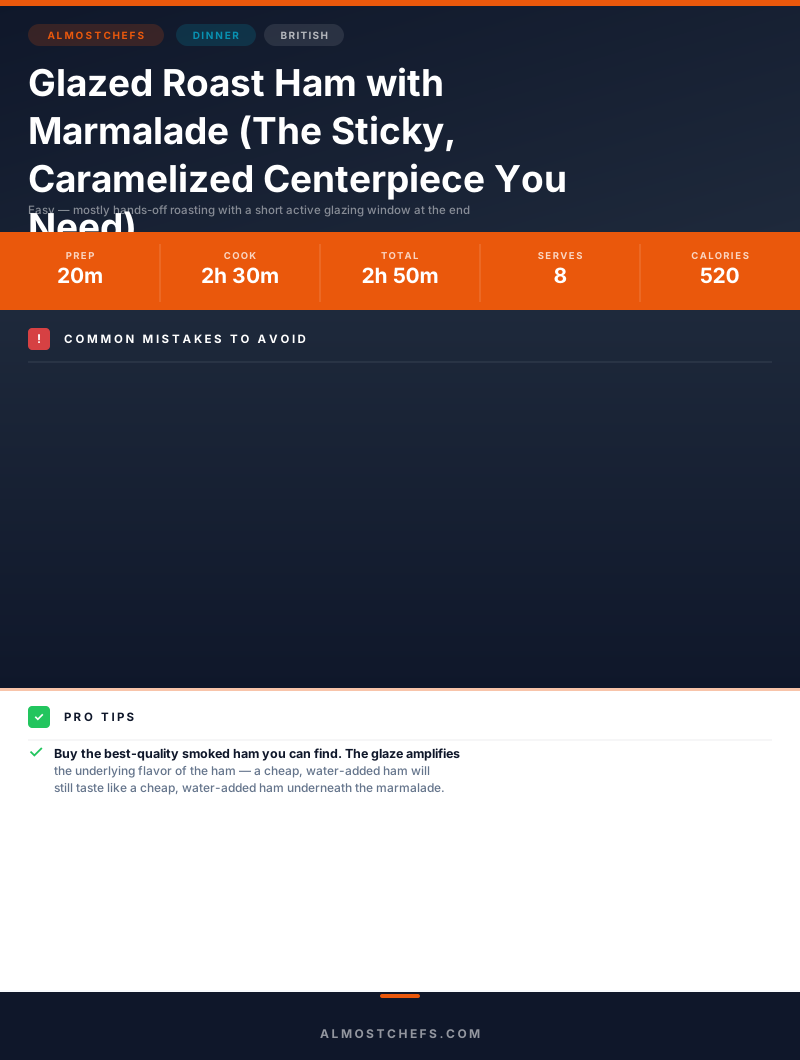
Glazed Roast Ham with Marmalade (The Sticky, Caramelized Centerpiece You Need)
A bone-in roast ham lacquered with a sticky citrus-marmalade glaze that caramelizes into a deep amber crust. We broke down the most reliable techniques to give you a foolproof method for a showstopping centerpiece with zero dry, bland results.

“Most glazed hams look incredible in photos and taste like salted cardboard on the plate. The glaze scorches before it sets, the meat dries out under two hours of heat, and the whole thing ends up tasting like a cafeteria ham with a shiny veneer. The fix is not a better glaze recipe — it's understanding when to apply it, how hot the oven needs to be, and why scoring the fat is the step that makes the difference between a glaze that slides off and one that locks in.”
Why This Recipe Works
Ham is the most forgiving centerpiece roast in the entire repertoire of festive cooking. It is pre-cooked, pre-seasoned, and structurally resilient in a way that leg of lamb or prime rib simply is not. And yet people still manage to ruin it — turning a beautifully smoked joint into something dry, bland, and vaguely cafeteria-adjacent. Almost without exception, the failures are not about the ham. They are about the glaze: when it goes on, how many layers it gets, and why the fat underneath it needs to be scored before any of that matters.
The Fat Cap Is Not Decoration
Every bone-in smoked ham arrives at the butcher counter wearing a substantial layer of fat beneath the rind — usually a quarter to half an inch thick. Most recipes tell you to score it in a diamond pattern and move on without explaining why that step is load-bearing. Here is the explanation: fat is hydrophobic. A smooth, unbroken fat cap is essentially a non-stick surface, and any glaze you apply will slowly slide off it as the fat renders and creates a liquid barrier between the meat and the coating.
The score lines solve this problem in two ways simultaneously. First, they give the rendered fat escape routes — instead of pooling under the glaze and lifting it off, the fat migrates into the channels and away from the surface. Second, the cuts create physical texture — rough edges and exposed meat proteins that give the glaze something to grip. A properly scored ham holds its glaze the way seasoned cast iron holds oil: the surface has been prepared to accept and retain the coating rather than reject it. Skip the scoring and you will spend the last 40 minutes of the cook continuously reapplying glaze that keeps migrating to the bottom of the pan.
The Two-Phase Cook
Most glazed ham recipes tell you to roast the ham at a single temperature for the entire duration, which is exactly the wrong approach. The problem is that the temperatures required for proper glaze caramelization — 375°F to 400°F — are significantly too high for a two-hour initial roast. Sugars begin browning aggressively above 320°F. Applied at the start and held at 375°F for the full cook, the glaze will be carbon by the time the internal temperature reaches 140°F.
The solution is a two-phase structure. In the first phase, the ham roasts wrapped tightly in foil at 325°F. The foil creates a contained steam environment that does two things: it prevents the surface from drying and hardening into a crust that will repel the glaze, and it allows the internal temperature to climb evenly from the outside in rather than the outside cooking faster than the center. A roasting rack is essential here — it keeps the ham elevated so heat circulates beneath the joint rather than the bottom sitting in pooled drippings. At the 90-minute mark, the foil comes off, the oven climbs to 400°F, and the glazing phase begins. From this point you are building a lacquer, not painting a wall.
The Lacquer Logic
A single thick coat of glaze does not produce that deep amber, almost lacquered finish you see in photographs. What produces it is four or five thin coats applied at ten-minute intervals, each one setting slightly before the next goes on. The chemistry is simple: each application of marmalade-based glaze adds a new layer of sugar that caramelizes partially before the next coat lands. The layers build on each other, becoming progressively more concentrated and complex. By the fifth coat, the surface is genuinely multi-layered — sticky, deeply colored, and fragrant with orange bitterness and spice in a way that a single coat applied thickly simply cannot replicate.
A pastry brush with a comfortable handle matters more than most people expect here. You are working quickly and repeatedly against a very hot surface, and a brush that holds enough liquid to cover the entire ham in one pass without needing to reload saves significant time — and every second the oven door is open drops the temperature.
Why Orange Marmalade Specifically
The marmalade-and-mustard combination is a British technique that has existed in ham cookery for generations, and it survives because it is chemically well-suited to the job. Marmalade contains pectin — the same gelling agent responsible for jam's set — which, when heated, creates a glaze that holds its shape on the surface rather than running immediately into the pan. It also contains Seville orange rind, which contributes bitter citrus compounds that counterbalance the sugar and prevent the glaze from tasting like straight candy. Apricot jam can substitute, but the result tastes flatter. The bitterness in orange marmalade is not incidental — it is structural.
The Dijon mustard functions as an emulsifier and flavor anchor. Its acidity sharpens the sweetness of the glaze, and its emulsifying proteins help the fat from the ham surface and the sugar from the marmalade coexist in the same coating rather than separating. The result is a glaze that behaves like a sauce — cohesive, glossy, and layered — rather than a sugar syrup that sets hard and cracks when carved.
Where Beginners Mess This Up
Before we start, read this. These are the 4 reasons your glazed roast ham with marmalade (the sticky, caramelized centerpiece you need) will fail:
- 1
Applying the glaze too early: Marmalade is mostly sugar, and sugar burns at 320°F. If you coat the ham at the start of roasting and hold it at 350°F for two hours, you get black crust, not amber lacquer. The glaze goes on in the final 30-40 minutes only — applied in multiple thin layers, not one thick coat.
- 2
Skipping the fat scoring: The diamond score pattern is not decorative. Cutting through the fat cap allows rendered fat to escape the channels rather than pooling under the glaze and causing it to slide off. The cuts also create more surface area, so each brush of glaze has physical texture to grip. Skip this step and half your glaze ends up in the bottom of the roasting pan.
- 3
Not wrapping the ham in the first phase: Ham roasted uncovered for the full cook time loses moisture rapidly through the exposed surface. Wrapping the ham tightly in foil for the first 1.5 to 2 hours locks in steam and keeps the internal temperature climbing evenly. You unwrap only at the end for the glazing phase.
- 4
Pulling the ham before it rests: Carving immediately after the oven releases the juices that the muscle fibers contracted during cooking. A 15-minute rest, tented loosely with foil, allows those fibers to relax and reabsorb the juices. Skip the rest and the cutting board turns into a puddle.
The Video Reference Library
Want to see it in action? Here are the exact videos we analyzed and combined to build this foolproof recipe translation:

🛠️ Core Equipment
- Roasting pan with rackElevating the ham on a rack keeps it out of the rendered fat and allows heat to circulate beneath the joint. A flat pan traps the ham in its own drippings and produces uneven browning on the bottom.
- Pastry brush or basting brushFor applying the glaze in thin, even coats. A silicone brush holds more liquid than a natural bristle brush and is easier to clean. Multiple thin applications build a lacquer — one thick application just burns.
- Instant-read thermometerHam is done at an internal temperature of 140°F (for pre-cooked) or 145°F (for raw). Time-based cooking is unreliable because ham weights vary dramatically. A thermometer removes all guesswork.
- Sharp carving knifeBone-in ham requires a long, thin blade to navigate around the femur without tearing the meat. A dull knife compresses the slices and pushes the juices out rather than cleanly separating them.
Glazed Roast Ham with Marmalade (The Sticky, Caramelized Centerpiece You Need)
🛒 Ingredients
- ✦1 bone-in smoked ham, 5-6 pounds (pre-cooked)
- ✦1 cup orange marmalade
- ✦3 tablespoons Dijon mustard
- ✦2 tablespoons dark brown sugar
- ✦1 tablespoon apple cider vinegar
- ✦1/2 teaspoon ground ginger
- ✦1/4 teaspoon ground cloves
- ✦1/4 teaspoon freshly ground black pepper
- ✦30 whole cloves, for studding (optional)
- ✦1/2 cup water or apple juice (for the roasting pan)
👨🍳 Instructions
01Step 1
Remove the ham from the refrigerator 45 minutes before roasting. Preheat the oven to 325°F.
02Step 2
Using a sharp knife, score the fat cap in a diamond pattern. Make cuts approximately 1 inch apart and 1/4 inch deep, cutting through the fat but not into the meat.
03Step 3
If desired, press a whole clove into each diamond intersection for additional spice flavor and visual effect.
04Step 4
Place the ham cut-side down on a rack set inside a roasting pan. Pour water or apple juice into the bottom of the pan to prevent drippings from burning.
05Step 5
Wrap the ham tightly with heavy-duty aluminum foil, sealing all edges. Roast for 1 hour 30 minutes (approximately 15-18 minutes per pound).
06Step 6
While the ham roasts, make the glaze. Combine the marmalade, Dijon mustard, brown sugar, apple cider vinegar, ground ginger, ground cloves, and black pepper in a small saucepan over medium heat.
07Step 7
After 1 hour 30 minutes, remove the ham from the oven. Increase oven temperature to 400°F. Carefully remove and discard the foil.
08Step 8
Brush the entire surface of the ham with a generous first coat of glaze, getting it into the score lines.
09Step 9
Return the ham to the oven, uncovered, for 10 minutes. Remove and apply a second coat of glaze. Repeat this process 2-3 more times over 30-40 minutes total, building up the lacquer.
10Step 10
Check the internal temperature. Pre-cooked ham is done at 140°F; raw ham at 145°F. The glaze should be set, sticky, and deeply caramelized.
11Step 11
Remove the ham from the oven and tent loosely with foil. Rest for 15 minutes before carving.
12Step 12
Carve by slicing along the bone and cutting slices against the grain. Serve with any pan drippings spooned over the top.
Nutrition Per Serving
Estimates based on standard preparation. Adjustments alter macros.
🔄 Substitutions
Instead of Orange marmalade...
Use Apricot jam or peach preserves
Milder, less bitter result. Still caramelizes well. Add a tablespoon of orange zest to the glaze to recover some of the citrus character.
Instead of Dijon mustard...
Use Whole-grain mustard
Slightly coarser texture in the glaze but excellent flavor. The mustard seeds add visual interest in the finished crust.
Instead of Dark brown sugar...
Use Honey or maple syrup
Honey produces a slightly thinner glaze that requires an extra application coat. Maple syrup adds a distinct earthy sweetness that pairs well with smoked ham.
Instead of Bone-in ham...
Use Boneless ham roast
Reduces cook time by roughly 20% since there's no bone to conduct heat. Slightly less flavor in the finished meat but easier to carve and serve.
🧊 Storage & Reheating
In the Fridge
Store carved ham tightly wrapped or in an airtight container for up to 4 days. The glaze softens but the flavor remains excellent.
In the Freezer
Freeze sliced ham in portions for up to 2 months. Freeze without glaze for best texture — the caramelized surface turns sticky and slightly tacky after freezing.
Reheating Rules
Arrange slices in a single layer in a covered skillet with a splash of water or apple juice. Warm over low heat for 5-7 minutes. Avoid the microwave — it toughens the meat fibers significantly.
❓ Frequently Asked Questions
Does the ham need to be pre-cooked or can I use a raw ham?
Either works, but most hams sold in supermarkets are pre-cooked (cured and smoked). Pre-cooked ham just needs to reach 140°F internal temperature — you're essentially reheating it while building flavor. A raw fresh ham needs to reach 145°F and will require significantly longer roasting time. Check the label before you start calculating cook time.
Why is my glaze burning before the ham is done?
The oven temperature is too high or you applied the glaze too early. The glazing phase should only happen in the final 30-40 minutes at 400°F. If the glaze is blackening before it caramelizes, drop the oven to 375°F and apply thinner coats more frequently.
Can I make the glaze ahead of time?
Yes. The glaze keeps refrigerated in a sealed jar for up to a week. Warm it gently before use — cold glaze is thick and applies unevenly. It should be fluid enough to brush easily but not so thin that it runs off immediately.
How do I know how long to roast my ham?
The general rule is 15-18 minutes per pound at 325°F for pre-cooked bone-in ham. But weight is an estimate — an instant-read thermometer at the thickest point away from the bone is the only reliable signal. Target 140°F for pre-cooked, 145°F for raw.
Do I have to score the fat?
Technically no, but practically yes. Without scoring, rendered fat has nowhere to go and it pools under the glaze, causing it to slide off in sheets rather than adhering. The score lines also allow the glaze to penetrate slightly into the surface, creating a more complex flavor in every bite.
What should I serve with glazed ham?
Classic pairings are roasted root vegetables, scalloped potatoes, braised greens, or a simple grain salad. The ham is sweet and salty so acidic sides — pickled vegetables, a sharp grain mustard, or a citrus-dressed salad — cut through the richness effectively.
The Science of
Glazed Roast Ham with Marmalade (The Sticky, Caramelized Centerpiece You Need)
We turned everything on this page into a beautiful, flour-proof PDF cheat sheet. Print it out, stick it to your fridge, and never mess up your glazed roast ham with marmalade (the sticky, caramelized centerpiece you need) again.
*We'll email you the high-res PDF instantly. No spam, just perfectly cooked meals.
AlmostChefs Editorial Team
We translate the internet's most popular cooking videos into foolproof, beginner-friendly written recipes. We analyze multiple methods, test them in our kitchen, and engineer a single "Master Recipe" that gives you the best possible result with the least possible stress.