Creamy Parmesan Risotto (The Stirring Method Actually Explained)
A classic Italian Arborio rice dish built on gradual broth absorption and constant movement, finished with cold butter and freshly grated Parmigiano-Reggiano for a velvety, restaurant-quality result. We broke down exactly why the technique works so you stop guessing and start executing.
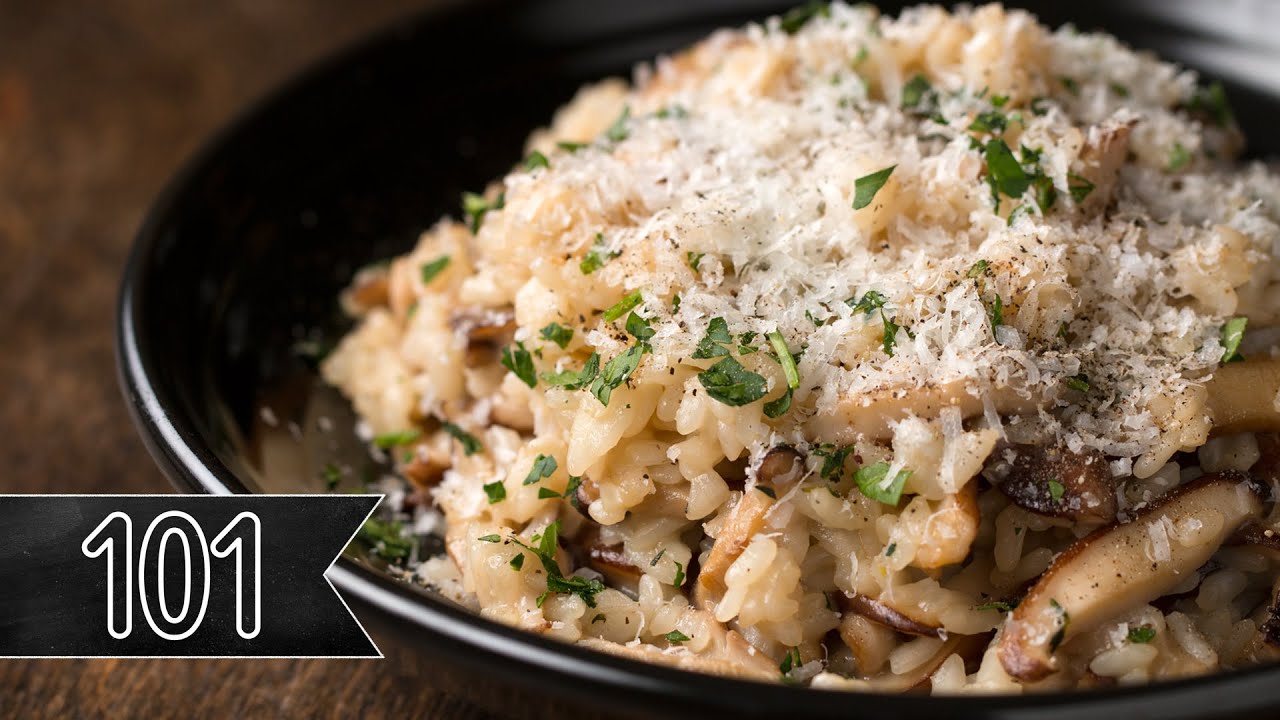
“Risotto has a reputation as a high-maintenance dish that demands your full attention and a culinary degree. That reputation is half right. It does demand your attention — but only because the technique is doing something specific that most recipes never bother to explain. Once you understand what the starch is doing and why the broth temperature matters, the dish practically makes itself. Thirty minutes. One pan. No cream. This is how it actually works.”
Why This Recipe Works
Risotto is not a complicated dish. It is a repetitive one. The technique is the same motion, executed with the same patience, for twenty minutes — and the only thing that can go wrong is misunderstanding what that motion is actually doing. Once you understand the starch, everything else is just stirring.
The Starch Is the Sauce
Arborio rice is bred specifically for high amylopectin content — the type of starch that dissolves into liquid rather than gelling inside the grain. When you toast raw Arborio in oil and then slowly introduce warm broth, the amylopectin migrates out of each grain and into the surrounding liquid, creating a natural cream without any added dairy. The stirring accelerates this migration by continuously breaking the film that forms on the grain's surface.
This is why the technique works and why shortcuts don't. A rice cooker gives you no surface agitation and no gradual liquid introduction — you get steamed rice, not risotto. A slow cooker gives you even, gentle heat but no stirring — you get something closer to congee. The pan, the ladle, and the motion are not tradition for tradition's sake. They are the machine.
Why the Toast Matters
Toasting dry Arborio in olive oil before any liquid is added is the least-discussed but most important preparatory step. The oil coats each grain in a thin hydrophobic layer that acts as a release valve. It controls how fast the amylopectin can migrate out into the broth — slowly enough that each ladle addition has time to build a rich, emulsified sauce before the next addition dilutes it.
Skip the toast and you dump liquid onto porous, uncoated grains that release all their starch immediately. The result is gluey and uniform — technically cooked rice, but with none of the layered creaminess that makes risotto worth making. Two to three minutes in a hot pan is the difference.
The Broth Temperature Rule
Warm broth is not a suggestion made by fussy culinary instructors. It is a physical requirement. When hot starch-laden risotto meets cold broth, the temperature drop causes the extracted amylopectin to re-gel — snapping back into the grain instead of staying suspended in the sauce. The creaminess you built over the last ten minutes collapses. You are now making catch-up, and the rice is cooking unevenly because different parts of the pan are at different temperatures.
Keep a second pot on the back burner at a low simmer throughout the entire cook. It is the single cheapest insurance policy in Italian cooking.
The Mantecatura
The final step — folding cold butter into the finished rice off heat — has a name because it deserves one. Mantecatura is the Italian word for the emulsification technique that transforms a plate of creamy rice into something that moves like silk. Cold butter, vigorously folded into the hot rice, releases its water content as tiny droplets that suspend in the starch-enriched liquid. The result is a glossy, cohesive sauce that clings to every grain.
Hot butter does the opposite. The fat separates from the water at high temperature and pools on the surface. This is why you take the pan completely off heat before adding the butter, and why the butter must come straight from the fridge. The temperature gradient is the mechanism.
A wooden spoon or flat silicone spatula and vigorous folding — not gentle stirring — is what drives the emulsification. Thirty seconds of decisive movement is worth more than two minutes of lazy circles.
What Al Dente Actually Means Here
Al dente in risotto is not the same as al dente in pasta. In pasta, you want a firm bite with a slightly raw center. In risotto, you want the exterior of each grain fully cooked and creamy while the very center retains a faint resistance — not crunch, just structure. A grain that disintegrates when pressed means the rice is done and you are losing the textural contrast that makes risotto satisfying rather than just soft.
The all'onda test confirms both texture and consistency simultaneously. If the risotto flows like a wave when you tilt the pan, the starch concentration is correct and the grains are properly cooked. If it sits rigid, the rice is overdone and has absorbed too much liquid. If it runs thin, it needs another minute and possibly a smaller final ladle addition.
Twenty minutes. One pan. The wave tells you when you're done.
Where Beginners Mess This Up
Before we start, read this. These are the 4 reasons your creamy parmesan risotto (the stirring method actually explained) will fail:
- 1
Adding cold broth: Cold broth dropped into a hot pan drops the temperature of the rice and stops the starch release mid-process. The grains seize up instead of slowly surrendering their starch into the surrounding liquid. Your broth must be simmering hot — not boiling, not room temperature — throughout the entire cook. Keep a separate pot running on the back burner.
- 2
Skipping the toast: Toasting the dry Arborio in oil for 2-3 minutes before any liquid is added is not optional. The heat coats each grain in a thin layer of oil that controls how fast starch leaches out. Without the toast, you dump liquid onto raw, porous grains and get a gluey, unevenly textured mush instead of individual creamy grains.
- 3
Adding too much broth at once: Risotto is not a pilaf. You are not trying to cook the rice in a fixed volume of liquid. Each ladle addition creates a controlled environment where the rice releases starch slowly into a small amount of liquid. One cup at a time — that is the constraint that creates creaminess. Two cups at once produces boiled rice.
- 4
Skipping the cold butter finish: The mantecatura — folding cold butter into the finished rice off heat — is what creates the glossy, emulsified sauce that coats every grain. Hot butter splits. Cold butter emulsifies. Remove the pan from heat before adding butter, and fold vigorously. This is the step that separates home risotto from restaurant risotto.
The Video Reference Library
Want to see it in action? Here are the exact videos we analyzed and combined to build this foolproof recipe translation:
The source video for this recipe. Precise walkthrough of broth addition and the mantecatura finish. Watch for the visual cue when the starch is fully released — the risotto should move as one unit when you shake the pan.
🛠️ Core Equipment
- Heavy-bottomed wide pan or Dutch ovenWide surface area accelerates liquid absorption and promotes even starch release. Thin pans create hot spots that burn the bottom before the center cooks. A [Dutch oven](/kitchen-gear/review/dutch-oven) or wide stainless sauté pan is ideal.
- LadleA standard 6-oz ladle gives you the right portion control for gradual broth addition. Eyeballing from a pot leads to inconsistent additions. Consistency is the entire technique.
- Wooden spoon or silicone spatulaYou need something that can reach the edges of the pan and pull the rice from the bottom without scratching. A flat-edged [wooden spoon](/kitchen-gear/review/wooden-spoon) covers both.
- Box grater or MicroplanePre-grated Parmigiano-Reggiano is drier and won't emulsify properly into the sauce. Grate it fresh. A [Microplane](/kitchen-gear/review/microplane) produces a finer texture that melts almost instantly.
Creamy Parmesan Risotto (The Stirring Method Actually Explained)
🛒 Ingredients
- ✦1.75 cups Arborio rice
- ✦4.5 cups vegetable broth, warmed and kept at a gentle simmer
- ✦0.75 cup dry white wine
- ✦1 medium yellow onion, finely diced
- ✦3 garlic cloves, minced
- ✦3 tablespoons extra-virgin olive oil
- ✦3.5 tablespoons unsalted butter, divided and cold
- ✦0.75 cup freshly grated Parmigiano-Reggiano cheese
- ✦0.5 teaspoon fine sea salt
- ✦0.25 teaspoon freshly ground black pepper
- ✦1 tablespoon fresh parsley, chopped (optional garnish)
👨🍳 Instructions
01Step 1
Bring the vegetable broth to a gentle simmer in a separate pot and keep it warm throughout the entire cooking process.
02Step 2
Heat the olive oil in a large, heavy-bottomed pan over medium heat until shimmering, about 1-2 minutes.
03Step 3
Add the diced onion and cook, stirring occasionally, until softened and translucent, about 3-4 minutes.
04Step 4
Stir in the minced garlic and cook for 30 seconds until fragrant.
05Step 5
Add the Arborio rice and toast in the oil, stirring constantly, for 2-3 minutes until the grains appear translucent at the edges and smell faintly nutty.
06Step 6
Pour in the white wine and stir continuously until fully absorbed, about 2 minutes.
07Step 7
Add the first ladle (about 1 cup) of warm broth and stir every 30 seconds, allowing the liquid to absorb before adding more.
08Step 8
Continue adding warm broth one ladle at a time, stirring frequently and waiting until each addition is mostly absorbed before adding the next, for approximately 18-20 minutes total.
09Step 9
Test the rice at the 18-minute mark. The grains should be creamy on the outside with a slight firmness at the center — al dente. If underdone, add a final ladle and cook 2 more minutes.
10Step 10
Remove the pan from heat. Stir in 2.5 tablespoons of cold butter until melted and fully incorporated.
11Step 11
Add the grated Parmigiano-Reggiano and fold gently until emulsified into a silky sauce.
12Step 12
Season with sea salt and freshly ground black pepper. The risotto should flow slowly when you tilt the pan — Italian chefs call this all'onda, 'like a wave.'
13Step 13
Divide into warm bowls, finish with the remaining 1 tablespoon of cold butter, and garnish with fresh parsley if using. Serve immediately.
Nutrition Per Serving
Estimates based on standard preparation. Adjustments alter macros.
🔄 Substitutions
Instead of Arborio rice...
Use Carnaroli or Vialone Nano rice
Carnaroli has a firmer grain structure and is harder to overcook, making it more forgiving for beginners. Minimal taste difference — the creaminess is the same.
Instead of White wine...
Use Fresh lemon juice (3 tablespoons) plus an extra ladle of broth
Removes the alcohol while maintaining the acidity needed for flavor depth. The risotto will be slightly brighter and more citrus-forward.
Instead of Parmigiano-Reggiano...
Use Pecorino Romano (0.5 cup) mixed with nutritional yeast (2 tablespoons)
Sharper, more assertive flavor. Still emulsifies well. The nutritional yeast adds umami depth and B vitamins. A solid dairy-reduced option.
Instead of Butter...
Use Extra-virgin olive oil (5 tablespoons) in the finishing step
Maintains creaminess with a lighter mouthfeel and more pronounced olive oil flavor. The emulsification still works — olive oil is not as cold-sensitive as butter.
🧊 Storage & Reheating
In the Fridge
Store in an airtight container for up to 2 days. The rice continues absorbing moisture as it sits and will stiffen significantly.
In the Freezer
Not recommended. Freezing breaks down the starch structure and the texture becomes grainy and wet on thawing.
Reheating Rules
Add 2-3 tablespoons of warm broth or water per portion, cover, and reheat over low heat while stirring. Do not microwave — it drives out moisture unevenly and produces a rubbery texture.
❓ Frequently Asked Questions
Why is my risotto gluey instead of creamy?
Two likely causes: you added the broth too fast, flooding the pan and forcing the starch out all at once instead of gradually, or you over-stirred at high heat. Gradual addition and moderate stirring create a smooth starch suspension. Aggressive heat and bulk broth create paste.
Do I have to use white wine?
No, but the wine provides acidity that balances the fat from butter and cheese. If you skip it without substituting an acid, the finished dish will taste flat and rich in an unpleasant way. Lemon juice works. Even a splash of white wine vinegar diluted with broth works.
Can I make risotto ahead of time?
Restaurants par-cook risotto to 75% done, spread it on sheet pans to cool, and finish to order. You can do the same at home: cook until just underdone, spread on a baking sheet, refrigerate, then finish with the last ladle of broth and the butter-cheese step when ready to serve.
Why does my risotto thicken so fast in the bowl?
Starch continues gelling as the temperature drops. This is unavoidable — it's the same starch that makes the dish creamy. Warm bowls slow this down. Serving immediately is the real solution. Risotto is not a dish that holds.
Is there a version without dairy?
Yes. Substitute the butter with extra-virgin olive oil and the Parmigiano with nutritional yeast (3 tablespoons) plus a small amount of cashew cream. The texture will be slightly less luxurious but the technique is identical.
How do I know when the risotto is done?
The all'onda test: tilt the pan. The risotto should flow slowly toward the low side like a wave — fluid but not soupy, with the grains suspended in a glossy sauce. If it sits in a solid mound, it's too thick. If it runs like soup, it needs another minute. The wave is the target.
The Science of
Creamy Parmesan Risotto (The Stirring Method Actually Explained)
We turned everything on this page into a beautiful, flour-proof PDF cheat sheet. Print it out, stick it to your fridge, and never mess up your creamy parmesan risotto (the stirring method actually explained) again.
*We'll email you the high-res PDF instantly. No spam, just perfectly cooked meals.
AlmostChefs Editorial Team
We translate the internet's most popular cooking videos into foolproof, beginner-friendly written recipes. We analyze multiple methods, test them in our kitchen, and engineer a single "Master Recipe" that gives you the best possible result with the least possible stress.