Homemade Rice Krispie Treats (Low Heat, Gentle Fold, Chewy Result)
Rice Krispie Treats made correctly: butter melted on low, marshmallows pulled from heat the moment they become liquid, cereal folded with 20–30 strokes to preserve air structure, and gentle pressing to avoid compressing the bars into dense slabs. The single biggest error is heat — overcooking marshmallows recrystallizes the sugar into a hard, tight network.
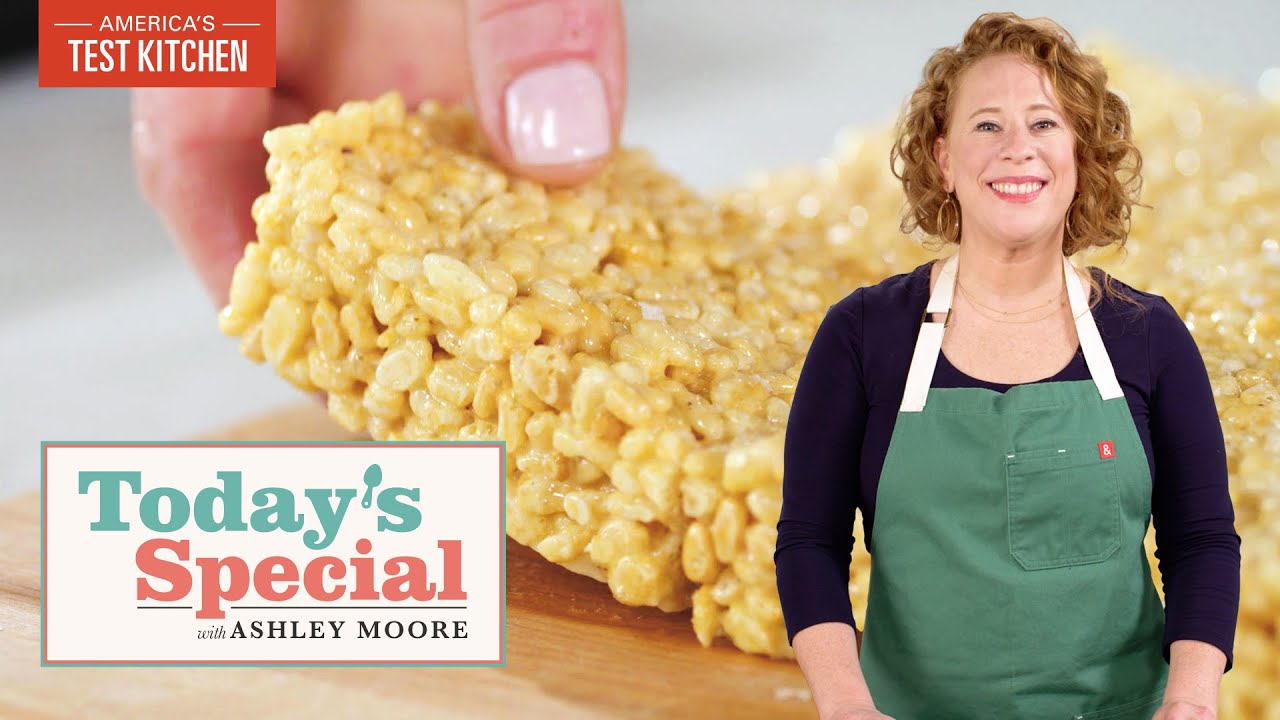
“Rice Krispie Treats are three ingredients and 18 minutes. They are also one of the most consistently overcooked things in home kitchens. The moment marshmallows finish melting is the moment to remove the pot from heat — not 30 seconds later, not after you stir a few more times. Continued heat after melting completes sets the sugar network into a tight, hard matrix that no amount of butter or vanilla will undo. Low heat throughout. Pull at the moment of completion. Everything else is folding.”
Why This Recipe Works
Rice Krispie Treats are three ingredients. They take 18 minutes. And they are one of the most consistently ruined things in home kitchens — not because the recipe is difficult but because the most important instruction is also the one that feels counterintuitive: apply low heat throughout and stop cooking the moment the work is done.
The Sugar Chemistry of Marshmallows
Marshmallows are a sugar foam. Gelatin provides the scaffolding; sucrose and glucose provide the mass; whipped air provides the volume. When heat is applied, the gelatin melts, the sugar liquefies, and the structure collapses into a sticky, fluid binder. The critical variable is not whether this transition happens but at what temperature it happens and how long the mixture stays on heat after the transition completes.
Sucrose in liquid form is amorphous — its molecules are disordered and unable to form crystals. This is the state you want in a Rice Krispie Treat binder: fluid, flexible, pliable. Applied heat beyond the completion of melting drives the sucrose toward recrystallization — the molecules align and form ordered crystal structures, producing a rigid network that sets hard. You can observe the transition happening: a correctly melted marshmallow mixture is smooth and glossy and flows off a spatula in ribbons. An overcooked mixture looks slightly grainy, pulls away from the pot sides in dense clumps, and loses its fluid movement.
The recrystallized network is permanent. There is no recovery step. Once the bars set hard, they are hard. Low heat throughout the melt and immediate removal from heat at completion is the only prevention.
The Air Structure of Puffed Rice
Each grain of puffed rice cereal is a hollow shell — a thin wall of gelatinized rice starch enclosing a pocket of air. This structure is created during the manufacturing process by rapidly expanding steam-pressurized cooked rice, and it is what produces both the snap and the lightness that define the texture of a proper Rice Krispie Treat.
This structure is easily destroyed. Aggressive stirring during the cereal folding step physically crushes the shell walls, collapsing the air pockets and producing grains that are now solid, dense fragments. The resulting bar is heavy and compact rather than light and airy. The folding instruction — 20 to 30 gentle strokes — is a minimum contact approach designed to coat every grain in marshmallow without damaging the shells that make the cereal worth using.
The pressing step carries the same logic. A heavy-bottomed saucepan distributes heat evenly during the melt, and buttered palms at the pressing stage provide even, light pressure that levels the bars without crushing the grain structure. The goal is uniform surface height, not compacted density. If you press until you feel the mixture stop compressing, you have pressed too hard.
Salt and Vanilla as Flavor Infrastructure
The standard box-top recipe uses neither. This is a meaningful omission. Fine sea salt at 1/4 teaspoon does not make the treats taste salty — it suppresses the perception of excessive sweetness, which is the dominant flavor problem in a recipe built on marshmallows. With salt, the butter tastes distinctly like butter. The vanilla registers as vanilla. The sweetness reads as pleasant rather than overwhelming. Without salt, the entire flavor profile collapses into a single undifferentiated sweetness.
Vanilla is added off heat for a specific reason: its aromatic compounds are highly volatile and evaporate rapidly at temperatures above 150°F. Added to a hot pot, most of the vanilla's flavor cooks off before it can integrate into the mixture. Added immediately after removing from heat, with the mixture temperature dropping, the aromatic compounds remain intact and distribute through the marshmallow binder as it cools. The vanilla in the finished bar is legible — not just a background note but a distinct flavor element that makes the difference between grocery-store and homemade.
The Case for Brown Butter
The base recipe uses standard melted butter — correct and sufficient. For a meaningfully different result, brown the butter before adding marshmallows. Browning converts the milk solids in butter through the Maillard reaction, producing nutty, caramel-forward flavor compounds that do not exist in plain melted butter. The process takes two extra minutes over medium-low heat, requires no additional equipment, and produces a bar that tastes categorically more sophisticated than the standard version. The simplest recipes expose the impact of technique improvements most directly.
Where Beginners Mess This Up
Before we start, read this. These are the 4 reasons your homemade rice krispie treats (low heat, gentle fold, chewy result) will fail:
- 1
Overcooking the marshmallows: This is the single most common failure and the one with no recovery. Once marshmallows melt into a smooth liquid, pull the pot from heat immediately. Continued heat recrystallizes the sucrose in the marshmallow into a rigid, tight network — the bars set hard and dense, with a texture closer to brittle candy than the classic chewy treat. Low heat throughout the entire melt is non-negotiable.
- 2
Using high heat to speed up the process: High heat accelerates marshmallow melting but at the cost of texture. The sugar in marshmallows has a narrow window between fluid (workable) and recrystallized (hard). Low-to-medium-low heat gives you 4–5 minutes of working time. High heat gives you 90 seconds and a grainy result.
- 3
Pressing the cereal mixture into the pan too hard: Aggressive pressing compresses the puffed rice grains, collapsing the hollow air structure that gives each grain its snap and lightness. Press with lightly buttered palms using firm but even pressure — enough to create a uniform surface, not enough to feel resistance. The goal is flat, not dense.
- 4
Cutting before the bars have fully set: The marshmallow binder needs at least 30 minutes at room temperature to cool and firm. Cutting warm bars produces ragged, torn edges and the bars collapse under the knife. Wait the full cooling window. Room temperature, not the refrigerator — cold air dries the surface and makes bars crumbly.
The Video Reference Library
Want to see it in action? Here are the exact videos we analyzed and combined to build this foolproof recipe translation:
The primary reference for this recipe. Covers the low-heat marshmallow melting technique, the folding motion for coating cereal without crushing it, and the correct pan-pressing pressure.
Explains the sugar recrystallization mechanism that produces hard bars when marshmallows are overcooked. Essential background for understanding why the heat control instruction is absolute.
Covers ingredient ratios — specifically the butter-to-marshmallow balance — and how vanilla and salt change the flavor profile without adding process complexity.
🛠️ Core Equipment
- Large heavy-bottomed saucepan or Dutch ovenEven heat distribution prevents hot spots that scorch marshmallow before the center melts. A thin pan creates localized burning and the grainy recrystallized texture the recipe is specifically designed to avoid.
- Silicone spatulaFlexible enough to scrape every last gram of marshmallow from the pan sides. At this recipe's scale, the marshmallow-to-cereal ratio is precise — losing even a quarter cup to pan residue changes the final bar texture. A rigid spatula leaves material behind.
- 9x13 inch baking panThe standard volume for 24 even squares. A smaller pan produces overly thick bars that do not set properly in the center. A larger pan spreads the mixture too thin and the bars crumble when cut.
- Sharp chef's knifeA buttered sharp blade cuts cleanly without dragging through the set marshmallow. Dull knives compress and tear the bars rather than cutting. Wipe the blade between every cut for clean, uniform squares.
Homemade Rice Krispie Treats (Low Heat, Gentle Fold, Chewy Result)
🛒 Ingredients
- ✦3.5 tablespoons unsalted butter
- ✦10 oz fresh marshmallows (about 5 cups)
- ✦6 cups Rice Krispies cereal
- ✦1/2 teaspoon vanilla extract
- ✦1/4 teaspoon fine sea salt
- ✦Cooking spray or additional butter, for the pan
👨🍳 Instructions
01Step 1
Spray a 9x13 inch baking pan generously with cooking spray, coating the bottom and all sides. Set aside.
02Step 2
Measure and have the cereal ready in a large bowl before starting the melt. The marshmallow mixture sets quickly once removed from heat — time lost searching for the cereal box is time the mixture is stiffening in the pot.
03Step 3
Melt the butter in a large heavy-bottomed saucepan over LOW heat. Stir occasionally until completely melted, about 1–2 minutes.
04Step 4
Add all the marshmallows at once. Stir constantly with a silicone spatula over low heat until the marshmallows are completely melted and smooth, about 4–5 minutes.
05Step 5
Remove from heat the moment marshmallows are fully melted. Add the vanilla extract and fine sea salt immediately. Stir to incorporate.
06Step 6
Add the Rice Krispies cereal to the pot all at once. Fold gently using 20–30 folding strokes until the cereal is evenly coated. Do not stir aggressively.
07Step 7
Transfer the mixture immediately to the prepared pan. The mixture sets as it cools — work quickly.
08Step 8
Lightly butter your hands or spray with cooking spray. Press the mixture evenly into the pan with your palms using firm but gentle pressure. Aim for uniform surface, not maximum compression.
09Step 9
Cool at room temperature for a minimum of 30 minutes until fully set and firm. Do not refrigerate to accelerate cooling.
10Step 10
Butter a sharp chef's knife. Cut into 24 squares — 6 cuts lengthwise, 4 cuts crosswise. Wipe the blade clean between each cut for clean edges.
Nutrition Per Serving
Estimates based on standard preparation. Adjustments alter macros.
🔄 Substitutions
Instead of Unsalted butter...
Use Coconut oil (refined)
Slightly lighter texture with a subtle coconut undertone. Reduces saturated fat. Works at the same volume but loses the distinctive buttery flavor that defines the classic bar.
Instead of Regular marshmallows...
Use Mini marshmallows (same weight)
Mini marshmallows have more surface area relative to their volume and melt faster and more evenly. Use the same 10 oz by weight — not by cup measurement.
Instead of Rice Krispies cereal...
Use Crispy brown rice cereal or puffed millet cereal
Slightly nuttier, earthier flavor with marginally denser texture. Both work as direct substitutes by volume.
Instead of Vanilla extract...
Use Almond extract (1/4 teaspoon only)
Almond extract is significantly more potent than vanilla. Use half the quantity or it will overpower. Produces a distinctly different but pleasant flavor.
🧊 Storage & Reheating
In the Fridge
Not recommended. Refrigeration dries the surface and makes bars crumbly. Room temperature in an airtight container is correct.
In the Freezer
Wrap individual bars in plastic wrap and freeze for up to 6 weeks. Thaw at room temperature for 20 minutes before serving.
Reheating Rules
These are not reheated. If bars have gone slightly stiff, a 5-second microwave burst per bar softens them back to pliable — do not overheat or they will melt entirely.
❓ Frequently Asked Questions
Why are my Rice Krispie Treats hard instead of chewy?
The marshmallows were cooked on too-high heat or for too long after melting. High heat causes the sucrose in marshmallows to recrystallize as it transitions from foam to liquid, producing a rigid candy-like structure instead of a soft, pliable binder. Keep the entire process on low heat and remove from heat the moment the marshmallows are fully melted.
Can I use mini marshmallows instead of regular?
Yes. Mini marshmallows have more surface area relative to their mass and melt faster and more evenly than regular size. Use the same weight — 10 ounces — regardless of marshmallow size. Do not measure by cups with mini marshmallows as they pack differently.
Why are my treats falling apart when I cut them?
Either they were not cooled long enough before cutting, or the marshmallow-to-cereal ratio is off. Confirm you used 10 ounces of marshmallows by weight and wait the full 30-minute minimum cooling window before cutting.
Can I make these dairy-free?
Yes. Substitute refined coconut oil for butter at the same quantity. The texture is slightly lighter and there is a subtle coconut flavor, but the technique is identical and they set correctly.
How do I prevent the mixture from sticking to my hands when pressing?
Butter your palms generously or spray with cooking spray. Reapply between passes. The marshmallow binder is aggressively sticky and dry hands make this step unnecessarily difficult.
Can I add mix-ins like chocolate chips?
Yes, but timing matters. Chocolate chips added to the pot immediately after removing from heat melt slightly, creating ribbons of chocolate rather than discrete chips. For intact chips, let the mixture cool for 2 minutes before folding in the cereal, then add chips with the cereal. Sprinkles go on top after pressing while the surface is still tacky.

The Science of
Homemade Rice Krispie Treats (Low Heat, Gentle Fold, Chewy Result)
We turned everything on this page into a beautiful, flour-proof PDF cheat sheet. Print it out, stick it to your fridge, and never mess up your homemade rice krispie treats (low heat, gentle fold, chewy result) again.
*We'll email you the high-res PDF instantly. No spam, just perfectly cooked meals.
AlmostChefs Editorial Team
We translate the internet's most popular cooking videos into foolproof, beginner-friendly written recipes. We analyze multiple methods, test them in our kitchen, and engineer a single "Master Recipe" that gives you the best possible result with the least possible stress.