The Classic Reuben Sandwich (Deli-Quality in 20 Minutes)
Tender corned beef, tangy sauerkraut, melted Swiss cheese, and homemade Russian dressing on toasted rye. We broke down what makes a deli Reuben actually work — and how to replicate it at home without compromising any of the structure or flavor.
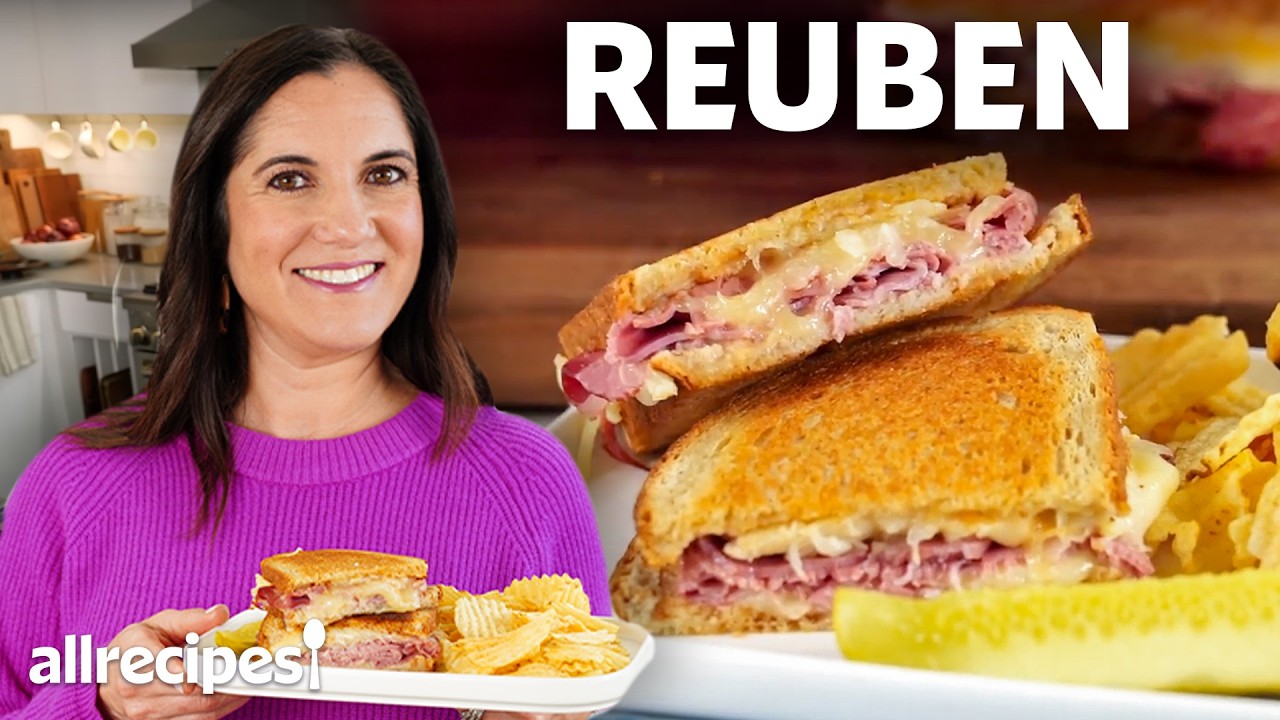
“Most homemade Reubens fall apart, go soggy, or produce cheese that never fully melts. The difference between a deli Reuben and a disappointing one comes down to three things: draining the sauerkraut completely, toasting in the right order, and pressing the assembled sandwich back onto the heat. Skip any one of these and the whole structure collapses — literally.”
Why This Recipe Works
The Reuben is one of the few sandwiches that has a genuine claim to engineering. Every component serves a structural or chemical role, and the failure mode for each is predictable, repeatable, and entirely avoidable once you understand what you're actually doing.
The Moisture Problem
Sauerkraut is fermented cabbage sitting in brine. That brine is the source of its flavor — the lactic acid tang that cuts through the fat of the corned beef and the richness of the Swiss. It is also the reason most homemade Reubens end up wet, limp, and structurally compromised within three minutes of leaving the pan.
The fix is two steps, not one. First, drain the sauerkraut thoroughly — press it against the side of the colander, squeeze handfuls of it, get it as dry as you reasonably can without wringing out all the flavor. Second, warm it in a dry skillet for three minutes. The residual moisture that survived the drain evaporates under heat. What you're left with is sauerkraut that holds its position in the sandwich instead of migrating through the bread like a slow leak.
The Toast Architecture
Rye bread has a problem: it's dense enough to stay structurally sound under a pound of filling, but that same density means it doesn't bond easily to wet ingredients. The solution is to toast each set of bread slices separately — the base gets toasted first, loaded with the meat and cheese, and the top slice gets toasted right before assembly with the Russian dressing spread on the untoasted side.
That untoasted interior surface is deliberate. It provides enough surface friction to grip the layers beneath it when the sandwich gets pressed back onto the griddle. A fully toasted interior becomes a smooth, slick barrier that lets the filling shift and slide. You want grip, not slip.
The Dressing Architecture
Russian dressing is three things working simultaneously: the fat of the mayonnaise carries fat-soluble flavor compounds from the spices; the ketchup adds body and mild acidity; the horseradish provides volatile heat compounds that cut through the richness of corned beef and Swiss in a way that no other ingredient can replicate. Worcestershire is the glue — it adds fermented umami depth that ties the sharpness and the richness together into a single coherent flavor.
The minced onion and dill are not garnish. They macerate in the dressing during the assembly process, releasing allicin and aromatic oils that raise the complexity of what would otherwise taste like a basic condiment. Thirty minutes of rest time between mixing and spreading is ideal. Five minutes is the minimum. Spreading it immediately out of the bowl means you're spreading a sum of parts, not a unified sauce.
The Final Press
The assembled Reuben going back onto the griddle is not optional. Swiss cheese has a higher melting point than most cheeses used in grilled sandwiches — significantly higher than American or provolone. The cheese needs direct sustained heat to transition from cold slices to a molten layer that fuses the sauerkraut to the bread above it. Without this step, you have hot meat, cold cheese, and a sandwich that falls apart the moment you cut it.
The cast iron skillet matters here for the same reason it matters in biryani: even heat distribution prevents the corners from burning while the center stays pale. Medium heat on a heavy pan for 2-3 minutes per side is the target. If the bread darkens faster than the cheese melts, cover the pan loosely to trap ambient heat and slow the surface browning.
This is a twenty-minute recipe. But twenty minutes done correctly, in the right sequence, produces something that is genuinely hard to distinguish from a deli counter original. Twenty minutes done carelessly produces a soggy pile of expensive ingredients. The difference is entirely in the sequencing — and now you know the sequence.
Where Beginners Mess This Up
Before we start, read this. These are the 4 reasons your the classic reuben sandwich (deli-quality in 20 minutes) will fail:
- 1
Wet sauerkraut: Undrained sauerkraut is a steam bomb inside your sandwich. As it heats, it releases liquid that soaks into the bread from the inside out, turning your toasted rye into a soggy mess before it even hits the plate. Drain it, then warm it in a dry skillet to cook off any remaining moisture.
- 2
Toasting both sides before assembling: If you fully toast all bread slices before assembly, the inner surfaces have no tackiness left to grip the fillings. The sandwich slides apart on the griddle. One side of the bread should meet the fillings while still slightly warm and marginally soft — it creates a natural bond.
- 3
Not returning the sandwich to the heat: Swiss cheese has a relatively high melting point. Stacking cold cheese on warm meat and calling it done leaves you with two separate temperature zones — hot meat, cold cheese — and a structural mess. The assembled sandwich needs 2-3 minutes per side on the griddle to fuse the layers and actually melt the cheese.
- 4
Spreading dressing on both sides before toasting: Russian dressing on a hot skillet burns. The mayo-based dressing goes on the unbuttered, untoasted side right before you assemble — never on a surface that will contact the heat directly.
The Video Reference Library
Want to see it in action? Here are the exact videos we analyzed and combined to build this foolproof recipe translation:
The primary reference for this recipe — solid technique on the toast sequence and sauerkraut prep. Pay attention to how the sauerkraut is pressed before adding it to the skillet.
🛠️ Core Equipment
- Large cast iron skillet or flat griddleEven heat across the entire bread surface is what produces a uniformly golden crust. A small skillet forces you to work one sandwich at a time and creates hot spots that burn corners while the center stays pale.
- Wide flat spatulaA Reuben is a tall, loaded sandwich. A narrow spatula tips the whole structure when you flip. Wide coverage keeps all four layers in contact and transfers cleanly.
- Small bowl and whiskThe Russian dressing needs to be fully emulsified — not just stirred. Unmixed dressing separates on the bread and creates uneven wet spots. Thirty seconds of whisking makes a real difference.
The Classic Reuben Sandwich (Deli-Quality in 20 Minutes)
🛒 Ingredients
- ✦8 slices rye bread
- ✦1 pound quality corned beef, sliced thin
- ✦2 cups fresh sauerkraut, drained well
- ✦8 ounces Swiss cheese, sliced
- ✦3 tablespoons mayonnaise
- ✦2 tablespoons ketchup
- ✦1 tablespoon horseradish
- ✦1 tablespoon sweet pickle relish
- ✦1 teaspoon Worcestershire sauce
- ✦4 tablespoons unsalted butter, softened
- ✦1 small yellow onion, minced
- ✦1 tablespoon fresh dill
- ✦1 teaspoon mustard powder
- ✦1 pinch cayenne pepper
👨🍳 Instructions
01Step 1
Combine mayonnaise, ketchup, horseradish, sweet pickle relish, and Worcestershire sauce in a small bowl. Whisk until fully smooth and emulsified.
02Step 2
Warm the drained sauerkraut in a dry skillet over medium heat for 3 minutes, stirring occasionally to drive off excess moisture.
03Step 3
Spread softened butter evenly on one side of each bread slice.
04Step 4
Heat a large skillet or griddle over medium-high heat until a drop of water sizzles immediately on contact.
05Step 5
Place 4 bread slices butter-side down onto the hot skillet. Toast for 2-3 minutes until deeply golden and crispy, then transfer to a clean surface, toasted-side up.
06Step 6
Layer the corned beef onto each toasted slice, slightly overlapping the slices to build even coverage.
07Step 7
Distribute the warm sauerkraut evenly over the corned beef, pressing down gently so it adheres to the meat.
08Step 8
Layer 2 slices of Swiss cheese over the sauerkraut on each sandwich, ensuring complete edge-to-edge coverage.
09Step 9
Spread a generous amount of Russian dressing across the remaining 4 untoasted bread slices on the unbuttered side.
10Step 10
Toast the remaining 4 bread slices butter-side down in the same skillet for 2-3 minutes until golden brown.
11Step 11
Place each dressed, toasted slice directly onto the assembled base, dressing-side down onto the cheese. Press firmly so the layers fuse.
12Step 12
Reduce heat to medium. Carefully return each sandwich to the skillet and press down with a wide spatula for 30 seconds.
13Step 13
Toast the assembled sandwiches for 2-3 minutes on the first side until the exterior is deep golden and the cheese begins to melt.
14Step 14
Flip each sandwich carefully with a wide spatula. Toast the second side for another 2-3 minutes until equally crispy and the cheese is fully melted throughout.
15Step 15
Transfer to a cutting board, rest for 1 minute, then cut diagonally and serve immediately.
Nutrition Per Serving
Estimates based on standard preparation. Adjustments alter macros.
🔄 Substitutions
Instead of Rye bread...
Use Whole grain or sprouted rye bread
Slightly nuttier flavor with more texture. Lower glycemic index. Holds up comparably to standard rye — no structural trade-off.
Instead of Regular corned beef...
Use Grass-fed or heritage corned beef
Richer, more complex beef flavor. Marginally more expensive but produces a noticeably better result. Worth the upgrade if your deli carries it.
Instead of Mayonnaise-based Russian dressing...
Use Half mayo, half plain Greek yogurt
Slightly tangier with a creamier texture. Reduces calories without flattening the flavor. Works well if you prefer a less rich dressing.
Instead of Regular Swiss cheese...
Use Aged Swiss or Gruyère
More pronounced cheese flavor means you can use slightly less. Gruyère melts exceptionally well and adds a nuttier depth that complements the sauerkraut.
🧊 Storage & Reheating
In the Fridge
Store components separately for best results — assembled Reubens go soggy within a few hours. Wrapped individually, cooked sandwiches keep for 1 day, though the bread loses its crust.
In the Freezer
Not recommended. Sauerkraut and Russian dressing do not freeze well and the bread texture deteriorates significantly on thawing.
Reheating Rules
Reheat in a dry skillet over medium-low heat for 3-4 minutes per side, pressing with a spatula. This re-crisps the bread and brings the cheese back to melt. Avoid the microwave — it turns the bread rubbery and makes the sauerkraut wet again.
❓ Frequently Asked Questions
Why does my Reuben get soggy?
Almost always the sauerkraut. It must be drained and then warmed in a dry pan to cook off residual moisture before it goes anywhere near the bread. Wet sauerkraut is the primary cause of soggy Reubens — not the dressing, not the meat.
What's the difference between Russian dressing and Thousand Island?
Russian dressing is sharper and more savory — it uses horseradish and Worcestershire for heat and depth. Thousand Island is sweeter, using relish and sometimes hard-boiled egg as the primary flavor notes. A Reuben technically calls for Russian dressing, though many delis use Thousand Island. Either works, but Russian is the correct call.
Can I make Reubens in the oven instead of a skillet?
You can, but you won't get the same crust. An oven produces even heat but no direct contact browning — the bread toasts instead of crisping. If you need to make more than four sandwiches at once, a 400°F oven for 10-12 minutes is an acceptable compromise.
How do I keep the sandwich from falling apart when I flip it?
Press the assembled sandwich firmly for 30 seconds before flipping. This compresses the layers and helps the melting cheese act as an adhesive. Use a wide spatula that covers most of the sandwich surface, and flip decisively — a hesitant flip invites collapse.
Do I have to use rye bread?
No, but rye is the correct bread for a Reuben. Its slight sourness counterbalances the richness of the corned beef and Swiss. A sourdough works as the closest substitute. White sandwich bread does not have the structure or flavor to carry these ingredients.
Can I use pastrami instead of corned beef?
Yes — and many delis do. A pastrami Reuben is sometimes called a 'Rachel.' Pastrami is smokier and more peppery than corned beef, which gives the sandwich a bolder character. The technique is identical.

The Science of
The Classic Reuben Sandwich (Deli-Quality in 20 Minutes)
We turned everything on this page into a beautiful, flour-proof PDF cheat sheet. Print it out, stick it to your fridge, and never mess up your the classic reuben sandwich (deli-quality in 20 minutes) again.
*We'll email you the high-res PDF instantly. No spam, just perfectly cooked meals.
AlmostChefs Editorial Team
We translate the internet's most popular cooking videos into foolproof, beginner-friendly written recipes. We analyze multiple methods, test them in our kitchen, and engineer a single "Master Recipe" that gives you the best possible result with the least possible stress.