Restaurant-Style Tomato Soup (The Velvety Version You've Been Missing)
A rich, silky tomato soup built on San Marzano tomatoes, slow-sweated aromatics, and a careful cream finish. We reverse-engineered the bistro texture that home cooks never quite nail — it comes down to two things: the strain and the order of operations.

“Most homemade tomato soup tastes thin, acidic, or vaguely like canned pasta sauce. Restaurant tomato soup tastes like something entirely different — velvety, round, and complex. The gap isn't about expensive ingredients. It's about three steps that home cooks routinely skip: sweating the onions to full translucency, simmering long enough for the tomatoes to lose their raw edge, and straining through a fine-mesh sieve to pull out every fiber that breaks the silky texture. Skip any one of these and you're eating can-of-tomatoes soup.”
Why This Recipe Works
Tomato soup is deceptively simple. Four or five main ingredients, one pot, under an hour. And yet most homemade versions land somewhere between mediocre and actively bad — flat, acidic, thin-textured, nothing like what you'd order at a decent restaurant. The gap is not about talent. It's about three specific steps that most home cooks either skip or rush.
The Aromatics Foundation
Everything in this soup is built on the onion and garlic base, and that base requires patience. The onion needs 4-5 full minutes over medium-high heat to fully collapse and sweeten. This isn't aesthetic — raw onion contains sulfurous compounds that only convert to sweet, complex flavors after sustained heat breaks them down. Pull the onions at 2 minutes because you're impatient and those compounds carry through to the finished soup, competing with the tomato the entire way.
The garlic follows immediately and needs exactly 60 seconds. Garlic that browns before the tomatoes go in turns bitter, and there's nothing you can do to fix bitter garlic once it's in the pot. Watch it closely. Move fast.
The Tomato Selection
San Marzano tomatoes are a genuine upgrade here, not food snobbery. They're grown in volcanic soil near Naples, which produces a lower-acid, higher-sugar tomato with a denser flesh and cleaner finish. Standard crushed tomatoes are fine. San Marzano tomatoes are noticeably better. Read the label — many cans are labeled "San Marzano style" and grown in California. Look for the DOP certification if you want the real thing.
The combination of canned and fresh tomatoes serves a purpose. Canned San Marzanos provide depth and body. Fresh tomatoes add brightness and a slightly raw, sunny note that all-canned soups lack. If you can't find decent fresh tomatoes (which is most of the year in most climates), go all-canned with no apology.
The Simmer Matters
Fifteen to twenty minutes of gentle simmering is not decoration. During this phase, the tomato's natural sugars caramelize slightly, the raw acidity mellows, and the aromatics from the bay leaf and basil infuse the liquid. Rushing this phase — say, giving it 8 minutes because you're hungry — produces soup that tastes thin and sharp no matter how much cream you add after.
The simmer should be a gentle bubble, not a rolling boil. A hard boil drives off too much water too fast and concentrates both the good flavors and the bitter ones. Medium-low heat, a lazy bubble pattern, and patience.
The Texture Problem
Here's what most recipes won't tell you: blending alone doesn't produce restaurant texture. A standard countertop blender will pulverize the tomatoes thoroughly, but it cannot break down the cellulose fibers in tomato skins or process the seed membranes into true smoothness. What survives the blender creates a subtly gritty, slightly broken mouthfeel — perfectly edible, but not silky.
The fix is a fine-mesh sieve. Pour the blended soup through it in batches and press with the back of a spoon. Ninety seconds of work. What stays behind — a small amount of fibrous paste — is exactly what was making your soup feel rough. What passes through is the velvety, uniform texture you've been paying for at restaurants.
The Cream Finish
Cream added to boiling tomato soup curdles. This is not a flaw in the cream — it's physics. The acid in the tomatoes combined with extreme heat denatures the proteins in the cream rapidly. The result is white specks floating in orange liquid. Reduce the heat to low, let the soup settle, then drizzle the cream in slowly while stirring continuously in one direction. The motion keeps the emulsion moving and prevents any one area from overheating.
If you're using a Dutch oven or heavy-bottomed pot, the retained heat means the soup stays warm for several minutes off the burner — enough time to add the cream safely without active heat underneath. Work with the pot's thermal mass rather than against it.
The Worcestershire sauce is the detail that separates recipes that taste complete from recipes that taste like they're missing something. You won't identify it in the finished soup. It adds a fermented, savory depth that rounds the acidic tomato without tasting specifically of anything. It's the reason restaurant tomato soup has a complexity that home versions often lack.
Where Beginners Mess This Up
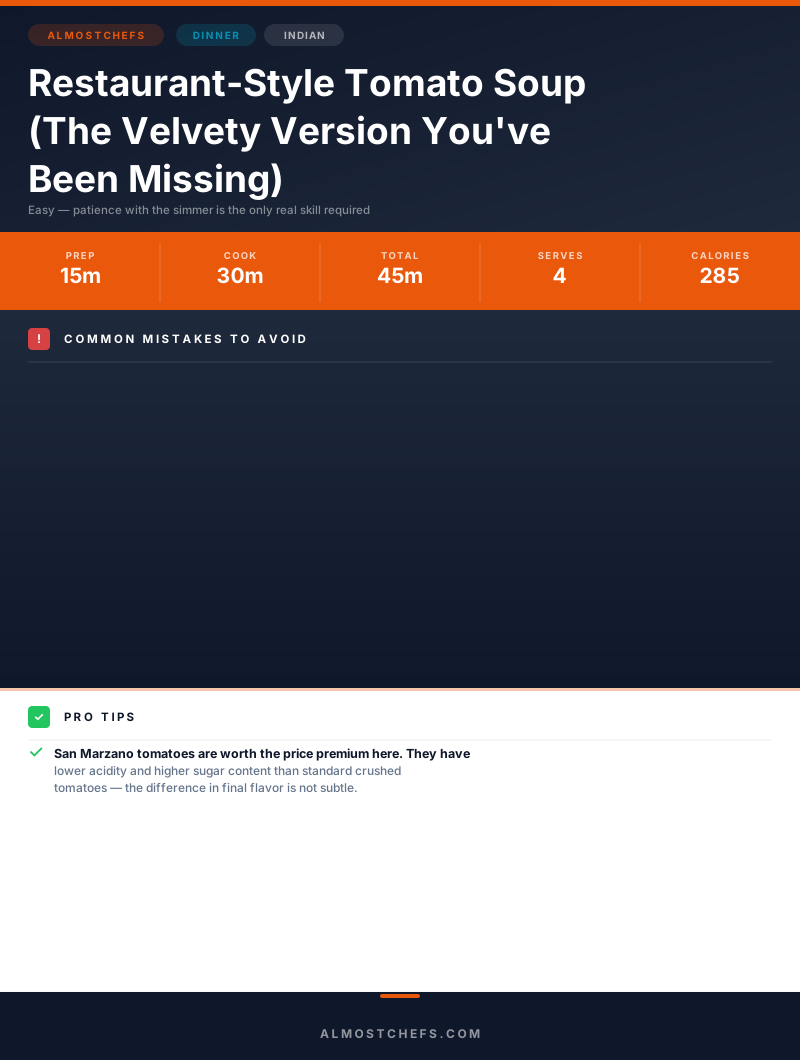
Before we start, read this. These are the 4 reasons your restaurant-style tomato soup (the velvety version you've been missing) will fail:
- 1
Rushing the onion sweat: Onions need 4-5 full minutes over medium-high heat to turn translucent and sweet. Pull them early and you get a sharp, raw allium note that persists through the entire soup — no amount of cream will cover it. The onions are the flavor foundation. Build it properly.
- 2
Under-simmering the tomatoes: Raw canned tomatoes have a bright, slightly metallic edge that needs 15-20 minutes of gentle heat to mellow into something round and complex. Rushing this step is the single reason most homemade tomato soup tastes like it came straight from the can.
- 3
Skipping the fine-mesh strain: Blending alone doesn't produce restaurant texture. Tomato skins, seed membranes, and fiber fragments survive the blender and create a faintly gritty, broken mouthfeel. The strain takes 90 seconds and is entirely non-negotiable if you want silky results.
- 4
Adding cream to boiling soup: Cream added to soup that's too hot curdles instantly — you get white specks floating in orange liquid. Remove the pot from high heat, let the soup drop to a gentle simmer, and drizzle the cream in slowly while stirring in one direction. The emulsification requires patience.
The Video Reference Library
Want to see it in action? Here are the exact videos we analyzed and combined to build this foolproof recipe translation:
The source video demonstrating the restaurant-style technique with San Marzano tomatoes. Clear guidance on simmer time and cream incorporation.
🛠️ Core Equipment
- Heavy-bottomed pot or Dutch ovenEven heat distribution prevents the tomato sugars from scorching on the bottom during the long simmer. A thin pot creates hot spots that produce bitter, burnt notes.
- Immersion blender or countertop blenderThe countertop blender produces a smoother result than an immersion blender. If using a countertop model, blend in small batches and vent the lid — hot liquid expands violently under the lid pressure.
- Fine-mesh sieveThe step that separates bistro texture from home-cook texture. Press the blended soup through in batches, using a spoon to work all the liquid through. What stays behind in the sieve is exactly what was making your soup gritty.
- LadleFor transferring soup to the blender in controlled quantities. Pouring directly from a heavy pot into a blender is how burns happen.
Restaurant-Style Tomato Soup (The Velvety Version You've Been Missing)
🛒 Ingredients
- ✦2 tablespoons unsalted butter
- ✦1 tablespoon olive oil
- ✦1 medium yellow onion, finely diced
- ✦4 cloves garlic, minced
- ✦1 can (28 ounces) crushed San Marzano tomatoes
- ✦1 pound fresh ripe tomatoes, quartered
- ✦3 cups vegetable or chicken stock
- ✦1 bay leaf
- ✦1 teaspoon dried basil
- ✦1/4 teaspoon red chili flakes
- ✦2 teaspoons granulated sugar
- ✦1 teaspoon Worcestershire sauce
- ✦3/4 cup heavy cream or whole milk
- ✦Salt and freshly ground black pepper to taste
- ✦Fresh basil leaves for garnish
- ✦Croutons for serving (optional)
👨🍳 Instructions
01Step 1
Melt the butter with olive oil in a large heavy-bottomed pot over medium-high heat, swirling to combine.
02Step 2
Add the diced onion and sauté for 4-5 minutes, stirring occasionally, until fully translucent and soft.
03Step 3
Stir in the minced garlic and cook for 1 minute until fragrant. Do not let it brown.
04Step 4
Pour in the crushed San Marzano tomatoes with their juices, add the fresh tomato quarters, and pour in the stock.
05Step 5
Add the bay leaf, dried basil, and red chili flakes. Stir well to distribute.
06Step 6
Bring to a gentle simmer over medium heat, then reduce to medium-low and cook uncovered for 15-20 minutes.
07Step 7
Remove from heat. Discard the bay leaf. Let the soup cool for 5 minutes.
08Step 8
Working in 2-cup batches, carefully blend the soup until completely smooth. Vent the blender lid with a folded towel to release steam pressure.
09Step 9
Pour the blended soup through a fine-mesh sieve back into the pot, pressing with a spoon to extract all liquid. Discard the solids.
10Step 10
Return the pot to medium-low heat. Stir in the granulated sugar and Worcestershire sauce. Taste as you go.
11Step 11
Reduce heat to low. Slowly drizzle in the heavy cream while stirring constantly in one direction until fully incorporated.
12Step 12
Season with salt and freshly ground black pepper. Remember that flavors are slightly muted when hot — season slightly past what tastes right.
13Step 13
Ladle into bowls and garnish with fresh basil leaves, croutons, and a drizzle of olive oil.
Nutrition Per Serving
Estimates based on standard preparation. Adjustments alter macros.
🔄 Substitutions
Instead of Heavy cream...
Use Greek yogurt or cashew cream
Greek yogurt adds tang and protein; cashew cream (soaked cashews blended with water) is neutral and silky. Both must be added off high heat to prevent curdling.
Instead of Butter...
Use Extra virgin olive oil
Lighter mouthfeel with subtle fruity notes. Reduces saturated fat while keeping the savory foundation. Use the same quantity.
Instead of Granulated sugar...
Use Honey or maple syrup
Use slightly less — both are sweeter by volume than granulated sugar. Honey adds floral notes; maple adds warmth. Add at the end so you can taste as you go.
Instead of Whole milk or heavy cream...
Use Unsweetened coconut milk or oat milk
Coconut milk adds subtle richness and pairs well with the chili flakes. Oat milk is lower fat and slightly neutral. Both make this soup fully dairy-free.
🧊 Storage & Reheating
In the Fridge
Store in an airtight container for up to 4 days. The flavor deepens by day two as the spices meld further.
In the Freezer
Freeze before adding cream for best texture — freeze the strained, blended base for up to 3 months. Add cream fresh when reheating.
Reheating Rules
Reheat gently on medium-low with a splash of stock to loosen. Add a small drizzle of fresh cream at the end to revive the richness. Avoid boiling — it breaks the emulsion.
❓ Frequently Asked Questions
Why does my tomato soup taste acidic even after cooking?
The tomatoes haven't simmered long enough, or your canned tomatoes have high acidity. Add sugar in small increments to balance — start with half a teaspoon at a time. A pinch of baking soda also neutralizes acidity rapidly but use it sparingly or the soup tastes flat.
Can I use all canned tomatoes and skip the fresh ones?
Yes. Use a total of 2 cans (28 ounces each) of crushed or whole peeled San Marzano tomatoes. Fresh tomatoes add brightness, but a good-quality canned tomato produces a richer, more consistent result year-round.
Do I have to strain the soup?
Only if you want restaurant texture. The blender alone leaves behind tomato skin fragments and seed membranes that create a subtly gritty mouthfeel. Straining takes 90 seconds and makes a visible, tangible difference. Skip it and you'll notice.
Why did my cream curdle when I added it?
The soup was too hot. Heavy cream needs to enter warm soup, not boiling soup. Reduce heat to low, wait 2 minutes, and drizzle the cream in slowly while stirring in one direction. If it curdles, an immersion blender can sometimes rescue the texture.
Can I make this soup vegan?
Yes. Swap butter for olive oil, use vegetable stock, and replace heavy cream with full-fat coconut milk or cashew cream. The texture and richness hold up well. Skip the Worcestershire sauce or use a vegan version.
How do I get a deeper, more complex flavor without adding time?
Drop a parmesan rind into the pot during the simmer and fish it out before blending. Add a teaspoon of tomato paste with the garlic and let it cook for 60 seconds before the liquid goes in — this concentrates umami dramatically.
The Science of
Restaurant-Style Tomato Soup (The Velvety Version You've Been Missing)
We turned everything on this page into a beautiful, flour-proof PDF cheat sheet. Print it out, stick it to your fridge, and never mess up your restaurant-style tomato soup (the velvety version you've been missing) again.
*We'll email you the high-res PDF instantly. No spam, just perfectly cooked meals.
AlmostChefs Editorial Team
We translate the internet's most popular cooking videos into foolproof, beginner-friendly written recipes. We analyze multiple methods, test them in our kitchen, and engineer a single "Master Recipe" that gives you the best possible result with the least possible stress.