Homemade Ravioli (Fresh Pasta That Actually Works)
Classic Italian ricotta and spinach ravioli made from scratch — silky egg pasta dough rolled thin, filled generously, and boiled to tender perfection. We broke down the most popular YouTube techniques to give you one foolproof method that nails the dough texture and seal every time.
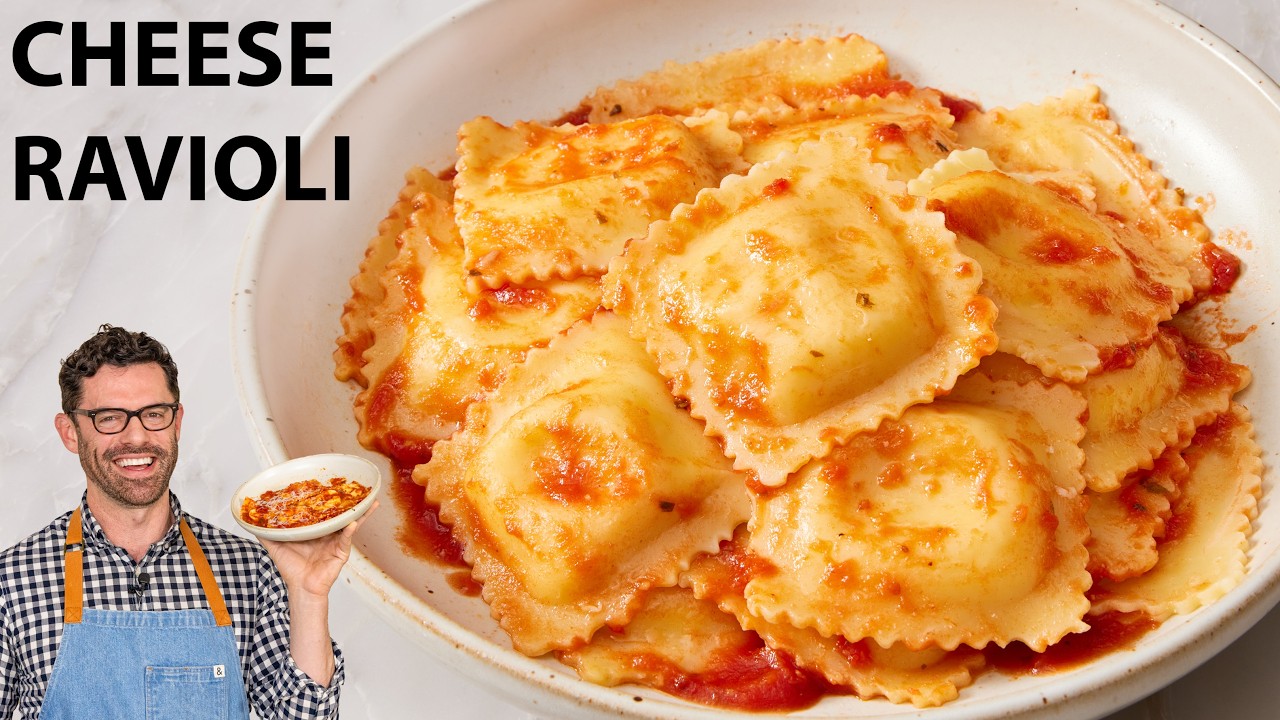
“Most homemade ravioli recipes fail at the same two moments: the dough tears when you roll it thin, and the seals blow out in boiling water. Neither problem is mysterious. The dough tears because it didn't rest long enough. The seals blow because the pasta was too thick or the water was brushed too sloppily. Fix those two things and fresh ravioli is genuinely easier than people pretend it is.”
Why This Recipe Works
Fresh pasta has an intimidating reputation it doesn't deserve. The technique is not complex — it is just sequential. Do each step correctly, in order, and the result is a plate of ravioli that tastes nothing like anything that ever came out of a box. Skip one step or rush another, and you'll be picking pasta off the bottom of a pot.
The Dough Is a Chemical System
Egg pasta dough is flour, eggs, and time. The flour provides starch and protein. The eggs provide liquid, fat, and additional protein. When you knead them together, the proteins in the flour — glutenin and gliadin — combine to form gluten, an elastic network that gives pasta its structure and chew. Kneading develops this network. Resting allows it to relax.
This is why the 30-minute rest is mandatory. When gluten is freshly developed, it's under tension — the network is tightly wound and resists deformation. Try to roll freshly kneaded dough and it springs back to its original thickness the moment the rolling pin lifts. After 30 minutes at room temperature, the network relaxes enough to stay where you put it. You're not waiting for anything mysterious. You're letting physics do work so you don't have to.
The dough thickness matters more than most recipes acknowledge. Ravioli needs to be thin enough to see your hand through it — roughly 1-2mm. At this thickness, the double layer at the sealed edges cooks to tender in 4-5 minutes. Roll it thicker and the edges are gummy before the center is done. Thinner and the pasta tears during assembly. The pasta machine exists precisely to eliminate this variable.
The Filling Problem Nobody Talks About
Ricotta is about 70% water by weight. Fresh spinach is mostly water. You're combining two high-moisture ingredients into a filling that needs to stay inside a thin pasta envelope while submerged in boiling water. If you don't drive moisture out of the spinach before it goes into the filling, the water releases during cooking, turns the ricotta into a slurry, and the hydraulic pressure blows the seals.
Sautéing the spinach until the pan is completely dry is not optional — it's load-bearing. Three to four minutes over medium heat, stirring constantly, is enough to reduce a cup of chopped spinach to a concentrated fraction of its original volume and eliminate almost all its free moisture. This is the same reason you salt eggplant before frying and squeeze grated zucchini before adding it to batter. Water is the enemy of structure.
Nutmeg in the filling is non-negotiable if you want the filling to taste Italian rather than generic. It's not a flavor you can identify when the dish is finished — it works below the level of conscious recognition, adding warmth and complexity that makes people ask what's in the filling. A quarter teaspoon is enough for a full pound of ricotta.
The Seal Is an Engineering Problem
Air is the enemy of ravioli. When you lay the second pasta sheet over the filling mounds, pockets of air form between the sheets. When the ravioli hits boiling water, those air pockets expand and push against the seals from the inside. Thin seals fail first. This is why you press from the center of each ravioli outward before cutting — you're evacuating air, not just joining two sheets of dough.
The water brush creates a chemical bond between the two pasta layers. Pasta dough is mostly starch. Water activates the starch at the surface, making it tacky. When you press two wetted starch surfaces together under slight pressure, they fuse. Too much water and the surface becomes slippery — the layers slide instead of bonding. A light, even application with a pastry brush is precisely right.
Cooking at a rolling boil throws the ravioli around the pot and applies repeated mechanical stress to the seals. A vigorous simmer — water moving actively but not churning — generates enough heat to cook the pasta while keeping the physical environment calm. The temperature difference between a rolling boil and a vigorous simmer is maybe 5 degrees Fahrenheit. The mechanical difference is enormous.
The Sauce Decision
Marinara and brown butter sage are the canonical ravioli sauces for a reason that has nothing to do with tradition: both are thin enough to coat without overwhelming, and neither competes with the ricotta filling for center stage. Heavy cream sauces work, but they turn the dish rich to the point of fatigue after a few bites. The filling is already dairy-forward. The sauce should provide brightness and contrast, not more of the same.
Brown butter takes three minutes and tastes like it took thirty. Butter is mostly fat and water with about 16% milk solids. Heat it past the melting point and the water evaporates, leaving the milk solids in direct contact with the hot fat. They brown through the Maillard reaction, producing hundreds of new flavor compounds — nutty, toasty, complex. Add sage leaves and they fry in that butter, turning crisp and deeply aromatic. Toss the ravioli directly in the pan to coat every surface. It's the best three minutes you'll spend in this kitchen.
Where Beginners Mess This Up
Before we start, read this. These are the 4 reasons your homemade ravioli (fresh pasta that actually works) will fail:
- 1
Skipping the dough rest: Freshly kneaded dough is loaded with tension — the gluten network is tight and elastic and will spring back the second you try to roll it thin. Resting for 30 minutes at room temperature lets the gluten relax completely. If you skip this, you'll fight the dough the entire time and still end up with pasta that's too thick.
- 2
Rolling the pasta too thick: Ravioli dough needs to be thin enough to see your hand through it — roughly 1-2mm. Thick pasta produces gummy, doughy ravioli where the dough overwhelms the filling. If you don't have a pasta machine, a heavy rolling pin and real patience are your only options.
- 3
Overfilling the ravioli: More filling is not more better. Overfilled ravioli can't seal properly — there's too much mass pushing against the edges. A teaspoon per ravioli is the right amount. It feels conservative until you bite through and find the filling-to-pasta ratio is actually perfect.
- 4
Boiling at too aggressive a heat: Fresh pasta is delicate. A rolling boil tosses the ravioli around the pot and blows the seals open. Bring the water to a boil, then reduce to a vigorous simmer before adding the pasta. Gentle, consistent heat keeps every piece intact.
The Video Reference Library
Want to see it in action? Here are the exact videos we analyzed and combined to build this foolproof recipe translation:
The reference video for this recipe — clear technique for dough consistency and rolling. Best resource for understanding what properly rested dough looks and feels like.
🛠️ Core Equipment
- Pasta machine or heavy rolling pinA pasta machine produces consistent thickness in seconds. A rolling pin works but requires significant effort to reach 1-2mm consistently. Without one of these, even textures are nearly impossible.
- Pastry brush or fingertipFor brushing water around the filling mounds to create the seal. Too much water makes the dough soggy and slippery. Too little and the edges won't bond. A light, controlled application is everything.
- Ravioli cutter or sharp knifeA fluted ravioli cutter creates decorative crimped edges and simultaneously presses the seal closed. A sharp knife works but requires pressing the edges closed separately. Dull knives drag the dough and tear seals.
- Large wide potFresh ravioli needs room to float and move without stacking. A crowded pot means uneven cooking and pasta that sticks together. Go bigger than you think you need.
Homemade Ravioli (Fresh Pasta That Actually Works)
🛒 Ingredients
- ✦2 cups all-purpose flour
- ✦3 large eggs
- ✦1 pound whole milk ricotta cheese
- ✦3 cups fresh spinach, finely chopped
- ✦1/2 cup grated Parmigiano-Reggiano cheese
- ✦1/4 teaspoon freshly grated nutmeg
- ✦1 medium garlic clove, minced
- ✦1 teaspoon sea salt, divided
- ✦1/2 teaspoon black pepper
- ✦2 tablespoons extra virgin olive oil
- ✦4 cups marinara sauce
- ✦2 tablespoons fresh basil, torn
- ✦1 tablespoon butter
- ✦Water for pasta dough and boiling
👨🍳 Instructions
01Step 1
Combine 2 cups flour and 1/2 teaspoon salt in a large mixing bowl. Create a well in the center and crack the eggs directly into it.
02Step 2
Beat the eggs gently with a fork, then gradually incorporate flour from the inner edges of the well until a shaggy dough forms.
03Step 3
Knead the dough with your hands for 8-10 minutes until smooth and elastic. Add small amounts of water if the dough is too dry and crumbly.
04Step 4
Wrap the dough tightly in plastic wrap and rest at room temperature for 30 minutes.
05Step 5
While the dough rests, sauté the chopped spinach in a skillet over medium heat for 3-4 minutes, stirring until all excess moisture has evaporated.
06Step 6
Combine the cooked spinach, ricotta, Parmigiano-Reggiano, minced garlic, nutmeg, remaining 1/2 teaspoon salt, and black pepper. Mix gently until blended.
07Step 7
Divide the rested dough into two equal portions. Roll each piece through a pasta machine or with a rolling pin until thin enough to see your hand through it — roughly 1-2mm.
08Step 8
Lay one pasta sheet on a lightly floured work surface. Drop teaspoon-sized mounds of filling in rows, spaced 2 inches apart.
09Step 9
Lightly brush water around each mound of filling with a pastry brush or your fingertip.
10Step 10
Lay the second pasta sheet on top and press down gently between each mound to remove air pockets. Work from the center outward.
11Step 11
Cut into individual squares with a ravioli cutter, knife, or pasta wheel. Press the edges firmly to ensure a complete seal.
12Step 12
Bring a large pot of well-salted water to a boil, then reduce to a vigorous simmer. Add the ravioli in batches — don't crowd the pot.
13Step 13
Cook for 4-5 minutes after the ravioli float to the surface, stirring gently. Remove with a slotted spoon.
14Step 14
Warm the marinara sauce in a separate saucepan over medium heat until it reaches a gentle simmer.
15Step 15
Plate the ravioli and ladle warm marinara over the top. Finish with torn basil, a drizzle of olive oil, and additional Parmigiano-Reggiano.
Nutrition Per Serving
Estimates based on standard preparation. Adjustments alter macros.
🔄 Substitutions
Instead of All-purpose flour...
Use Whole wheat flour or 50/50 blend
Denser, nuttier flavor. The dough is slightly harder to roll thin and tears more easily. Worth doing for the fiber gain, but expect a learning curve on the first batch.
Instead of Whole milk ricotta...
Use Part-skim ricotta or ricotta blended with silken tofu
Lighter texture and lower saturated fat. The silken tofu version is nearly indistinguishable once the filling is seasoned. Drain either option through cheesecloth if the filling seems wet.
Instead of Marinara sauce...
Use Homemade San Marzano marinara
San Marzano tomatoes are lower in acidity and naturally sweeter than standard canned tomatoes. Simmer with garlic, olive oil, and fresh basil for 20 minutes. No added sugar needed.
Instead of Butter in sauce...
Use Extra virgin olive oil
Lighter finish with a fruitier, more Mediterranean flavor profile. Use about the same volume. The dish loses richness but gains brightness.
🧊 Storage & Reheating
In the Fridge
Store cooked ravioli in an airtight container for up to 3 days. Toss with a little olive oil before storing to prevent sticking.
In the Freezer
Freeze uncooked ravioli on a parchment-lined baking sheet until solid, then transfer to a freezer bag. Keeps for up to 2 months. Cook from frozen.
Reheating Rules
Reheat cooked ravioli in a covered skillet with a splash of water and a drizzle of olive oil over medium-low heat for 3-4 minutes. Microwaving works but makes the pasta gummy.
❓ Frequently Asked Questions
Why does my ravioli dough keep tearing when I roll it?
The dough didn't rest long enough. Gluten needs at least 30 minutes to relax before the dough will roll without resistance. If you rested it and it's still tearing, add a small amount of water and knead for 2 more minutes — the dough may be too dry.
My ravioli keeps opening up in the boiling water. What went wrong?
Three possible causes: the water seal was too thin or uneven, there were air pockets between the sheets that expanded, or the water is boiling too aggressively. Press the edges firmly after cutting, remove all air pockets before cutting, and reduce the boil to a vigorous simmer before adding the pasta.
Can I make the dough ahead of time?
Yes. Wrap tightly and refrigerate for up to 24 hours. Let it come back to room temperature for 20 minutes before rolling — cold dough is stiff and tears easily.
Do I need a pasta machine?
No, but it helps significantly. A heavy rolling pin on a smooth surface works, but reaching 1-2mm by hand requires real effort and patience. If you make fresh pasta more than occasionally, a manual pasta machine is worth the investment.
Can I use store-bought pasta sheets?
Yes, and it cuts the prep time in half. Look for fresh lasagna sheets at Italian delis or specialty grocery stores. Trim them to size and use exactly as you would homemade sheets.
How do I know when the ravioli are done?
Cook for 4-5 minutes after they float. Cut one open — the pasta should be tender all the way to the sealed edge with no gummy or raw dough texture. The filling should be fully heated through. Fresh pasta cooks fast; when in doubt, taste one.
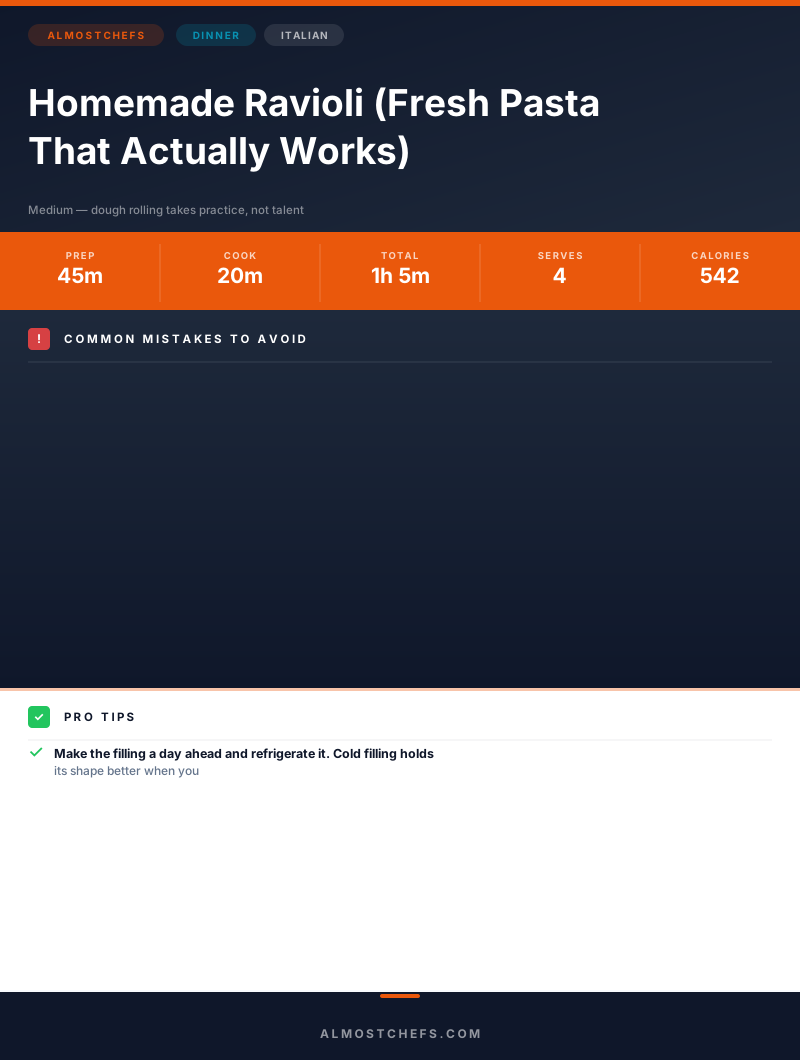
The Science of
Homemade Ravioli (Fresh Pasta That Actually Works)
We turned everything on this page into a beautiful, flour-proof PDF cheat sheet. Print it out, stick it to your fridge, and never mess up your homemade ravioli (fresh pasta that actually works) again.
*We'll email you the high-res PDF instantly. No spam, just perfectly cooked meals.
AlmostChefs Editorial Team
We translate the internet's most popular cooking videos into foolproof, beginner-friendly written recipes. We analyze multiple methods, test them in our kitchen, and engineer a single "Master Recipe" that gives you the best possible result with the least possible stress.