Proper Ratatouille (The One-Pot French Classic You've Been Shortchanging)
A classic French Provençal vegetable stew built on eggplant, zucchini, bell peppers, and tomatoes slow-cooked with aromatic herbs and olive oil. We cut through the noise to give you one straightforward technique that respects the dish without wasting your afternoon.
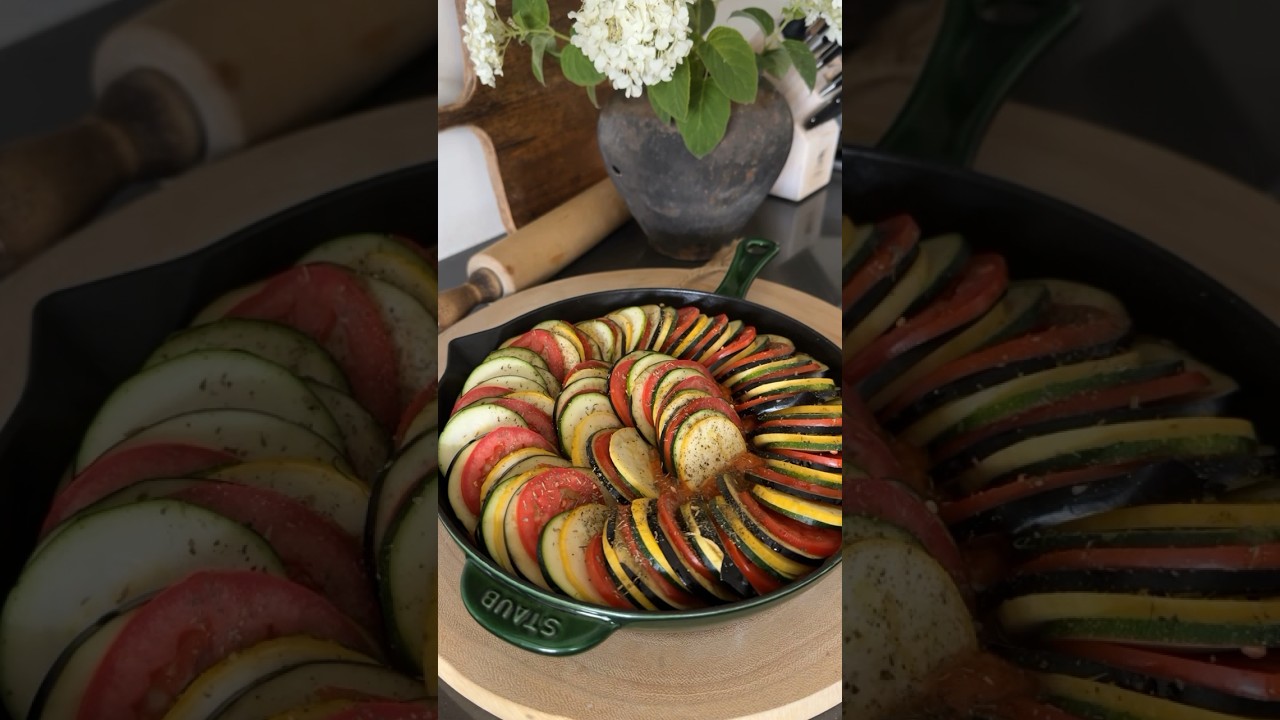
“Ratatouille has a reputation for being either a rustic peasant stew or an elaborate tian you spend two hours slicing. Both versions have their place, but neither is what most home cooks need on a Tuesday. What you need is a version that extracts the full flavor of summer vegetables without babysitting the stove — and the secret is in the order you add them and how long you leave them alone.”
Why This Recipe Works
Ratatouille is one of those dishes that sounds simple until you make a bad version of it. You've had bad ratatouille — a grey, soupy pile of vegetables that tastes like they were boiled together in tomato water with no particular purpose. The problem is almost always the same: every vegetable went into the pot at the same time, the lid stayed on, and nobody paid attention to the order of operations.
This dish is not complicated. But it has a logic, and ignoring that logic produces mush.
Why the Order of Vegetables Matters
Eggplant is the villain of every failed ratatouille. It's 92% water by weight and behaves like a sponge — it will absorb whatever liquid is available before releasing its own. If you throw eggplant into a pot already containing tomatoes and zucchini, it soaks up that liquid and steams instead of browning. You end up with pale, waterlogged cubes that have no texture and no flavor.
The fix is simple: eggplant goes into hot oil alone. Give it 3-4 minutes of uninterrupted contact with a hot surface before anything else joins the pot. The edges should start to brown and the flesh should soften and collapse slightly. At that point, it has sealed its exterior and will behave like a proper vegetable for the rest of the cook.
Zucchini and bell peppers go in next. They cook faster and need less direct heat. The tomatoes come last, once everything else has had a head start.
The Tomato Paste Bloom
Two tablespoons of tomato paste does almost nothing if you stir it directly into the liquid. The compounds that give it depth — the caramelized sugars, the concentrated glutamates — are only activated by dry heat against a hot surface. Push your vegetables to the sides, drop the paste into the center of the pot, and work it against the hot metal for sixty seconds. It should darken slightly and smell toasty rather than raw.
This one step doubles the savory depth of the finished dish. It's the difference between a stew that tastes like vegetables in tomato sauce and one that tastes like it was built.
The Uncovered Simmer
A Dutch oven with the lid on is a steam trap. Summer vegetables — especially zucchini and tomatoes — release enormous amounts of moisture as they cook. Without ventilation, that moisture stays in the pot and you end up with soup. The dish needs to be cooked uncovered at a gentle simmer for the full 25-30 minutes so that the liquid reduces by roughly a third and concentrates around the vegetables.
The finished sauce should coat the back of a spoon. The vegetables should hold their shape but yield immediately to a fork. If the sauce is still thin and the vegetables are swimming, give it another 5-10 minutes uncovered and turn up the heat slightly.
The Balsamic Finish
A teaspoon of balsamic vinegar added off the heat does something that no amount of seasoning during cooking can replicate. Acid brightens everything. It makes the tomatoes taste more like tomatoes, the herbs taste more like herbs, and the whole dish snap into focus. It's not there to make the ratatouille taste like balsamic — it's there to remind everything else what it's supposed to taste like.
The fresh herbs go in at the same moment, for the same reason. Thirty minutes of simmering destroys every volatile aromatic compound in fresh basil and parsley. They exist only to be added at the end, off the heat, where they stay vivid and fragrant long enough to reach the table.
Ratatouille is summer vegetables treated with enough patience to become something greater than their individual parts. Follow the order. Leave the lid off. Finish with acid. That's the entire job.
Where Beginners Mess This Up
Before we start, read this. These are the 4 reasons your proper ratatouille (the one-pot french classic you've been shortchanging) will fail:
- 1
Rushing the eggplant: Eggplant is a sponge. If you don't give it dedicated time in hot oil before the other vegetables join the pot, it will absorb moisture from the tomatoes and turn waterlogged and bitter. Sauté it alone for 3-4 minutes until it starts to brown on the edges before adding anything else.
- 2
Skipping the tomato paste bloom: Tomato paste added straight to a liquid just dissolves without contributing depth. Cooking it dry in the pan for 60 seconds caramelizes its sugars and triggers the Maillard reaction — you get a concentrated, slightly smoky backbone that canned tomatoes alone cannot provide.
- 3
Simmering with the lid on: Ratatouille needs to reduce. A covered pot traps steam, keeps the liquid thin, and gives you soup instead of stew. Cook uncovered for the full 25-30 minutes so excess moisture evaporates and the sauce concentrates around the vegetables.
- 4
Adding fresh herbs too early: Fresh parsley and basil added at the start of a 30-minute simmer contribute nothing — their volatile aromatic compounds cook off in the first five minutes. They go in off the heat, right before serving, so they stay bright and fragrant.
The Video Reference Library
Want to see it in action? Here are the exact videos we analyzed and combined to build this foolproof recipe translation:
The primary reference video for this recipe. Clear breakdown of vegetable sautéing order and why the uncovered simmer matters for final texture and concentration.
🛠️ Core Equipment
- Large heavy-bottomed pot or Dutch ovenEven heat distribution prevents the vegetables from scorching on the bottom while the top half steams. A [Dutch oven](/kitchen-gear/review/dutch-oven) is ideal — its thick walls hold steady heat without spiking.
- Sharp chef's knifeYou're cutting five different vegetables into consistent 1-inch pieces. Irregular cuts mean some pieces turn to mush while others stay underdone. A [sharp chef's knife](/kitchen-gear/review/chefs-knife) makes uniform cuts fast.
- Wooden spoon or heat-resistant silicone spatulaFor stirring without scratching the pot. Eggplant sticks before it releases — you need something rigid enough to scrape the bottom without tearing the pieces apart.
Proper Ratatouille (The One-Pot French Classic You've Been Shortchanging)
🛒 Ingredients
- ✦4 tablespoons extra virgin olive oil, divided
- ✦1 large yellow onion, finely diced
- ✦4 cloves garlic, minced
- ✦1 medium eggplant, cut into 1-inch cubes
- ✦2 medium zucchini, diced into 1-inch pieces
- ✦1 large red bell pepper, chopped into 1-inch chunks
- ✦1 large yellow bell pepper, chopped into 1-inch chunks
- ✦1 can (28 ounces) crushed tomatoes
- ✦2 tablespoons tomato paste
- ✦1 teaspoon dried herbes de Provence
- ✦1 teaspoon dried basil
- ✦1/2 teaspoon dried thyme
- ✦1/4 teaspoon cayenne pepper
- ✦Sea salt to taste
- ✦Fresh ground black pepper to taste
- ✦2 tablespoons fresh parsley, chopped
- ✦1 tablespoon fresh basil, chopped
- ✦1 teaspoon balsamic vinegar
👨🍳 Instructions
01Step 1
Heat 2 tablespoons of olive oil in a large heavy-bottomed pot over medium-high heat until shimmering, about 1-2 minutes.
02Step 2
Add the diced onion and sauté until softened and translucent, stirring occasionally, about 4-5 minutes.
03Step 3
Stir in the minced garlic and cook until fragrant, about 1 minute. Do not let it brown.
04Step 4
Add the remaining 2 tablespoons of olive oil and the cubed eggplant. Sauté for 3-4 minutes, stirring frequently, until the edges start to brown.
05Step 5
Add the diced zucchini and chopped bell peppers. Continue sautéing for another 4-5 minutes until the vegetables begin to soften slightly.
06Step 6
Push the vegetables to the sides and add the tomato paste to the center of the pot. Cook the paste, stirring it against the hot surface, for 1 minute until it darkens slightly.
07Step 7
Pour in the crushed tomatoes with all their juices. Add the herbes de Provence, dried basil, thyme, and cayenne pepper. Stir to combine.
08Step 8
Bring to a gentle simmer over medium heat, then reduce to low. Cook uncovered for 25-30 minutes, stirring occasionally, until the vegetables are tender and the sauce has thickened.
09Step 9
Taste and season generously with sea salt and fresh ground black pepper.
10Step 10
Remove from heat. Stir in the balsamic vinegar, then fold in the fresh parsley and basil.
11Step 11
Serve warm, optionally over quinoa, with crusty bread, or with a drizzle of good olive oil.
Nutrition Per Serving
Estimates based on standard preparation. Adjustments alter macros.
🔄 Substitutions
Instead of Crushed tomatoes...
Use Fresh tomatoes, blanched, peeled, and chopped
Fresher, more delicate flavor with a thinner consistency. In peak summer with good tomatoes, this is the better choice. Increase simmer time by 5 minutes to compensate for higher water content.
Instead of Herbes de Provence...
Use 1 tablespoon fresh thyme, 1 tablespoon fresh oregano, 1 teaspoon finely chopped fresh rosemary
Brighter, more herbaceous result. Fresh herbs bloom more aggressively — add them during the last 10 minutes of simmering, not at the start.
Instead of Tomato paste...
Use Sun-dried tomato paste or 3 tablespoons additional crushed tomatoes
Sun-dried tomato paste delivers a richer, more concentrated umami punch. The extra crushed tomatoes are a neutral workaround if that's all you have.
Instead of Olive oil...
Use 2 tablespoons olive oil plus 2 tablespoons vegetable broth
Cuts fat and calories while maintaining moisture. The broth adds subtle savory depth. Use this swap if you want a lighter dish without losing body.
🧊 Storage & Reheating
In the Fridge
Store in an airtight container for up to 4 days. Flavor peaks on day two.
In the Freezer
Freeze in portioned containers for up to 3 months. Thaw overnight in the fridge and reheat gently on the stovetop.
Reheating Rules
Reheat on low in a covered saucepan with a splash of water or broth to restore moisture. Stir in a small handful of fresh herbs after reheating to revive the brightness.
❓ Frequently Asked Questions
Why is my ratatouille watery?
You either kept the lid on during the simmer or didn't cook it long enough uncovered. Vegetables release significant moisture as they cook — without evaporation, that liquid has nowhere to go. Cook uncovered over low heat for the full 25-30 minutes and let the sauce reduce.
Do I have to salt and drain the eggplant first?
Not strictly. Modern eggplant varieties have been bred to be less bitter than older ones. That said, salting for 15 minutes and patting dry helps the eggplant brown faster and absorb less oil — which improves texture. It's worth doing if you have the time.
Can I make this in the oven instead?
Yes. After building the base on the stovetop through the tomato paste step, transfer everything to a baking dish, add the tomatoes and seasonings, and roast uncovered at 375°F for 45-50 minutes. You get better caramelization on the vegetables but lose some of the stew's saucy quality.
What's the difference between ratatouille and caponata?
Both are cooked vegetable dishes with Mediterranean roots, but caponata is Sicilian, uses a sweet-and-sour agrodolce base (vinegar and sugar), often includes capers and olives, and is more intensely flavored. Ratatouille is French Provençal, herb-forward, and more restrained. Neither is better — they're doing different jobs.
Is this dish actually from the Provence region?
Yes. Ratatouille is native to Nice and the broader Provence region, where the summer vegetable harvest produces exactly the ingredients in this dish — eggplant, zucchini, peppers, tomatoes. It was originally peasant food, a way to use up surplus garden vegetables. The name comes from the French verb 'touiller,' meaning to stir or toss.
Can I add protein to make this a more substantial main?
Absolutely. White beans or chickpeas stirred in during the last 10 minutes of simmering add plant protein without disrupting the dish. For non-vegan versions, crumbled Italian sausage browned at the start (before the onions) adds a savory depth that works well with the herbes de Provence.
The Science of
Proper Ratatouille (The One-Pot French Classic You've Been Shortchanging)
We turned everything on this page into a beautiful, flour-proof PDF cheat sheet. Print it out, stick it to your fridge, and never mess up your proper ratatouille (the one-pot french classic you've been shortchanging) again.
*We'll email you the high-res PDF instantly. No spam, just perfectly cooked meals.
AlmostChefs Editorial Team
We translate the internet's most popular cooking videos into foolproof, beginner-friendly written recipes. We analyze multiple methods, test them in our kitchen, and engineer a single "Master Recipe" that gives you the best possible result with the least possible stress.