Crispy Chicken Cheese Balls (The Iftar Snack Everyone Asks For)
Golden, panko-crusted chicken balls with a molten mozzarella-cheddar center, spiked with cumin, coriander, and green chili. We broke down the technique to give you a filling that holds together, a coating that stays crispy, and a cheese pull that doesn't disappoint.

“The difference between cheese balls that hold together and cheese balls that explode in the fryer is one step: refrigerating the mixture for 30 minutes before you touch it. Most recipes skip this. Most recipes also produce a greasy, cheese-leaking mess. The chill firms the protein structure, sets the cheese into the mixture, and gives you a ball that fries clean and pulls apart in a molten ribbon. Do not skip the chill.”
Why This Recipe Works
Chicken cheese balls are a study in surface-to-interior tension. The exterior needs to be dry, crispy, and structurally sound. The interior needs to be moist, spiced, and loaded with cheese that melts completely without leaking out. These two objectives are in direct conflict, and every failure mode in this recipe comes from the conflict resolving in the wrong direction.
The Structural Problem
Minced chicken is wet. Cheese is fat-rich and melts under heat. Combine them, roll the mixture into a sphere, and drop it into 375°F oil — and you have a system under significant structural stress. The exterior needs to set before the interior liquefies, or you get a collapse.
The refrigerator step is the engineering solution. Cold slows the fat migration in the cheese and tightens the myosin bonds in the chicken, creating a firmer matrix that survives the first 60-90 seconds of frying. During those seconds, the panko coating sets and creates a rigid shell. By the time the interior warms enough for the cheese to fully melt, the shell is strong enough to contain it. Skip the chill and that sequence reverses — the interior liquefies before the shell sets, and the whole thing blows out.
Thirty minutes in the refrigerator is the minimum. If your kitchen is warm or you've handled the mixture extensively, 45 minutes is more reliable.
The Breading Architecture
Three-stage breading is not a suggestion — it's a structural system. Each layer has a job.
Flour is the primer. It pulls moisture from the ball's surface and creates a dry, slightly tacky layer that the egg can grip. Without it, the egg slides off and the panko has nothing to bond to.
Egg wash is the adhesive. It bridges the gap between the floury surface and the panko, curing into a solid film during frying that locks the coating in place.
Panko is the structure. Japanese-style breadcrumbs are larger, drier, and more irregular than Western breadcrumbs. That irregular surface creates air pockets during frying that expand and crisp, rather than compressing into a solid greasy shell. The result is significantly more crunch per millimeter of coating.
Press the panko firmly against each ball. Loose panko falls off in the oil, floats, burns, and makes your oil acrid. Coating that's physically pressed into the egg wash stays put.
The Oil Management Problem
Most home cooks fry all their batches in sequence without checking oil temperature between rounds. This is why the first batch is perfect and the third is pale and greasy. Every time you add cold balls, the oil temperature drops. In a thin pot, it may not fully recover before the next batch goes in. In a heavy-bottomed pot, the thermal mass of the metal stores enough heat to recover quickly — but you still need to verify.
The target window is 350-375°F. Below 350°F, the coating absorbs oil instead of repelling it. Above 375°F, the exterior burns before the interior cooks through. An instant-read thermometer takes three seconds to use and eliminates all of the guesswork.
Fry in batches of four or five. The oil temperature drop from four balls is recoverable. The drop from ten balls is not.
The Spice Balance
Green chili, cumin, ginger-garlic paste, and fresh coriander are doing different jobs. The chili provides heat and brightness. Cumin adds earthiness and warmth. Ginger-garlic paste builds the aromatic base that makes the filling smell like food rather than just protein. Fresh coriander cuts through the richness of the cheese with a clean herbal note.
Ground spices are used here instead of whole — and that's correct for this application. The mixture is refrigerated and then fried quickly. There's no long cook time for whole spices to release. Ground spices integrate into the mixture immediately and distribute evenly through every ball.
Don't skip the onion. It adds moisture and sweetness that balances the salt of the cheese, and it contributes to the Maillard browning of the interior during frying. Finely mince it so there are no large pieces that create structural weak points in the ball.
Where Beginners Mess This Up
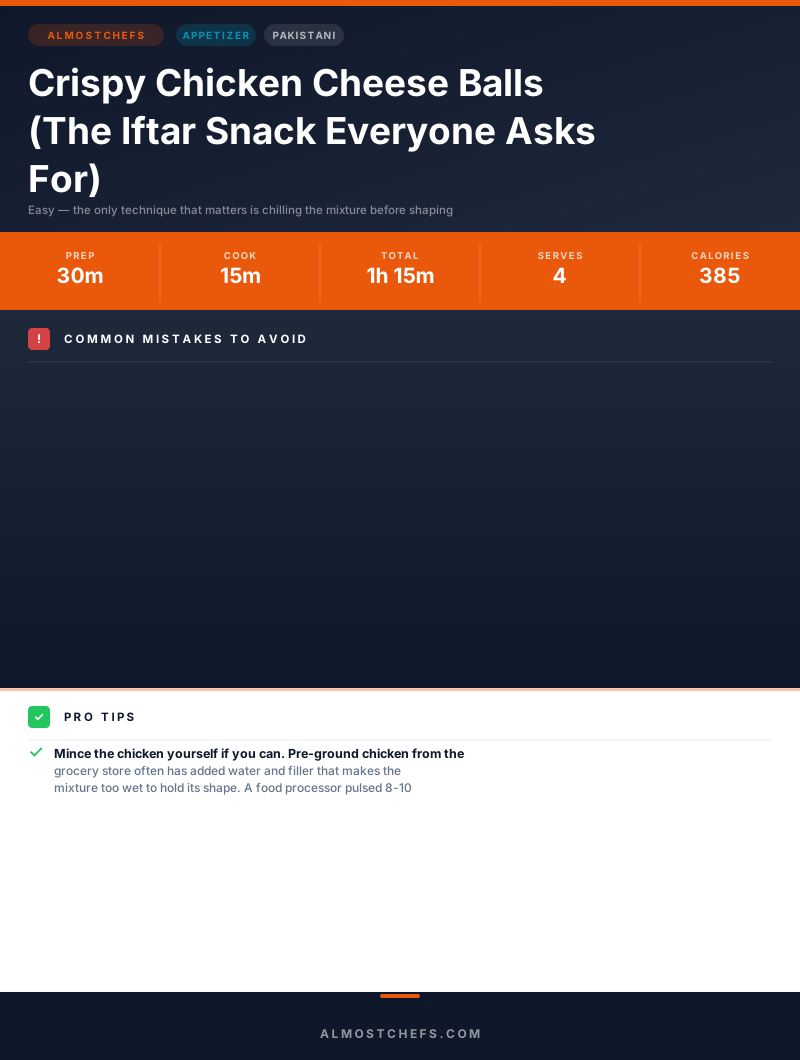
Before we start, read this. These are the 4 reasons your crispy chicken cheese balls (the iftar snack everyone asks for) will fail:
- 1
Shaping warm mixture: Room-temperature chicken mixture is too soft to hold a sphere shape under the mechanical stress of frying. The heat from your hands partially melts the cheese before it even hits the oil, weakening the structure. Thirty minutes in the refrigerator is the entire difference between a ball and a splatter.
- 2
Overcrowding the oil: Dropping too many balls at once drops the oil temperature from 375°F to well below 300°F. At that temperature, the coating absorbs oil instead of crisping. You get greasy, pale balls that stick together. Four to five balls per batch, no more.
- 3
Skipping the flour base coat: Panko does not stick directly to moist chicken. The flour creates a dry surface the egg wash can grip, which gives the panko something to bond to. Skip the flour and the coating slides off in the oil.
- 4
Frying at inconsistent temperature: Oil that's too cool makes soggy coating. Oil that's too hot browns the exterior before the chicken cooks through. 350-375°F is the window. Use a thermometer — the bread cube test is an approximation, not a measurement.
The Video Reference Library
Want to see it in action? Here are the exact videos we analyzed and combined to build this foolproof recipe translation:

The source video for this recipe. Watch specifically for how the mixture is shaped and the color you're aiming for when the balls are done — deep amber, not pale gold.
2. Crispy Cheese Ball Technique Breakdown
Detailed walkthrough of the three-stage breading station — flour, egg wash, panko — and why each layer exists. Good close-ups of proper panko adhesion before frying.
3. Iftar Snack Ideas and Frying TipsCovers oil temperature management across multiple frying batches, including how to bring the oil back to temperature between rounds without overshooting.
🛠️ Core Equipment
- Deep heavy-bottomed pot ↗Mass holds heat. A thin pot loses temperature the moment the balls go in and never recovers between batches. A [Dutch oven](/kitchen-gear/review/dutch-oven) or heavy stockpot is the right tool — it maintains 350-375°F without spiking or crashing.
- Instant-read thermometer ↗Guessing oil temperature is how you ruin batches. 350-375°F is a 25-degree window and it matters. A [probe thermometer](/kitchen-gear/review/instant-read-thermometer) removes the guesswork entirely.
- Small ice cream scoop ↗Consistent portion size means consistent cook time. If some balls are twice the size of others, you'll have some overcooked and some raw in the same batch. A scoop gives you uniform balls every time.
- Wire rack over a sheet pan ↗Paper towels trap steam against the bottom of the balls and soften the coating within minutes. A wire rack lets air circulate on all sides, keeping the crust crispy for longer after frying.
Crispy Chicken Cheese Balls (The Iftar Snack Everyone Asks For)
🛒 Ingredients
- ✦500g boneless chicken breast, finely minced
- ✦150g mozzarella cheese, shredded
- ✦75g sharp cheddar cheese, shredded
- ✦3/4 cup panko breadcrumbs
- ✦1/4 cup all-purpose flour
- ✦2 large eggs
- ✦1 medium onion, finely minced
- ✦3 fresh green chilis, finely chopped
- ✦1 tablespoon ginger-garlic paste
- ✦2 tablespoons fresh coriander leaves, chopped
- ✦1/2 teaspoon ground cumin
- ✦1/2 teaspoon ground coriander
- ✦1/2 teaspoon black pepper
- ✦Salt to taste
- ✦2-3 cups vegetable oil for deep frying
- ✦Water as needed for egg wash
👨🍳 Instructions
01Step 1
Combine the minced chicken, mozzarella, cheddar, onion, green chilis, ginger-garlic paste, fresh coriander, cumin, ground coriander, salt, and black pepper in a large mixing bowl.
02Step 2
Mix thoroughly until the cheese is evenly distributed and the mixture holds its shape when pressed.
03Step 3
Cover with plastic wrap and refrigerate for 30 minutes.
04Step 4
Remove from the fridge and divide into 16-18 equal portions using a small ice cream scoop.
05Step 5
Roll each portion between your palms into a compact, smooth ball. Apply firm, even pressure — loose packing leads to cracking during frying.
06Step 6
Set up your breading station: flour in one shallow dish, eggs beaten with a splash of water in a second, panko spread in a third.
07Step 7
Coat each ball in flour first, then egg wash, then panko. Press the panko firmly against the surface so it adheres completely with no bare spots.
08Step 8
Arrange the breaded balls on a parchment-lined tray and rest at room temperature for 10 minutes to let the coating set.
09Step 9
Heat vegetable oil in a heavy-bottomed pot to 350-375°F. Verify with a thermometer.
10Step 10
Fry 4-5 balls at a time for 3-4 minutes, turning occasionally, until deep amber on all sides and floating to the surface.
11Step 11
Remove with a slotted spoon and transfer to a wire rack (not paper towels) to drain. Allow the oil to return to temperature before the next batch.
12Step 12
Serve immediately with mint chutney, sweet chili sauce, or tamarind paste.
Nutrition Per Serving
Estimates based on standard preparation. Adjustments alter macros.
🔄 Substitutions
Instead of Deep frying in oil...
Use Shallow frying in 2 tablespoons oil or air frying at 380°F for 12 minutes
Slightly less golden color and crunch, but still satisfying. Air frying works well if you spray the balls generously with oil before cooking.
Instead of Panko breadcrumbs...
Use Almond flour mixed with sesame seeds
Nuttier flavor, lower carbohydrate, and better blood sugar stability. The texture is different — more crumbly than crunchy — but the coating holds in the fryer.
Instead of All-purpose flour...
Use Gram flour (chickpea flour) and cornstarch, equal parts
Lighter, crispier base coat with a subtle nuttiness that complements the spices. Slightly different golden color on the finished ball.
Instead of Boneless chicken breast...
Use Mixed chicken thigh and breast, or lean ground turkey
Thigh meat adds more moisture and is more forgiving if you go slightly over on cook time. Turkey breast is leaner but can dry out — mix with a small amount of thigh if using turkey.
🧊 Storage & Reheating
In the Fridge
Store cooked balls in an airtight container for up to 2 days. The coating will soften — reheat in the oven or air fryer, not the microwave.
In the Freezer
Freeze breaded, uncooked balls on a sheet pan until solid, then transfer to a zip bag. Fry from frozen at 350°F for 5-6 minutes. Do not thaw first — the coating separates.
Reheating Rules
Oven at 375°F for 8-10 minutes or air fryer at 375°F for 5 minutes. Both restore meaningful crunch. Microwave produces a soft, soggy result that does not recover.
❓ Frequently Asked Questions
Why do my cheese balls keep falling apart in the oil?
Two causes: the mixture wasn't cold enough when shaped, or the breading station was skipped or rushed. Chill the mixture for the full 30 minutes, and make sure every ball gets flour before the egg wash — the flour is the adhesion layer everything else depends on.
Can I bake these instead of frying?
Yes, but manage your expectations. Bake at 400°F for 18-20 minutes, flipping once at the halfway point, with the balls sprayed generously with oil. You'll get a lighter golden color and less crunch. The cheese center will still melt. It's a different result — not worse, just different.
How do I know the chicken is cooked through without cutting one open?
The float test: fully cooked balls float to the surface of the oil. The internal steam from cooked meat is buoyant enough to lift the ball. If they're still sinking after 4 minutes, give them another 30-60 seconds.
Can I make these ahead of time?
Yes — bread them, refrigerate on a tray for up to 4 hours, and fry to order. Do not fry and hold. Fry them as close to serving as possible for maximum crunch.
Why are my cheese balls pale and greasy instead of golden and crispy?
Oil temperature was too low. Pale and greasy means the coating absorbed oil instead of crisping. Bring the oil to 350-375°F before each batch and verify with a thermometer. The temperature drop from adding cold balls is normal — the pot should recover within 60 seconds if it's heavy enough.
Can I use pre-shredded cheese from a bag?
You can, but it melts less smoothly. Pre-shredded cheese is coated with anti-caking agents (usually cellulose) that interfere with the melt. Block cheese grated yourself gives a cleaner pull and better integration into the chicken mixture.
The Science of
Crispy Chicken Cheese Balls (The Iftar Snack Everyone Asks For)
We turned everything on this page into a beautiful, flour-proof PDF cheat sheet. Print it out, stick it to your fridge, and never mess up your crispy chicken cheese balls (the iftar snack everyone asks for) again.
*We'll email you the high-res PDF instantly. No spam, just perfectly cooked meals.
AlmostChefs Editorial Team
We translate the internet's most popular cooking videos into foolproof, beginner-friendly written recipes. We analyze multiple methods, test them in our kitchen, and engineer a single "Master Recipe" that gives you the best possible result with the least possible stress.