High-Protein Ramadan Meal Prep (Five Days of Suhoor and Iftar, Done in One Session)
A complete batch-cooking system for Ramadan — grilled chicken, spiced lentils and chickpeas, brown rice, roasted sweet potatoes, and hard-boiled eggs prepped in one efficient session. Each component stores separately for up to five days, delivering 38+ grams of protein per meal to sustain energy through long fasting hours.
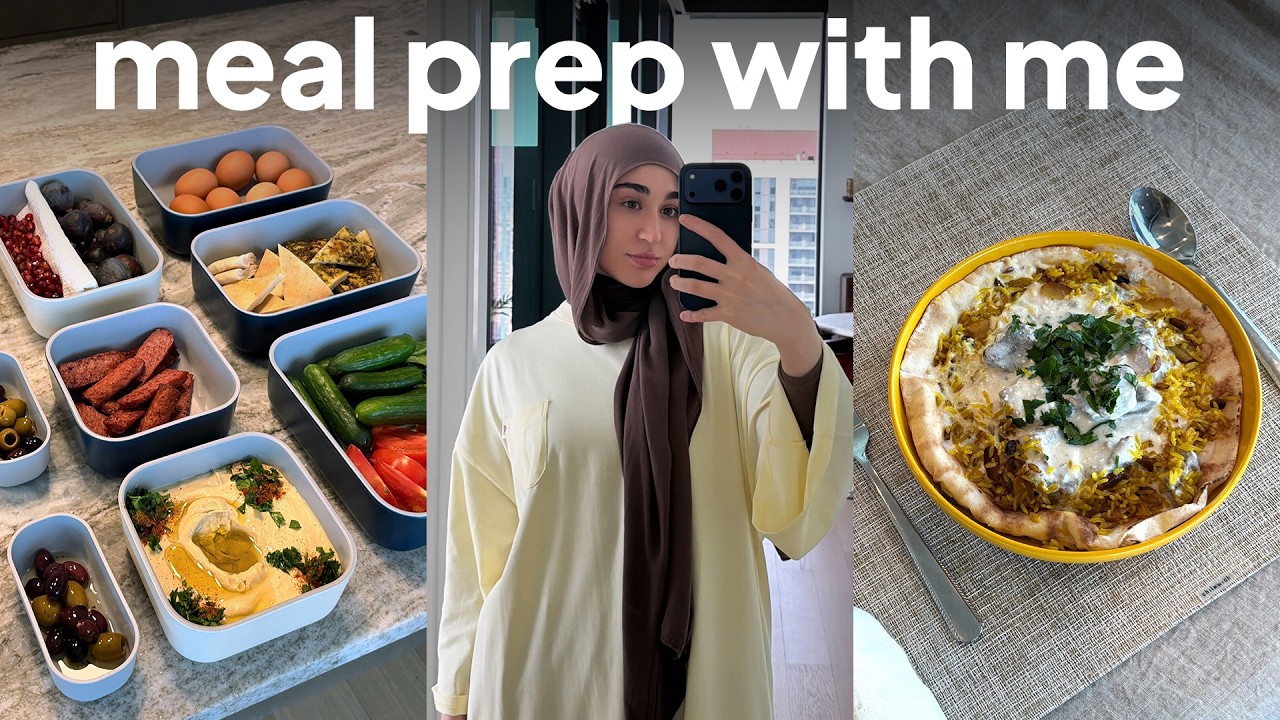
“Ramadan fasting is 16 to 18 hours. The meals that bookend it — suhoor before dawn, iftar after sunset — carry an outsized physiological load. Most meal prep advice for Ramadan is vague health content dressed up in spices. This is a system: one 90-minute cook session that produces five days of complete, high-protein meals with every component stored optimally so nothing turns soggy, nothing dries out, and every plate takes under three minutes to assemble.”
Why This Recipe Works
Meal prep advice exists on a spectrum from genuinely useful to aesthetically pleasing content that leaves you staring at a fridge full of soggy rice on Wednesday. This system sits firmly at the useful end because it was designed around one specific constraint: food that has to stay edible for four days, eaten at irregular hours by someone who is running on limited sleep and has 90 seconds to assemble a meal before the fast begins.
The Separation Principle
The foundational rule of this prep — and the one most meal prep guides ignore — is that moisture migrates. Warm lentils sitting against brown rice for 18 hours will waterlog the grains. Spinach pressed against hot chicken turns black and slimy by morning. Dates in contact with yogurt turn the whole container into a sweetened puddle. Every component in this prep exists in its own sealed container because the enemy of good stored food is contact between things with different moisture levels.
This adds maybe four extra containers to the washing pile. It extends meal quality by two full days. The math is obvious.
Protein Architecture
This prep delivers 38+ grams of protein per meal through layered sources, not a single dense protein hit. Chicken breast handles the fast-digesting leucine-rich protein that drives muscle protein synthesis. Lentils and chickpeas provide slower-digesting plant protein alongside 9 grams of fiber that flattens the glycemic curve of the brown rice. Greek yogurt and eggs round out the amino acid profile with additional casein and complete protein respectively.
For suhoor — the pre-dawn meal eaten before a 16 to 18 hour fast — this structure matters. A meal that spikes blood sugar at 4am produces a crash at 9am. A meal weighted toward protein, fat, and fiber from eggs, yogurt, and almonds releases energy over five to six hours. The components are identical throughout the week; the plate ratios shift based on which meal you're eating.
The Spice Logic
Cumin, turmeric, and coriander do more than add flavor to the lentil base. Turmeric's curcumin compound is one of the more studied anti-inflammatory agents in food; cumin supports digestive motility; coriander has mild blood-sugar-moderating properties. These aren't health claims dressed up as cooking advice — they're the reason these spices appear in fasting-period foods across Middle Eastern, South Asian, and North African cuisines. Traditional foodways have long understood that what you eat during periods of restricted intake has outsized physiological impact.
The onion-garlic mixture folded into the lentils at the end is not just aromatics. Alliums contain prebiotic fructooligosaccharides that feed gut bacteria — relevant context given that gut microbiome diversity tends to shift during extended fasting. The gut health score on this prep isn't marketing language; it's structural.
Timing the Cook Session
The 90-minute prep works because the oven and stovetop run in parallel. Sweet potatoes go in the oven first — 30 minutes unattended. While they roast, you sear the chicken, start the lentils, and set the eggs. Brown rice in the rice cooker runs entirely without supervision. The only active stovetop management is the lentil pot and the onion sauté, and neither requires constant attention.
By the time the sweet potatoes come out, the chicken is resting, the lentils are five minutes from done, the eggs are in the ice bath, and the rice cooker has clicked to warm. Everything finishes within ten minutes of each other. That's not luck — it's the correct start sequence executed in the right order.
What This Prep Isn't
It isn't a recipe for one specific dish. It's five days of raw material. Iftar meal one might be warm chicken over lentils with roasted sweet potato and spinach wilted in. Suhoor on day three might be two eggs, a container of yogurt with dates and almonds, and nothing else. The system is designed to be mixed, matched, and portioned based on what you need in the moment — not assembled identically five times.
That flexibility is the point. A heavy-bottomed pot and a rice cooker do the heavy lifting. The rest is just components, waiting to be combined.
Where Beginners Mess This Up
Before we start, read this. These are the 4 reasons your high-protein ramadan meal prep (five days of suhoor and iftar, done in one session) will fail:
- 1
Cooking the rice to full doneness before storing: Brown rice that is completely soft when it goes into the container will be mushy by day two. Pull it off the heat when it's just barely tender — it will continue absorbing residual moisture as it cools. This is the difference between fluffy reheated rice and a clumped mass.
- 2
Mixing the spinach into hot components: Spinach oxidizes rapidly when it comes into contact with heat or acids. If you fold it into warm lentils before storing, you'll have dark, slimy greens by day one. Store it raw and separately, then stir it into warm portions at mealtime where the residual heat wilts it perfectly.
- 3
Pre-mixing the yogurt, almonds, and dates: Yogurt absorbs moisture aggressively from dates and softens almonds overnight. These three components must be stored in their own small containers. Combine them at the table, not in advance. This also gives you flexibility — some meals want yogurt and fruit, some don't.
- 4
Skipping the chicken rest before slicing: Slicing chicken immediately after cooking forces all the accumulated juices out onto the cutting board instead of back into the meat fibers. Five minutes of resting before you cut means moister chicken through day four. It costs nothing.
The Video Reference Library
Want to see it in action? Here are the exact videos we analyzed and combined to build this foolproof recipe translation:
The source video for this recipe system. Covers the full batch-cooking workflow with timing breakdowns for running the oven, stovetop, and boiled eggs simultaneously without bottlenecks.
🛠️ Core Equipment
- Large skillet with high sidesThe chicken needs enough surface area to sear without steaming. Crowding the pan drops the surface temperature and you get grey, braised chicken instead of golden-brown seared chicken. Work in batches if needed.
- Rice cookerBrown rice tolerates almost no imprecision in water ratio. A [rice cooker](/kitchen-gear/review/rice-cooker) removes the variable entirely — consistent results every session without monitoring. If using a pot, use a heavy-bottomed one with a tight lid.
- Sheet pan with rimmed edgesRoasting sweet potatoes requires dry, circulating heat. A rimmed [sheet pan](/kitchen-gear/review/sheet-pan) keeps the cubes from rolling off while allowing evaporation. Foil-lined for easy cleanup.
- Airtight glass containers with dividersProtein and grain stored in the same container allows moisture transfer that degrades both. Glass seals better than plastic over multiple days and doesn't absorb odors from spiced lentils. Separate containers per component is the non-negotiable rule.
High-Protein Ramadan Meal Prep (Five Days of Suhoor and Iftar, Done in One Session)
🛒 Ingredients
- ✦2.5 lbs boneless, skinless chicken breasts
- ✦2 cups dried green lentils
- ✦2 cans (15 oz each) chickpeas, drained and rinsed
- ✦2 cups uncooked brown rice
- ✦3 medium yellow onions, finely diced
- ✦5 cloves garlic, minced
- ✦3 cups fresh spinach leaves
- ✦2 medium sweet potatoes, cut into 1-inch cubes
- ✦4 tablespoons extra-virgin olive oil
- ✦2 teaspoons ground cumin
- ✦1.5 teaspoons turmeric powder
- ✦12 large eggs
- ✦2 cups plain Greek yogurt
- ✦1 cup raw almonds, unsalted
- ✦1.5 cups pitted dates, chopped
- ✦Salt and freshly ground black pepper to taste
- ✦6 cups low-sodium vegetable or chicken broth
- ✦1 teaspoon ground coriander
👨🍳 Instructions
01Step 1
Preheat the oven to 400°F (200°C). Toss the sweet potato cubes with 1 tablespoon olive oil, salt, and pepper. Spread in a single layer on a rimmed sheet pan and roast for 25-30 minutes, stirring halfway, until caramelized and fork-tender.
02Step 2
Pat the chicken breasts dry with paper towels. Season generously on both sides with salt, black pepper, 1 teaspoon cumin, and 0.5 teaspoon turmeric.
03Step 3
Heat 2 tablespoons olive oil in a large skillet over medium-high heat until shimmering. Sear chicken for 6-7 minutes per side until golden brown and internal temperature reaches 165°F (74°C). Work in batches to avoid crowding.
04Step 4
Transfer chicken to a cutting board. Rest for 5 minutes, then slice into bite-sized chunks. Store in an airtight glass container. Do not mix with grains.
05Step 5
Rinse lentils under cold water. Combine with 6 cups broth in a large pot and bring to a boil over high heat.
06Step 6
Reduce heat to medium-low. Add remaining 1 teaspoon cumin, 1 teaspoon turmeric, and 0.5 teaspoon ground coriander. Simmer uncovered for 25-30 minutes until lentils are tender but still hold their shape.
07Step 7
Stir in drained chickpeas during the last 5 minutes of simmering. Season with salt and pepper. Remove from heat.
08Step 8
In a separate pan, sauté diced onions in the remaining 1 tablespoon olive oil over medium heat for 5-6 minutes until translucent. Add garlic and cook 1 more minute until fragrant.
09Step 9
Fold the onion-garlic mixture into the lentil-chickpea pot. Adjust seasoning. Let cool completely before sealing in a container.
10Step 10
Cook brown rice with 4 cups water in a rice cooker or covered pot. Season with a pinch of salt. Stop slightly short of complete doneness — just barely tender.
11Step 11
Place 12 eggs in a pot of cold water. Bring to a boil, remove from heat, cover, and let sit for 12 minutes. Transfer immediately to an ice bath. Peel once cooled and store whole in a sealed container.
12Step 12
Store fresh spinach raw in its own container. Do not mix with warm components.
13Step 13
Divide all components — chicken, lentil-chickpea mix, brown rice, roasted sweet potatoes, hard-boiled eggs — across five meal prep containers, keeping proteins and grains in separate sections.
14Step 14
Store Greek yogurt, almonds, and chopped dates in separate small containers. Do not pre-combine.
15Step 15
Refrigerate all containers immediately. Consume within four days. Freeze any portions beyond day four in freezer-safe containers.
Nutrition Per Serving
Estimates based on standard preparation. Adjustments alter macros.
🔄 Substitutions
Instead of Boneless, skinless chicken breasts...
Use Turkey breast or lean ground turkey
Similar protein content with a slightly leaner fat profile. Ground turkey needs to be formed into patties or crumbled — not sliced — which changes the texture of assembled meals.
Instead of Brown rice...
Use Quinoa or millet
Both hold up better through five days of storage than brown rice and offer complete amino acid profiles. Quinoa cooks in 15 minutes versus 40 — adjust your timing accordingly.
Instead of Plain Greek yogurt...
Use Unsweetened almond yogurt or coconut yogurt
Dairy-free alternative for those with lactose sensitivity. Coconut yogurt adds subtle sweetness that pairs well with the dates. Check the label — some brands have almost no protein.
Instead of Dried green lentils...
Use Red lentils or black beluga lentils
Red lentils cook in 15-20 minutes and create a creamier, more porridge-like consistency. Black lentils hold their shape better through storage and have a distinct earthy flavor. Both work — they produce different textures.
🧊 Storage & Reheating
In the Fridge
Store all components in separate airtight glass containers for up to 4 days. Keep proteins and grains in different sections to prevent moisture transfer.
In the Freezer
Freeze portions beyond day four in freezer-safe containers for up to 2 months. Freeze chicken and lentils separately from rice for best texture on reheating.
Reheating Rules
Add 1-2 tablespoons of water to rice and chicken before reheating, covered, on medium heat or in the microwave with a damp paper towel on top. Stir lentils from the bottom up — they settle and can scorch if reheated untouched.
❓ Frequently Asked Questions
How many grams of protein does each meal provide?
Each container delivers approximately 38 grams of protein when portioned across five servings. The primary sources are chicken breast (roughly 26g per 5oz serving), lentils and chickpeas (about 18g combined), Greek yogurt (17g per cup), and hard-boiled eggs (6g each). The exact number shifts based on how you proportion the components per meal.
Can I prep this outside of Ramadan?
Completely. The meal structure — high protein, high fiber, moderate carbs, anti-inflammatory spices — is just sound weekly meal prep. The Ramadan context shapes the portioning logic (sustained slow-release energy versus quick post-fast replenishment), but the food itself is universally practical.
Why store components separately instead of pre-assembling complete plates?
Moisture. Lentil liquid migrates into rice overnight, making it mushy. Spinach wilts and oxidizes when stored next to warm proteins. Dates soften almonds. Pre-assembled plates look convenient but taste worse by day two. Separate storage adds ten seconds to assembly and substantially extends quality.
Can I freeze the entire batch?
Chicken, lentils, chickpeas, and cooked rice freeze well for up to two months. Hard-boiled eggs do not — the whites become rubbery after freezing. Roasted sweet potatoes freeze adequately but lose some caramelized texture. Spinach and yogurt should not be frozen.
Is this suitable for suhoor specifically, or just iftar?
Both, but the proportioning changes. For suhoor, reduce the rice portion and increase eggs, yogurt, and almonds — the goal is slow-digesting protein and fat to sustain you through the fast. For iftar, lead with lentils, sweet potato, and a full rice portion to replenish glycogen after the fast. The components are identical; the plate ratios are different.
How do I prevent the chicken from drying out by day three?
Three things: don't overcook it initially (pull at exactly 165°F), rest it before slicing to retain juices, and store it in a sealed glass container rather than plastic. When reheating, add a splash of water or broth and cover the container — the steam keeps the chicken moist. Dry reheating is the main culprit.
The Science of
High-Protein Ramadan Meal Prep (Five Days of Suhoor and Iftar, Done in One Session)
We turned everything on this page into a beautiful, flour-proof PDF cheat sheet. Print it out, stick it to your fridge, and never mess up your high-protein ramadan meal prep (five days of suhoor and iftar, done in one session) again.
*We'll email you the high-res PDF instantly. No spam, just perfectly cooked meals.
AlmostChefs Editorial Team
We translate the internet's most popular cooking videos into foolproof, beginner-friendly written recipes. We analyze multiple methods, test them in our kitchen, and engineer a single "Master Recipe" that gives you the best possible result with the least possible stress.