Crispy Ragi Adai (The Finger Millet Pancake You Should Be Making)
A traditional South Indian savory pancake made from finger millet flour and roasted lentils — naturally gluten-free, blood-sugar friendly, and built for a crispy exterior with a soft, wholesome interior. We broke down the village method into a foolproof home technique that gets the batter consistency right every time.

“Ragi adai has been feeding South Indian villages for centuries. It is high in calcium, fiber, and complex carbohydrates. It stabilizes blood sugar, supports gut health, and tastes like something your grandmother would make you eat whether you wanted it or not — which, once you've had a properly made one, you will. The problem is that most home attempts skip the dry-roasting step, rush the grind, or cook on the wrong heat. All three mistakes produce the same result: pale, gummy pancakes that taste like damp flour. Here's how to get the real thing.”
Why This Recipe Works
Ragi adai does not ask much of you. It asks for patience during the soak, attention during the roast, and the discipline to keep the lid off and your spatula still for four uninterrupted minutes. In exchange, it delivers a pancake with more calcium than most dairy products, more fiber than oatmeal, a glycemic response that won't spike your blood sugar before 9am, and a flavor that tastes like someone actually thought about breakfast.
The Flour Problem
Finger millet is not wheat. It behaves differently, absorbs liquid differently, and — critically — tastes different depending on whether you've treated the flour properly before cooking. Raw ragi flour has a faint bitterness and a chalky, dusty note that doesn't cook out during the few minutes an adai spends on the griddle. Dry-roasting the flour in a heavy pan for two to three minutes activates the Maillard reaction in the grain's outer bran layer, converting those bitter compounds into nutty, earthy flavors. This is the step that separates an adai that tastes like health food from one that tastes like food.
The same logic applies to the dal-rice mixture. Soaking softens the grains for grinding, but dry-roasting after soaking drives off excess surface moisture and concentrates flavor before the mixture hits the grinder. The sequence — soak, drain, roast, cool, grind — exists for a reason. Compress any step and you compress the result.
Batter Consistency Is Everything
Ragi batter is not forgiving once you've gone too thin. The flour absorbs water slowly, which means a batter that looks right immediately after mixing may look right for the wrong reason — the ragi hasn't fully hydrated yet. The fix: mix the dal batter and ragi flour together, then wait five minutes before making any adjustments. If the batter is still too stiff after resting, add water a tablespoon at a time. The target is a thick, scoopable consistency that falls in ribbons off a spoon rather than streaming off like pancake batter.
When you pour this batter onto the griddle and spread it, you want just enough resistance to hold a ¼-inch thickness. Too thin and there's no interior to contrast with the crust. Too thick and the outside burns before the inside sets. A cast-iron griddle at consistent medium-high heat gives you the window to get this right.
Why the Additions Matter
Curry leaves, green chili, ginger, and asafoetida are not optional flavor enhancements — they are functional components. Curry leaves contain carbazole alkaloids with documented anti-inflammatory and blood-sugar-stabilizing properties. Asafoetida (hing) mitigates the gas-producing oligosaccharides in the lentils. Fresh ginger supports digestion. The aromatics in this recipe were not chosen for tradition alone; they were chosen because they work.
Fresh grated coconut adds fat and moisture to what would otherwise be a fairly dry batter. The fat slows starch absorption, which is part of why ragi adai scores so well for blood sugar management. If you substitute desiccated coconut, you preserve the flavor but lose some of that moisture. If you omit it entirely, compensate with an extra teaspoon of ghee in the batter.
The Griddle Technique
The cast-iron griddle is not optional. Thin non-stick pans lose heat when cold batter hits them, dropping the surface temperature below the threshold needed for crust formation. Cast iron holds temperature. When the batter lands, it should sizzle immediately and stay sizzling for the entire cook time.
Four minutes on the first side, undisturbed. The crust forms from the bottom up. You will know it's ready when the edges of the adai look matte and set — no longer shiny or wet-looking. If you flip before this happens, the bottom tears and you get a pancake that sticks in pieces instead of releasing cleanly. The second side takes less time because the structure is already set. Press gently with a spatula if you want extra contact and a more uniform crust.
Ghee around the edges — not on top, around the edges — lets the fat wick under the adai, crisping the perimeter without making the surface greasy. It is the detail that village cooks do without thinking about it. Now you know why.
Where Beginners Mess This Up
Before we start, read this. These are the 4 reasons your crispy ragi adai (the finger millet pancake you should be making) will fail:
- 1
Skipping the dry-roast: Ragi flour tastes raw and faintly bitter if you don't dry-roast it before adding it to the batter. Two to three minutes in a dry pan over medium-low heat activates the nutty, earthy compounds that make adai taste like adai. This step costs you almost nothing and buys you everything.
- 2
Grinding the batter too thin: Ragi adai batter should be thick — slightly thicker than idli batter. If it pours like water, you've added too much liquid during grinding and the pancakes will spread too thin, cook unevenly, and never develop a proper crust. The batter should fall in thick ribbons off a spoon.
- 3
Cooking on the wrong heat: Medium-high heat is non-negotiable. Too low and the adai steams instead of crisps, leaving you with a pale, rubbery disk. Too high and the outside burns before the inside sets. The griddle is ready when a drop of water sizzles and evaporates on contact within two seconds.
- 4
Moving the adai too early: Three to four minutes undisturbed on the first side. Do not press it, flip it early, or check the bottom by lifting. The crust needs time to form. When the edges look set and matte — no longer wet — it's ready to flip.
The Video Reference Library
Want to see it in action? Here are the exact videos we analyzed and combined to build this foolproof recipe translation:
The source video for this recipe. Village-style preparation that demonstrates the roasting and grinding technique with useful close-ups of batter consistency and griddle heat.
🛠️ Core Equipment
- Cast-iron griddle or heavy-bottomed skilletCast iron holds heat evenly at medium-high temperature, which is exactly what ragi adai needs to form a properly crispy crust without burning. A thin non-stick pan loses heat too quickly when cold batter hits it.
- Wet grinder or high-powered blenderThe dal-rice mixture needs to be ground to a smooth, thick paste. A standard blender can do the job but may need more water, which thins the batter. A wet grinder produces a denser, more cohesive result with less added liquid.
- Heavy-bottomed pan for dry-roastingUsed for roasting both the dals and the ragi flour. Even heat distribution prevents scorching, which turns ragi from nutty to burnt in seconds. The same pan can handle both steps.
- Thin metal spatulaFor flipping the adai cleanly without breaking it. A thick spatula or rubber spatula cannot get under the crust without tearing. Thin, flexible metal is the right tool.
Crispy Ragi Adai (The Finger Millet Pancake You Should Be Making)
🛒 Ingredients
- ✦1 cup ragi (finger millet) flour
- ✦½ cup urad dal (split black gram), soaked
- ✦¼ cup chana dal (split chickpeas), soaked
- ✦¼ cup white rice, soaked
- ✦1 medium yellow onion, finely minced
- ✦3 green chilies, finely minced
- ✦1 tablespoon fresh ginger, minced
- ✦12 curry leaves, roughly chopped
- ✦¼ teaspoon asafoetida (hing)
- ✦4 tablespoons fresh grated coconut
- ✦3 tablespoons ghee or vegetable oil for cooking
- ✦¾ cup water (approximately)
- ✦Salt to taste
👨🍳 Instructions
01Step 1
Soak the urad dal, chana dal, and rice together in water for 45 minutes to 1 hour until tender enough for grinding.
02Step 2
Drain the soaked dals and rice thoroughly, discarding all soaking water.
03Step 3
Dry roast the drained dal-rice mixture in a heavy-bottomed pan over medium heat for 3-4 minutes, stirring constantly until fragrant and slightly warm. Set aside to cool completely.
04Step 4
In the same pan over medium-low heat, lightly roast the ragi flour for 2-3 minutes, stirring gently and continuously to prevent scorching. Remove from heat and allow to cool.
05Step 5
Grind the cooled roasted dal-rice mixture in a wet grinder or high-powered blender with water added gradually until you achieve a smooth, thick batter — slightly thicker than idli batter. This takes 4-5 minutes in a wet grinder.
06Step 6
Transfer the ground batter to a large mixing bowl and fold in the roasted ragi flour with a spatula until thoroughly combined with no dry pockets.
07Step 7
Add the minced onion, green chilies, ginger, curry leaves, asafoetida, and grated coconut to the batter and mix well.
08Step 8
Season with salt just before cooking, stirring gently to distribute evenly.
09Step 9
Heat a cast-iron griddle over medium-high heat for 2-3 minutes. It is ready when a drop of water sizzles and evaporates on contact within two seconds.
10Step 10
Lightly oil the griddle surface with ghee using a brush or folded cloth.
11Step 11
Pour approximately ¼ cup of batter onto the griddle and spread into a circle about ¼-inch thick using the back of a wet spoon.
12Step 12
Cook undisturbed for 3-4 minutes until the bottom develops a golden-brown crust and the edges look set and matte.
13Step 13
Drizzle a small amount of ghee around the edges of the adai, then flip carefully with a thin metal spatula.
14Step 14
Cook the second side for 2-3 minutes until golden-brown. Press gently with the spatula if needed for even contact.
15Step 15
Transfer to a serving plate and repeat with remaining batter, keeping the griddle at consistent medium-high heat throughout.
Nutrition Per Serving
Estimates based on standard preparation. Adjustments alter macros.
🔄 Substitutions
Instead of Urad dal and chana dal...
Use Moong dal or masoor dal
Slightly lighter and less nutty flavor. Both grind smoothly and offer comparable protein content with marginally better digestibility. Good option if chana dal causes bloating.
Instead of Fresh grated coconut...
Use Unsweetened desiccated coconut, or omit entirely
Desiccated coconut delivers the aroma without the moisture. Reduces calories by roughly 40-50 per serving. Omitting entirely produces a leaner, slightly drier adai.
Instead of Ghee for cooking...
Use Cold-pressed coconut oil or sesame oil
Both maintain the crispy exterior. Sesame oil adds a toasted, nutty note that pairs well with the ragi. Coconut oil adds subtle sweetness. Neither produces the same richness as ghee.
Instead of White rice in the dal mixture...
Use Quinoa flakes or millet flakes
Improves the amino acid profile and fiber content. Produces a slightly more pronounced earthy flavor and minimal texture change. A straightforward upgrade if you have them.
🧊 Storage & Reheating
In the Fridge
Store cooked adai in an airtight container for up to 2 days. They lose crispiness but reheat well.
In the Freezer
Freeze cooked adai in a single layer, then stack with parchment between each. Keeps for up to 1 month.
Reheating Rules
Reheat on a dry cast-iron skillet over medium heat for 2-3 minutes per side. This restores the crust almost completely. Avoid the microwave — it makes them rubbery.
❓ Frequently Asked Questions
Why is my ragi adai gummy inside?
Either the batter was too thick and the adai was spread too thick, or the heat was too low. Adai should be about ¼-inch thick — no more. At medium-high heat, the inside sets by the time the outside crisps. Low heat steams the adai instead of cooking it through.
Do I have to dry-roast the ragi flour?
Yes. Raw ragi flour has a faintly bitter, chalky flavor that doesn't cook out during the short griddle time. Dry-roasting for 2-3 minutes activates the nutty compounds and removes that raw edge. It takes three minutes. Do not skip it.
Can I skip grinding and use store-bought ragi flour for everything?
You can, but you'll lose the textural contrast. The coarsely ground dal creates pockets of chewiness against the smoother ragi. Store-bought dal flour produces a more uniform, less interesting texture. Use whole ragi flour plus fresh-ground dal for the best result.
Is ragi adai gluten-free?
Yes. Finger millet, urad dal, chana dal, and rice are all naturally gluten-free. Check that your ragi flour is certified gluten-free if you have celiac disease, as cross-contamination during processing is common.
Why does my adai stick to the pan?
Two possible causes: the griddle wasn't hot enough before you added the batter, or you tried to flip too early. A properly heated cast-iron griddle will release the adai naturally once the crust forms. If it resists, wait another 30-60 seconds before trying again.
What's the difference between ragi adai and regular dosa?
Dosa batter is fermented overnight and made primarily from urad dal and rice. Ragi adai is made same-day, uses finger millet as the primary grain, and is thicker and more rustic. Adai is more nutritionally dense and has a heartier, earthier flavor. Neither is better — they are different tools for different mornings.
The Science of
Crispy Ragi Adai (The Finger Millet Pancake You Should Be Making)
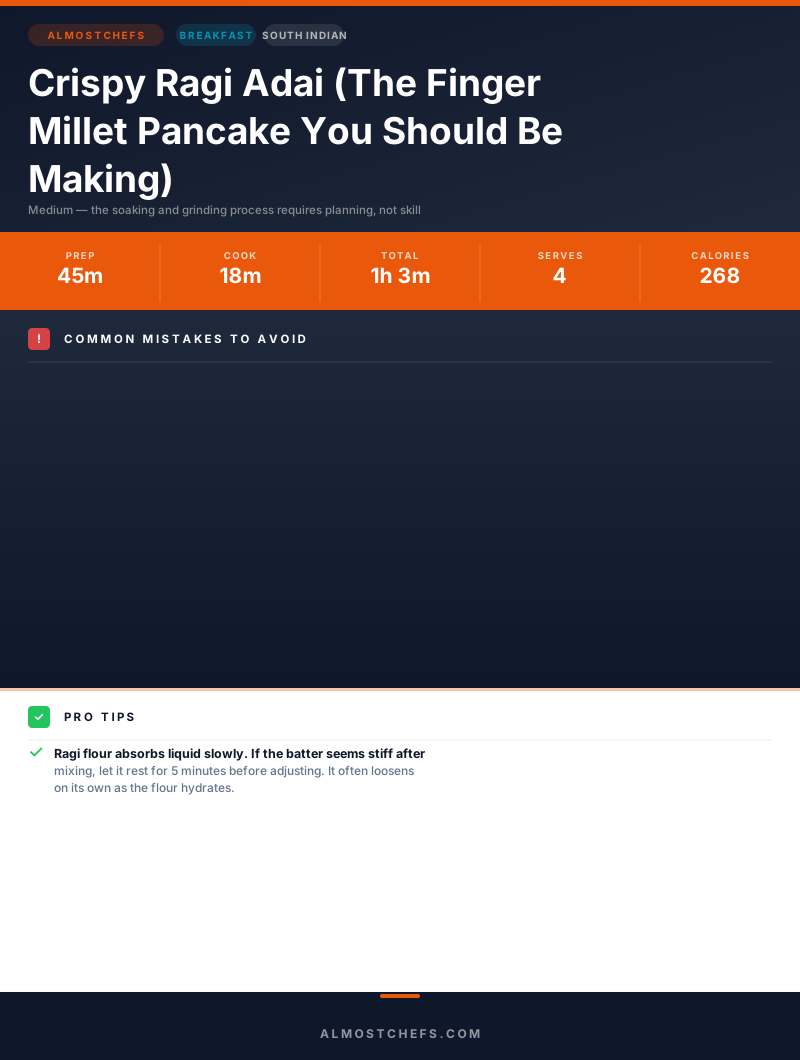
We turned everything on this page into a beautiful, flour-proof PDF cheat sheet. Print it out, stick it to your fridge, and never mess up your crispy ragi adai (the finger millet pancake you should be making) again.
*We'll email you the high-res PDF instantly. No spam, just perfectly cooked meals.
AlmostChefs Editorial Team
We translate the internet's most popular cooking videos into foolproof, beginner-friendly written recipes. We analyze multiple methods, test them in our kitchen, and engineer a single "Master Recipe" that gives you the best possible result with the least possible stress.