Low and Slow Pulled Pork (The Slow Cooker Method That Actually Works)
A bone-in pork shoulder braised low and slow with apple cider vinegar, smoky spices, and a tangy barbecue finish. We broke down every step — from scoring the fat cap to the final shred — to give you restaurant-quality pulled pork without a smoker, a pit, or an eight-hour babysitting shift.
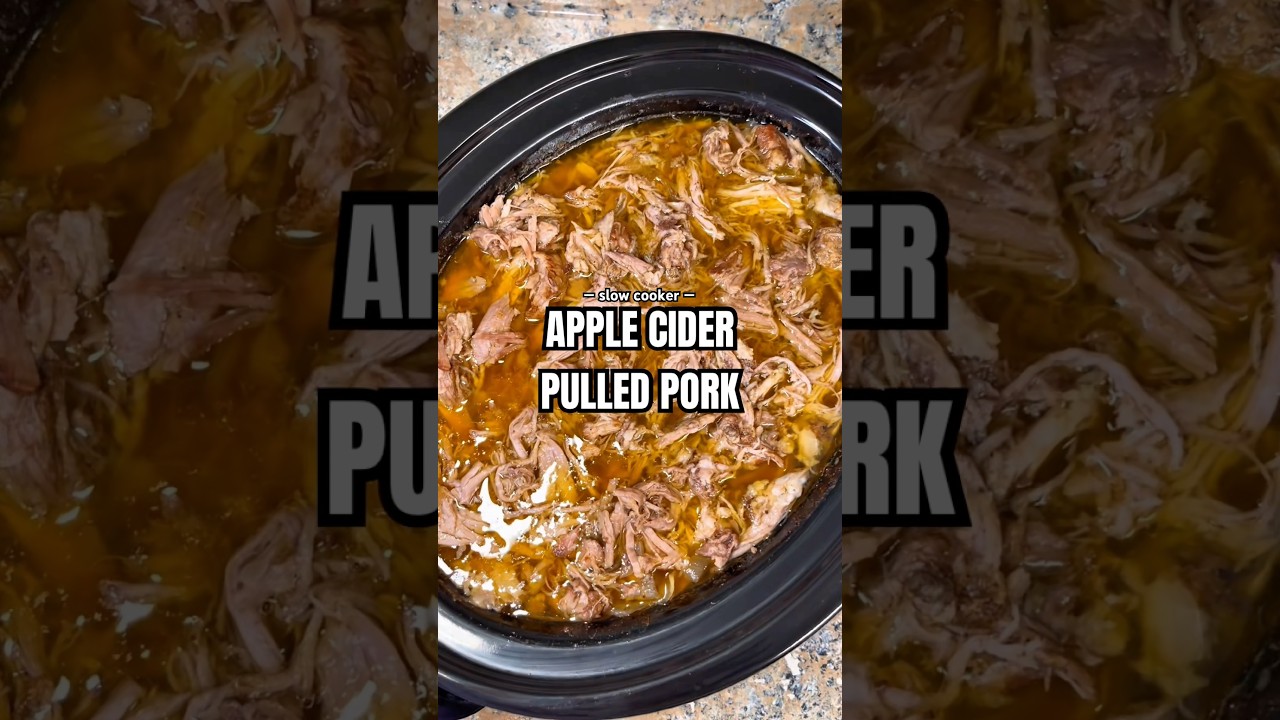
“Pulled pork has exactly one enemy: impatience. Every shortcut — higher heat, shorter time, skipping the rest — costs you in texture. The slow cooker version wins not because it's faster, but because it's more forgiving than a smoker and produces better results than an oven at the temperature range most people use. The apple cider vinegar does the work of smoke: cutting through the fat, brightening the sauce, and making the whole thing taste like something you'd pay too much for at a barbecue restaurant.”
Why This Recipe Works
Pulled pork is the most democratic dish in American barbecue. No special equipment. No thermodynamics degree. No wood-burning offset smoker that costs more than a used car. What it requires is one piece of ugly, affordable meat and time — which is exactly what a slow cooker was engineered to provide.
The Cut Is the Recipe
Pork shoulder — specifically the Boston butt, cut from the upper shoulder — is roughly 30% fat and connective tissue by weight. This is not a flaw. This is the entire point. That connective tissue is collagen, and at sustained temperatures between 190°F and 205°F over many hours, collagen breaks down into gelatin: a rich, silky protein that coats every strand of meat and gives pulled pork its characteristic texture. You cannot achieve this with a leaner cut. Pork loin will shred, technically, but it will be dry and stringy — the texture of meat that was cooked past its window without the fat and collagen to sustain it.
The bone-in shoulder adds two additional advantages. The bone conducts heat into the center of the cut, shortening the time the densest portion spends below 190°F. And the marrow releases into the braising liquid, adding depth to the cooking liquid you'll use to sauce the finished meat. A boneless shoulder is a fine substitute. It is not an improvement.
Dry Rub Timing Is Not Optional
The salt in a dry rub doesn't season the surface — it migrates. In the first hour, salt draws moisture out of the meat through osmosis. By hour two, that moisture has dissolved the dry spices and been pulled back in, carrying the seasoning with it. Apply the rub ten minutes before cooking and you get flavored surface crust. Apply it the night before and you get pork that tastes seasoned all the way through.
This is why overnight refrigeration — uncovered — is the correct move. The surface dries slightly in the open air of the refrigerator, which forms a better bark during cooking and means the braising liquid doesn't immediately wash the seasoning off.
The Apple Cider Vinegar Does What Smoke Can't
Most slow cooker pulled pork recipes taste flat next to the smoked version. The difference is complexity and acid. Smoke adds hundreds of flavor compounds that you simply cannot replicate indoors. What you can replicate is the acid-fat balance that makes barbecue craveable instead of just rich.
Apple cider vinegar — 1.5 cups of it — provides brightness that cuts through the rendered pork fat and makes the whole dish feel lighter than its calorie count suggests. The Worcestershire sauce adds fermented umami depth. The mustard emulsifies the braising liquid slightly, preventing the fat and water from completely separating. Together, they build a braising environment that produces complexity without smoke, in a slow cooker rather than a pit.
The 203°F Target Is Not Arbitrary
Food safety says pork is done at 145°F. Food quality says something different entirely. At 145°F, the muscle fibers are cooked but the collagen is still structural — meaning the meat is technically safe to eat but will not shred. At 180°F, you can pull it apart with effort. At 203°F, the meat almost shreds itself. The instant-read thermometer is the only tool in this recipe that is genuinely non-negotiable.
The 7-8 hour timeline is a starting point, not a guarantee. Bone-in shoulders vary in density. Slow cookers vary in wattage. A cold piece of meat pulled directly from the refrigerator takes longer to come up to temperature than one that's been resting at room temp. Check at 7 hours. Trust the thermometer over the clock.
The Finishing Equation
The reserved cooking liquid is the most undervalued component of this recipe. After 8 hours, it contains rendered pork fat, dissolved gelatin, concentrated vinegar, and every spice that migrated off the surface during cooking. Strained and added back to the shredded meat alongside the barbecue sauce, it does something commercial sauce cannot: it makes the meat taste like itself.
Use 1 cup of strained liquid. Add your barbecue sauce. Stir gently — you want variation in the texture, not uniformity. The crispy, slightly charred bits from the fat cap should stay distinct from the tender interior strands. That contrast between textures is what separates good pulled pork from great pulled pork.
Everything else — the toppings, the bread, the sides — is personal preference. The pork does the work.
Where Beginners Mess This Up
Before we start, read this. These are the 4 reasons your low and slow pulled pork (the slow cooker method that actually works) will fail:
- 1
Cooking on high heat to save time: Pork shoulder contains dense connective tissue — primarily collagen — that only converts to gelatin at sustained temperatures between 190°F and 205°F over a long period. High heat gets the meat to temperature faster but doesn't give the collagen time to break down. The result is meat that's technically cooked but not truly tender. Low and slow is the only path to the pull.
- 2
Skipping the dry rub rest: A dry rub applied five minutes before cooking is decoration. The salt needs at least one hour — preferably overnight — to draw moisture to the surface and then pull it back in, carrying the spices with it into the meat. Rub it the night before. Refrigerate uncovered. Let it work.
- 3
Pouring the liquid over the meat instead of around it: The fat cap needs to stay dry enough to render properly during cooking. If you drench the top of the pork in liquid, you steam the fat instead of rendering it — and you lose the bark that forms on the surface. Pour the vinegar mixture around the sides of the meat, not on top.
- 4
Skipping the rest before shredding: Shredding immediately after cooking squeezes out the juices the meat spent eight hours absorbing. A 15-20 minute rest lets the muscle fibers reabsorb those juices. Skip it and your pulled pork is dry the moment it hits the board.
The Video Reference Library
Want to see it in action? Here are the exact videos we analyzed and combined to build this foolproof recipe translation:
The source video for this method. Covers the dry rub technique, proper liquid placement, and how to read doneness without guessing.
🛠️ Core Equipment
- 6-quart or larger slow cookerAn 8-10 pound bone-in shoulder is a large cut. A 4-quart cooker forces the meat to sit in its own liquid from the start, which steams instead of braises and washes off the dry rub. You need room for the meat to sit above the liquid.
- Instant-read meat thermometerTime is a guideline. Internal temperature is the truth. You want 203°F at the thickest point — not 185°F, not 195°F. At 203°F, the collagen is fully converted and the meat shreds with almost no resistance. A thermometer is the only way to know.
- Fine-mesh sieveFor straining the cooking liquid before adding it back to the shredded pork. The strained liquid is concentrated, intensely flavored, and worth every bit as much as the barbecue sauce. Don't discard it.
- Two large forks or bear clawsShredding with forks gives you control over strand length and texture. A stand mixer shreds faster but produces uniform, overly fine strands that lose the texture contrast between the crispy exterior bits and the tender interior.
Low and Slow Pulled Pork (The Slow Cooker Method That Actually Works)
🛒 Ingredients
- ✦1 bone-in pork shoulder (8-10 pounds, preferably with fat cap)
- ✦3 tablespoons brown sugar, packed
- ✦2 tablespoons paprika
- ✦1.5 tablespoons garlic powder
- ✦1.5 tablespoons onion powder
- ✦1.5 tablespoons kosher salt
- ✦1.5 tablespoons freshly cracked black pepper
- ✦0.5 teaspoon cayenne pepper
- ✦1 medium yellow onion, quartered
- ✦1.5 cups unsweetened apple cider vinegar
- ✦0.5 cup low-sodium beef or chicken broth
- ✦3 tablespoons Worcestershire sauce
- ✦2 tablespoons yellow mustard
- ✦1 cup barbecue sauce (preferably lower-sugar variety)
- ✦2 tablespoons apple cider vinegar (for finishing, optional)
👨🍳 Instructions
01Step 1
Score the fat cap of the pork shoulder in a crosshatch pattern, making shallow cuts about 1/4 inch deep.
02Step 2
Combine brown sugar, paprika, garlic powder, onion powder, salt, black pepper, and cayenne pepper in a small bowl. Stir until evenly mixed.
03Step 3
Rub the spice mixture generously over the entire pork shoulder, working it into the scored fat cap and covering all surfaces. Let the rub sit for at least 1 hour at room temperature, or overnight in the refrigerator uncovered.
04Step 4
Place the quartered onion on the bottom of the slow cooker to create a raised bed for the meat.
05Step 5
Whisk together the apple cider vinegar, broth, Worcestershire sauce, and mustard in a measuring cup until combined.
06Step 6
Set the seasoned pork shoulder onto the onions, fat-side up. Pour the vinegar mixture around the sides of the meat, not over the top.
07Step 7
Cover and cook on LOW for 7-8 hours, until the internal temperature reaches 203°F at the thickest part of the meat.
08Step 8
Carefully transfer the pork to a large cutting board. Reserve all cooking liquid in the slow cooker. Rest the meat uncovered for 15-20 minutes.
09Step 9
Remove and discard the bone. Use two forks to shred the pork against the grain, working in sections.
10Step 10
Strain the reserved cooking liquid through a fine-mesh sieve into a measuring cup. Discard the onions and solids. Skim excess fat from the surface if desired.
11Step 11
Return the shredded pork to the slow cooker. Add 1 cup of the strained cooking liquid and the barbecue sauce. Stir gently to combine.
12Step 12
Taste and adjust with additional salt, pepper, or finishing vinegar as needed.
13Step 13
Keep warm on LOW for up to 2 hours before serving, adding reserved cooking liquid as needed if the pork dries out.
Nutrition Per Serving
Estimates based on standard preparation. Adjustments alter macros.
🔄 Substitutions
Instead of Brown sugar in dry rub...
Use Coconut sugar or maple sugar (same amount)
Slightly different caramel notes but maintains sweetness and surface caramelization. Lower glycemic index if that's a concern.
Instead of Standard barbecue sauce...
Use Sugar-free or low-sugar barbecue sauce, or homemade tomato-based sauce with smoked paprika and vinegar
Reduces added sugar significantly. A homemade version gives you complete control over sweetness and smoke level.
Instead of Pork shoulder...
Use Pork butt roast
Pork butt is actually cut from the upper shoulder — the names are interchangeable in most markets. Either works identically here.
Instead of Yellow mustard...
Use Spicy brown mustard or whole grain mustard
More pronounced mustard flavor that sharpens the tangy profile of the braising liquid. Use the same amount.
🧊 Storage & Reheating
In the Fridge
Store in an airtight container with some of the cooking liquid for up to 4 days. The liquid keeps the meat from drying out and the flavors continue to develop.
In the Freezer
Freeze in portioned containers with cooking liquid for up to 3 months. Thaw overnight in the refrigerator.
Reheating Rules
Reheat in a covered skillet or saucepan over low heat with a splash of reserved cooking liquid or broth. Stir occasionally. Microwave works in a pinch but dries out the meat quickly — cover with a damp paper towel and use 50% power.
❓ Frequently Asked Questions
Can I cook this on HIGH to save time?
Technically yes, but the result won't be the same. High heat gets the pork to 203°F faster, but the collagen hasn't had enough time at temperature to fully convert to gelatin. You'll get meat that shreds but lacks the silky, tender quality of the low-and-slow version. If you're in a rush, 4-5 hours on HIGH is your fallback — just know it's a compromise.
Why bone-in instead of boneless?
The bone conducts heat into the center of the meat and releases gelatin and marrow into the braising liquid over the long cook. Boneless shoulder works fine but produces a slightly less rich cooking liquid and can dry out more easily without the bone as a heat conductor. Bone-in is worth the effort.
How do I know it's done without a thermometer?
The bone should wiggle freely and nearly pull out on its own. The meat should show visible tearing along the muscle seams when you press it with a fork. That said, buy a thermometer — they're inexpensive and remove all guesswork from any large cut of meat.
My pulled pork is dry. What happened?
Either the cook time was too short (not enough collagen conversion), the heat was too high (moisture cooked off faster than collagen could replace it), or you didn't add enough of the reserved cooking liquid back in. Fix it by adding warm cooking liquid or broth, a tablespoon at a time, while stirring gently over low heat.
What's the best way to serve pulled pork besides sandwiches?
Over white rice with pickled red onions and a drizzle of hot sauce. On top of baked potatoes with coleslaw. In tacos with a quick cabbage slaw and lime. Tossed into a grain bowl with roasted sweet potatoes. The meat is seasoned to work with almost anything — it doesn't need to live in a bun.
Can I make this ahead of time for a party?
Pulled pork is arguably better made ahead. Cook it the day before, refrigerate in the cooking liquid, and reheat gently on the stovetop or in the slow cooker on LOW the next day. The overnight rest lets the flavors integrate fully. Serve with extra cooking liquid warmed on the side.

The Science of
Low and Slow Pulled Pork (The Slow Cooker Method That Actually Works)
We turned everything on this page into a beautiful, flour-proof PDF cheat sheet. Print it out, stick it to your fridge, and never mess up your low and slow pulled pork (the slow cooker method that actually works) again.
*We'll email you the high-res PDF instantly. No spam, just perfectly cooked meals.
AlmostChefs Editorial Team
We translate the internet's most popular cooking videos into foolproof, beginner-friendly written recipes. We analyze multiple methods, test them in our kitchen, and engineer a single "Master Recipe" that gives you the best possible result with the least possible stress.