High-Protein Waffles That Actually Keep You Full (38g Per Serving)
Greek yogurt, cottage cheese, and eggs work together to pack 38g of protein into every serving of these waffles. Fluffy outside, crisp inside, and built for meal prep — they freeze perfectly and reheat in minutes.

“Classic waffles are a 240-calorie sugar delivery system that leaves you hungry by 10am. These are not those waffles. Three protein sources — Greek yogurt, cottage cheese, and eggs — fuse into a batter that cooks up golden and crisp, holds together on the iron, and delivers 38 grams of protein per serving. This is meal-prep breakfast that doesn't taste like a compromise.”
Why This Recipe Works
The problem with high-protein breakfast recipes is that most of them treat protein as an additive rather than an architectural element. You take a regular waffle recipe, stir in a scoop of protein powder, and wonder why the result is dry, rubbery, and vaguely chalky. That approach fails because protein powder isn't flour — it behaves completely differently under heat, absorbing moisture aggressively and tightening protein bonds into rubber if you're not careful.
This recipe builds the protein into the structure itself, using three sources that each serve a distinct function.
Three Proteins, One System
Greek yogurt provides the liquid base and lactic acid that activates the baking soda. It also contributes tangy flavor that masks the chalky aftertaste of protein powder — a problem that ruins most "healthy" waffle recipes. At roughly 17g of protein per cup, it does serious structural work without any textural cost.
Cottage cheese is the secret. Blended smooth, it becomes a thick, creamy liquid with a fat-protein ratio that behaves remarkably like butter in a waffle batter. It keeps the interior moist during the long iron cook time while the exterior crisps. The curds are the only obstacle — and a blender eliminates them in 30 seconds. Skipping the blender is the single most common reason these waffles fail.
Eggs bind everything. Three whole eggs add 18g of protein and provide the albumin network that holds the waffle together structurally. They're also why the batter is thick enough to sit on the iron without running out the sides.
Together, these three sources hit 38g per serving before you add any toppings. Almond butter on top pushes it past 40g. That is a significant percentage of most people's daily protein target in a single breakfast.
The Dry Ingredient Balance
Rolled oats and almond flour replace all-purpose flour for two reasons. Oats provide structure and fiber that slows glucose absorption — the blood sugar score on this recipe is 9/10 partly because of this substitution. Almond flour adds fat that keeps the interior tender and prevents the protein from overdrying during the cook.
The leavening ratio matters more than it does in standard waffle recipes. Protein-heavy batters are denser and need more lift. One teaspoon of baking powder plus half a teaspoon of baking soda is the combination that produces reliable rise — but only if you don't over-mix after combining wet and dry. Baking soda activates on contact with the acidic yogurt. Every unnecessary stir releases more of that gas before the batter hits the waffle iron. Twenty strokes is the limit.
The Iron Temperature Problem
A waffle iron set to medium-high creates an immediate surface seal on contact, locking steam inside and producing the crisp exterior that standard protein waffles never achieve. A cool iron lets the batter sit and steam, producing a pale, soft waffle with the texture of a wet sponge.
This is why the preheat step is non-negotiable. The iron should be hot enough that ghee dropped on the surface sizzles and browns within 10 seconds. If it just sits there melting, give it another minute.
The other critical variable is patience. Every protein waffle recipe on the internet tells you to wait until steam stops escaping before you open the lid. Every home cook ignores this advice and opens it at the 2-minute mark. The result is a waffle that tears cleanly in half — top plate takes one side, bottom plate takes the other. Steam escaping means the interior is still setting. Once the steam slows to a trickle, the protein network has solidified enough to hold its shape. Four to five minutes is the target. Set a timer and walk away.
Meal Prep Value
These waffles exist to solve the mid-morning crash. Batch four servings on Sunday, cool them on a wire rack, freeze in stacks with parchment between layers, and reheat in a toaster straight from frozen for 2-3 minutes. The toaster restores the exterior crispiness that a microwave destroys. You have a 38g protein breakfast in less time than it takes to make coffee.
That's the actual value proposition here. Not novelty. Not virtue signaling about macros. Just a genuinely good waffle that keeps you functional until lunch.
Where Beginners Mess This Up
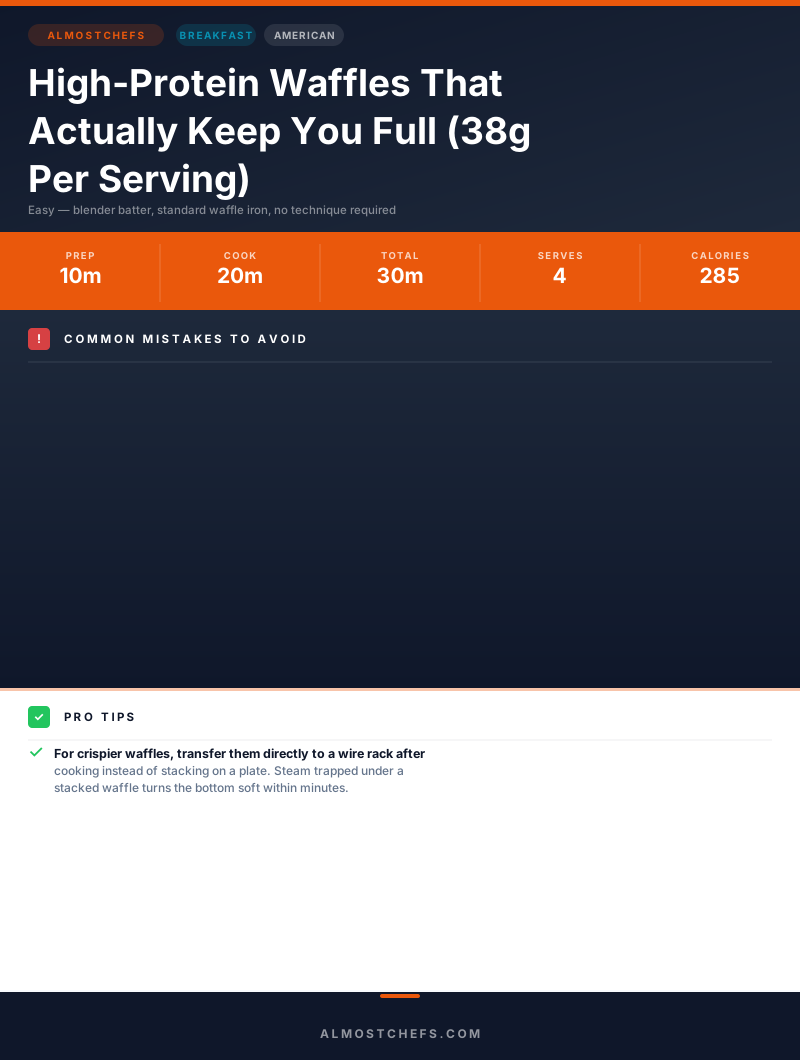
Before we start, read this. These are the 4 reasons your high-protein waffles that actually keep you full (38g per serving) will fail:
- 1
Opening the waffle iron too early: Protein-rich batters need the full 4-5 minutes to set. Pull the lid before steam stops escaping and the waffle tears in half — half stuck to the top plate, half to the bottom. Wait until steam slows to a trickle before you even think about opening it.
- 2
Skipping the blender for the wet ingredients: Cottage cheese has visible curds that don't vanish on their own. If you mix by hand, you get lumpy batter that produces uneven texture throughout the waffle. Thirty seconds in a blender gives you a smooth, homogenous base that cooks uniformly.
- 3
Over-mixing the batter after adding dry ingredients: Baking powder and baking soda need to stay active until the batter hits the hot iron. Over-stirring develops gluten from the oat flour and deflates the leavening gases — the result is a dense, flat waffle that chews like a hockey puck. Twenty strokes, no more.
- 4
Under-heating the waffle iron: A properly preheated iron creates an immediate crust on contact, locking in moisture and producing the crisp exterior. A lukewarm iron steams the batter instead of crisping it, giving you a pale, soft waffle with no structural integrity.
The Video Reference Library
Want to see it in action? Here are the exact videos we analyzed and combined to build this foolproof recipe translation:
The source video for this recipe. Covers the blending technique, batter consistency check, and how to tell when the waffle is done without opening the iron early.
🛠️ Core Equipment
- BlenderEssential for breaking down the cottage cheese curds into a smooth, uniform batter. No other tool does this efficiently — a whisk leaves lumps that create uneven texture in the finished waffle.
- Waffle ironA [waffle iron](/kitchen-gear/review/waffle-iron) with good heat retention and nonstick plates is the entire game here. Cheap irons with inconsistent heat produce patchy browning. A heavy Belgian-style plate gives even color across the full surface.
- Mixing bowl and spatulaThe dry ingredients need to be whisked separately before folding into the wet mix. Folding — not stirring — is what keeps the batter airy. A flexible silicone spatula gives you control over each stroke.
- Measuring cupsProtein powder behaves differently by brand — density varies significantly. Weight-based measuring removes the guesswork, but if you're using cups, spoon the powder in rather than scooping directly to avoid packing.
High-Protein Waffles That Actually Keep You Full (38g Per Serving)
🛒 Ingredients
- ✦1 cup nonfat Greek yogurt, plain
- ✦1 cup low-fat cottage cheese
- ✦3 large eggs
- ✦1/3 cup vanilla protein powder (whey or plant-based)
- ✦1/2 cup rolled oats, finely ground
- ✦1/4 cup almond flour
- ✦2 tablespoons honey or maple syrup
- ✦1 teaspoon vanilla extract
- ✦1/2 teaspoon cinnamon
- ✦1/4 teaspoon sea salt
- ✦1 teaspoon baking powder
- ✦1/2 teaspoon baking soda
- ✦Nonstick cooking spray or ghee for the waffle iron
- ✦Optional toppings: fresh berries, almond butter, Greek yogurt
👨🍳 Instructions
01Step 1
Combine the Greek yogurt and cottage cheese in a blender and pulse until smooth with no visible curds, about 30 seconds.
02Step 2
Add the eggs, vanilla protein powder, vanilla extract, and honey to the blender. Blend on medium speed until fully incorporated and uniform, about 45 seconds.
03Step 3
In a separate bowl, whisk together the ground oats, almond flour, cinnamon, sea salt, baking powder, and baking soda until evenly distributed.
04Step 4
Pour the wet mixture into the bowl with the dry ingredients. Fold gently with a spatula until just combined, about 20 strokes. The batter should be thick but pourable.
05Step 5
Preheat your waffle iron on medium-high heat and coat the plates with nonstick spray or brush with melted ghee.
06Step 6
Pour approximately 1/3 cup of batter into the center of the iron and close the lid gently.
07Step 7
Cook until golden brown and crispy, about 4-5 minutes. Do not open the lid until steam has nearly stopped escaping.
08Step 8
Transfer to a plate and repeat with remaining batter, recoating the iron between each batch.
09Step 9
Serve warm with fresh berries, a spoonful of almond butter, or a dollop of Greek yogurt.
Nutrition Per Serving
Estimates based on standard preparation. Adjustments alter macros.
🔄 Substitutions
Instead of Vanilla protein powder...
Use Unflavored collagen peptides or plant-based vanilla protein
Collagen adds protein without sweetness, giving you more flavor control. Plant-based protein works for vegan diets but may make the batter slightly denser — add 1-2 tablespoons extra liquid to compensate.
Instead of Rolled oats...
Use Allulose-sweetened oat flour or additional almond flour
Waffles become denser but significantly more keto-friendly. Blood sugar impact drops considerably. Almond flour alone produces a richer, slightly more eggy waffle.
Instead of Low-fat cottage cheese...
Use Casein protein powder mixed with a splash of unsweetened almond milk
Increases protein to approximately 42g per serving. Slightly less moist result — the cottage cheese contributes significant moisture to the batter, so compensate with an extra tablespoon of yogurt.
Instead of Honey or maple syrup...
Use Monk fruit sweetener or erythritol (1-2 tablespoons)
Carbs drop from 18g to approximately 10g per serving. Zero glycemic impact. Taste remains sweet — erythritol has a very slight cooling aftertaste that most people don't notice in a hot waffle.
🧊 Storage & Reheating
In the Fridge
Store cooled waffles in an airtight container for up to 4 days. Layer with parchment paper to prevent sticking.
In the Freezer
Freeze in a zip-lock bag with parchment between layers for up to 3 months. No pre-thawing required.
Reheating Rules
Toast directly from frozen at medium heat for 2-3 minutes. The toaster restores the exterior crispiness that microwave reheating destroys. If using a microwave, 60 seconds works but the exterior goes soft.
❓ Frequently Asked Questions
Why do my protein waffles stick to the iron?
Two causes: the iron isn't hot enough before you add batter, or you're not using enough fat on the plates. Protein-rich batters bond to metal more aggressively than standard flour-based batters. Preheat fully, coat generously with ghee or nonstick spray, and don't open the lid until steam has nearly stopped — that's when the surface has set enough to release cleanly.
Can I make these without a blender?
Technically yes, but the cottage cheese curds won't fully incorporate. You'll end up with visible white lumps throughout the waffle that cook unevenly. If you don't have a blender, use a food processor or immersion blender. A whisk alone isn't sufficient.
Why do my waffles come out dense instead of fluffy?
Over-mixing is the most likely culprit — the baking powder and baking soda lose their lift when the batter is worked too aggressively. Second possibility: your leavening is expired. Baking powder loses potency after 6-12 months. Test it by dropping a teaspoon into hot water — if it doesn't bubble vigorously, replace it.
Can I use full-fat Greek yogurt or cottage cheese?
Yes. Full-fat versions produce a richer, slightly denser waffle. The protein content drops marginally but the fat content increases, which actually improves satiety. The batter may be slightly thicker — thin with a tablespoon of water if needed.
How do I get the exterior actually crispy, not just cooked?
Three factors: high heat on the iron, ghee instead of spray (butter solids brown, spray oils don't), and cooling on a wire rack immediately after cooking. Stacking hot waffles traps steam that softens the exterior within 2 minutes of coming off the iron.
Are these waffles good for post-workout?
Yes — the 38g protein profile combined with 18g of complex carbs hits the optimal post-workout window ratio for muscle protein synthesis. The carbs replenish glycogen; the protein (particularly the whey if you use whey protein powder) drives recovery. Add a banana on the side to push the carb content higher for endurance training recovery.
The Science of
High-Protein Waffles That Actually Keep You Full (38g Per Serving)
We turned everything on this page into a beautiful, flour-proof PDF cheat sheet. Print it out, stick it to your fridge, and never mess up your high-protein waffles that actually keep you full (38g per serving) again.
*We'll email you the high-res PDF instantly. No spam, just perfectly cooked meals.
AlmostChefs Editorial Team
We translate the internet's most popular cooking videos into foolproof, beginner-friendly written recipes. We analyze multiple methods, test them in our kitchen, and engineer a single "Master Recipe" that gives you the best possible result with the least possible stress.