38g Protein Smoothie Bowl (The Breakfast That Actually Keeps You Full)
A thick, spoonable smoothie base loaded with Greek yogurt, cottage cheese, and whey protein that delivers 38g of protein per serving. We engineered the texture so it holds its shape like soft-serve, topped with granola, berries, and almonds for a breakfast that tastes like dessert and performs like a pre-workout meal.
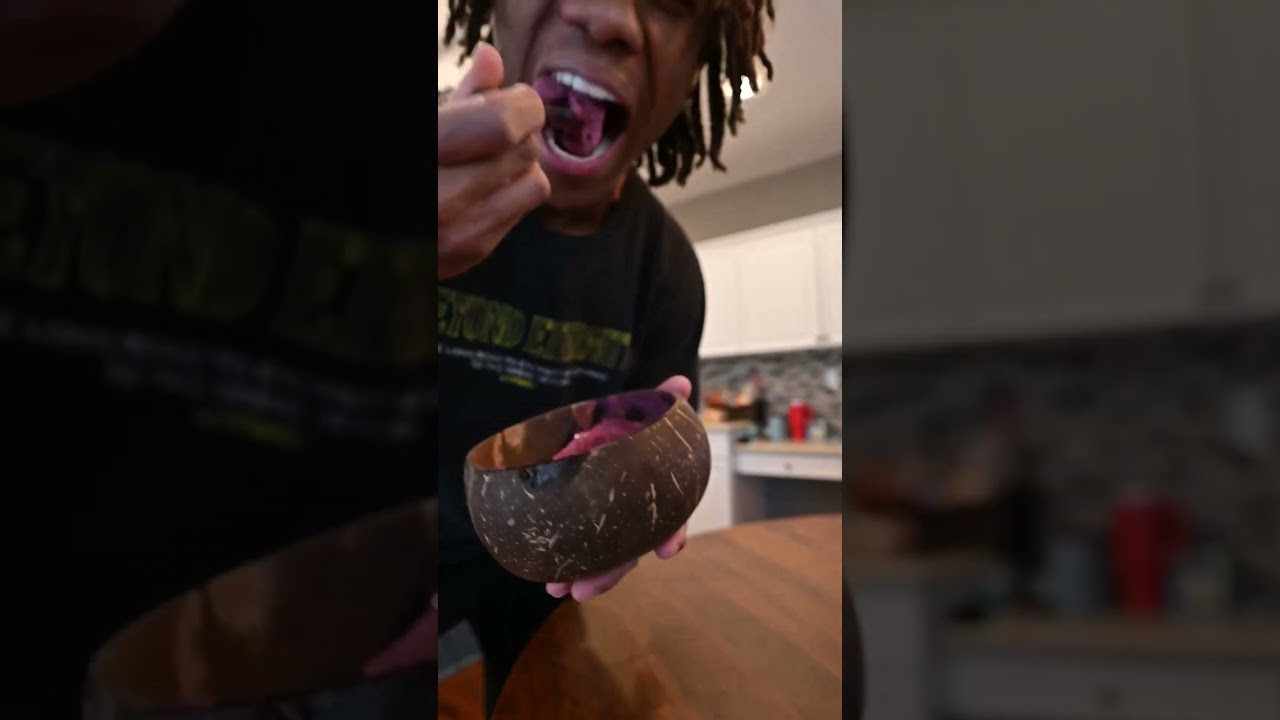
“Most smoothie bowls are dessert cosplaying as breakfast — 18g of protein and 50g of sugar dressed up with acai and granola to look responsible. This one is different. By stacking Greek yogurt, cottage cheese, and a full scoop of whey, we hit 38g of protein in a single bowl without sacrificing the thick, cold, ice-cream-adjacent texture that makes a smoothie bowl worth eating. If your current breakfast has you hungry by 10am, this is why.”
Why This Recipe Works
A smoothie bowl has two jobs: taste like a treat and perform like a meal. Most fail at the second one. The typical acai bowl at a juice bar delivers 20g of sugar and 10g of protein wrapped in enough Instagram aesthetics to make you feel healthy by association. By 10:30am you're staring at the office vending machine.
This bowl is engineered differently.
The Triple Protein Stack
The base uses three distinct protein sources — Greek yogurt, cottage cheese, and whey protein powder — not because more is always better, but because each one contributes something the others can't. Greek yogurt provides lactic acid that brightens the flavor and a thick, tangy base. Cottage cheese adds casein protein, which digests slowly and extends satiety well past the meal. Whey protein rounds out the amino acid profile and gives you the fast-absorbing leucine that signals muscle protein synthesis.
Stack all three and you hit 38g without any one ingredient becoming the dominant flavor. This is the difference between a protein smoothie bowl and a protein-powder bowl with some fruit in it.
Texture Is Architecture
The reason smoothie bowls fail structurally isn't the ingredients — it's the liquid ratio. People apply the same liquid volume they'd use for a drinkable smoothie and wonder why their toppings sink. A pourable smoothie and a spoonable smoothie bowl are fundamentally different products. Half the liquid, twice the frozen fruit, and a high-powered blender that generates enough friction to smooth cottage cheese curds into a uniform base.
The ice cubes are not optional. They drop the temperature of the yogurt and dairy below where they start to loosen, which keeps the base stiff for longer after transfer. A warm-environment base — or one made with room-temperature ingredients — starts softening immediately and reaches soup consistency before you've eaten a third of it.
Topping Zones Are Not Aesthetic
Every recipe photo with pristine topping sections looks like a food stylist spent 20 minutes arranging it. There's a functional reason behind the arrangement that survives contact with actual eating. When you section the toppings, each spoonful travels through a different textural layer — crispy granola, soft berry, crunchy almond — before hitting the cold, creamy base. Random piling produces monotonous bites where the texture is either all crunch or all smoothness.
The flaxseed scattered across the top is the easiest nutritional upgrade in breakfast cooking. One tablespoon adds 2g of fiber, 1.8g of omega-3 fatty acids, and a measurable dose of lignans with no discernible flavor impact. It disappears into the bowl completely. Use a flexible spatula to get every gram of base out of the blender — at 38g of protein per serving, leaving a third of the base stuck to the jar means you built a $12 breakfast and left $4 of it in the sink.
Why This Beats a Protein Shake
The satiety research on solid versus liquid meals is consistent: the same macronutrients consumed in solid form produce longer-lasting fullness than the same macronutrients in liquid form, because chewing triggers cephalic phase digestive responses that blended drinks don't. A smoothie bowl occupies the middle ground — the base is technically blended, but the toppings require real chewing. That chewing matters. It signals your digestive system that a meal is happening, not just a supplement.
Meal prep this for the week: blend five bases on Sunday, freeze them in individual containers, pull one the night before, and add fresh toppings in the morning. Eight minutes of active work on one day covers five breakfasts. That's the actual value proposition — not that it looks good, but that it removes the decision entirely.
Where Beginners Mess This Up
Before we start, read this. These are the 4 reasons your 38g protein smoothie bowl (the breakfast that actually keeps you full) will fail:
- 1
Using too much liquid: The number one smoothie bowl failure is a base that's too thin to hold toppings. Smoothie bowls require half the liquid of a drinkable smoothie. Start with 1/2 cup almond milk maximum. If your base runs to the edges of the bowl like soup, you added too much. The correct texture is thick enough that a spoon dragged through it leaves a clean trail.
- 2
Blending at the wrong order: Protein powder clumps when it hits liquid directly without a buffer. Always add yogurt and cottage cheese first, then powder, then liquid. The thick dairy acts as a binder and prevents the powder from balling up into chalky pockets at the bottom of the blender.
- 3
Using room-temperature fruit: Frozen fruit is structural. It thickens the base, chills the bowl, and helps the mixture hold its shape after transfer. Fresh or thawed berries make a thinner base that softens the granola within minutes. Use fruit straight from the freezer — every time.
- 4
Dumping all toppings at once: Presentation aside, randomly piled toppings create uneven bites where one spoonful is all granola and the next is all plain base. Arrange toppings in distinct zones — granola on one side, berries in the middle, nuts and seeds spread across. Every bite should have some of everything.
The Video Reference Library
Want to see it in action? Here are the exact videos we analyzed and combined to build this foolproof recipe translation:
The source video for this recipe — covers the blending technique and protein stacking method that makes this bowl genuinely filling rather than Instagram bait.
🛠️ Core Equipment
- High-powered blenderFrozen fruit and cottage cheese require real torque to blend smooth. A weak blender leaves chunky curds and uneven texture. A [high-powered blender](/kitchen-gear/review/high-powered-blender) with at least 1000 watts handles frozen ingredients without stalling.
- Wide, shallow bowlDepth is the enemy of smoothie bowls. A deep bowl concentrates toppings in the center and makes even distribution impossible. A wide, shallow bowl gives you surface area to create distinct topping zones.
- Flexible spatulaThe base clings to the blender jar. A silicone spatula is the only tool that extracts every gram without losing half your breakfast to the sides of the blender.
38g Protein Smoothie Bowl (The Breakfast That Actually Keeps You Full)
🛒 Ingredients
- ✦1 cup plain nonfat Greek yogurt
- ✦1/2 cup low-fat cottage cheese
- ✦1 scoop vanilla whey protein powder (25g protein)
- ✦1/2 cup unsweetened almond milk
- ✦1/2 frozen banana
- ✦1/2 cup frozen mixed berries
- ✦1 tablespoon natural almond butter
- ✦1/2 teaspoon vanilla extract
- ✦1/4 cup high-protein granola (at least 8g protein per serving)
- ✦1/4 cup sliced fresh strawberries
- ✦2 tablespoons raw almonds, chopped
- ✦1 tablespoon ground flaxseed
- ✦1/2 tablespoon raw honey
- ✦2-3 ice cubes
👨🍳 Instructions
01Step 1
Add the Greek yogurt and cottage cheese to the blender first, followed by the protein powder.
02Step 2
Pour in the almond milk, then add the frozen banana, frozen mixed berries, almond butter, vanilla extract, and ice cubes.
03Step 3
Blend on high for 45-60 seconds, stopping halfway to scrape down the sides. Blend until the mixture is completely smooth and thick enough to hold its shape when spooned.
04Step 4
Transfer the base into a wide, shallow bowl using a flexible spatula to extract the full portion from the blender.
05Step 5
Arrange the granola in a cluster on one side of the bowl to create a defined topping zone.
06Step 6
Layer the sliced strawberries, chopped almonds, and ground flaxseed in separate sections across the remaining surface.
07Step 7
Drizzle the raw honey over the granola and strawberries.
08Step 8
Serve immediately. Eat by scooping through the toppings and base together so each bite has both texture and creaminess.
Nutrition Per Serving
Estimates based on standard preparation. Adjustments alter macros.
🔄 Substitutions
Instead of Vanilla whey protein powder...
Use Unflavored collagen peptides or plant-based vanilla protein (same amount)
Collagen creates a silkier texture and adds joint-supporting amino acids. Plant-based protein may taste slightly earthier. Both maintain the protein target.
Instead of Low-fat cottage cheese...
Use Silken tofu (1/2 cup) or additional Greek yogurt (bringing total to 1/2 cup)
Silken tofu works for dairy-free needs — slightly thinner base, neutral flavor. Extra yogurt increases creaminess and keeps protein high.
Instead of Natural almond butter...
Use Powdered peanut butter (2 tbsp mixed with 1 tbsp water) or sunflower seed butter
Powdered peanut butter cuts calories while maintaining protein. Sunflower seed butter is the best nut-free alternative — equally smooth with a slightly earthier flavor.
Instead of High-protein granola...
Use 2 tbsp chopped pecans mixed with 2 tbsp plain rolled oats and 1/4 tsp cinnamon
Saves money and gives you full sugar control. Less sweet, more whole-grain texture. Can be prepped in bulk at the start of the week.
🧊 Storage & Reheating
In the Fridge
The blended base stores in an airtight container for up to 24 hours. Stir before eating — some separation is normal. Do not add toppings until ready to serve.
In the Freezer
Freeze the base in individual portions for up to 1 month. Thaw in the fridge for 20 minutes, not on the counter — the goal is thick and cold, not room temperature.
Reheating Rules
This recipe is cold by design. No reheating. If the frozen base is too solid after the fridge thaw, let it sit at room temperature for 5 minutes and stir vigorously.
❓ Frequently Asked Questions
Why is my smoothie bowl too thin?
You used too much liquid. Half a cup of almond milk is the maximum for this ratio of ingredients. Also confirm your fruit was fully frozen, not partially thawed — frozen fruit is what gives the base its thick, soft-serve texture.
Can I make this without protein powder?
Yes, but the protein drops significantly. Without the whey scoop, you're at roughly 25g protein — still solid for a breakfast, but not the 38g target. Compensate by increasing cottage cheese to 3/4 cup.
Does cottage cheese make the base lumpy?
Only if you add it after the liquids. Blend the yogurt and cottage cheese first, before adding anything else. The blades break down the curds immediately when they're the first thing in the jar. Added later, they can remain chunky.
How do I keep the granola from getting soggy?
Two things: eat immediately after assembling, and keep the granola in a separate zone rather than pushing it into the base. Granola sitting on top of the base starts absorbing moisture within about 5 minutes. If you're prepping this the night before, keep the granola in a separate container and add it right before eating.
Is this actually filling or will I be hungry in an hour?
At 38g of protein and 6g of fiber, this bowl is engineered for satiety. Protein and fiber both slow gastric emptying — the rate at which your stomach empties into the small intestine — which is the primary mechanism of fullness duration. A 38g protein breakfast will keep most people satisfied for 4-5 hours.
Can I use fresh berries instead of frozen?
For the base, no — fresh berries don't provide the structural chill that thickens the mixture. For toppings, fresh is better. If you only have fresh berries, spread them on a baking sheet and freeze for 2 hours before blending.
The Science of
38g Protein Smoothie Bowl (The Breakfast That Actually Keeps You Full)
We turned everything on this page into a beautiful, flour-proof PDF cheat sheet. Print it out, stick it to your fridge, and never mess up your 38g protein smoothie bowl (the breakfast that actually keeps you full) again.
*We'll email you the high-res PDF instantly. No spam, just perfectly cooked meals.
AlmostChefs Editorial Team
We translate the internet's most popular cooking videos into foolproof, beginner-friendly written recipes. We analyze multiple methods, test them in our kitchen, and engineer a single "Master Recipe" that gives you the best possible result with the least possible stress.