High-Protein Sprouts Salad (The Weight Loss Lunch That Actually Fills You Up)
A powerhouse Indian sprouts salad combining sprouted mung beans and chickpeas with crisp raw vegetables, tossed in a tangy lemon-chaat masala dressing. No cooking required. Maximum nutrition, maximum crunch, done in 20 minutes.
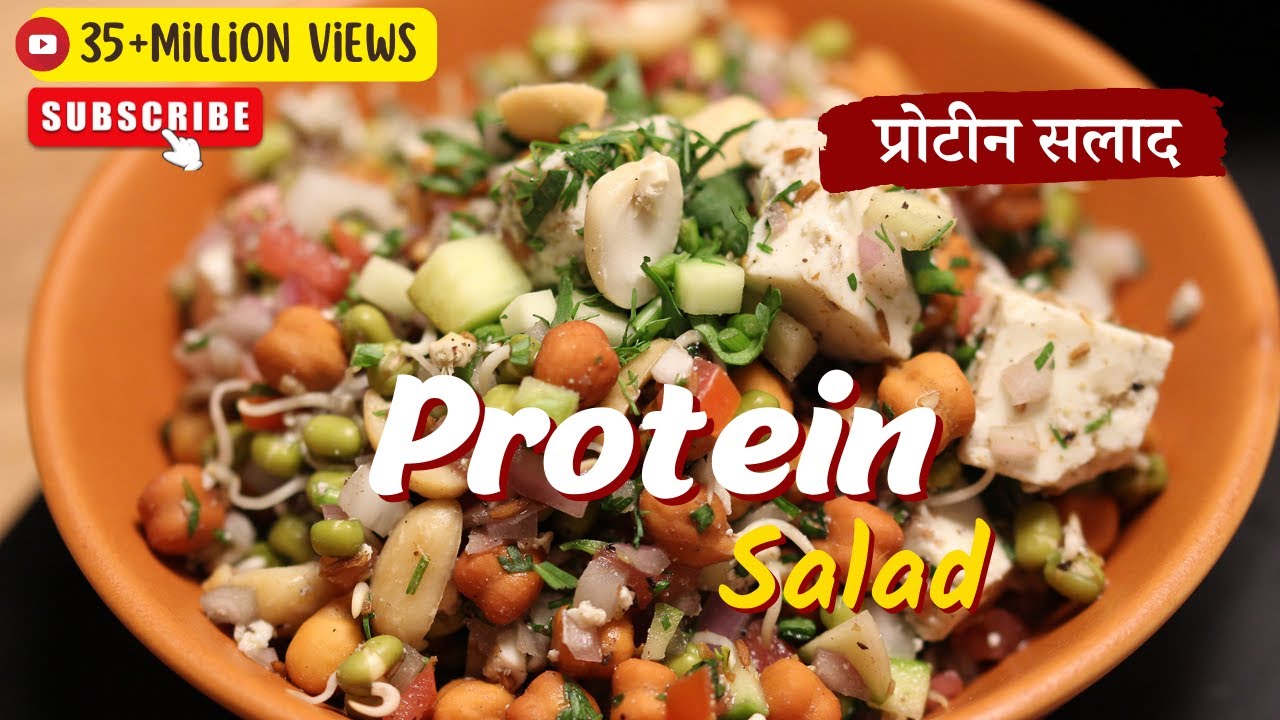
“Most salads fail at one job: keeping you full. They're low-calorie in the useful sense and low-protein in every sense, which means you're hungry again 90 minutes later. This Indian sprouts salad is different. Sprouted mung beans and chickpeas deliver 10 grams of plant protein per serving, fiber that slows digestion, and a chaat masala dressing that makes you actually want to eat it. The secret is in the timing — dressing goes on at the last possible second.”
Why This Recipe Works
Salads fail the fullness test because most of them are water with dressing. Lettuce is 95% water. Cucumber is 96%. Without something structurally different in the bowl — something that actually provides sustained energy — you're eating an expensive glass of liquid that costs you 90 minutes of satiety and then leaves you raiding the snack drawer.
Sprouted legumes solve this problem with unusual efficiency.
What Sprouting Actually Does
When a mung bean or chickpea sprouts, it's in the middle of becoming a plant. That biological process fundamentally changes the seed's nutritional architecture. Phytic acid — the antinutrient that binds to zinc, iron, and magnesium and prevents your body from absorbing them — breaks down by 25-50% during sprouting. Digestive enzyme inhibitors that make raw legumes difficult to process degrade almost entirely. The protein becomes more bioavailable. The fiber structure shifts from a dense, compact form to a more open, fermentable form that your gut microbiome can actually work with.
What this means practically: sprouted mung beans deliver more usable protein per gram than their unsprouted equivalents, with less digestive disruption. The 10 grams of protein in this salad hit differently than 10 grams from a protein bar.
The Chaat Masala Architecture
Chaat masala is one of the more intelligent spice blends in any cuisine. The combination of amchur (dried mango powder), black salt, cumin, and dried ginger creates what food scientists call a complete flavor profile — sour, savory, slightly sulfurous, warming — in a single spoonful. It does in one ingredient what most Western salad dressings do with six.
The lemon juice amplifies the sourness and provides the acidity that makes every other flavor register more sharply. The minimal olive oil doesn't add richness so much as it acts as a carrier — fat-soluble aromatic compounds in the cumin and chaat masala dissolve into the oil and coat every surface in the bowl rather than pooling at the bottom.
The Timing Problem
Most people who make this salad and find it disappointing made it 20 minutes too early. Lemon juice begins breaking down the cell walls of cucumber and tomato immediately on contact. Within 10 minutes of dressing, the vegetables start releasing their internal moisture. Within 20 minutes, you have a puddle. Within an hour, you have the textural equivalent of a mistake.
The rule is simple: dress at the last possible second. If you're meal prepping, keep every component separate until the moment you eat. A sharp chef's knife and a large mixing bowl on the counter take 90 seconds to combine everything. Do it at your desk, at the table, wherever you're eating. The crunch is worth the minor inconvenience.
Why This Works for Weight Loss
The fiber-protein combination in sprouted legumes produces what researchers call a high satiety index — you feel full faster, you feel full longer, and your blood sugar rises more slowly than it would from equivalent calories of processed food. The chaat masala's black salt contains trace minerals. The bell peppers provide vitamin C that enhances iron absorption from the legumes. The mint and cilantro aren't decorative — both contain compounds that support digestion and reduce bloating, which matters when you're eating a high-fiber meal.
This is the kind of lunch that works because every ingredient is doing actual work. Nothing is filler.
Where Beginners Mess This Up
Before we start, read this. These are the 4 reasons your high-protein sprouts salad (the weight loss lunch that actually fills you up) will fail:
- 1
Dressing the salad too early: Lemon juice and olive oil begin breaking down the cell walls of cucumber and tomato the moment they make contact. Dress the salad more than 10 minutes before serving and you get a soggy, watery bowl with zero crunch. Add the dressing immediately before serving — not before. This is the single rule that separates a great sprouts salad from a sad one.
- 2
Using wet vegetables: Tomatoes and cucumbers are mostly water. If you don't pat them dry after washing and actively remove tomato seeds and their surrounding liquid, that water pools at the bottom of the bowl and dilutes the dressing. Dry your vegetables before cutting. Remove tomato seeds. Non-negotiable.
- 3
Skipping the onion rinse: Raw red onion contains sulfur compounds that dominate every other flavor in the bowl. A 30-second rinse under cold water after mincing removes the harshest volatile compounds without losing the crunch and mild pungency that balance the dressing. Skip it and the onion takes over.
- 4
Using stale sprouts: Sprouts are alive. They have a 48-72 hour window of peak crunch and nutrition after sprouting. Beyond that, the texture softens, the flavor turns slightly funky, and their nutritional density drops. If your sprouts smell anything other than clean and fresh, start over.
The Video Reference Library
Want to see it in action? Here are the exact videos we analyzed and combined to build this foolproof recipe translation:
The source video demonstrating the full sprouts salad technique, assembly order, and dressing method.
🛠️ Core Equipment
- Large mixing bowlYou need room to toss without ingredients flying out. A bowl that's too small forces timid mixing and uneven dressing distribution. Go bigger than you think you need.
- Fine-mesh sieveFor rinsing the sprouted legumes thoroughly. Running sprouts under a tap faucet doesn't get into the tangled root mass — a sieve does.
- Sharp chef's knifeUniform quarter-inch dice on cucumber, tomato, and bell pepper isn't just aesthetic. Uniform cut size means uniform texture in every bite. A dull knife crushes vegetables instead of cutting them, releasing moisture prematurely.
- Small whisk or forkProperly emulsifying the lemon juice and olive oil matters. An un-emulsified dressing separates immediately — you get oily bites and then sour bites instead of a cohesive coating.
High-Protein Sprouts Salad (The Weight Loss Lunch That Actually Fills You Up)
🛒 Ingredients
- ✦1 cup sprouted mung beans
- ✦3/4 cup sprouted chickpeas
- ✦1 medium cucumber, diced into small cubes
- ✦2 medium Roma tomatoes, diced, seeds removed
- ✦3/4 cup mixed bell peppers (red, yellow, or orange), diced
- ✦1/3 cup red onion, finely minced
- ✦3 tablespoons fresh lemon juice, freshly squeezed
- ✦1.5 tablespoons extra-virgin olive oil
- ✦3 tablespoons fresh cilantro leaves, chopped
- ✦2 tablespoons fresh mint leaves, finely chopped
- ✦1/2 teaspoon cumin powder, preferably freshly toasted
- ✦1/2 teaspoon chaat masala
- ✦1/4 teaspoon freshly ground black pepper
- ✦Salt to taste
- ✦1/2 cup alfalfa or radish sprouts (optional garnish)
👨🍳 Instructions
01Step 1
Rinse all sprouted legumes thoroughly under cold water using a fine-mesh sieve. Let drain completely. Do this 2-3 hours before assembly if possible, so they're dry by the time you build the salad.
02Step 2
Wash and completely dry the cucumber, tomatoes, and bell peppers before cutting.
03Step 3
Cut the cucumber lengthwise, scrape out seeds with a spoon, then dice into uniform quarter-inch cubes.
04Step 4
Dice the tomatoes, actively removing seeds and surrounding liquid before adding to the bowl.
05Step 5
Mince the red onion into very fine pieces. Rinse briefly under cold water, then pat dry.
06Step 6
Combine the sprouted mung beans and sprouted chickpeas in a large mixing bowl.
07Step 7
Add the cucumber, tomatoes, bell peppers, and minced red onion to the legumes. Stir gently to distribute evenly.
08Step 8
In a small bowl, whisk together the lemon juice, olive oil, cumin powder, chaat masala, and black pepper until fully emulsified.
09Step 9
Pour the dressing over the salad immediately before serving. Toss gently but thoroughly for 1-2 minutes, making sure the dressing coats everything.
10Step 10
Season with salt to taste, remembering that chaat masala already contains salt. Taste before adding more.
11Step 11
Add the chopped cilantro and mint leaves. Toss once more lightly.
12Step 12
Garnish with alfalfa or radish sprouts if using. Serve immediately.
Nutrition Per Serving
Estimates based on standard preparation. Adjustments alter macros.
🔄 Substitutions
Instead of Sprouted mung beans...
Use Sprouted lentils or sprouted peas
Slightly earthier flavor with a marginally different texture. Protein and fiber content remain similar. Sprouted green lentils are the closest match.
Instead of Chaat masala...
Use Amchur powder (dried mango powder) plus extra cumin
Brighter and more tangy. Lower sodium than most commercial chaat masala blends. Use equal parts amchur and cumin, then adjust salt separately.
Instead of Red onion...
Use Scallions (green onions)
Lighter, fresher bite with less digestive sharpness. Use the white and light green parts only. No need to rinse — scallions don't carry the same harsh sulfur punch.
Instead of Fresh lemon juice...
Use Fresh lime juice
Slightly brighter and more floral than lemon. Works perfectly with the chaat masala. Use the same quantity — the acidity levels are comparable.
🧊 Storage & Reheating
In the Fridge
Store undressed components in an airtight container for up to 2 days. Keep the dressing in a separate small jar. Combine only immediately before eating.
In the Freezer
Not suitable for freezing. Sprouts and raw vegetables do not survive the freeze-thaw cycle with any usable texture.
Reheating Rules
This salad is served cold and requires no reheating. If the vegetables have released moisture during storage, drain briefly before dressing and serving.
❓ Frequently Asked Questions
How do I sprout mung beans at home?
Soak 1/2 cup dry mung beans in cold water for 8-12 hours. Drain, transfer to a damp cloth or sprouting jar, and leave in a warm dark spot for 24-48 hours, rinsing twice daily. You'll see small white tails appear within 24 hours. Harvest when the tails are 1/4 to 1/2 inch long for best texture and sweetness.
Is this salad actually filling enough as a main meal?
For most people, yes — primarily because the combination of protein and fiber from the sprouted legumes slows gastric emptying significantly compared to a vegetable-only salad. If you're very active or have higher caloric needs, add a protein source on top (egg, paneer, tofu) or pair with a small portion of whole grain.
Can I use canned chickpeas instead of sprouted?
You can, but you lose a significant portion of what makes this salad work. Sprouted chickpeas have higher bioavailable protein and enzyme content than canned. Canned chickpeas are also softer and will go mushy quickly once dressed. If you must substitute, rinse and dry canned chickpeas thoroughly and add them at the very last moment.
What is chaat masala and where can I find it?
Chaat masala is a tangy, savory spice blend common in Indian street food. Core ingredients typically include amchur (dried mango powder), cumin, coriander, dried ginger, black salt, and chili. Find it in any Indian grocery store, most international supermarkets, or online. Everest and MDH are the most widely available brands.
Why does my salad get watery so fast?
Two reasons: undried vegetables and premature dressing. Salt draws moisture out of vegetables through osmosis, and lemon juice accelerates cell breakdown. Dry every vegetable completely before cutting, remove tomato seeds and their liquid, and dress the salad at the absolute last moment before serving. These three steps eliminate 90% of the wateriness problem.
Can I make this salad the night before?
You can prep all components the night before — wash, cut, and store vegetables and sprouts separately in airtight containers in the fridge. Mix the dressing separately. Combine and dress only when you're about to eat. A fully assembled, dressed salad stored overnight will be soft and watery by morning.
The Science of
High-Protein Sprouts Salad (The Weight Loss Lunch That Actually Fills You Up)
We turned everything on this page into a beautiful, flour-proof PDF cheat sheet. Print it out, stick it to your fridge, and never mess up your high-protein sprouts salad (the weight loss lunch that actually fills you up) again.
*We'll email you the high-res PDF instantly. No spam, just perfectly cooked meals.
AlmostChefs Editorial Team
We translate the internet's most popular cooking videos into foolproof, beginner-friendly written recipes. We analyze multiple methods, test them in our kitchen, and engineer a single "Master Recipe" that gives you the best possible result with the least possible stress.