38g Protein Stuffed Peppers (The Meal Prep Weapon)
Roasted bell peppers loaded with lean ground beef, Greek yogurt, cottage cheese, and quinoa. We rebuilt the classic comfort formula from the ground up to hit 38g of protein per serving without tasting like a gym supplement. This is serious meal prep that actually holds up four days later.
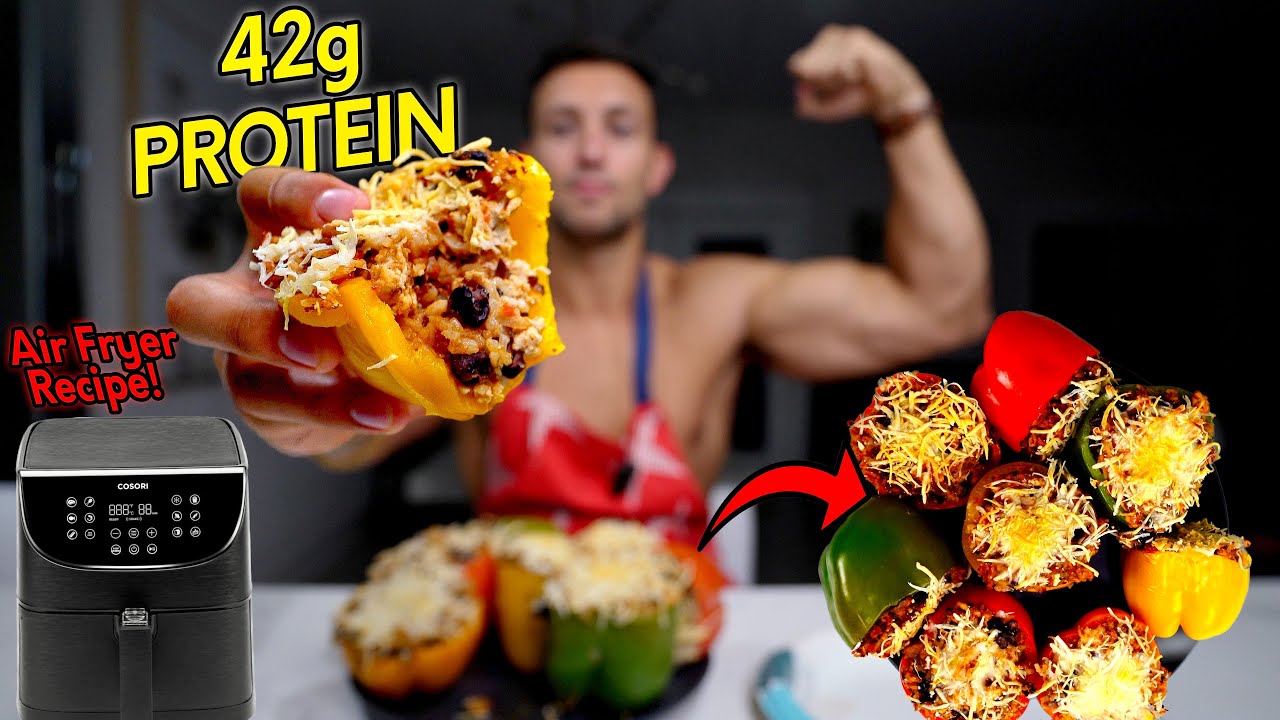
“Classic stuffed peppers top out at 28g of protein and usually taste like cafeteria food by day two. This version hits 38g per serving by swapping three ingredients most people would never think to put in a pepper. The Greek yogurt and cottage cheese melt into the beef filling during baking, creating a creamy, rich interior that holds its texture through four days of meal prep. No protein powder. No chalky aftertaste. Just food that does a job.”
Why This Recipe Works
Stuffed peppers are one of the most abused meal prep recipes on the internet. The standard version — ground beef, white rice, jarred marinara, shredded cheddar — delivers around 28g of protein at best and turns into a soggy, greasy brick by day three. This version fixes every problem structurally, by swapping ingredients rather than adding supplements or protein powders.
The Protein Architecture
Most stuffed pepper recipes treat protein as an afterthought. This one treats it as a load-bearing element of every ingredient decision. The 93/7 lean ground beef is the foundation — same protein as 80/20, 60 fewer calories, no grease pooling in the bottom of your baking dish. The white rice is replaced with quinoa, which is a complete protein containing all nine essential amino acids and contributes about 2g more protein per serving than rice would. But the real work is done by two ingredients nobody expects to see in a stuffed pepper: Greek yogurt and cottage cheese.
Together, they replace sour cream in the filling and contribute roughly 9g of additional protein per serving while creating a creamier, more cohesive texture than sour cream ever could. The yogurt's lactic acid interacts with the heat during baking to set the filling into something sliceable and solid rather than loose and crumbly. The cottage cheese melts almost entirely into the mixture, leaving no curds detectable in the final texture — just richness. This is the swap that takes the recipe from 28g to 38g, and it requires zero additional effort.
The Tomato Paste Minute
One minute. That's all the difference between a flat-tasting filling and one with actual depth. Raw tomato paste is acidic and metallic. When it hits a hot, dry pan after you've drained the beef fat, the Maillard reaction converts its sugars and amino acids into new flavor compounds — the same chemistry that makes seared meat taste different from boiled meat. You're not cooking the paste to reduce it. You're transforming it into something categorically different in 60 seconds.
Most home cooks dump everything into the pan simultaneously and wonder why the filling tastes one-dimensional. The cook sequence matters: onion first, then garlic, then beef, then paste cooked alone, then everything else off the heat. Each step builds on the last.
The Dairy Timing Problem
Greek yogurt breaks at high heat. Add it to a screaming hot pan and it separates into a grainy, watery mess that ruins the filling texture. The solution is mechanical, not culinary: pull the pan completely off the heat and wait 60 seconds before folding in the dairy. The residual heat is more than enough to incorporate everything without triggering separation.
The dairy also needs to be room temperature when it goes in — cold yogurt dropped into a hot filling drops the temperature unevenly, creates pockets of unmelted cottage cheese, and extends your bake time unpredictably. Take both out of the refrigerator when you start prepping. By the time the beef is browned, they're ready.
The Two-Stage Bake
Covered first, uncovered last. This is not optional and it's not arbitrary. The first 25 minutes with foil traps steam from the beef broth you've added to the dish, which softens the pepper walls from the outside while the filling heats through from the inside. Without the foil, you're dry-roasting: the top of the filling browns and desiccates before the pepper is halfway cooked.
The last 15 minutes uncovered handle all the texture work — melting the mozzarella, giving the filling a slight crust on top, and letting any excess moisture evaporate so the final texture is cohesive rather than wet. A heavy-bottomed baking dish is worth using here for the same reason it matters in any long braise: even heat across the base prevents the broth from evaporating from one corner while pooling in another.
Why It Holds for Four Days
The yogurt-cottage cheese matrix isn't just a protein delivery mechanism — it's also a structural binder that keeps the filling from drying out during storage. Fat from sour cream or whole milk mozzarella separates on refrigeration and turns the filling greasy when reheated. Nonfat dairy doesn't do this. The filling stays cohesive, sliceable, and nearly identical in texture from day one through day four. This is the difference between meal prep you look forward to eating and meal prep you eat because it's there.
Where Beginners Mess This Up
Before we start, read this. These are the 4 reasons your 38g protein stuffed peppers (the meal prep weapon) will fail:
- 1
Using 80/20 ground beef: Fattier beef releases excess grease during browning that makes the filling greasy and loose. It also dilutes the protein-to-calorie ratio you're building toward. Drain what you can, but you can't drain it all. Start with 93/7 lean and the problem doesn't exist.
- 2
Skipping the tomato paste cook-down: Raw tomato paste tastes acidic and slightly metallic. One minute in a hot, dry skillet triggers the Maillard reaction and transforms it into something sweet, deep, and savory. This single minute adds more flavor than doubling the Italian seasoning would.
- 3
Adding the dairy off the heat, then ignoring temperature: Greek yogurt and cottage cheese must go in off the heat — they'll break and turn grainy if they hit a screaming hot pan. But they also need to be room temperature when you add them, or they'll drop the filling temperature unevenly and extend your bake time.
- 4
Skipping the foil cover for the first 25 minutes: Peppers need wet, trapped heat to soften. Without foil, the top of the filling browns and dries before the pepper walls have fully cooked through. Cover first, uncover last — the 15 uncovered minutes at the end handle all the browning you need.
The Video Reference Library
Want to see it in action? Here are the exact videos we analyzed and combined to build this foolproof recipe translation:
The source video demonstrating the Greek yogurt and cottage cheese filling technique. Clear breakdown of the layering method and how the dairy integrates into the beef mixture.
🛠️ Core Equipment
- Large oven-safe baking dishDeep enough to hold four upright peppers with room for the broth to pool around the base without evaporating in the first ten minutes. A shallow sheet pan lets all the moisture escape.
- Heavy-bottomed skilletEven heat distribution across the base prevents hot spots that scorch the beef before it's fully browned. A [cast iron skillet](/kitchen-gear/review/cast-iron-skillet) is ideal — it also holds heat when you add cold ingredients like onion without dropping temperature.
- Wooden spoon or stiff spatulaFor breaking ground beef into small, uniform pieces as it cooks. Uniform pieces cook evenly. Large chunks leave pink centers surrounded by overdone exterior. The tool matters less than the motion — break constantly, early, often.
- Aluminum foilCreates the covered steam environment for the first 25 minutes that softens the pepper walls. Without it, you're dry-roasting, not braising — and the pepper texture suffers.
38g Protein Stuffed Peppers (The Meal Prep Weapon)
🛒 Ingredients
- ✦4 large bell peppers (red, yellow, or orange), tops cut off and seeds removed
- ✦1 pound 93/7 lean ground beef
- ✦1 cup plain nonfat Greek yogurt, room temperature
- ✦3/4 cup low-fat cottage cheese, room temperature
- ✦1 cup cooked quinoa
- ✦1 medium yellow onion, finely diced
- ✦3 cloves garlic, minced
- ✦1 cup diced tomatoes (fresh or canned, drained)
- ✦1/2 cup shredded part-skim mozzarella cheese
- ✦2 tablespoons tomato paste
- ✦1 tablespoon olive oil
- ✦1 teaspoon Italian seasoning
- ✦1/2 teaspoon paprika
- ✦1/4 teaspoon red pepper flakes
- ✦Salt and black pepper to taste
- ✦1/4 cup fresh parsley, chopped
- ✦1/4 cup low-sodium beef broth
👨🍳 Instructions
01Step 1
Preheat your oven to 375°F and position a rack in the middle.
02Step 2
Arrange the hollowed bell peppers upright in a baking dish and set aside.
03Step 3
Heat olive oil in a large skillet over medium-high heat until shimmering, about 1 minute.
04Step 4
Add the diced onion and sauté, stirring occasionally, until softened and translucent, about 4 minutes.
05Step 5
Stir in the minced garlic and cook until fragrant, about 45 seconds.
06Step 6
Add the lean ground beef, breaking it into small pieces with a wooden spoon, and cook until browned throughout, about 6 minutes.
07Step 7
Drain any excess fat from the skillet if needed, then stir in the tomato paste and cook for 1 minute to deepen the flavor.
08Step 8
Remove the skillet from heat. Fold in the Greek yogurt, cottage cheese, cooked quinoa, diced tomatoes, mozzarella, Italian seasoning, paprika, and red pepper flakes until fully combined.
09Step 9
Season the filling with salt and black pepper to taste.
10Step 10
Spoon the filling evenly into each prepared bell pepper, mounding slightly at the top.
11Step 11
Pour the beef broth into the bottom of the baking dish around the peppers.
12Step 12
Cover the baking dish tightly with foil and bake for 25 minutes.
13Step 13
Remove the foil and bake uncovered for another 15 minutes, until the peppers are tender and the filling is heated through.
14Step 14
Garnish with fresh parsley and serve warm directly from the baking dish.
Nutrition Per Serving
Estimates based on standard preparation. Adjustments alter macros.
🔄 Substitutions
Instead of Cooked white rice...
Use Cooked quinoa
Quinoa adds roughly 2g more protein per serving and contains all nine essential amino acids. Slightly nuttier flavor and firmer texture. The structural difference is minimal once baked into the filling.
Instead of Sour cream...
Use Plain nonfat Greek yogurt + cottage cheese blend
Greek yogurt delivers 20g protein per cup versus sour cream's 3g. The cottage cheese adds another 14g per 3/4 cup. The texture is creamier and tangier — it actually works better in the filling than sour cream does.
Instead of 93/7 lean ground beef...
Use Ground turkey (99% lean)
Reduces calories by about 40 per serving. Slightly drier texture — compensate by adding an extra tablespoon of broth to the filling before stuffing. Protein content remains nearly identical.
Instead of Part-skim mozzarella...
Use Shredded sharp cheddar
Stronger flavor that competes more with the beef and spice profile. Use half the quantity — sharp cheddar at full volume overwhelms the filling. Still melts cleanly.
🧊 Storage & Reheating
In the Fridge
Store whole peppers in airtight containers for up to 4 days. The filling firms up and slices cleanly by day two — arguably better texture than day one.
In the Freezer
Freeze individually wrapped in plastic wrap, then foil, for up to 3 months. Thaw overnight in the refrigerator before reheating.
Reheating Rules
Add 2 tablespoons of water to the container, cover with a damp paper towel, and microwave on 70% power for 2-3 minutes. Full power dries out the filling. Oven reheating at 350°F for 15 minutes covered produces the best texture.
❓ Frequently Asked Questions
Why does my filling turn out watery?
Two likely causes: the diced tomatoes weren't drained, or the Greek yogurt was added while the pan was still hot and broke. Drain tomatoes thoroughly before adding, and always pull the pan off heat for at least 60 seconds before folding in the dairy.
Can I use green bell peppers?
You can, but green peppers are more bitter and go soft faster during baking. Red, orange, and yellow peppers are sweeter and hold their structure better through the full 40-minute cook. The color difference also affects the final presentation significantly.
Do I need to pre-cook the peppers before stuffing?
No. The 25-minute covered bake with broth in the bottom of the dish creates enough steam to fully soften the pepper walls without pre-cooking. Pre-cooking risks over-softening them so they collapse when you fill them.
Can I make this dairy-free?
Replace the Greek yogurt and cottage cheese with silken tofu blended smooth — same creamy texture, roughly similar protein content. Use dairy-free mozzarella or skip the cheese entirely and add an extra tablespoon of tomato paste for depth.
How do I hit 38g of protein per serving?
The protein comes from four sources: the lean beef (roughly 22g), Greek yogurt (5g from 1/4 cup per serving), cottage cheese (4g from 3 oz per serving), quinoa (2g), and mozzarella (5g). Each source contributes. Substituting any one of them — especially the yogurt-cottage cheese blend — will drop the total.
Can I prep and freeze these before baking?
Yes. Stuff the raw peppers, skip the broth, wrap each one tightly in plastic wrap, and freeze. When ready to cook, thaw overnight in the fridge, add the broth to the dish, and bake as directed adding 10 minutes to the covered bake time.
The Science of
38g Protein Stuffed Peppers (The Meal Prep Weapon)
We turned everything on this page into a beautiful, flour-proof PDF cheat sheet. Print it out, stick it to your fridge, and never mess up your 38g protein stuffed peppers (the meal prep weapon) again.
*We'll email you the high-res PDF instantly. No spam, just perfectly cooked meals.
AlmostChefs Editorial Team
We translate the internet's most popular cooking videos into foolproof, beginner-friendly written recipes. We analyze multiple methods, test them in our kitchen, and engineer a single "Master Recipe" that gives you the best possible result with the least possible stress.