High-Protein Egg Muffins (28g Per Serving, Zero Morning Stress)
Fluffy egg muffin cups packed with spinach, feta, and Greek yogurt for 28g of protein per serving. We analyzed the most common meal-prep breakfast failures to build a foolproof technique that delivers creamy, fully-set muffins that pop out clean and reheat perfectly all week.
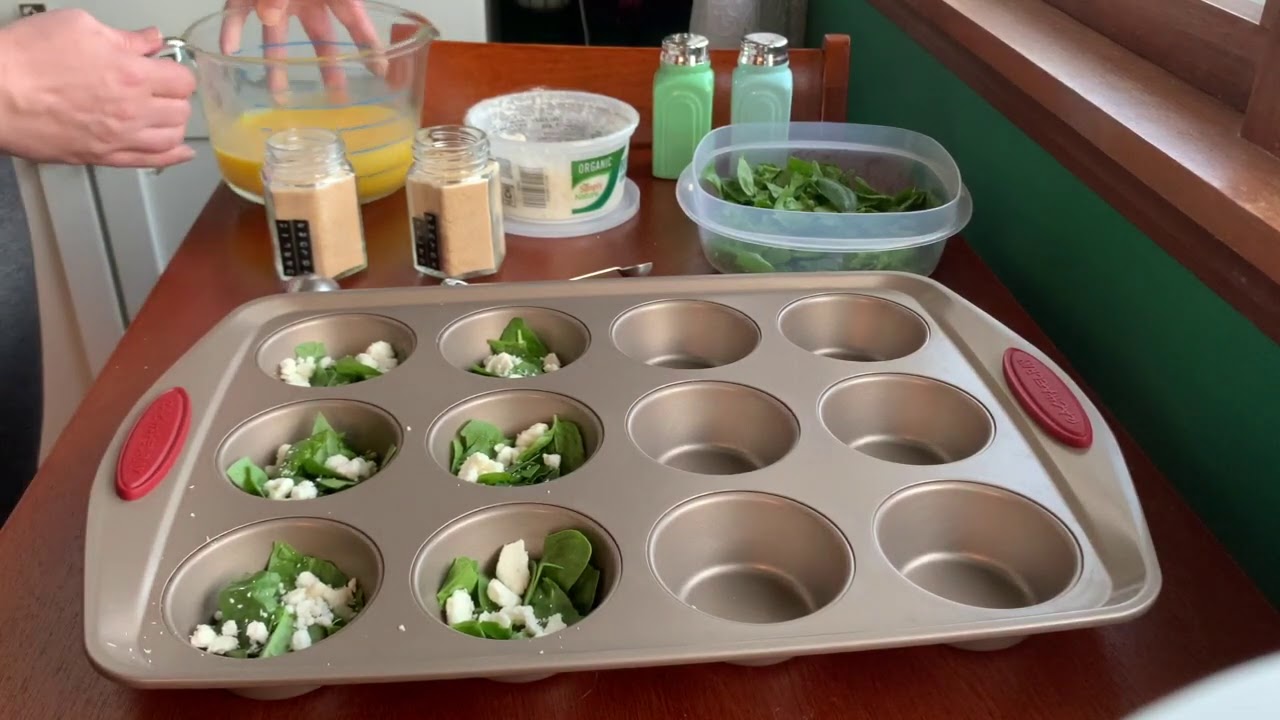
“Most egg muffin recipes produce two failure modes: rubbery hockey pucks or sunken, wet-centered cups that fall apart the second you try to remove them. The fix is in the batter ratio — specifically, the addition of Greek yogurt. It adds protein density, keeps the texture creamy rather than bouncy, and acts as an emulsifier that holds the muffins together without drying them out. Bake a batch on Sunday and you have a 28g-protein breakfast ready to grab every morning for five days.”
Why This Recipe Works
Egg muffins have a reputation for being a beginner recipe, which is why most versions are mediocre. The assumption is that anything involving eggs and a muffin tin is simple enough to survive careless technique. It isn't. The gap between a good egg muffin and a dense, rubbery one comes down to three decisions: the batter ratio, how full you fill the cups, and how long you let them rest before trying to remove them.
The Yogurt Is Structural, Not Optional
The defining ingredient in this recipe is the Greek yogurt, and it does more work than most people give it credit for. First, the protein: a half cup of nonfat Greek yogurt adds roughly 10-12g of protein to the entire batch with zero additional fat. When distributed across four servings of three muffins each, this pushes the per-serving total to 28g — a number that straight eggs alone cannot reach without an excessive volume of eggs.
Second, the texture. Egg proteins are tightly coiled and, when heated, uncoil and bond to each other in a rigid network. The more proteins bond, the chewier and more rubbery the result. Greek yogurt's lactic acid and fat content interrupt this bonding process at key points, producing a softer, more cohesive set. The result isn't scrambled egg in a cup — it's something closer to a crustless quiche: creamy, sliceable, structurally sound.
Third, the yogurt acts as an emulsifier between the whites and yolks, which have different fat and water compositions and naturally resist full integration. The yogurt bridges them. This is why the batter looks smooth and uniform instead of streaky when you fold properly.
Vegetable Placement Over Mixing
The vegetables go into the muffin cups before the egg mixture — not stirred directly into the batter. This matters because spinach, bell pepper, and green onion have significantly different densities than the egg mixture. Stirring them in produces uneven distribution: two cups heavy with spinach, three cups with only a scrap of pepper, and six cups that look like plain egg.
Pre-loading each cup with equal vegetable portions before pouring the egg mixture over the top guarantees uniform distribution. The egg mixture flows down around the vegetables and encases them during baking, which also prevents the spinach from floating to the surface and burning.
Chop the spinach small — roughly half-inch pieces. Whole spinach leaves create air pockets under the egg mixture as they wilt and shrink. Those pockets mean uneven baking and cups that look hollow after cooling.
The Three-Quarter Rule
Eggs expand as they set. Not dramatically, but enough to overflow a full muffin cup, bond to the top of the tin, and tear when you try to remove the muffin. Three-quarters full is not a conservative estimate — it's the functional maximum for this batter.
A standard 12-cup muffin tin holds approximately 1/3 cup per well. At three-quarters capacity, each cup gets roughly 1/4 cup of egg mixture. With 12 large eggs and 4 whites plus yogurt, the total batter volume is approximately 3 cups — which works out to exactly 1/4 cup per muffin across all twelve. The math lands perfectly when you measure rather than eyeball.
Temperature and Release
Egg proteins are still contracting as the muffins cool. At 350°F internal temperature, they're fragile and elastic — they'll stretch and tear if disturbed. At room temperature, they've contracted into their final shape and are structurally stable. The five-minute tin rest is not about avoiding burns to your hands. It's about giving the protein matrix time to set into a form that can survive removal.
After the rest, a thin offset spatula or butter knife run around the full circumference of each cup is non-negotiable. The egg mixture will have bonded to the tin at the edges regardless of how well you greased it. One clean pass breaks that bond without tearing the muffin. Skip this step and you lose half the batch.
The Meal Prep Case
Three muffins per serving. Four servings per batch. Twelve muffins total, ready in under 35 minutes on a Sunday afternoon. Each serving delivers 28g of protein, 5g of carbohydrates, and 198 calories — numbers that outperform most commercial protein bars on every metric except convenience. After five days in the fridge they're still clean, still creamy, and ninety seconds from ready. The engineering is the point.
Where Beginners Mess This Up
Before we start, read this. These are the 4 reasons your high-protein egg muffins (28g per serving, zero morning stress) will fail:
- 1
Skipping the yogurt fold: Greek yogurt is not optional garnish — it's structural. Stirred into the egg mixture before baking, it contributes creaminess, binds the whites and yolks into a more cohesive set, and adds roughly 6g of protein per serving that straight eggs cannot provide. Leaving it out produces a rubbery, flat muffin.
- 2
Overfilling the muffin cups: Eggs expand as they set. Filling past the three-quarter mark means the muffin rises over the edge, bonds to the tin, and tears when you try to remove it. Three-quarters full gives the egg room to puff without overflowing.
- 3
Pulling them too early: The top should be just set and lightly golden — a slight jiggle in the dead center is acceptable, but the edges must be fully firm. Underbaked muffins collapse as they cool and stick aggressively to the tin. If in doubt, give them 2 more minutes.
- 4
Skipping the cooling rest: Egg proteins contract as they cool. Trying to remove muffins while they're scorching hot tears the bottom layer. Five minutes in the tin, then a thin knife around the edge — this is the only way to get them out intact.
The Video Reference Library
Want to see it in action? Here are the exact videos we analyzed and combined to build this foolproof recipe translation:
The primary reference video for this recipe. Covers the batter technique, vegetable distribution, and the visual cues for knowing when the muffins are done.
🛠️ Core Equipment
- 12-cup muffin tinStandard size for this recipe. Dark metal tins heat faster and can overbrown the edges — lighter aluminum gives more even, forgiving heat.
- Large mixing bowlYou need room to whisk aggressively and fold in the yogurt without splashing. A bowl that feels too large is exactly the right size.
- Silicone spatulaFor folding the Greek yogurt into the egg mixture without deflating the froth you built up during whisking. A whisk reincorporates too aggressively at this stage.
- Thin offset spatula or butter knifeFor running around the edge of each muffin before removal. This is the difference between a clean release and a destroyed muffin.
High-Protein Egg Muffins (28g Per Serving, Zero Morning Stress)
🛒 Ingredients
- ✦8 large eggs
- ✦4 large egg whites
- ✦1/2 cup plain nonfat Greek yogurt
- ✦3 cups fresh spinach, roughly chopped
- ✦1/2 cup crumbled feta cheese
- ✦1/4 cup diced red bell pepper
- ✦2 green onions, thinly sliced
- ✦1/4 teaspoon garlic powder
- ✦1/4 teaspoon black pepper
- ✦1/4 teaspoon sea salt
- ✦1/8 teaspoon red pepper flakes (optional)
- ✦Cooking spray or 1 teaspoon olive oil for muffin tin
👨🍳 Instructions
01Step 1
Preheat your oven to 350°F and lightly coat a 12-cup muffin tin with cooking spray or a thin layer of olive oil.
02Step 2
Crack the 8 whole eggs into a large mixing bowl, add the 4 egg whites, and whisk vigorously for about 1 minute until well combined and slightly frothy.
03Step 3
Fold the Greek yogurt into the egg mixture using a silicone spatula, stirring gently until no large lumps remain and the mixture is smooth.
04Step 4
Add the garlic powder, black pepper, sea salt, and red pepper flakes to the egg mixture and stir to distribute the seasonings evenly.
05Step 5
Divide the chopped spinach, diced bell pepper, and sliced green onions among the muffin cups, placing about 2 tablespoons of vegetables in each cup.
06Step 6
Pour the egg and yogurt mixture over the vegetables in each muffin cup, filling them about three-quarters full.
07Step 7
Sprinkle the crumbled feta cheese evenly over each cup, using about 2 teaspoons per muffin.
08Step 8
Bake for 18-22 minutes, until the egg mixture is set at the edges and the tops are lightly golden with only a very slight jiggle in the dead center.
09Step 9
Remove from the oven and let the muffins cool in the tin for 5 minutes before running a thin knife around each edge and popping them onto a cooling rack.
10Step 10
Serve warm or store in an airtight container in the refrigerator for up to 5 days. Reheat for 90 seconds in the microwave.
Nutrition Per Serving
Estimates based on standard preparation. Adjustments alter macros.
🔄 Substitutions
Instead of Plain nonfat Greek yogurt...
Use Blended smooth cottage cheese
Adds 4g extra protein per 1/4 cup. Slightly less tangy result. Blend the cottage cheese before adding or you'll get white lumps that don't integrate.
Instead of Feta cheese...
Use Crumbled goat cheese or sharp cheddar
Goat cheese produces an airier, more delicate muffin. Cheddar melts fully and creates a richer, more savory result. Both work well.
Instead of Fresh spinach...
Use Frozen spinach (thawed and squeezed completely dry) or chopped kale
Frozen spinach must be squeezed aggressively — excess water turns the egg mixture watery and prevents proper setting. Kale adds earthiness and more fiber.
Instead of Red bell pepper...
Use Sun-dried tomatoes (2 tablespoons) or diced mushrooms
Sun-dried tomatoes add concentrated sweetness and chewiness. Mushrooms add umami and slight moisture — pat them dry before adding.
🧊 Storage & Reheating
In the Fridge
Store in an airtight container for up to 5 days. Layer with parchment paper if stacking to prevent sticking.
In the Freezer
Freeze individually on a baking sheet until solid, then transfer to a zip-lock bag for up to 2 months. Thaw overnight in the fridge.
Reheating Rules
Microwave on a paper towel-lined plate for 90 seconds from refrigerated, or 2.5 minutes from frozen. The paper towel absorbs excess steam and keeps the bottom from getting soggy.
❓ Frequently Asked Questions
Why are my egg muffins rubbery?
Two causes: overbaking or omitting the Greek yogurt. Egg proteins tighten dramatically past 200°F — pull the muffins the moment the edges set. The yogurt interrupts the protein network and keeps the texture creamy. Without it, you're eating a baked egg disc.
Can I make these dairy-free?
Yes. Replace the Greek yogurt with blended silken tofu (same volume) and omit the feta or use a dairy-free crumble. The texture will be slightly denser but the protein content stays high.
Why did my muffins stick even though I greased the tin?
Either the tin wasn't fully coated (get every seam) or you tried to remove them while still hot. Let them cool 5 minutes, run a thin knife around the full edge of each cup, then pop them out. Silicone muffin molds eliminate this problem entirely.
How do I scale this up for a bigger batch?
Double every ingredient and use two muffin tins. Bake both tins simultaneously on the same rack if your oven allows, or stagger them on upper and lower racks, rotating halfway through. Add 2-3 minutes to the bake time when using two cold tins.
Can I add meat to these?
Yes — cooked and crumbled turkey sausage or diced chicken breast work well. Add the meat with the vegetables before pouring the egg mixture. Do not add raw meat; it won't cook through in 20 minutes at 350°F.
Do these work without the egg whites?
You can use 10 whole eggs instead of 8 eggs plus 4 whites. The protein per serving drops slightly and the fat increases, but the technique is identical. The whites are there to boost protein density without adding fat — skip them if you prefer whole-egg flavor.
The Science of
High-Protein Egg Muffins (28g Per Serving, Zero Morning Stress)
We turned everything on this page into a beautiful, flour-proof PDF cheat sheet. Print it out, stick it to your fridge, and never mess up your high-protein egg muffins (28g per serving, zero morning stress) again.
*We'll email you the high-res PDF instantly. No spam, just perfectly cooked meals.
AlmostChefs Editorial Team
We translate the internet's most popular cooking videos into foolproof, beginner-friendly written recipes. We analyze multiple methods, test them in our kitchen, and engineer a single "Master Recipe" that gives you the best possible result with the least possible stress.