38g Protein Overnight Oats (The Double Greek Yogurt Method)
High-protein overnight oats built on a double-yogurt strategy — Greek yogurt mixed into the base and dolloped on top — with chia seeds and optional protein powder delivering 38g protein per serving. We broke down the technique so every jar comes out creamy, thick, and actually satisfying.
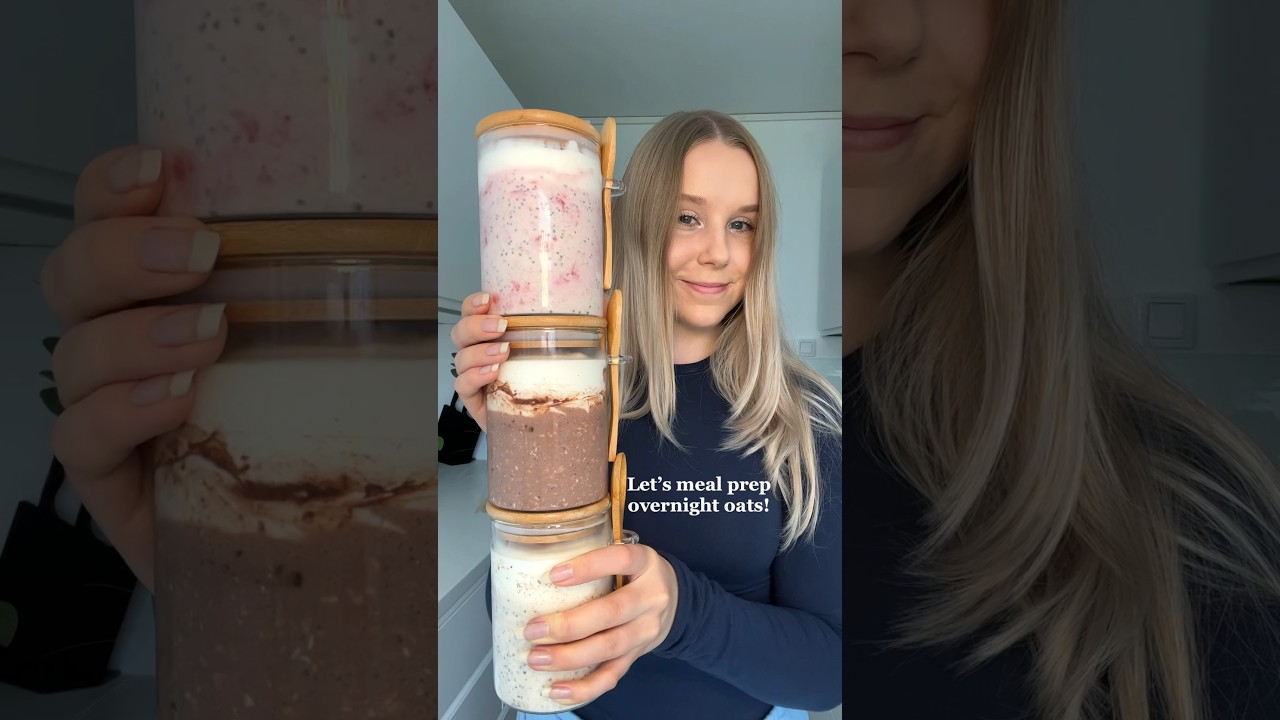
“Most overnight oats recipes promise high protein and deliver glorified porridge with a protein powder aftertaste. The difference between a 38g protein jar that actually tastes good and one that tastes like a chalky supplement drink comes down to two things: the double-yogurt method and how aggressively you incorporate the almond butter. We fixed every common failure point so you can make five jars on Sunday and not dread pulling one out on Thursday.”
Why This Recipe Works
Overnight oats have a reputation problem. The concept is sound — hydrate rolled oats in liquid overnight, eat cold in the morning, skip the stove entirely. The execution is almost always flawed. Most recipes produce a thin, sweet bowl of beige mush that's indistinguishable from wallpaper paste by day three of your meal prep week. The protein content is modest at best, the texture deteriorates fast, and the satiety window is nowhere near as long as the recipe claims.
The double-yogurt method fixes the protein and the texture simultaneously.
The Architecture of 38 Grams
Standard overnight oats — oats, almond milk, a banana — deliver roughly 8-10g of protein per serving. That's a snack, not a muscle-building breakfast. Getting to 38g without making the jar taste like a supplement shake requires stacking protein sources that each contribute flavor, not just macros.
Greek yogurt is the foundation. One cup of plain nonfat Greek yogurt contains 23g of protein and acts as a structural element — it thickens the base, contributes tartness that balances the honey, and creates a creamy consistency that almond milk alone cannot achieve. Almond butter adds 7g and brings the fat that slows digestion and extends satiety. Chia seeds contribute 5g and absorb liquid to build body. Protein powder, if used, adds a final 20-25g on top — but the recipe is already doing serious work before you ever open the scoop.
The second Greek yogurt serving, dolloped cold on top when serving, does something the in-base yogurt cannot: it provides textural contrast. The soaked base is uniform and creamy. The fresh dollop is dense, slightly sour, and cool. That contrast is why this bowl feels like a complete meal rather than prep-container leftovers.
The Chia Seed Variable
Chia seeds are structurally useful and structurally dangerous. They absorb 10-12 times their weight in liquid over eight hours — which is exactly what you want them to do, because that gel formation is what gives the overnight oats their pudding-like body. The problem is that most recipes underestimate the absorption rate when protein powder is added to the mix.
Whey protein is hygroscopic. It pulls moisture aggressively. Add a full scoop to a recipe calibrated for oats and yogurt alone, and you'll wake up to a jar so thick a spoon stands upright in it. The fix is mechanical, not chemical: add 2 tablespoons of extra almond milk per scoop of protein powder at the mixing stage, and keep another 2-3 tablespoons on hand for the morning stir.
Fill your wide-mouth mason jars only three-quarters full. The remaining quarter is not wasted space — it's working space, the room you need to stir the separated layers back together without making a mess, and the room for toppings that belong on top, not buried.
What Rolled Oats Actually Need
Old-fashioned rolled oats have been steamed and pressed flat during processing, which means they're partially pre-cooked. They hydrate completely in cold liquid given enough time — typically six hours minimum, eight to twelve hours optimal. Quick oats do the same thing in two hours but turn to paste. Steel-cut oats require actual heat to soften their dense outer bran layer; they do not work here.
The distinction matters because the texture of a five-day meal prep batch is not static. Day one oats have more chew and body. Day five oats are softer and denser. If you're making a full week's worth in one session, eat the jars in order and adjust your morning liquid additions accordingly — later-week jars will need more almond milk to loosen.
The Almond Butter Problem
Natural almond butter — the kind with no added emulsifiers — separates in the jar and does not reincorporate easily. Fold it in gently and you'll get oily streaks distributed through an otherwise homogeneous base. The fix is to treat the mixing step as an actual task, not a formality. Two minutes of vigorous stirring with a fork — not a spoon, the tines do more work — is the difference between a uniform base and a batch where every third spoonful tastes like pure almond butter while the rest tastes like nothing.
This is a simple recipe. That doesn't mean the execution is automatic.
Where Beginners Mess This Up
Before we start, read this. These are the 4 reasons your 38g protein overnight oats (the double greek yogurt method) will fail:
- 1
Under-mixing the almond butter: Natural almond butter separates and sits in oily streaks if you fold it in gently. You need to stir the entire base vigorously for a full 2 minutes until the fat is fully emulsified into the oat mixture. Lazy stirring leaves pockets of pure almond butter and pockets of bland oats — neither is the point.
- 2
Not accounting for chia seed expansion: Chia seeds absorb 10-12 times their weight in liquid over 8 hours. If you fill your jar to the top before refrigerating, you'll pull out a dense, overpacked brick with no room to stir. Fill each container only three-quarters full and you'll have space for the morning stir and toppings.
- 3
Using protein powder without adjusting liquid: Protein powder — especially whey — absorbs liquid aggressively. A recipe calibrated without it will turn into concrete overnight if you add a scoop and don't compensate. Add an extra 2 tablespoons of almond milk per scoop when mixing. Adjust further in the morning if needed.
- 4
Skipping the morning stir: Overnight oats stratify in the fridge. The chia seeds sink, the oats settle, and the liquid separates to the top. A 30-second stir before eating re-emulsifies everything and gives you the even, creamy texture the recipe promises. Eating it straight from the fridge without stirring is always a disappointment.
The Video Reference Library
Want to see it in action? Here are the exact videos we analyzed and combined to build this foolproof recipe translation:
The source video demonstrating the double-yogurt method and protein layering technique. Clear breakdown of why texture varies between batches and how to fix common consistency problems.
🛠️ Core Equipment
- Wide-mouth mason jars (16 oz)Wide-mouth jars allow you to stir properly without smashing the contents against the sides. Narrow jars make morning stirring frustrating and ensure uneven texture. The wide mouth also makes layering toppings clean and intentional.
- Medium mixing bowlYou need enough room to stir vigorously without splashing. Mixing directly in individual jars makes it nearly impossible to fully incorporate the almond butter and distribute the chia seeds evenly across all four servings.
- Kitchen scale or measuring cupsOvernight oats are a ratio game. Too much liquid and the texture is thin and soupy. Too little and you get a dense paste. The 1:0.75 oat-to-milk ratio here is calibrated for the yogurt addition — drift from it and the texture suffers.
38g Protein Overnight Oats (The Double Greek Yogurt Method)
🛒 Ingredients
- ✦1 cup rolled oats (old-fashioned)
- ✦1 cup plain nonfat Greek yogurt (for the base)
- ✦3/4 cup unsweetened almond milk
- ✦1/4 cup chia seeds
- ✦2 tablespoons natural almond butter
- ✦1 scoop vanilla whey protein powder (optional but recommended)
- ✦1 tablespoon raw honey
- ✦1/2 teaspoon vanilla extract
- ✦1/4 teaspoon ground cinnamon
- ✦1/4 teaspoon sea salt
- ✦1/2 banana, sliced (for topping)
- ✦2 tablespoons raw almonds, chopped (for topping)
- ✦1/4 cup plain nonfat Greek yogurt (for topping dollop)
- ✦1 tablespoon unsweetened cocoa powder (optional, for topping)
👨🍳 Instructions
01Step 1
Combine the rolled oats, 1 cup Greek yogurt, almond milk, chia seeds, almond butter, protein powder, honey, vanilla extract, cinnamon, and sea salt in a medium mixing bowl.
02Step 2
Stir the mixture vigorously for 2 minutes until the almond butter is fully incorporated and no streaks remain.
03Step 3
Divide the mixture evenly between 4 wide-mouth mason jars or airtight containers, filling each about three-quarters full.
04Step 4
Press down gently on the oat mixture to compress it and ensure even moisture distribution throughout.
05Step 5
Cover each container with an airtight lid and refrigerate for at least 6 hours. Overnight (8-12 hours) yields the best texture.
06Step 6
Remove from the refrigerator and stir each portion thoroughly, adding 2-3 tablespoons of additional almond milk if the consistency is too thick.
07Step 7
Transfer to a serving bowl and top with a generous dollop of the reserved Greek yogurt.
08Step 8
Arrange the sliced banana and chopped almonds over the top.
09Step 9
Dust lightly with cocoa powder if desired. Eat immediately.
Nutrition Per Serving
Estimates based on standard preparation. Adjustments alter macros.
🔄 Substitutions
Instead of Vanilla whey protein powder...
Use Collagen peptides (unflavored or vanilla)
Smoother texture, no chalky aftertaste. Adds 10g protein per scoop while supporting joint and gut health. Dissolves more cleanly into the base — nearly undetectable in flavor.
Instead of Almond milk...
Use Fairlife 2% reduced fat protein shake
Richer, creamier mouthfeel and bumps total protein to approximately 48g per serving. Higher calorie density — account for this if you're tracking macros tightly.
Instead of Natural almond butter...
Use Powdered peanut butter (PB2) mixed with 1 tablespoon water
Lighter texture, less oily mouthfeel, saves roughly 80 calories per serving. Keeps protein intact at 4g per tablespoon. Better choice if you're running a calorie deficit.
Instead of Plain nonfat Greek yogurt (base)...
Use Icelandic-style skyr (plain, nonfat)
Even thicker and tangier. Skyr contains slightly more protein per gram than Greek yogurt and includes natural probiotics for digestive support. Direct swap, same volume.
Instead of Sliced banana topping...
Use Fresh blueberries or raspberries
Tartness cuts through the creamy base. Lower sugar impact than banana, stronger antioxidant profile. Better choice for blood sugar stability if eating post-workout.
🧊 Storage & Reheating
In the Fridge
Store assembled jars (without toppings) for up to 5 days. Add toppings only when serving.
In the Freezer
Not recommended. Greek yogurt separates when frozen and thawed, producing a grainy, watery texture that no amount of stirring will fix.
Reheating Rules
Microwave 90 seconds if you prefer a warm breakfast. Stir before and after heating. Add a splash of almond milk to loosen if needed.
❓ Frequently Asked Questions
Why are my overnight oats too thick in the morning?
Chia seeds and rolled oats both absorb liquid aggressively overnight. Add 2-3 tablespoons of almond milk the next morning and stir thoroughly before eating. If you're using protein powder, add an extra 2 tablespoons at the mixing stage the night before to account for additional absorption.
Can I make this without protein powder?
Yes. The double-yogurt method alone delivers approximately 26g protein per serving without any powder. The recipe works without it — the powder is optional infrastructure for hitting higher protein targets, not a structural ingredient.
Do I need to cook the oats first?
No. Old-fashioned rolled oats hydrate completely in the refrigerator overnight without any heat. The extended soak in yogurt and milk softens them fully. Quick oats do the same but turn to mush. Steel-cut oats do not hydrate adequately without cooking — don't substitute them here.
Why does my protein powder clump in the oats?
Whey protein clumps when it hits cold, thick liquid directly. Dissolve it in the almond milk first, whisking until smooth, before combining with the oats and yogurt. This distributes it evenly through the base and prevents the chalky pockets.
How far in advance can I realistically make these?
Five days is the practical ceiling. After that, the oats begin to ferment slightly and the texture degrades from chewy-creamy toward mushy. Days one through three are noticeably better than days four and five — factor that into your week's meal plan.
Is the cocoa powder topping worth adding?
Yes, but only if you want a mocha-adjacent flavor. A light dusting adds bitterness that cuts the sweetness of the honey and banana, plus antioxidants from the polyphenols. Don't stir it in — dust on top just before eating so the contrast is visible and the flavor hits before it fully incorporates.
The Science of
38g Protein Overnight Oats (The Double Greek Yogurt Method)
We turned everything on this page into a beautiful, flour-proof PDF cheat sheet. Print it out, stick it to your fridge, and never mess up your 38g protein overnight oats (the double greek yogurt method) again.
*We'll email you the high-res PDF instantly. No spam, just perfectly cooked meals.
AlmostChefs Editorial Team
We translate the internet's most popular cooking videos into foolproof, beginner-friendly written recipes. We analyze multiple methods, test them in our kitchen, and engineer a single "Master Recipe" that gives you the best possible result with the least possible stress.