High-Protein French Toast (38g Protein, Zero Sacrifice)
Classic French toast rebuilt for muscle. Greek yogurt and cottage cheese replace traditional milk in a blended custard that delivers 38g protein per serving without tasting like a supplement shake. We broke down the technique to get the same golden, custardy result — just with macros that actually work for you.
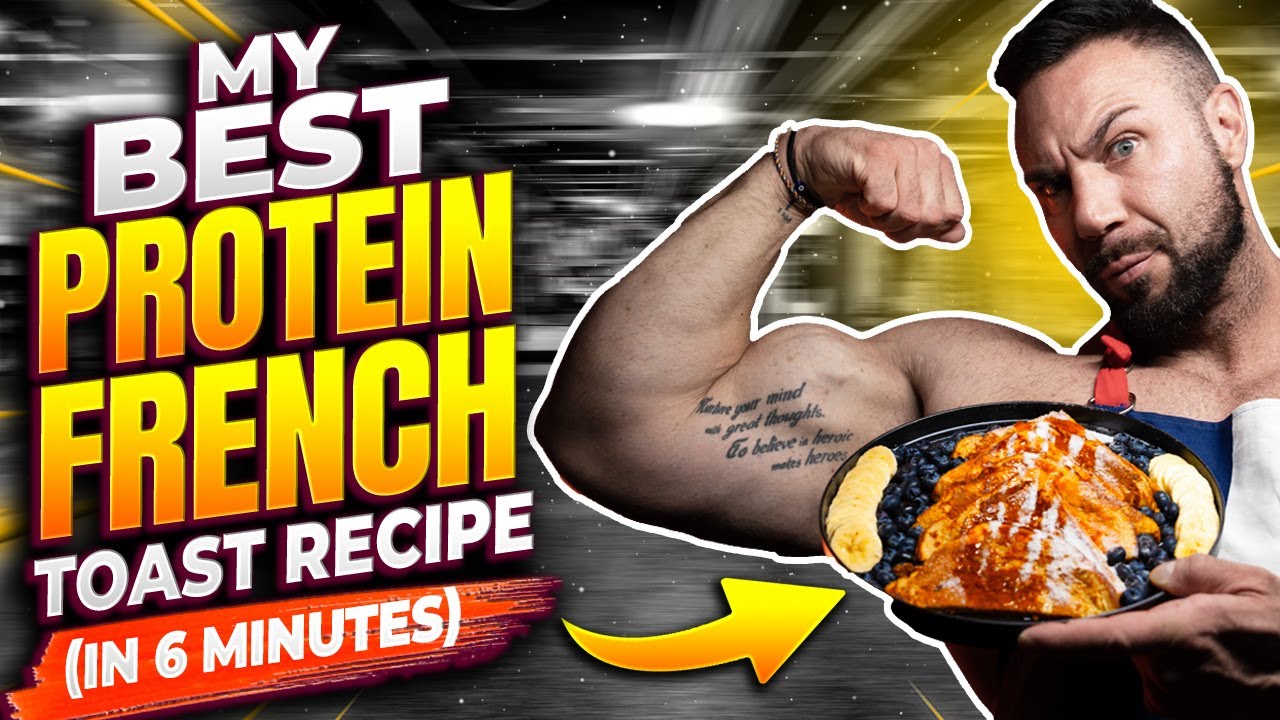
“French toast is supposed to be indulgent. The problem is that the traditional version — milk, eggs, butter, syrup — burns through its calories on flavors you forget by noon. This version keeps every bit of that golden, custardy satisfaction and quietly swaps the hollow calories for 38 grams of complete protein per plate. The secret is blending Greek yogurt and cottage cheese into the custard. Not stirring. Blending. Smooth enough that nobody at the table knows what's in it unless you tell them.”
Why This Recipe Works
French toast does not need to be a nutritional compromise. The original version — bread soaked in eggs and milk, fried in butter — is fine. It delivers about 12 grams of protein per serving and asks you to spend the next two hours wondering when you'll be hungry again. This version delivers 38 grams per serving and still tastes like French toast, not a fitness supplement.
The mechanism is simple: replace the milk with a 50/50 blend of Greek yogurt and cottage cheese. Two protein-dense dairy products that together create a custard richer and creamier than the original, with a macronutrient profile that actually justifies the meal.
The Blending Requirement
This is where most high-protein French toast recipes fail. They call for whisking the cottage cheese into the egg mixture and hoping for the best. You cannot whisk cottage cheese smooth. Its protein structure forms visible curds that no amount of stirring will break down. What you get is a lumpy custard that coats the bread unevenly and leaves white specks on the finished toast.
Forty-five seconds in a blender solves this completely. The high-speed emulsification breaks the cottage cheese down to a molecular level, combining it with the eggs and yogurt into a silky, uniform liquid indistinguishable from a traditional cream-based custard. This is a 45-second step that transforms the recipe from "healthy but weird" to "nobody can tell."
Why the Fat Combination Matters
Butter alone burns at medium-high heat after the first batch. Coconut oil alone lacks the flavor that makes French toast taste like French toast. The combination — one tablespoon of each — gives you the Maillard browning and dairy richness of butter with the thermal stability of coconut oil. By the time you're cooking batch two, the pan is still at the right temperature and the fat hasn't darkened to the point of bitterness.
The heat itself is non-negotiable. You need to see the butter foaming before the bread goes in. That foam tells you the water content has cooked off and the surface is hot enough to immediately begin browning the custard coating. Drop the bread into a pan that isn't hot enough and you're steaming it, not frying it — the result is pale, soft toast that never develops a crust.
The Dipping Window
Three to four seconds per side. Not a long soak — a dip. Whole grain bread is denser than brioche or challah, which means it absorbs liquid faster and deeper than most French toast recipes account for. Over-soaked slices have no structural integrity left by the time they hit the pan. They stick, tear, and release excess moisture that turns the cooking surface into a pool instead of a searing contact zone.
If you want maximum custard penetration without structural failure, press gently on each slice as you dip. The gentle compression opens the bread's interior structure and allows the custard to wick inward without flooding the surface.
The Protein Architecture
Greek yogurt and cottage cheese aren't interchangeable — they work together through different protein mechanisms. Greek yogurt contributes whey and casein proteins that create the body of the custard and hold it together during cooking. Cottage cheese adds curds that, once emulsified, contribute a lush richness and secondary protein density that Greek yogurt alone can't achieve. Either ingredient by itself gets you to about 20 grams of protein per serving. Together, blended smooth, they reach 38 grams while keeping the fat below 10 grams.
The result is a breakfast that keeps you satiated for 4-5 hours — not because it's heavy, but because the protein load slows gastric emptying and stabilizes blood sugar in a way that carbohydrate-dominant breakfasts simply don't. This is the version you make on days when skipping lunch isn't an option and eating garbage isn't either.
Where Beginners Mess This Up
Before we start, read this. These are the 4 reasons your high-protein french toast (38g protein, zero sacrifice) will fail:
- 1
Stirring instead of blending the custard: Cottage cheese has visible curds. If you whisk it into the egg mixture, you get white lumps on the surface of your French toast that look and taste wrong. Blending takes 45 seconds and turns the entire mixture into a silky, uniform custard. This is not optional.
- 2
Soaking the bread too long: Three to four seconds per side — not a soak, a dip. Thick whole grain bread is denser than brioche and absorbs liquid faster than most people expect. Over-soaked slices fall apart in the pan and never develop a crispy exterior because the surface is too wet to brown properly.
- 3
Cooking on heat that's too low: Medium-high heat is correct. Low heat gives you pale, steamed French toast that's wet in the middle. You need the butter-oil combination to be actively foaming and shimmering before the bread goes in. That initial contact with high heat sets the crust.
- 4
Crowding the pan: Every extra slice in the pan drops the surface temperature and traps steam. Work in batches. Crowded pans produce soft, gray toast instead of golden, crispy slices.
The Video Reference Library
Want to see it in action? Here are the exact videos we analyzed and combined to build this foolproof recipe translation:
The source video for this recipe's approach. Demonstrates the blending technique and shows exactly what the custard consistency should look like before dipping.
🛠️ Core Equipment
- BlenderNon-negotiable for this recipe. The cottage cheese curds must be fully emulsified into the custard. A whisk cannot do this. Even a cheap [countertop blender](/kitchen-gear/review/blender) gets the job done in under a minute.
- Large heavy-bottomed skilletEven heat distribution across the cooking surface prevents hot spots that burn one slice while undercooking the next. A [cast iron skillet](/kitchen-gear/review/cast-iron-skillet) is ideal — it retains heat between batches so you don't need to wait for the pan to recover.
- Shallow baking dish or wide bowlYou need room to lay the bread flat and dip both sides without the custard splashing. A standard dinner bowl doesn't give you enough surface area to coat evenly.
- Spatula with a wide, thin bladeWet custard-coated bread is fragile before it sets. A wide [fish spatula](/kitchen-gear/review/fish-spatula) gets under the entire slice cleanly so you don't crack it mid-flip.
High-Protein French Toast (38g Protein, Zero Sacrifice)
🛒 Ingredients
- ✦4 large eggs
- ✦1 cup plain nonfat Greek yogurt
- ✦1/2 cup low-fat cottage cheese
- ✦1/4 cup unsweetened almond milk
- ✦1 tsp vanilla extract
- ✦1/2 tsp ground cinnamon
- ✦1/4 tsp ground nutmeg
- ✦1/4 tsp sea salt
- ✦8 slices whole grain bread, 1 inch thick
- ✦2 tbsp unsalted butter, divided
- ✦1 tbsp coconut oil
- ✦2 tbsp raw honey
- ✦1/4 cup fresh berries, for serving
- ✦2 tbsp sliced almonds, for topping
👨🍳 Instructions
01Step 1
Combine eggs, Greek yogurt, cottage cheese, almond milk, and vanilla extract in a blender. Blend on high for 45 seconds until completely smooth and creamy.
02Step 2
Pour the blended custard into a shallow baking dish. Stir in cinnamon, nutmeg, and sea salt.
03Step 3
Heat 1 tablespoon of butter and the coconut oil together in a large skillet over medium-high heat until the butter foams and the oil shimmers, about 2 minutes.
04Step 4
Working one slice at a time, dip each piece of bread into the custard for 3-4 seconds per side. You want it saturated but not disintegrating.
05Step 5
Place coated slices in the hot skillet in a single layer. Do not crowd. Cook in batches if needed.
06Step 6
Cook for 4-5 minutes until the bottom is deep golden brown and the edges look set.
07Step 7
Flip each slice carefully and cook the second side for 3-4 minutes until equally golden.
08Step 8
Transfer to a warm plate. Add the remaining tablespoon of butter to the pan and repeat with the remaining slices.
09Step 9
Drizzle finished French toast with honey and top with fresh berries and sliced almonds just before serving.
Nutrition Per Serving
Estimates based on standard preparation. Adjustments alter macros.
🔄 Substitutions
Instead of Plain nonfat Greek yogurt...
Use Plain 2% Greek yogurt or Icelandic skyr
Richer, silkier custard with a subtle tang. Minimal calorie increase. Skyr has slightly higher protein per gram than standard Greek yogurt.
Instead of Low-fat cottage cheese...
Use Full-fat cottage cheese or ricotta
Creamier custard and slightly higher satiety. Ricotta produces the silkiest result but adds roughly 30 calories per serving.
Instead of Unsweetened almond milk...
Use Fairlife protein shake (vanilla) or cashew milk
Fairlife pushes the protein to approximately 48g per serving. Cashew milk creates a more decadent, buttery flavor without the protein bump.
Instead of Whole grain bread...
Use Sprouted grain bread or sourdough
Sprouted grain holds the custard better due to denser structure. Sourdough adds mild acidity that plays well against the sweet toppings. Both have lower glycemic impact than standard whole grain.
🧊 Storage & Reheating
In the Fridge
Store cooked French toast in an airtight container for up to 3 days. Separate layers with parchment paper to prevent sticking.
In the Freezer
Freeze in a single layer on a baking sheet first, then transfer to a freezer bag. Keeps for up to 2 months. Reheat directly from frozen.
Reheating Rules
Reheat in a dry skillet over medium heat for 2-3 minutes per side. The microwave works in a pinch but produces soft, steamed toast instead of crispy. The skillet method takes 5 minutes and is worth it.
❓ Frequently Asked Questions
Can I taste the cottage cheese?
No. When blended smooth, cottage cheese is completely undetectable — it contributes creaminess and protein without any curd texture or distinct flavor. The vanilla, cinnamon, and nutmeg dominate. This is the most common concern from people who have never made this recipe, and it disappears after the first bite.
Why is my French toast soggy in the middle?
Two possible causes: the heat was too low, or you soaked the bread too long. Medium-high heat is correct — lower than that and the custard steams instead of sets. Three to four seconds of dipping per side is enough for thick-cut whole grain bread.
Do I need the coconut oil, or can I just use butter?
You can use butter alone, but it will burn by your second batch. Coconut oil raises the smoke point of the fat mixture, which means you can maintain medium-high heat throughout without the pan getting too dark. If you don't have coconut oil, a neutral oil like avocado works identically.
Can I make this dairy-free?
Replace the Greek yogurt with a thick coconut yogurt and the cottage cheese with silken tofu blended smooth. The protein drops significantly — from 38g to roughly 14g per serving — but the texture holds up well.
Why blend the custard instead of just whisking?
Cottage cheese has a grainy, curdled structure that whisking cannot break down. In a whisked custard, the curds coat the bread surface unevenly and become visible on the finished toast. Blending emulsifies everything into a uniform liquid in under a minute. It is the single most important technique in this recipe.
Can I make this ahead for the week?
Yes. Cook all eight slices, undercooking slightly, and store in the fridge for up to 3 days or freezer for 2 months. Reheat in a dry skillet to restore the crust. The custard mixture can also be blended and stored in a sealed jar for up to 2 days — just stir before using.
The Science of
High-Protein French Toast (38g Protein, Zero Sacrifice)
We turned everything on this page into a beautiful, flour-proof PDF cheat sheet. Print it out, stick it to your fridge, and never mess up your high-protein french toast (38g protein, zero sacrifice) again.
*We'll email you the high-res PDF instantly. No spam, just perfectly cooked meals.
AlmostChefs Editorial Team
We translate the internet's most popular cooking videos into foolproof, beginner-friendly written recipes. We analyze multiple methods, test them in our kitchen, and engineer a single "Master Recipe" that gives you the best possible result with the least possible stress.