Easy Pozole That Actually Tastes Like the Real Thing
A streamlined take on the traditional Mexican hominy stew — dried guajillo and ancho chiles blended into a rich, smoky broth with tender rotisserie chicken and hearty hominy. Ready in 50 minutes without sacrificing the depth that makes pozole worth making.
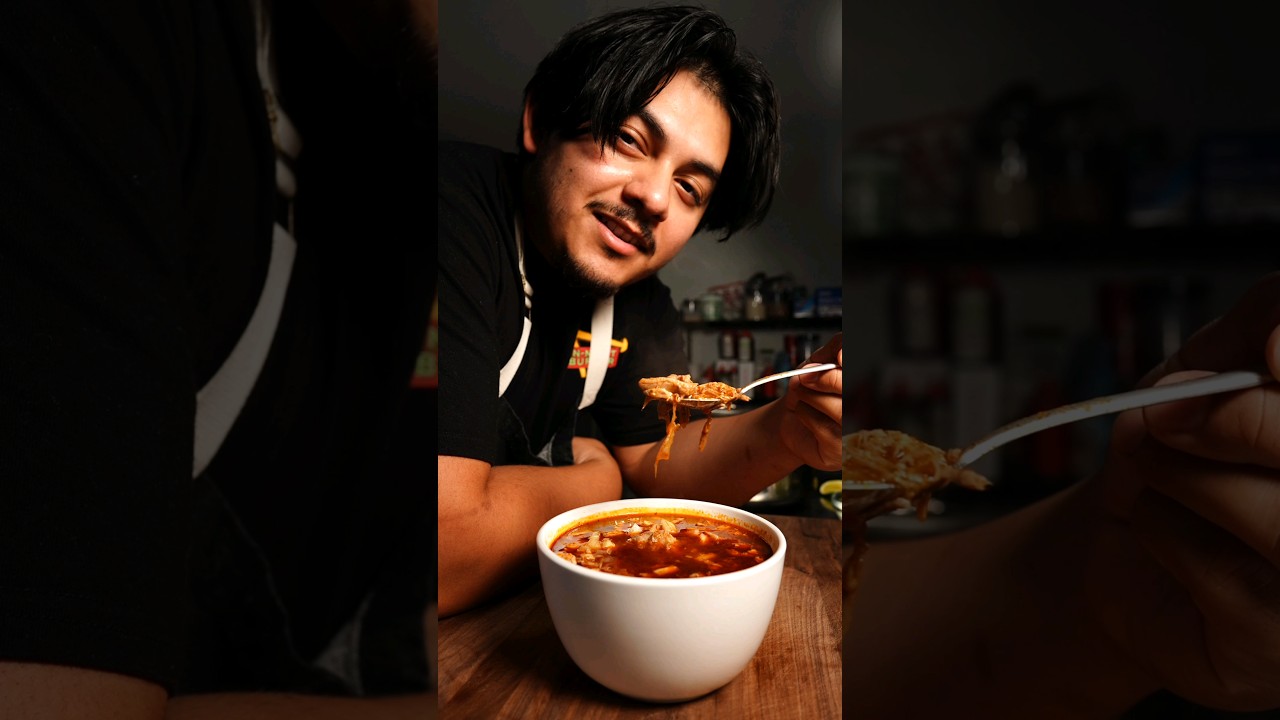
“Pozole is one of those dishes that looks intimidating but runs on a single technique: getting the dried chiles right. Everything else — the hominy, the chicken, the toppings — is assembly. The problem is most weeknight versions skip the chile work entirely and end up with flat, forgettable broth that tastes like mild enchilada sauce poured over corn. This version does the work in four minutes and tastes like it cooked all day.”
Why This Recipe Works
Pozole is one of the oldest dishes in the Americas — dating back to pre-Columbian Aztec ritual — and it has survived this long because the architecture is nearly perfect. Hominy and a chile-based broth are, nutritionally and texturally, made for each other. The nixtamalized corn contributes a chewy, substantial body that holds up to long simmering. The dried chile broth provides layers of earthiness, smoke, and heat that develop slowly over time. The toppings — raw cabbage, crunchy radishes, fresh lime — exist specifically to create contrast against all that warm, heavy depth.
The weeknight problem with pozole is that most shortcuts eliminate the dried chiles entirely. They replace them with canned enchilada sauce or generic chile powder, and the result tastes exactly like what it is: a compromise. The broth loses its characteristic earthy smokiness and becomes something closer to a mildly spiced tomato soup with corn in it. Not pozole. Not close.
The Chile Foundation
Guajillo and ancho are the two workhorses of Mexican red chile cookery, and their combination is not accidental. Guajillos are thin-skinned, mildly hot, and deliver a clean, fruity heat with a distinct tannic bite. Anchos — dried poblanos — are wide-shouldered, dark, and bring a sweet, chocolatey depth that rounds out the guajillo's sharpness. Together they build the kind of broth complexity that neither could achieve alone.
The four-minute toasting process is what activates them. A dry skillet over medium heat triggers the Maillard reaction on the chile skin's surface, converting the sugar and amino acid compounds into new aromatic molecules — the same chemistry that makes roasted coffee smell different from raw beans. Press the chiles flat, 30 seconds per side, pull them before any charring appears. Then blend with broth and strain. The entire chile prep workflow from dry skillet to pot takes less time than waiting for a pot of water to boil.
Straining is not optional. Dried chile skins, even after high-powered blending, leave behind fine fibrous particles that create a gritty mouthfeel in the finished broth. A fine-mesh sieve catches these while letting the fully extracted flavor compounds through. It's 30 seconds of extra effort that separates a professional-tasting broth from a homemade one.
Rotisserie Chicken as a Tool
Using rotisserie chicken is not a compromise — it's a deliberate technique decision. Pork shoulder pozole requires 60-75 minutes of active braising to become tender. Rotisserie chicken has already been cooked to peak juiciness and then cooled, which means its fibers have relaxed and are ready to absorb the broth's flavor immediately. Twenty minutes of simmering is enough.
The key is not overworking it. Add the shredded chicken when instructed, keep the simmer gentle, and pull the pot off heat at the 20-minute mark. Chicken that simmers too long in any liquid tightens back up and turns stringy. The broth should do the flavor work — the chicken's job is texture and protein.
Hominy Is Not Rice
One of the most common errors in cooking pozole for the first time is treating hominy like rice or dried beans — as an ingredient that needs to be cooked through. Canned hominy is already nixtamalized and fully cooked. It enters the pot tender. The simmer phase exists purely to allow the kernels to absorb the broth's flavor, not to soften them further.
This distinction matters because overcooked hominy loses the chewy, slightly bouncy texture that makes pozole satisfying. The kernels should have resistance when you bite them — a gentle push-back, not the soft collapse of a canned bean that's been simmered too long. Add the hominy at step seven and trust the 15-20 minute window.
The Topping Architecture
Traditional pozole toppings are not optional garnish — they are structural components of the dish. The broth is rich, hot, and heavy. Shredded raw cabbage adds cool crunch and a mild, slightly bitter counterpoint. Thinly sliced radishes contribute peppery sharpness. Fresh lime juice cuts through the fat. Crispy tortilla strips provide the same function as croutons in French onion soup: textural relief.
A Dutch oven matters here because it holds heat well enough to stay steaming hot while you arrange toppings at the table. Cold pozole is just stew. Hot pozole with cold toppings is architecture.
Set the toppings out in small bowls and let people build their own bowl. The entire point of the topping tradition is customization — heat level, crunch, acid balance. Don't pre-dress the bowls and eliminate the experience.
Where Beginners Mess This Up
Before we start, read this. These are the 4 reasons your easy pozole that actually tastes like the real thing will fail:
- 1
Burning the dried chiles during toasting: Guajillo and ancho chiles need 30 seconds per side in a dry skillet — not a minute, not until they're deeply charred. Burnt chiles turn bitter and ruin the entire broth. Pull them the moment they release their aroma and start to soften. They should smell earthy and sweet, not acrid.
- 2
Skipping the straining step: After blending the toasted chiles with broth, you must strain the mixture through a fine-mesh sieve. The chile skins break down into small fibers that don't fully pulverize, leaving a gritty texture in the finished stew. Thirty seconds of straining is the difference between a silky broth and one that feels like wet cardboard.
- 3
Over-simmering the hominy: Canned hominy is already cooked. It only needs 15-20 minutes to absorb the broth's flavor. Extended simmering turns the kernels from pleasantly chewy to soft and grainy — the same way overcooked beans lose their character. Add the hominy when instructed and don't improvise extra cooking time.
- 4
Underseasoning before adding toppings: The broth must be properly seasoned on its own before you ladle it out. Toppings like cabbage and radishes are textural accents, not seasoning agents. Taste and adjust salt and cayenne before serving — a timid broth cannot be fixed at the table.
The Video Reference Library
Want to see it in action? Here are the exact videos we analyzed and combined to build this foolproof recipe translation:
The source video for this recipe's technique. Clear demonstration of the chile toasting and blending process, with good close-ups of the color progression you're aiming for in the broth.
🛠️ Core Equipment
- Dutch oven or heavy-bottomed potThe stew needs sustained even heat for the simmering phase. A thin pot creates scorching on the bottom that makes the broth bitter. A [Dutch oven](/kitchen-gear/review/dutch-oven) handles both the high-heat chile sauce reduction and the low simmer without complaint.
- BlenderA standard countertop blender pulverizes the toasted chiles and broth into a smooth sauce. An immersion blender works but doesn't get the skins fine enough — you'll end up straining out more volume than you want.
- Fine-mesh sieveNon-negotiable for straining the blended chile mixture. A colander has holes too large. You need a [fine-mesh sieve](/kitchen-gear/review/fine-mesh-sieve) to catch the chile skin fibers without losing the flavor.
- Small dry skilletFor toasting the chiles separately from the main pot. Keeps heat control precise and lets you pull the chiles immediately when done without trying to fish them out of a hot onion mixture.
Easy Pozole That Actually Tastes Like the Real Thing
🛒 Ingredients
- ✦2 tablespoons extra-virgin olive oil
- ✦1 large yellow onion, finely diced
- ✦4 garlic cloves, minced
- ✦2 dried guajillo chiles, seeds and stems removed
- ✦1 dried ancho chile, seeds and stems removed
- ✦1 teaspoon dried Mexican oregano
- ✦1 teaspoon ground cumin
- ✦6 cups low-sodium chicken broth
- ✦2 cans (15 ounces each) white hominy, drained and rinsed
- ✦2 cups shredded rotisserie chicken
- ✦1 medium red bell pepper, diced
- ✦1 cup diced zucchini
- ✦1 teaspoon sea salt
- ✦1/2 teaspoon black pepper
- ✦1/4 teaspoon cayenne pepper
- ✦2 tablespoons fresh cilantro, chopped
- ✦1 lime, cut into wedges
- ✦Toppings: sliced radishes, shredded cabbage, thinly sliced jalapeños, crispy tortilla strips
👨🍳 Instructions
01Step 1
Heat olive oil in a large Dutch oven or heavy-bottomed pot over medium-high heat. Add the diced onion and sauté for 3-4 minutes, stirring frequently, until the edges turn translucent.
02Step 2
Add the minced garlic and cook for 1 minute more, stirring constantly to prevent browning.
03Step 3
In a separate dry skillet over medium heat, toast the guajillo and ancho chiles for about 30 seconds per side until they release their aroma and soften slightly. Do not let them darken past deep red-brown.
04Step 4
Transfer the toasted chiles to a blender with 1 cup of the chicken broth. Blend until completely smooth, then strain through a fine-mesh sieve directly into the pot with the onion and garlic.
05Step 5
Stir in the dried oregano and ground cumin. Cook for 2-3 minutes, stirring occasionally, until the spices bloom and the mixture darkens slightly.
06Step 6
Pour in the remaining 5 cups of chicken broth and bring to a gentle boil.
07Step 7
Add the drained hominy, shredded rotisserie chicken, diced bell pepper, and zucchini. Stir well to combine.
08Step 8
Reduce heat to low and simmer uncovered for 15-20 minutes, until the vegetables are tender and the broth has deepened in color.
09Step 9
Season with sea salt, black pepper, and cayenne pepper. Taste and adjust — the broth should be bold and slightly smoky with a gentle heat at the back.
10Step 10
Stir in the fresh cilantro and a squeeze of lime juice from one wedge just before serving.
11Step 11
Ladle into bowls and serve with the remaining lime wedges and toppings: radishes, cabbage, jalapeños, and tortilla strips.
Nutrition Per Serving
Estimates based on standard preparation. Adjustments alter macros.
🔄 Substitutions
Instead of Rotisserie chicken...
Use Shredded turkey breast
Slightly lighter flavor with less fat. Works well but benefits from an extra minute in the broth to pick up seasoning — turkey is more neutral than chicken.
Instead of White hominy...
Use Blue hominy or half hominy, half cooked chickpeas
Blue hominy has a nuttier flavor and more anthocyanins. Adding chickpeas thickens the broth slightly and increases plant-based protein. Either works without changing the method.
Instead of Low-sodium chicken broth...
Use Bone broth or homemade vegetable broth
Bone broth adds richness and a slightly gelatinous body. Vegetable broth keeps the dish plant-forward but lightens the overall savoriness — compensate with an extra pinch of salt and oregano.
Instead of Dried guajillo and ancho chiles...
Use 2 tablespoons mild chile powder plus 1 tablespoon smoked paprika
An acceptable weeknight shortcut when dried chiles are unavailable. Skip the toasting step and add directly to the pot. You lose some complexity but retain smokiness and color.
🧊 Storage & Reheating
In the Fridge
Store in an airtight container for up to 4 days. The broth intensifies as it sits — you may need to add a splash of water or broth when reheating.
In the Freezer
Freeze the broth and hominy base for up to 3 months. Leave out the fresh vegetables when freezing — add freshly diced bell pepper and zucchini when reheating.
Reheating Rules
Reheat on the stovetop over medium-low heat with a splash of chicken broth. Stir occasionally. Microwave works in a pinch but the hominy texture suffers.
❓ Frequently Asked Questions
What is hominy and where do I find it?
Hominy is dried maize kernels that have been treated with an alkaline solution — a process called nixtamalization — which removes the outer hull and changes the flavor and texture into something chewy, slightly sweet, and distinctly corn-flavored. It's sold canned in the Latin foods aisle of most grocery stores. Look for white hominy. Drain and rinse it before using.
Can I use fresh chiles instead of dried?
No. Dried guajillo and ancho chiles have a fundamentally different flavor profile than fresh — earthy, smoky, and complex in a way that fresh chiles cannot replicate. Fresh chiles are brighter and sharper. If dried chiles are unavailable, use the chile powder and smoked paprika substitution listed above.
Is pozole gluten-free?
This recipe is gluten-free as written. Hominy is a corn product and contains no gluten. Check your chicken broth label to confirm it's certified gluten-free if that's a strict requirement — most low-sodium broths are, but some brands add flavorings with gluten-containing ingredients.
Can I make this with pork instead of chicken?
Yes, and traditional pozole rojo is typically made with pork shoulder. Cut 1.5 pounds of pork shoulder into 2-inch chunks and sear in the Dutch oven before adding the onion. Simmer the pork in the broth for 60-75 minutes until tender before adding the hominy. The total time increases to around 2 hours but the depth of flavor is substantially better.
Why does my broth taste bitter?
The chiles burned during toasting. Bitterness from charred chile skin cannot be corrected after the fact — it permeates the entire broth. If this happens, the fix is starting over with fresh chiles. Prevention: 30 seconds per side maximum, medium heat only, pull them the instant you smell them.
What's the difference between pozole rojo, verde, and blanco?
The color refers to the chile base. Rojo (red) uses dried red chiles like guajillo and ancho — this recipe. Verde (green) uses tomatillos and fresh green chiles for a brighter, tangier broth. Blanco (white) uses no chile sauce at all, relying on a clean pork or chicken broth. All three use hominy and share the same topping tradition.
The Science of
Easy Pozole That Actually Tastes Like the Real Thing
We turned everything on this page into a beautiful, flour-proof PDF cheat sheet. Print it out, stick it to your fridge, and never mess up your easy pozole that actually tastes like the real thing again.
*We'll email you the high-res PDF instantly. No spam, just perfectly cooked meals.
AlmostChefs Editorial Team
We translate the internet's most popular cooking videos into foolproof, beginner-friendly written recipes. We analyze multiple methods, test them in our kitchen, and engineer a single "Master Recipe" that gives you the best possible result with the least possible stress.