The Classic Pound Cake (Nail the Ratio, Never Miss Again)
A dense, tender, buttery loaf built on the legendary 1:1:1:1 ratio of butter, sugar, eggs, and flour. We stripped the classic down to its essentials and added the technique details that most recipes skip — so your crumb comes out perfect every single time.
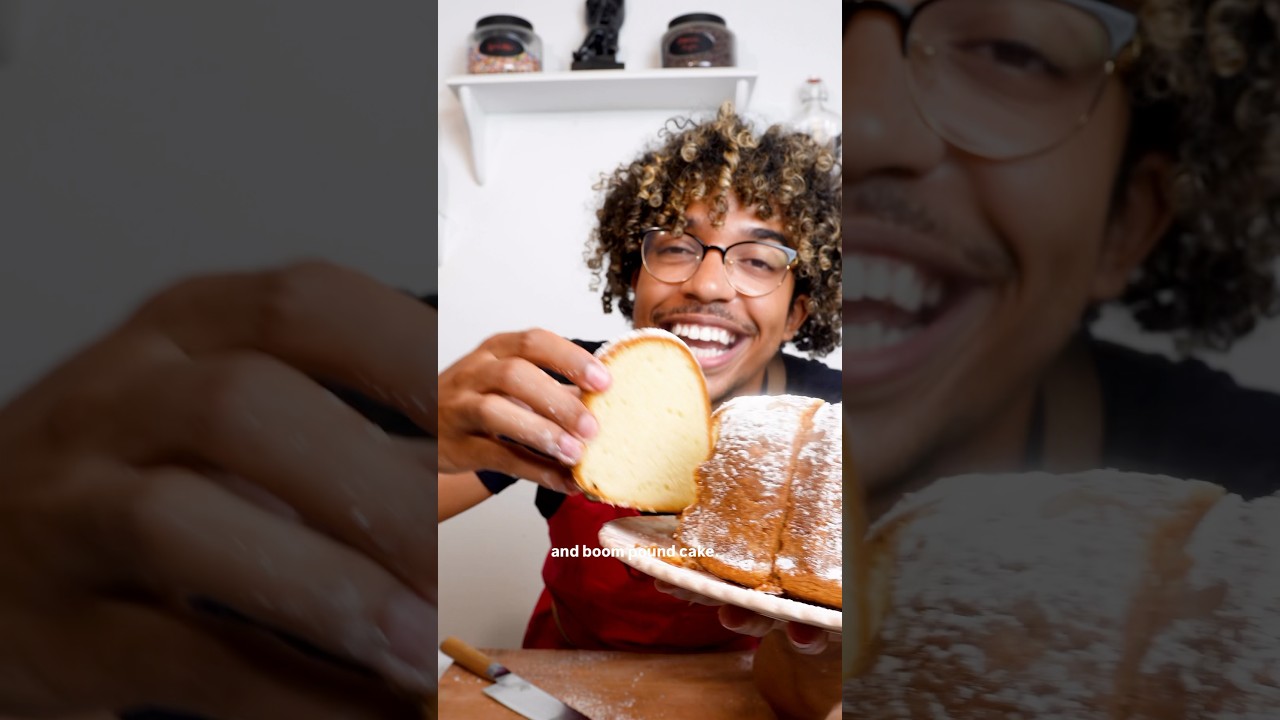
“Pound cake is the oldest ratio in baking. Equal weights of butter, sugar, eggs, and flour. That's it. And yet most homemade versions come out either rubbery, sunken, or dense in the wrong way — a heavy brick instead of a tender, close-crumbed slice that practically dissolves. The ratio is not the problem. Execution is. We're going to fix that.”
Why This Recipe Works
Pound cake is the most honest recipe in baking. There is nowhere to hide. No layers, no frosting, no decoration to distract from structural failure. Just a loaf that either has the right crumb or it doesn't. The ratio that gives this cake its name — equal parts butter, sugar, eggs, and flour — has been producing excellent results since the 18th century. The recipe isn't broken. The execution usually is.
The Creaming Problem
Most home bakers undersell the creaming step. They give it thirty seconds, see pale yellow butter and sugar, and call it ready. What you actually need is 3-4 full minutes at medium-high speed until the mixture goes noticeably pale — almost white — and looks visibly fluffy. The volume should increase by nearly half.
This matters because pound cake uses baking powder as a backup, not a primary leavener. The main structural lift comes from the air bubbles you force into the fat during creaming. Those bubbles expand during baking and create the tender, tight crumb that defines the classic. Shortcut the creaming and you're starting with a deflated foundation that no amount of oven heat can fully recover.
The eggs matter too. Each one goes in alone, beaten until fully absorbed before the next follows. The yolks are emulsifiers — their lecithin holds the fat and water molecules together in a stable mixture. Add two eggs at once and the emulsion struggles. Rush the mixing and you get that broken, greasy batter that never quite bakes right.
Temperature Is Non-Negotiable
Room temperature means room temperature. Butter should yield easily when pressed with a finger — not cold and firm, not shiny and soft from the microwave. Cold butter traps air poorly during creaming. Melted or over-softened butter collapses the aerated structure before it even makes it to the oven.
Eggs straight from the refrigerator shock the emulsified butter mixture. The fat seizes around the cold protein and the batter breaks. Let them sit out for 30-60 minutes. The milk too. This is not fussiness — it's the difference between a batter that cooperates and one that fights you.
The Flour Addition and Why You Stop Mixing
Once flour hits the batter, gluten development begins. Gluten is what makes bread chewy and elastic — two qualities that are catastrophic in pound cake. The alternating addition method — flour, milk, flour, milk, flour — keeps the batter's hydration level from fluctuating too dramatically, which would otherwise cause the gluten to overdevelop.
Mix on low. Mix until just combined. Stop before it looks perfectly smooth. Those few flour streaks will vanish on their own. The moment you reach for "perfectly blended," you've overworked the batter and the crumb will be tight and rubbery rather than tender.
325°F and the Long Bake
A lower oven temperature is not the conservative choice — it's the correct one. High heat sets the exterior crust before the interior can expand, creating a raw, sunken center surrounded by a fully baked shell. At 325°F, the entire loaf rises slowly and evenly. The top cracks — and it should crack, that split is a sign of even expansion — but it does so after the structure is already stable.
Use a loaf pan with straight sides for the classic profile, and pull the cake onto a wire rack as soon as the rest period is done. Steam trapped under the pan turns the bottom crust soft. The rack lets it breathe.
What Lemon and Almond Extract Actually Do
The lemon zest doesn't make this a lemon pound cake — it brightens everything else. Butter-heavy batters can taste flat and one-dimensional without an acid element. The zest's volatile oils cut through the richness and make the vanilla more perceptible. Remove it and the cake tastes slightly dull, even though nothing else changed.
The almond extract is optional but deliberate. A quarter teaspoon is below the threshold where you taste almond distinctly. What it does is amplify the vanilla and add a faint floral warmth that reads as depth rather than as a specific flavor. It's the oldest baker's trick in the book, and it works.
Where Beginners Mess This Up
Before we start, read this. These are the 4 reasons your the classic pound cake (nail the ratio, never miss again) will fail:
- 1
Using cold butter or cold eggs: Room temperature is not a suggestion. Cold butter won't aerate properly during creaming — you'll get dense crumb instead of the light, pale, fluffy base the batter needs. Cold eggs cause the emulsion to break, leaving you with a greasy, curdled batter that never fully recovers in the oven. Pull everything out 30-60 minutes before you start.
- 2
Undermixing or overmixing the batter: Creaming the butter and sugar requires 3-4 full minutes at medium-high speed until the mixture turns pale yellow and almost doubles in volume. That air is your leavening. But once you add the flour, switch to low and mix only until combined. Overworking the gluten at that stage makes the crumb tight and chewy instead of tender.
- 3
Baking at too high a temperature: 325°F is not a typo. Higher heat sets the crust before the center finishes, causing the top to crack aggressively and leaving a raw, dense core. The low-and-slow approach gives the batter time to rise evenly before the crust locks it in. A toothpick at 55 minutes is your signal — not the clock alone.
- 4
Cutting into it too soon: The crumb is still setting as the cake cools. Slice a warm pound cake and it compresses under the knife into a gummy layer. Wait the full cool-down — 1 to 2 hours on a wire rack. The patience is part of the recipe.
The Video Reference Library
Want to see it in action? Here are the exact videos we analyzed and combined to build this foolproof recipe translation:
The anchor video for this recipe. Covers the creaming method in detail and shows exactly what properly aerated butter looks like before the eggs go in.
🛠️ Core Equipment
- Stand mixer or hand mixerCreaming butter and sugar by hand simply cannot achieve the volume and aeration a mixer provides in 3-4 minutes. Under-aerated butter is the number one cause of dense pound cake.
- 9-inch loaf panSize matters. A smaller pan produces overflow; a larger pan spreads the batter too thin and dries it out. A standard 9x5-inch [loaf pan](/kitchen-gear/review/loaf-pan) with straight sides gives you the classic tall, domed profile.
- Wire cooling rackCooling in the pan traps steam underneath, softening the bottom crust into a soggy layer. A [wire rack](/kitchen-gear/review/wire-rack) lets air circulate all around the cake so the crust stays intact.
- Parchment paperEven with greased pans, pound cake can stick at the dense bottom layer. A parchment liner is ten seconds of insurance against losing half your cake to the pan.
The Classic Pound Cake (Nail the Ratio, Never Miss Again)
🛒 Ingredients
- ✦2 cups all-purpose flour
- ✦1 teaspoon baking powder
- ✦1/2 teaspoon fine sea salt
- ✦1 cup unsalted butter, softened to room temperature
- ✦1 1/4 cups granulated sugar
- ✦4 large eggs, room temperature
- ✦1/2 cup whole milk, room temperature
- ✦2 teaspoons pure vanilla extract
- ✦1/4 teaspoon almond extract, optional
- ✦Zest of 1 medium lemon, finely grated
👨🍳 Instructions
01Step 1
Preheat your oven to 325°F and position a rack in the middle section.
02Step 2
Coat a 9-inch loaf pan with nonstick cooking spray and line the bottom with parchment paper.
03Step 3
Whisk together the flour, baking powder, and salt in a medium bowl. Set aside.
04Step 4
Beat the softened butter and granulated sugar together on medium-high speed for 3 to 4 minutes, until the mixture is pale, light, and noticeably increased in volume.
05Step 5
Add the eggs one at a time, beating well after each addition until fully incorporated before adding the next.
06Step 6
Mix in the vanilla extract, almond extract if using, and lemon zest until evenly distributed.
07Step 7
With the mixer on low, alternate adding the flour mixture and milk in three flour additions and two milk additions, beginning and ending with flour. Mix only until just combined after each addition.
08Step 8
Pour the batter into the prepared pan and smooth the top with an offset spatula.
09Step 9
Bake for 55 to 65 minutes, until a toothpick inserted into the center comes out clean or with just a few moist crumbs.
10Step 10
Remove from the oven and let the cake cool in the pan for 15 minutes.
11Step 11
Turn the cake out onto a wire cooling rack and cool completely before slicing, about 1 to 2 hours.
Nutrition Per Serving
Estimates based on standard preparation. Adjustments alter macros.
🔄 Substitutions
Instead of All-purpose flour...
Use 1 1/2 cups whole wheat plus 1/2 cup all-purpose flour
Produces a slightly denser, earthier crumb with more complex flavor. The lower gluten percentage of the blend helps maintain tenderness despite the bran.
Instead of Granulated sugar...
Use Coconut sugar or date sugar (same amount)
Adds subtle caramel or molasses undertones with gentler sweetness. Lower glycemic index. The cake will be slightly darker in color.
Instead of Unsalted butter...
Use 3/4 cup butter plus 1/4 cup nonfat Greek yogurt
Maintains moisture while reducing heaviness. Adds a slight tang that plays well with the vanilla and lemon. Reduces saturated fat without sacrificing crumb structure.
Instead of Whole milk...
Use Unsweetened oat milk
Minimal flavor impact. Oat milk has a similar fat content to 2% milk and produces a comparable crumb. Almond milk works but results in a very slightly drier texture.
🧊 Storage & Reheating
In the Fridge
Wrap tightly in plastic wrap and refrigerate for up to 5 days. The cold firms the crumb — let slices come to room temperature for 15 minutes before serving.
In the Freezer
Freeze whole or in individual slices, wrapped in plastic then foil, for up to 3 months. Thaw at room temperature still wrapped.
Reheating Rules
Room temperature is the best serving temperature for pound cake. If reheating from cold, 10-15 seconds in the microwave restores the soft crumb without drying it out. Do not use an oven — it pulls moisture.
❓ Frequently Asked Questions
Why did my pound cake sink in the middle?
Three possible causes: underbaking (the structure hadn't fully set when it came out), overmixing the batter after adding flour (too much gluten development creates tension that collapses), or opening the oven door before the cake had set — usually before 40 minutes. Test with a toothpick and trust the 325°F temperature.
Do I really need to cream the butter for 3-4 minutes?
Yes. That time is doing structural work. You're forcing air bubbles into the fat, and those bubbles expand in the oven to leaven the cake. Thirty seconds of halfhearted mixing gives you nothing. Set a timer and let the mixer run.
Can I add mix-ins like blueberries or chocolate chips?
You can. Toss them in a tablespoon of flour first so they don't sink straight to the bottom. Fold them in at the very end by hand, not with the mixer. Keep additions to under 1 cup total or the batter gets too heavy to rise properly.
What makes pound cake different from regular butter cake?
Ratio and density. Traditional pound cake uses equal weights of butter, sugar, eggs, and flour with minimal leavening — the air creamed into the butter does most of the work. Standard butter cake uses more leavening, more liquid, and less fat per cup of flour, producing a lighter, more open crumb. Pound cake is denser by design.
My batter looked curdled after adding the eggs — did I ruin it?
Probably not. Curdling happens when cold eggs hit warm butter and break the emulsion. Keep beating on medium speed — the batter usually comes back together within 60-90 seconds. If it doesn't fully smooth out, add a tablespoon of your measured flour. It acts as an emulsifier and usually saves the batter.
Can I make this in a Bundt pan instead of a loaf pan?
Yes, with adjustments. Grease the Bundt pan extremely thoroughly — every crevice. Reduce baking time to 45-55 minutes since the center tube conducts heat and speeds cooking. Start checking at 40 minutes.
The Science of
The Classic Pound Cake (Nail the Ratio, Never Miss Again)
We turned everything on this page into a beautiful, flour-proof PDF cheat sheet. Print it out, stick it to your fridge, and never mess up your the classic pound cake (nail the ratio, never miss again) again.
*We'll email you the high-res PDF instantly. No spam, just perfectly cooked meals.
AlmostChefs Editorial Team
We translate the internet's most popular cooking videos into foolproof, beginner-friendly written recipes. We analyze multiple methods, test them in our kitchen, and engineer a single "Master Recipe" that gives you the best possible result with the least possible stress.