The Definitive Potato Salad (Stop Drowning It in Mayo)
A creamy, herb-forward potato salad built on a Greek yogurt and olive oil base instead of a jar of mayo. Red potatoes with the skin on, properly cooled, folded into a bright dressing with fresh dill, chives, and a hit of apple cider vinegar. The side dish that actually holds up at a barbecue.
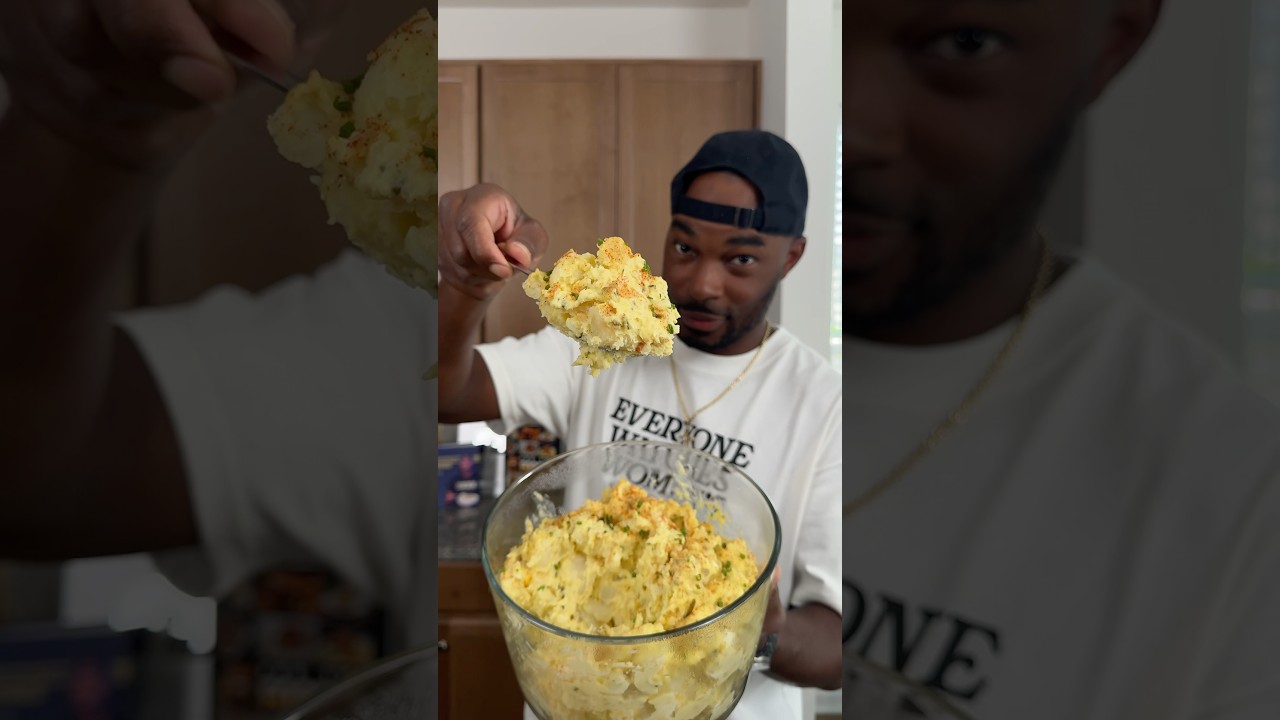
“Potato salad has a bad reputation and it earned it. Mealy potatoes floating in a gray mayo swamp, served at room temperature because someone forgot to refrigerate it. The fix is not complicated: use the right potato, cool it properly, and build a dressing that actually has flavor. We swapped the mayo base for Greek yogurt and olive oil, kept the eggs and celery, and added fresh herbs that make it taste like something you'd actually choose to eat.”
Why This Recipe Works
Potato salad is one of those dishes that exists in two categories: the kind someone made themselves, and the kind that came out of a deli container. The deli version has one job — to be inoffensive. This recipe has a different job.
The Potato Decision
Most potato salad recipes call for russets or generic "boiling potatoes" and then wonder why the result is a bowl of mash with celery in it. Russets are high-starch, which means they fall apart under dressing pressure. Red potatoes are waxy — they hold their cube shape through boiling, draining, cooling, folding, and a night in the refrigerator without dissolving into the surrounding dressing.
The skin stays on for three reasons: fiber, structure, and flavor. Red potato skin has a slightly earthy, mineral quality that grounds the brightness of the yogurt dressing. It also acts as a structural jacket that keeps the cube intact during the folding process. Peel them if you must, but you're removing the best part.
The Dressing Architecture
Greek yogurt works here because it does two things mayo cannot. First, it has actual acidity — its lactic acid is part of the flavor, not just a background note. Second, its protein content means it clings to the potato surface rather than pooling at the bottom of the bowl. The three tablespoons of extra virgin olive oil round out the fat profile and give the dressing a silkiness that pure yogurt alone cannot achieve.
The Dijon mustard is not optional. It acts as an emulsifier that binds the oil and yogurt into a stable, cohesive dressing rather than a broken one. It also adds a sharp, clean heat that differentiates this from a yogurt-cucumber dip. One tablespoon is calibrated — add more and the mustard takes over.
Apple cider vinegar serves the same function here that lemon juice does in a vinaigrette: it cuts through the fat and lifts every other flavor. The quarter-teaspoon of garlic powder adds depth without the harsh raw-garlic bite that would overwhelm cold leftovers the next day.
The Herb Layer
Fresh dill, chives, and parsley are not interchangeable. Dill is the dominant flavor — its anise-adjacent quality is what makes this taste like potato salad rather than a yogurt-dressed salad. Chives add a gentle allium note without the sharpness of raw onion. Parsley is structural: it adds a clean, grassy green flavor that prevents the dill from going too floral.
All three go in at the end, folded gently rather than stirred, so they stay visible and intact. After an hour in the refrigerator, they perfume the entire bowl.
Why the Chill Matters
One hour in the fridge is not a cooling step. It is a flavor-development step. During that hour, the yogurt dressing penetrates the porous potato surface and binds with the starch. The vinegar mellows from sharp to bright. The red onion softens from aggressive to sweet. The herbs release their volatile oils into the surrounding dressing.
Serve it immediately after folding and you have separate components. Serve it after an hour and you have a dish. This is the step that home cooks consistently skip, and it's why homemade potato salad so often disappoints.
The large mixing bowl you fold in matters too. Too small and you're forced to stir with force, which breaks the potato cubes. The goal is to fold — three or four slow, sweeping motions that coat everything evenly without destroying the texture you spent twenty minutes building.
Where Beginners Mess This Up
Before we start, read this. These are the 4 reasons your the definitive potato salad (stop drowning it in mayo) will fail:
- 1
Starting with cold water, then walking away: Potatoes need to start in cold water and come up to temperature gradually — this ensures even cooking from edge to center. But you also need to watch them. Overcooked potato cubes turn to mush the moment you fold them into the dressing. Fork-tender with structure is the target. If the fork goes through with zero resistance, you're already too late.
- 2
Dressing warm potatoes: Warm potatoes are porous. If you add the dressing while they're still hot, they absorb everything immediately and turn into a dense, overly dressed mass with no textural contrast. Give them ten minutes on a clean kitchen towel to steam off excess moisture and cool to room temperature first.
- 3
Under-seasoning the dressing: Potato salad serves cold, and cold temperature mutes flavor. The dressing needs to be slightly over-seasoned at room temperature so it tastes right after an hour in the fridge. Taste before serving and adjust — this step is not optional.
- 4
Skipping the chill time: One hour minimum in the refrigerator is not a suggestion. The Greek yogurt dressing needs time to absorb into the potato surface, the vinegar needs time to mellow, and the fresh herbs need time to perfume the whole bowl. Serve it immediately and it tastes like components that haven't met yet.
The Video Reference Library
Want to see it in action? Here are the exact videos we analyzed and combined to build this foolproof recipe translation:
The foundational technique video for this recipe. Covers the cold-water boiling method, cooling process, and dressing ratios in detail. Watch this before you start if it's your first time.
🛠️ Core Equipment
- Large heavy-bottomed potFor even boiling. A thin pot creates hot spots that cook the outside of the potato cubes while the centers lag. Even heat means all 32 potato cubes finish at the same time.
- Large mixing bowlPotato salad needs room to fold. A bowl that's too small forces you to stir aggressively, which breaks the potato cubes. Give everything space and use a wooden spoon with a gentle hand.
- Colander with fine holesFor draining efficiently. Small potato cubes can slip through a coarse colander. Fine holes let you drain fast without losing anything.
- Kitchen towel or paper towelsSpreading the drained potatoes to cool is the step most recipes skip. Surface moisture on warm potatoes dilutes the dressing. Two minutes on a towel makes a measurable difference.
The Definitive Potato Salad (Stop Drowning It in Mayo)
🛒 Ingredients
- ✦2 pounds red potatoes, unpeeled and cut into 1-inch cubes
- ✦4 large eggs
- ✦1 cup plain Greek yogurt
- ✦3 tablespoons extra virgin olive oil
- ✦2 tablespoons apple cider vinegar
- ✦2 medium celery stalks, finely diced
- ✦1 medium red onion, thinly sliced
- ✦3 tablespoons fresh dill, chopped
- ✦2 tablespoons fresh chives, minced
- ✦1 tablespoon Dijon mustard
- ✦1 teaspoon sea salt
- ✦1/2 teaspoon black pepper
- ✦1/4 teaspoon garlic powder
- ✦2 tablespoons fresh parsley, chopped
- ✦1/2 cup diced cucumber, seeds removed
👨🍳 Instructions
01Step 1
Place unpeeled red potato cubes in a large pot and cover completely with cold water.
02Step 2
Bring the pot to a rolling boil over high heat and cook for 12 to 15 minutes, until the potatoes are fork-tender but still hold their shape.
03Step 3
Drain the potatoes and spread them on a clean kitchen towel to cool for about 10 minutes, allowing excess moisture to evaporate.
04Step 4
Meanwhile, place eggs in a separate small pot, cover with cold water, and bring to a boil over medium-high heat.
05Step 5
Remove from heat, cover with a lid, and let the eggs sit for 10 minutes.
06Step 6
Transfer the eggs to an ice bath and let them cool for 5 minutes, then peel and chop into bite-sized pieces.
07Step 7
Whisk together Greek yogurt, olive oil, apple cider vinegar, Dijon mustard, salt, pepper, and garlic powder in a large mixing bowl until smooth.
08Step 8
Add the cooled potatoes to the dressing and gently fold together with a wooden spoon, being careful not to break the potato cubes.
09Step 9
Fold in the diced celery, red onion, cucumber, and chopped hard-boiled eggs until evenly distributed.
10Step 10
Sprinkle the fresh dill, chives, and parsley over the top and toss once more to incorporate.
11Step 11
Cover and refrigerate for at least 1 hour to allow flavors to meld and the salad to chill completely.
12Step 12
Taste before serving and adjust seasoning with additional salt, pepper, or vinegar as needed. Serve cold.
Nutrition Per Serving
Estimates based on standard preparation. Adjustments alter macros.
🔄 Substitutions
Instead of Plain Greek yogurt...
Use Non-fat Greek yogurt or cashew cream
Non-fat yogurt is slightly tangier and thinner — add an extra teaspoon of olive oil to compensate. Cashew cream (soaked cashews blended with water) makes this fully dairy-free with a richer, more neutral flavor.
Instead of Apple cider vinegar...
Use Lemon juice or white wine vinegar
Lemon juice adds a brighter citrus note. White wine vinegar is more neutral. Either works — just taste as you go since acidity levels vary.
Instead of Red onion...
Use Green onions (scallions)
Milder flavor and easier to digest. Use the white and light green parts. Good option if you're serving to people with onion sensitivity.
Instead of Red potatoes...
Use Yukon Gold potatoes
Similar waxy texture that holds up well in salad. Peel optional. Avoid russets — they're too starchy and will fall apart during folding.
🧊 Storage & Reheating
In the Fridge
Store covered in an airtight container for up to 4 days. Stir before serving and re-season as needed — the potatoes continue absorbing the dressing over time.
In the Freezer
Do not freeze. Greek yogurt separates upon thawing and the potato texture becomes mealy. This recipe is refrigerator-only.
Reheating Rules
This dish is served cold. If it comes out of the fridge too firm, let it sit at room temperature for 10 minutes before serving.
❓ Frequently Asked Questions
Why use Greek yogurt instead of mayo?
Greek yogurt has roughly twice the protein of mayonnaise and significantly less saturated fat. It also provides a tangy acidity that mayo lacks, which means you need less vinegar to balance the dressing. The texture is comparable — slightly lighter, equally creamy. The flavor is different: less rich, more bright. If you prefer the classic, use half yogurt and half mayonnaise as a transition.
Can I make this ahead of time?
Yes, and you should. This salad improves significantly after 12-24 hours in the fridge. Make it the night before for best results. Just taste and re-season before serving — cold storage can mute the salt level.
My potatoes fell apart when I folded them. What happened?
They were overcooked. Fork-tender means the fork goes in with light resistance — not freely. Once potatoes lose all structural integrity, there's nothing to save. Next time, start testing at the 12-minute mark and drain the moment they pass the fork test.
Do I have to keep the skin on the potatoes?
No, but you should. Red potato skin adds fiber, holds the cube together during folding, and contains a higher concentration of nutrients than the flesh. Peeling is purely aesthetic.
Is this recipe gluten-free?
Yes. Every ingredient in this recipe is naturally gluten-free. Verify your Dijon mustard label if you're serving someone with celiac disease — some brands add grain-based thickeners.
How long can I leave this out at a barbecue?
Two hours maximum at room temperature. The yogurt base degrades faster than a mayo base in heat. Keep it in a cooler until you're ready to serve, and put it back on ice between servings if you're outside in summer.
The Science of
The Definitive Potato Salad (Stop Drowning It in Mayo)
We turned everything on this page into a beautiful, flour-proof PDF cheat sheet. Print it out, stick it to your fridge, and never mess up your the definitive potato salad (stop drowning it in mayo) again.
*We'll email you the high-res PDF instantly. No spam, just perfectly cooked meals.
AlmostChefs Editorial Team
We translate the internet's most popular cooking videos into foolproof, beginner-friendly written recipes. We analyze multiple methods, test them in our kitchen, and engineer a single "Master Recipe" that gives you the best possible result with the least possible stress.