Crispy Potato Pancakes (No More Soggy Centers)
Golden, shatteringly crisp potato pancakes with a tender interior — made from freshly grated russet potatoes, bound with egg and flour, and fried in a shallow pool of hot oil. We broke down the most-watched YouTube methods to isolate the exact moisture removal and heat control techniques that separate restaurant-quality latkes from sad, limp discs.

“Potato pancakes look simple. They are simple. And yet most home cooks produce a version that is limp in the center, pale on the exterior, and inexplicably greasy despite being a potato fried in oil. The problem is always moisture. Raw potatoes are roughly 80% water. If you don't pull that water out before the pan hits them, you're not pan-frying — you're steaming. We tested every wringing, salting, and squeezing method to find what actually works.”
Why This Recipe Works
Potato pancakes are an exercise in water management. Everything else — the binder ratio, the oil temperature, the flip timing — exists downstream of that single variable. Get the moisture out, and the rest of the technique falls into place naturally. Leave it in, and no amount of heat or skill rescues you.
The Moisture Problem Is Bigger Than You Think
A raw russet potato is approximately 79% water by weight. When you grate it, you dramatically increase the surface area exposed to heat, which means all that water wants to leave fast. If it leaves in the pan, it steams the potato from the inside out and prevents the Maillard reaction — the browning chemistry responsible for the deep golden crust — from ever occurring. The solution is to extract that water manually before the potato gets anywhere near oil.
Wringing in a kitchen towel is more effective than salting because it works immediately. Salting draws moisture out through osmosis, but that process takes 20-30 minutes and leaves you with a saltier, wetter batter that still needs wringing. The towel method takes 90 seconds and removes more water than salting alone. Wring once, wait two minutes, wring again. The second squeeze always produces more liquid than people expect. That's the moisture that would have made your pancake soft.
The Onion Is Not Optional
Grating onion directly into the potato shreds accomplishes three things simultaneously. The onion's sulfur compounds season the potato from within rather than sitting on the surface. Its juice contributes additional liquid that — along with the starch sediment — actually helps the batter cohere after wringing. And the natural sugars in the onion caramelize during frying, adding complexity to what would otherwise be a one-note starchy crust. Omit the onion and you have a hash brown. Include it and you have a potato pancake.
Oil Temperature Is Binary
There is no "medium heat works fine." For potato pancakes, the oil is either hot enough or it isn't. At the correct temperature — 350°F to 375°F — the outer shreds of potato make contact with the oil and immediately begin drying and browning. A crust forms within the first 60 seconds. That crust is structural. It holds the loose shreds together and creates a barrier that prevents further oil absorption.
Below 350°F, that crust never forms. The potato sits in warm oil, slowly soaking it up, turning greasy and pale. A cast iron skillet is the right vessel here because its thermal mass holds temperature when a cold mass of batter hits the surface. A thin non-stick pan drops 50-75 degrees in the first 30 seconds, killing your frying temperature before the crust has a chance to set.
Binder Ratios and the Structural Logic
Two eggs and three tablespoons of flour for two pounds of potato is not an arbitrary ratio. The eggs provide the protein matrix that gels around the starch shreds during cooking, and the flour adds additional gluten structure that binds the edges where individual shreds meet. Too much flour produces a dense, bready interior that tastes more like a potato dumpling than a pancake. Too little, and the pancake falls apart on the flip — exposing loose shreds to the oil and producing a greasy, fragmented mess.
The starch sediment that settles at the bottom of the bowl after wringing is worth saving. It's pure potato starch, and when added back to the batter it gelatinizes during frying, acting as a third binder that reinforces the structure without adding any flour flavor. Many traditional recipes call for this step implicitly — it's the reason a properly made batter coheres slightly better than one where the starch was discarded.
The Wire Rack Rule
This detail is small and matters enormously. Finished potato pancakes resting on a plate or paper towel trap steam under their bottom crust. Within three minutes, that steam turns the crust soft. A wire rack set over a baking sheet allows air to circulate underneath, keeping the bottom crust as crisp as the top. If you're cooking in batches and want to hold pancakes warm, the rack goes into a 250°F oven. The crust survives intact for up to 30 minutes this way — enough time to finish the whole batch and serve everything at once.
Where Beginners Mess This Up
Before we start, read this. These are the 4 reasons your crispy potato pancakes (no more soggy centers) will fail:
- 1
Not removing enough moisture from the grated potato: This is the root cause of every soggy potato pancake. Raw grated potato releases an enormous amount of starch water during cooking. If that water is still in the shreds when they hit the pan, the surface steams instead of fries. You never get the Maillard reaction crust you're after — just a pale, wet disc that falls apart when you flip it.
- 2
Oil temperature too low: Potato pancakes need to go into hot oil — 350°F to 375°F. Cold oil means the pancake sits in lukewarm fat, absorbs it like a sponge, and fries unevenly from edge to center. You'll know the oil is ready when a pinch of grated potato dropped in sizzles aggressively on contact. If it sits there quietly, wait longer.
- 3
Pressing the pancake too thick: A potato pancake should be no more than half an inch thick. Thicker pancakes require more time in the pan to cook through — and the longer they sit, the more the exterior goes from golden to burnt while the center stays raw. Flatten them firmly when you add them to the pan.
- 4
Flipping too early: The first side needs an uninterrupted 3-4 minutes to form a proper crust. That crust is structural — it holds the shreds together. Flip too early and the pancake falls apart, exposing loose potato strands that absorb oil and turn the bottom of your pan into a mess.
The Video Reference Library
Want to see it in action? Here are the exact videos we analyzed and combined to build this foolproof recipe translation:
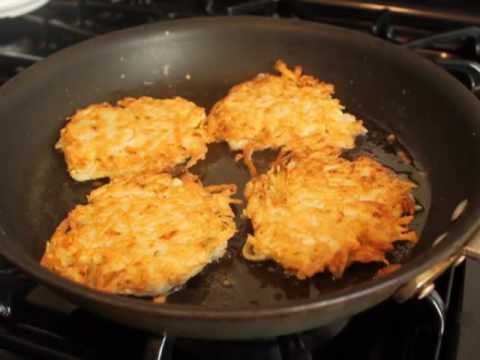
The definitive YouTube walkthrough for understanding moisture removal and oil temperature control. Clear demonstration of the wringing technique and exactly what the crust should look like before flipping.
2. Classic Latke Method with Expert Tips
A thorough breakdown of binder ratios and how egg-to-flour proportions affect the final texture. Useful for understanding why the pancake holds together or doesn't.
3. Potato Pancake Variations — Crispy Every TimeCovers the temperature science behind shallow frying and walks through the visual cues for doneness. Good reference for first-timers who aren't sure what 'ready to flip' actually looks like.
🛠️ Core Equipment
- Box grater or food processor with shredding diskHand-grating on the large holes of a box grater gives you the right shred texture — long enough to interlock and hold together, fine enough to cook through quickly. A food processor is faster for large batches but produces slightly shorter shreds that hold together less well.
- Clean kitchen towel or cheeseclothThe single most important tool in this recipe. You'll wring the grated potato inside this to extract water. Paper towels technically work but tear under serious wringing pressure. A dedicated kitchen towel survives proper force and gets the job done.
- Cast iron or stainless steel skilletYou need a pan that holds heat when cold potato mass hits it. Non-stick pans drop temperature too fast, causing the pancake to steam in its own moisture. Cast iron or heavy stainless steel maintains the frying temperature and delivers consistent browning.
- Thin metal spatulaSilicone spatulas are too thick and flexible to get cleanly under a forming crust. A thin metal fish spatula slides beneath the pancake without disrupting the crust before it's ready to release.
Crispy Potato Pancakes (No More Soggy Centers)
🛒 Ingredients
- ✦2 pounds russet potatoes, peeled
- ✦1 medium yellow onion
- ✦2 large eggs, lightly beaten
- ✦3 tablespoons all-purpose flour
- ✦1 teaspoon kosher salt, plus more to taste
- ✦1/2 teaspoon freshly ground black pepper
- ✦1/4 teaspoon garlic powder
- ✦Neutral oil for frying (vegetable, canola, or avocado oil)
- ✦Sour cream, for serving
- ✦Fresh chives or scallions, thinly sliced, for garnish
- ✦Applesauce, for serving (optional)
👨🍳 Instructions
01Step 1
Grate the peeled russet potatoes and onion on the large holes of a box grater into a large bowl.
02Step 2
Transfer the grated potato and onion mixture to a clean kitchen towel. Gather the corners and wring firmly over the sink for a full 60 seconds. You should expel at least 1/4 cup of cloudy water. Keep wringing until almost nothing comes out.
03Step 3
Transfer the dried potato mixture back to the bowl. Pour off any liquid that has pooled in the bowl and discard the white starchy sediment at the bottom.
04Step 4
Add the beaten eggs, flour, salt, pepper, and garlic powder to the potato mixture. Mix with your hands until everything is evenly distributed.
05Step 5
Heat 1/4 inch of neutral oil in a cast iron skillet over medium-high heat until shimmering and a pinch of grated potato sizzles aggressively on contact (350°F–375°F).
06Step 6
Scoop a heaping 1/4 cup of batter per pancake into the hot oil. Press each one flat with the back of a spatula until roughly 1/2 inch thick and 3-4 inches wide. Do not crowd the pan — work in batches of 3-4.
07Step 7
Fry undisturbed for 3-4 minutes on the first side until the edges look golden and set. Resist the urge to move or check early.
08Step 8
Flip once with a thin metal spatula. Press gently to flatten. Fry the second side for 2-3 minutes until deep golden brown.
09Step 9
Transfer to a wire rack set over a baking sheet. Season immediately with flaky salt. Do not stack — stacking steams the crust soft.
10Step 10
Repeat with remaining batter, replenishing and reheating the oil between batches. Serve hot with sour cream and chives.
Nutrition Per Serving
Estimates based on standard preparation. Adjustments alter macros.
🔄 Substitutions
Instead of Russet potatoes...
Use Yukon Gold potatoes
Less starchy than russets, which means they release less water but also bind less readily. Add an extra tablespoon of flour to compensate. The flavor is slightly butterier and the texture more creamy.
Instead of All-purpose flour...
Use Potato starch or matzo meal
Potato starch produces a lighter, crispier crust. Matzo meal is traditional in Jewish latkes and gives a slightly coarser, crunchier texture. Both are direct 1:1 swaps.
Instead of Eggs...
Use Flax egg (1 tablespoon ground flax + 3 tablespoons water per egg, rested 5 minutes)
Effective vegan binder that gels similarly to egg. The pancake is slightly more fragile on the flip — handle carefully and make sure the crust is fully set before turning.
Instead of Neutral oil...
Use Schmaltz (rendered chicken fat) or clarified butter
Traditional and deeply flavorful. Schmaltz in particular produces a richer, more savory crust. Smoke point is sufficient for this temperature range. Not suitable for vegetarian preparations.
🧊 Storage & Reheating
In the Fridge
Store cooled pancakes in a single layer (or between parchment sheets) in an airtight container for up to 3 days. They will soften but reheat well.
In the Freezer
Freeze in a single layer on a baking sheet until solid, then transfer to a zip-lock bag. Keeps for up to 2 months. Reheat directly from frozen — no thawing needed.
Reheating Rules
Reheat on a wire rack in a 400°F oven for 8-10 minutes until the crust re-crisps. Avoid the microwave — it re-steams the potato and destroys the crust completely.
❓ Frequently Asked Questions
Why are my potato pancakes falling apart in the pan?
Almost always a binder issue. Either the eggs and flour weren't mixed thoroughly enough to coat all the shreds, or the batter was too wet when it hit the pan. Wring the potato more aggressively next time. If they still fall apart, add one more tablespoon of flour and let the batter rest for 2 minutes before frying.
Why are my pancakes greasy?
The oil was too cold when the pancake went in. Cold oil gets absorbed instead of providing a frying surface. The pancake wicks it up like a sponge. Make sure the oil is shimmering and registers 350°F before adding any batter.
Can I make the batter ahead of time?
Not really. The salt in the batter draws moisture out of the potato continuously. If you make the batter an hour ahead, you'll have a soggy mess. Grate, wring, and fry in the same session. If you want to prep ahead, peel and store the potatoes whole in cold water overnight, then grate and fry the next morning.
Do I need to peel the potatoes?
For traditional smooth-edged pancakes, yes. Potato skin creates chewy, tough spots in the crust and the shreds don't bind together as cleanly. If you don't mind a more rustic texture, skin-on is fine — just scrub the potatoes thoroughly.
What's the difference between potato pancakes and latkes?
They're essentially the same dish with regional naming conventions. 'Latke' is the Yiddish term most common in Jewish-American cooking; 'potato pancake' is the broader European and American term. Latkes traditionally use matzo meal as the binder and are served at Hanukkah. The technique is identical.
Can I bake these instead of frying?
You can, but they won't be the same dish. Baked potato pancakes turn out dense and pale — the oven can't replicate the direct contact with hot oil that creates the shatteringly crisp crust. If you must bake, brush both sides generously with oil and use the broiler for the last 2 minutes to encourage browning.
The Science of
Crispy Potato Pancakes (No More Soggy Centers)
We turned everything on this page into a beautiful, flour-proof PDF cheat sheet. Print it out, stick it to your fridge, and never mess up your crispy potato pancakes (no more soggy centers) again.
*We'll email you the high-res PDF instantly. No spam, just perfectly cooked meals.
AlmostChefs Editorial Team
We translate the internet's most popular cooking videos into foolproof, beginner-friendly written recipes. We analyze multiple methods, test them in our kitchen, and engineer a single "Master Recipe" that gives you the best possible result with the least possible stress.