Foolproof Pork Tenderloin (The Pan Sauce Is the Point)
A herb-crusted, golden-seared pork tenderloin finished in the oven and served with a balsamic-honey pan sauce. We broke down the most common failures — overcooked interiors, pale crusts, watery sauces — and built a single technique that solves all three.
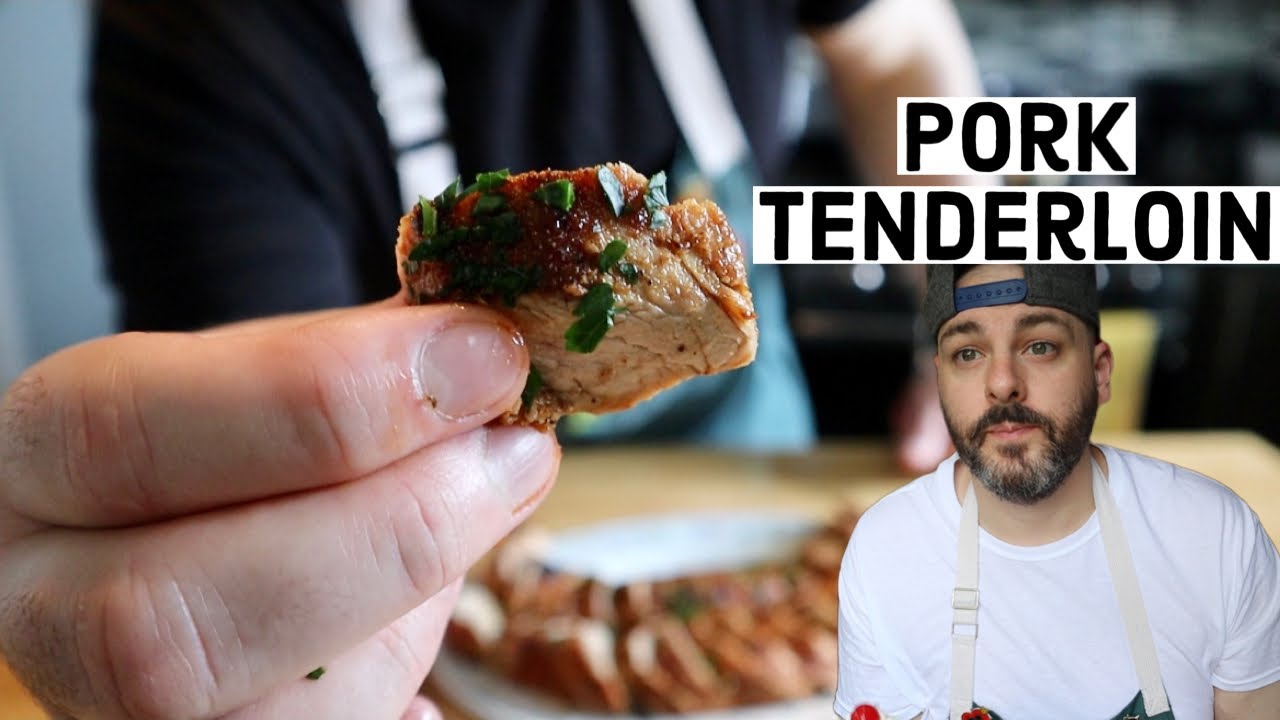
“Pork tenderloin is one of the leanest, fastest-cooking cuts of meat available. It is also one of the most commonly overcooked. The margin between 145°F (juicy, faintly pink, tender) and 160°F (dry, grey, chewy) is about four minutes. Every failure with this cut traces back to one mistake: cooking by time instead of temperature. We built this recipe around the thermometer and the pan sauce that makes people think you spent an hour in the kitchen.”
Why This Recipe Works
Pork tenderloin is a Tuesday-night protein that routinely gets treated like a Sunday roast — dressed up, fussed over, and still served dry. The cut doesn't require complexity. It requires precision. Everything in this recipe is designed around two objectives: building a crust that tastes like you know what you're doing, and pulling the meat at exactly the right moment before the lean fibers turn to sawdust.
The Crust Problem
Searing is a Maillard reaction, not a caramelization — a critical distinction that changes how you approach the pan. The Maillard reaction requires dry protein surface, a pan temperature above 300°F, and uninterrupted contact time. Moisture is the enemy. When you place a wet tenderloin into hot oil, the water flash-evaporates and creates a steam barrier between the meat and the pan, dropping the surface temperature and preventing browning. The result is a grey exterior that looks boiled rather than seared.
Pat the tenderloin completely dry. Let the oil shimmer before the meat goes in. Don't move it. Four minutes per side in a cast iron skillet produces a crust with real color and structural integrity — one that survives the oven roast without softening.
The mustard rub does more than flavor the surface. Dijon's emulsified consistency acts as a binder that holds the spice mixture against the meat during searing instead of falling into the oil. The slight acidity also brightens the crust flavor in a way that oil-only applications can't achieve.
The Temperature Window
Pork tenderloin has roughly 3% intramuscular fat. For comparison, a ribeye sits around 12-15%. That fat is what forgives sloppy temperature management in richer cuts — it keeps the meat moist even when slightly overcooked. Tenderloin has no such buffer. The window between ideal and ruined is narrow: 145°F is juicy and slightly pink. 160°F is dry and gray. At 170°F, you've made something closer to shoe leather than dinner.
An instant-read thermometer is the only tool that matters for this recipe. Start checking at 18 minutes. Oven temperatures vary enough that cooking by time alone is a gamble. The thermometer removes the variable entirely.
The Rest Is Not Optional
Eight minutes under foil is not a suggestion. When the tenderloin comes out of a 400°F oven, the muscle fibers are contracted from heat and the juices are concentrated in the center of the meat. Slicing immediately means those juices — the ones you spent 30 minutes developing — pour straight onto your cutting board. The rest period allows the fibers to relax and reabsorb the liquid evenly throughout the meat. You lose nothing. You gain everything.
The Pan Sauce Logic
The fond — those dark, caramelized bits stuck to the pan after searing — is concentrated pork protein and spice. Most home cooks wash it down the drain. This recipe builds a pan sauce from it instead. The broth and wine deglaze and lift the fond into the liquid, and the balsamic-honey reduction at the end concentrates it further into something glossy and complex that takes four minutes to make and tastes like it didn't.
The sequence matters: roast liquid first to deglaze and extract the fond, then add honey and balsamic after the meat is resting. Adding the honey too early causes it to burn at oven temperatures. Adding the balsamic too early produces harsh acidity before it has time to mellow through reduction. Four minutes on medium heat at the end is the correct timing, and it produces a sauce that makes the whole dish feel intentional rather than assembled.
This is not an ambitious recipe. It's a disciplined one — and that distinction is why it works.
Where Beginners Mess This Up
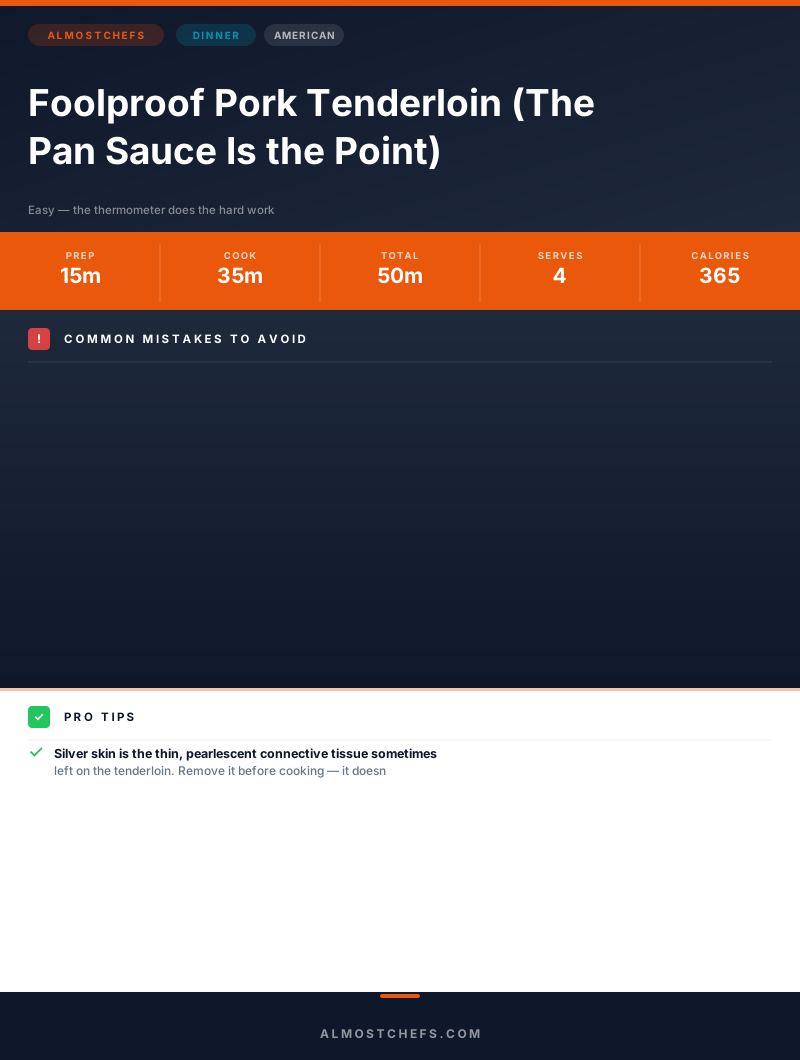
Before we start, read this. These are the 4 reasons your foolproof pork tenderloin (the pan sauce is the point) will fail:
- 1
Skipping the dry surface step: Moisture on the surface of the meat creates steam during searing, which prevents browning. The Maillard reaction — the chemical process responsible for that golden crust — requires direct contact between the meat proteins and a dry, hot pan surface. Pat the tenderloin completely dry before seasoning. This single step is the difference between a sear and a steam.
- 2
Cooking past 145°F internal temperature: Pork tenderloin has almost no intramuscular fat, which means it has no buffer against overcooking. At 145°F, the proteins are set but the fibers are still supple and moist. At 160°F, those same fibers contract, squeezing out every drop of juice. Use an instant-read thermometer. Start checking at the 18-minute mark. The four minutes after 145°F is the point of no return.
- 3
Skipping the rest: When meat comes out of a 400°F oven, the muscle fibers are contracted and the internal juices are pushed toward the center. An 8-minute rest under foil allows those fibers to relax and reabsorb the juices evenly. Slice immediately and those juices run straight onto your cutting board instead of into the meat.
- 4
Pouring the braising liquid over the seared crust: You worked for that crust. Pouring broth directly over the top of the tenderloin softens and steams it off during the oven roast. Pour the liquid around the sides of the meat, not over it. The crust survives. The flavor holds.
The Video Reference Library
Want to see it in action? Here are the exact videos we analyzed and combined to build this foolproof recipe translation:
The source video for this recipe. Clear walkthrough of the sear-to-oven technique, mustard rub application, and pan sauce reduction. Watch specifically for the crust color they're targeting before the pan goes into the oven.
🛠️ Core Equipment
- Oven-safe skillet (cast iron or heavy stainless steel)You need a pan that goes from stovetop to 400°F oven without flinching. Cast iron retains heat evenly for a consistent sear across the full surface. Nonstick pans at high heat are a health risk and won't build the fond you need for the sauce.
- Instant-read thermometerNon-negotiable for this cut. Pork tenderloin has a 15°F window between undercooked and overcooked. A thermometer removes all guesswork. A [good instant-read thermometer](/kitchen-gear/review/instant-read-thermometer) pays for itself the first time it saves a $15 piece of meat.
- Fine-mesh sieveFor straining the pan sauce. The shallots and herb sprigs have done their job by the time the sauce reduces — straining gives you a clean, glossy result. Optional for rustic presentation, essential for anything resembling a dinner party.
- Meat tongsFor turning the tenderloin on all sides during the sear without piercing the crust. A fork punches holes that drain the very juices you're trying to preserve.
Foolproof Pork Tenderloin (The Pan Sauce Is the Point)
🛒 Ingredients
- ✦1 pork tenderloin (1.5 to 2 pounds)
- ✦2 tablespoons extra-virgin olive oil
- ✦1 tablespoon sea salt
- ✦1.5 tablespoons freshly ground black pepper
- ✦3 sprigs fresh rosemary
- ✦4 sprigs fresh thyme
- ✦6 cloves garlic, minced
- ✦1 tablespoon Dijon mustard
- ✦2 medium shallots, thinly sliced
- ✦1 cup low-sodium beef broth
- ✦0.5 cup dry white wine or apple cider vinegar
- ✦1 tablespoon raw honey
- ✦2 tablespoons balsamic vinegar
- ✦1 teaspoon smoked paprika
- ✦Fresh green onions, chopped, for garnish
👨🍳 Instructions
01Step 1
Preheat your oven to 400°F. Pat the pork tenderloin completely dry with paper towels, removing all surface moisture.
02Step 2
Combine sea salt, black pepper, smoked paprika, and minced garlic in a small bowl. Stir until evenly mixed.
03Step 3
Rub the Dijon mustard evenly over the entire surface of the tenderloin. Then coat generously with the spice mixture, pressing firmly so it adheres.
04Step 4
Heat olive oil in a large oven-safe skillet over medium-high heat until the oil shimmers, about 2 minutes.
05Step 5
Sear the tenderloin on all sides, 3 to 4 minutes per side, until a deep golden-brown crust forms. Turn with tongs — never pierce with a fork.
06Step 6
Scatter the rosemary sprigs, thyme sprigs, and sliced shallots around the tenderloin in the skillet.
07Step 7
Pour the beef broth and white wine around the sides of the meat — not over the top — to preserve the seared crust.
08Step 8
Transfer the skillet to the oven and roast for 18 to 24 minutes. Start checking internal temperature at 18 minutes. Pull the meat when a thermometer reads 145°F at the thickest point.
09Step 9
Remove the skillet from the oven. Transfer the tenderloin to a cutting board and tent loosely with foil. Rest for 8 minutes. Do not slice yet.
10Step 10
Place the skillet back on the stovetop over medium heat. Whisk in the honey and balsamic vinegar. Simmer for 3 to 4 minutes, stirring occasionally, until the sauce reduces and coats the back of a spoon.
11Step 11
Strain the pan sauce through a fine-mesh sieve for a clean finish, or leave the shallots and herbs in for a rustic presentation.
12Step 12
Slice the rested tenderloin into 1-inch medallions and arrange on a serving platter. Pour the warm pan sauce over the slices and garnish with chopped green onions.
Nutrition Per Serving
Estimates based on standard preparation. Adjustments alter macros.
🔄 Substitutions
Instead of Extra-virgin olive oil...
Use Avocado oil
Higher smoke point makes it marginally better for high-heat searing. Flavor is cleaner and more neutral — you lose the slight fruitiness of olive oil, which is barely detectable after searing anyway.
Instead of Dry white wine...
Use Apple cider vinegar (0.5 cup) mixed with 0.5 cup water
Tangier and more assertive than wine. The acidity works well against the sweetness of the honey and balsamic in the pan sauce. A solid non-alcohol option that doesn't flatten the flavor.
Instead of Dijon mustard...
Use Stone-ground whole grain mustard
Grainier texture with a more rustic, earthy mustard flavor. The whole seeds pop slightly during searing, adding texture to the crust. A legitimate upgrade if you have it.
Instead of Raw honey...
Use Pure maple syrup or coconut sugar (same quantity)
Maple syrup produces a slightly thinner sauce but adds a pleasant woodsy sweetness. Coconut sugar needs a splash of extra broth to dissolve properly. Both work.
🧊 Storage & Reheating
In the Fridge
Store sliced or whole in an airtight container for up to 3 days. Keep the pan sauce separately to prevent the crust from softening.
In the Freezer
Freeze cooked medallions in a single layer on a baking sheet first, then transfer to a freezer bag for up to 2 months. The texture holds better than most cooked meats after freezing.
Reheating Rules
Reheat gently in a covered skillet over low heat with a splash of broth, about 5 minutes. Microwave reheating works but dries the meat quickly — use 50% power and cover with a damp paper towel.
❓ Frequently Asked Questions
Is it safe to eat pork at 145°F? I thought pork needed to reach 160°F.
The USDA updated its safe pork cooking temperature to 145°F in 2011. At 145°F with a 3-minute rest, pork tenderloin is fully safe to eat and will have a slightly pink center — this is normal and desirable. 160°F was the old guideline and produces dry, overcooked meat. Trust the updated standard.
My crust came out pale and soft, not golden-brown. What went wrong?
One of three things: the pan wasn't hot enough before you added the meat, the surface of the tenderloin was wet when it hit the pan, or you moved the meat too soon during searing. All three prevent the Maillard reaction from occurring. Let the oil shimmer before adding the meat, dry the surface thoroughly, and leave the tenderloin alone for the full 3-4 minutes before attempting to turn it.
Can I make this without wine or vinegar in the pan sauce?
Yes. Use all broth and no wine or vinegar, then increase the balsamic vinegar in the finish to 3 tablespoons to compensate for the lost acidity. The sauce will be slightly less complex but still very good.
Do I need to marinate the pork beforehand?
No. The mustard rub applied directly before cooking performs a similar function to a short marinade — it seasons the surface and creates a flavorful crust. Overnight marinating doesn't significantly improve pork tenderloin the way it helps tougher, fattier cuts.
Can I use pork loin instead of pork tenderloin?
These are different cuts and cannot be swapped directly. Pork loin is wider, denser, and takes 45-60 minutes to cook through. Pork tenderloin is small, narrow, and cooks in 20-25 minutes. Using loin with this timing will give you raw meat at the center.
Why is my pan sauce watery instead of thick and glossy?
It needed more reduction time. Return the pan to medium heat and simmer for another 2-3 minutes, stirring constantly. The balsamic and honey provide natural thickeners, but they need sustained heat to concentrate. If it's still thin, whisk in half a teaspoon of cold butter at the end — it emulsifies instantly and gives the sauce a restaurant-quality gloss.
The Science of
Foolproof Pork Tenderloin (The Pan Sauce Is the Point)
We turned everything on this page into a beautiful, flour-proof PDF cheat sheet. Print it out, stick it to your fridge, and never mess up your foolproof pork tenderloin (the pan sauce is the point) again.
*We'll email you the high-res PDF instantly. No spam, just perfectly cooked meals.
AlmostChefs Editorial Team
We translate the internet's most popular cooking videos into foolproof, beginner-friendly written recipes. We analyze multiple methods, test them in our kitchen, and engineer a single "Master Recipe" that gives you the best possible result with the least possible stress.