Easy Pork Fried Rice (Day-Old Rice, Wok Sear, Oyster Sauce Method)
Pork fried rice built on three non-negotiables: day-old chilled rice, a proper pork sear before anything else touches the wok, and the oyster sauce and white pepper combination that separates restaurant fried rice from home-cooked rice with soy sauce poured on it.
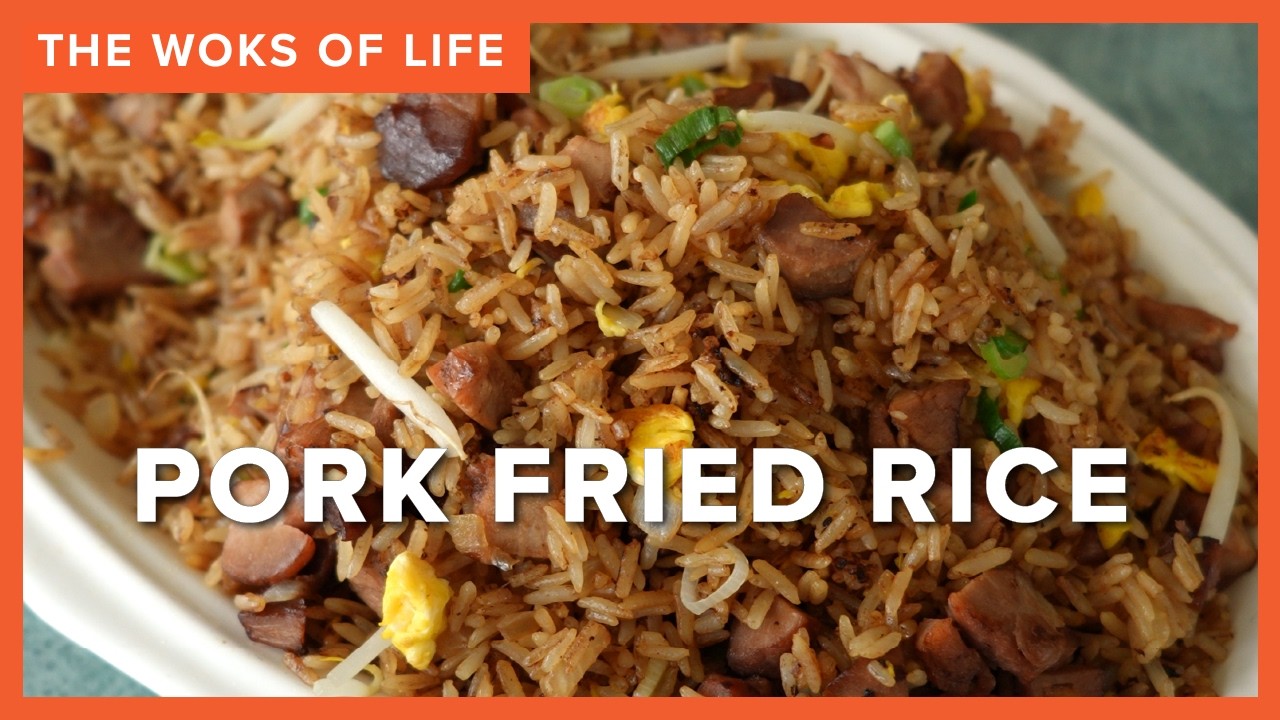
“Pork fried rice fails for the same reason chicken fried rice fails: fresh rice and insufficient heat. Fresh rice holds 70% of its weight in water. When it hits a wok, it releases that water as steam. The grains clump, the protein steams rather than sears, and what should be a 15-minute dinner becomes a bowl of soft, grey disappointment. The fix is the same every time: day-old chilled rice, pork seared separately at maximum heat before it touches anything else, and the specific combination of oyster sauce plus white pepper that is the actual flavor of Chinese fried rice.”
Why This Recipe Works
Pork fried rice is a dish with a reputation for simplicity that masks a technical precision requirement. The ingredients are accessible. The technique is brief. The margin for error at each critical step is narrow. Understanding what is actually happening at each stage removes the guesswork and makes the outcome consistent.
Day-Old Rice Is a Moisture Engineering Requirement
Freshly cooked jasmine rice contains approximately 70% water by weight. This moisture is distributed in two locations: inside the starch granules, which have swollen during cooking, and on the surface of each grain as free water released during the cooking process. When this rice is placed in a hot wok, the surface water vaporizes immediately, producing steam. Steam in a wok creates a humid microenvironment where the surface temperature of the rice cannot exceed 212°F — all the thermal energy is consumed by phase transition rather than by browning. The rice grains stick to each other and gelatinize further. The result is mush.
Refrigerating cooked rice overnight accomplishes two things simultaneously. The surface free water evaporates into the dry refrigerator air, leaving individual dry grains. The interior moisture redistributes and partially migrates outward, where it also evaporates. When this dried rice contacts a hot carbon steel wok surface, there is no steam phase. The rice surface exceeds 212°F within seconds, the Maillard reaction begins on the starch surface, and each grain develops a slight crust. This crust is what produces the textural contrast — slightly firm exterior, tender interior — that defines properly made fried rice.
The Pork Sear Is Not Interchangeable with Cooking the Pork
Pork tenderloin is exceptionally lean — typically less than 3 grams of fat per 3-ounce serving. This means it has almost no intramuscular fat to baste the meat during cooking and relies entirely on surface browning for flavor development. Surface browning requires the Maillard reaction, which requires temperatures above approximately 280°F at the meat surface, which requires the moisture on the surface to evaporate first.
Adding pork tenderloin slices to a pan that already contains onions, garlic, and ginger means the vegetable moisture reduces the pan temperature and produces steam. In steam, the pork cooks to grey, flavourless tenderness. Searing the pork first in a dry, smoking-hot wok with minimal oil produces caramelization: browned amino acids, Maillard compounds, and caramelized sugars on the surface that add flavor to every bite of the finished dish. The pork is then removed and held separately until the final assembly — this prevents it from overcooking during the extended wok time for the vegetables and rice.
Why Oyster Sauce Is Non-Negotiable
Soy sauce is sodium glutamate in solution. It provides saltiness and one specific type of umami. Oyster sauce is soy sauce that has been cooked down with oyster extract, which adds glutamates from the oyster protein, a suite of Maillard compounds from the reduction process, and glycogen-derived sweetness. The flavor profile of oyster sauce is categorically different from soy sauce — deeper, more complex, with a natural sweetness that rounds the salt edge. When a restaurant's pork fried rice tastes specifically like pork fried rice rather than like white rice with soy sauce, oyster sauce is a primary contributor.
White pepper operates on similar logic. Black pepper and white pepper are both Piper nigrum. Black pepper has its outer pericarp intact, which contributes piney, woody flavor compounds. White pepper has the pericarp removed before drying, which shifts the flavor profile toward sharper heat and a slightly fermented, earthy undertone from the extended soaking process used to remove the skin. Chinese cooking uses white pepper specifically because this flavor profile — not black pepper's — integrates into the dish without disrupting the sauce balance.
The Egg Timing Problem
Eggs added to fried rice have two possible roles depending on when they are cooked: as a coating (added and scrambled directly with the rice, distributing throughout) or as a textural element (cooked separately and folded in at the end as distinct pieces). Both techniques are valid but they produce different dishes. The instruction here is the latter: scramble in the cleared center of the wok, pull at 70% cooked, fold in at the end. The residual heat of the assembled rice finishes them without overcooking.
The 70% threshold matters. Fully cooked eggs at the scramble stage become rubbery during the additional time they spend in the wok during sauce absorption and final tossing. Pulling at 70% means they arrive at the table at approximately 95% cooked — just set, with no rubbery texture.
Batch Addition and Temperature Management
Cold rice is a significant thermal mass. Three cups of rice at 38°F entering a wok that was at 400°F will drop the surface temperature by 80–120°F immediately. At 280°F, the rice fries. Below 212°F, it steams. Adding all the rice at once in a home kitchen — where stovetop burners produce 10,000–15,000 BTU rather than a restaurant's 100,000+ BTU — almost guarantees a temperature drop into steaming territory.
Adding rice in two batches with a 30–45 second recovery window between them keeps the wok in the frying range throughout. Press each batch flat against the surface rather than continuously tossing — direct contact is how the starch browns. Then toss to redistribute. The alternation of pressing and tossing achieves the dual goal of surface browning and even heating.
The finish — sesame oil added around the wok edge rather than directly on the rice — is deliberate technique. Sesame oil contacting the hot metal vaporizes briefly, distributing the aromatic compounds as vapor through the dish rather than pooling as liquid on the surface. The result is more evenly distributed sesame aroma in every bite.
Where Beginners Mess This Up
Before we start, read this. These are the 4 reasons your easy pork fried rice (day-old rice, wok sear, oyster sauce method) will fail:
- 1
Mushy, clumping rice: Fresh rice was used. Fresh rice contains too much surface moisture — the wok cannot evaporate it fast enough, so the grains steam against each other and gelatinize into clumps. Refrigerate cooked rice overnight uncovered, or at minimum spread it on a sheet pan and refrigerate uncovered for 2 hours. The surface must be dry before the rice hits oil.
- 2
Pork is grey and steamed, not caramelized: The pork went in with other ingredients, or the wok was not hot enough before the pork hit the surface. Pork tenderloin is lean and cooks fast — it needs maximum heat and space, not a crowd. Sear it first, alone, in a smoking-hot wok with no other moisture sources in the pan. Then remove it. It goes back in at the end.
- 3
Dish tastes flat despite proper technique: Oyster sauce was skipped or white pepper was substituted with black. Oyster sauce adds umami depth and subtle sweetness from glycogen that soy sauce alone cannot replicate. White pepper provides a sharper, more penetrating heat profile than black — these are not interchangeable seasonings in Chinese cooking.
- 4
Wok temperature crashed mid-cook: Too much rice added at once. Cold rice is a significant thermal mass. Add it in batches, giving the wok 30–45 seconds to recover temperature between additions. Working in batches is not optional — it is what keeps the rice frying rather than steaming.
The Video Reference Library
Want to see it in action? Here are the exact videos we analyzed and combined to build this foolproof recipe translation:
The primary reference for this recipe. Covers the pork sear, rice addition batching technique, and the exact sequence for the oyster sauce and sesame oil finish.
Controlled testing of rice age, rice type, and wok temperature variables. Essential for understanding why each preparation step exists.
Detailed breakdown of egg technique, rice batching, and the order of operations that keeps each component at the right texture.
🛠️ Core Equipment
- Carbon steel wok or 12-inch cast iron skilletThe required cooking vessel for this recipe. A carbon steel wok heats fast, retains heat under load, and its curved sides allow constant tossing. Cast iron thermal mass compensates for lower BTU home burners. Nonstick cannot reach the temperatures this recipe requires.
- Wok spatula (wok chuan)The long-handled, angled blade is designed specifically for scraping the wok interior. It moves rice from the hot center to the cooler edges in one motion. A wooden spoon works but requires more effort to clear the wok bottom on each pass.
- Sheet panFor emergency rice drying when day-old rice is unavailable. Spread freshly cooked rice in a thin layer and refrigerate uncovered for a minimum of 2 hours. Not as effective as overnight rice, but functional.
Easy Pork Fried Rice (Day-Old Rice, Wok Sear, Oyster Sauce Method)
🛒 Ingredients
- ✦3 cups day-old cooked rice, chilled
- ✦12 oz pork tenderloin, thinly sliced against the grain
- ✦3 tablespoons sesame oil, divided
- ✦1 medium yellow onion, diced
- ✦4 cloves garlic, minced
- ✦1 tablespoon fresh ginger, grated
- ✦1.5 cups broccoli florets, cut small
- ✦1 cup carrots, small dice
- ✦3 large eggs, lightly beaten
- ✦3/4 cup frozen peas
- ✦3 tablespoons low-sodium soy sauce
- ✦1 tablespoon oyster sauce
- ✦1 teaspoon rice vinegar
- ✦2 green onions, sliced
- ✦1/2 teaspoon white pepper
- ✦Red pepper flakes, to taste (optional)
- ✦Sesame seeds, for garnish
👨🍳 Instructions
01Step 1
If using fresh-cooked rice, spread it on a rimmed sheet pan in a thin layer and refrigerate uncovered for at least 2 hours. Day-old refrigerated rice is strongly preferred.
02Step 2
Heat 1 tablespoon sesame oil in a wok or large cast iron skillet over high heat until the oil begins to shimmer and just smokes. Add pork tenderloin slices in a single layer.
03Step 3
Once the pork is golden and just cooked through, remove it from the wok and set aside on a plate. It returns at the final assembly step.
04Step 4
Add 1 tablespoon sesame oil to the wok. Add onion, garlic, and ginger. Stir-fry over high heat for 1–2 minutes until fragrant and onion edges begin to color.
05Step 5
Add broccoli florets and carrots. Stir-fry constantly for 3–4 minutes until slightly softened but still with bite. They will continue cooking when the rice goes in.
06Step 6
Push all vegetables to the sides of the wok, clearing the center. Add the beaten eggs directly to the center. Let them sit undisturbed for 15–20 seconds, then scramble gently until just set but still slightly wet.
07Step 7
Add the chilled rice in two batches, pressing each addition flat against the wok surface and tossing continuously. Allow 30–45 seconds between batches for the wok temperature to recover.
08Step 8
Return the seared pork to the wok. Add frozen peas and toss everything together for 1–2 minutes until the peas are heated through.
09Step 9
Drizzle soy sauce and oyster sauce evenly over the rice. Toss continuously for 1–2 minutes until the sauce is fully absorbed and no wet pools remain.
10Step 10
Add rice vinegar, white pepper, and remaining 1 tablespoon sesame oil around the edges of the wok. Toss once more to combine.
11Step 11
Taste and adjust seasoning. Garnish with sliced green onions, sesame seeds, and red pepper flakes if using. Serve immediately.
Nutrition Per Serving
Estimates based on standard preparation. Adjustments alter macros.
🔄 Substitutions
Instead of Pork tenderloin...
Use Pork shoulder (char siu style) or leftover roast pork
Pork shoulder has more fat and flavor. Char siu is the traditional restaurant inclusion and adds a sweet, caramelized element. Dice rather than slice.
Instead of Sesame oil (for cooking)...
Use Vegetable oil for cooking steps, toasted sesame oil for finishing only
Toasted sesame oil has a low smoke point and should only be used as a finishing oil. Use a neutral high-smoke-point oil for the cooking steps.
Instead of Oyster sauce...
Use Mushroom oyster sauce (vegetarian)
Identical texture and similar umami profile. Made from mushroom extract rather than oyster reduction. Indistinguishable in this recipe.
Instead of Day-old cooked rice...
Use Fresh rice dried on a sheet pan
Spread freshly cooked rice thin on a rimmed sheet pan and refrigerate uncovered for a minimum of 2 hours. Functional but not as effective as truly overnight rice.
Instead of Broccoli florets...
Use Snap peas, bell pepper, or bok choy
Cut to consistent size with the carrots so everything cooks at the same rate. Bell pepper adds sweetness; bok choy adds a mild bitterness that balances the oyster sauce.
🧊 Storage & Reheating
In the Fridge
Airtight container for up to 3 days. Fried rice reheats well and flavors integrate further overnight.
In the Freezer
Portion into freezer-safe containers for up to 2 months. Rice texture holds up to freezing better than most cooked grains.
Reheating Rules
Best reheated in a hot wok or skillet with a splash of water and a small drizzle of oil, tossing over high heat for 2–3 minutes. Microwave works for convenience but will not restore wok texture.
❓ Frequently Asked Questions
Why does my pork turn grey instead of golden?
The wok was not hot enough before the pork went in, or too much pork was added at once. Grey pork means the surface moisture did not evaporate fast enough for the Maillard reaction — the protein steamed instead of seared. Preheat until the oil just smokes, add pork in a single uncrowded layer, and do not touch it for 60 seconds.
Can I use fresh rice instead of day-old?
If you have no choice, cook the rice with slightly less water than usual, spread it in a thin layer on a sheet pan, and refrigerate uncovered for at least 2 hours. The surface will dry enough to fry. It will not be identical to overnight rice but it works. Day-old rice is structurally superior because the interior moisture has also redistributed and reduced.
Do I need a wok, or can I use a regular pan?
A 12-inch cast iron skillet is the best alternative. Its thermal mass compensates for lower BTU home burners and prevents the dramatic temperature drops that ruin fried rice. Nonstick pans cannot reach the required temperatures. Stainless steel works but requires more oil to prevent sticking.
Why white pepper instead of black?
White and black pepper both come from the same plant but are processed differently. White pepper has the outer skin removed before drying, which shifts its flavor compound profile. It has a sharper, more penetrating heat with a slightly earthy undertone. In Chinese fried rice, white pepper is standard. Black pepper produces technically acceptable but noticeably different results.
Why add sesame oil at the end rather than cooking with it?
Toasted sesame oil has a low smoke point around 350°F and degrades quickly at high wok temperatures, turning bitter. Its value is aromatic. Adding it at the end preserves the nutty, toasted compounds that would otherwise cook off during the stir-fry.
Can I make this ahead for meal prep?
Yes. Fried rice is one of the best meal-prep dishes. Cook fully, cool to room temperature, then portion into airtight containers. The flavors improve after 24 hours as the sauces penetrate the rice more deeply. Reheat in a hot pan rather than a microwave when possible.
The Science of
Easy Pork Fried Rice (Day-Old Rice, Wok Sear, Oyster Sauce Method)
We turned everything on this page into a beautiful, flour-proof PDF cheat sheet. Print it out, stick it to your fridge, and never mess up your easy pork fried rice (day-old rice, wok sear, oyster sauce method) again.
*We'll email you the high-res PDF instantly. No spam, just perfectly cooked meals.
AlmostChefs Editorial Team
We translate the internet's most popular cooking videos into foolproof, beginner-friendly written recipes. We analyze multiple methods, test them in our kitchen, and engineer a single "Master Recipe" that gives you the best possible result with the least possible stress.