Easy Pan-Seared Pork Chops (Bone-In, High Heat, No Dry Results)
Bone-in pork chops seared to a deep mahogany crust in a cast iron skillet, finished in a tangy apple cider vinegar and rosemary pan sauce with carrots and Brussels sprouts. The technique solves the dry-pork problem at the source: surface preparation, temperature management, and stopping at 145°F.
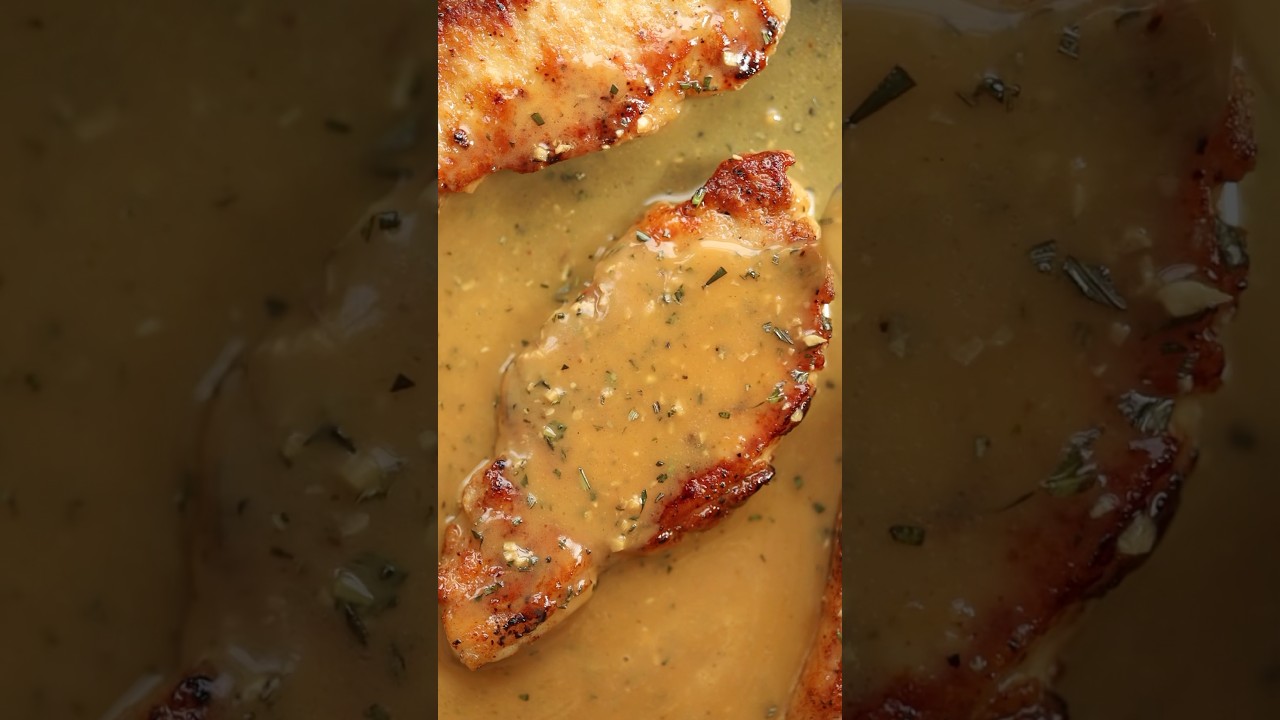
“Pork chops have a reputation as the dry, rubbery disappointment of weeknight dinners. That reputation is earned but entirely avoidable. The problem is not the cut — it is cooking past 145°F internal temperature, or starting with wet, cold meat that cannot sear properly. Fix the prep and stop at the right temperature and the same chop that has disappointed you for years becomes something genuinely good.”
Why This Recipe Works
Pork chops are the most misunderstood cut in the average home kitchen. They are lean, which means they respond to excess heat by squeezing every drop of moisture out of the muscle fibers — quickly and irreversibly. The window between 145°F (correct) and 165°F (dry) is exactly the distance between a chop worth eating and one that gets politely finished. Most home recipes treat that window as a range. It is not. It is a target.
The Maillard Reaction Requires Dry, Warm Meat
The browning that happens on a properly seared pork chop is not caramelization — it is the Maillard reaction, a cascade of chemical interactions between amino acids and reducing sugars that produces the hundreds of flavor compounds responsible for everything people love about browned meat. The reaction requires surface temperatures above 280–300°F. Any moisture on the surface converts to steam at 212°F, suppressing the temperature below the Maillard threshold until all the water evaporates.
This is why patting the chops dry is not optional polish — it is what allows the reaction to begin immediately rather than 90 seconds late, by which point the exterior is already gray and steamed. Cold meat adds a second problem: thermal mass from the refrigerator drops the pan temperature 20–30 degrees the moment contact is made. That recovery takes 1–2 minutes, during which the meat surface hovers below browning temperature. Fifteen minutes at room temperature gives the surface a head start and reduces the temperature shock.
The Cast Iron Skillet Is the Correct Tool
Thermal mass is the key variable. A cast iron skillet holds its temperature when cold protein lands on it because the pan's mass contains more stored energy than the meat can absorb in the initial shock. The surface temperature drops — but by less, and it recovers faster. A thin stainless or nonstick pan drops 40–50 degrees and can take 3 minutes to recover. In those 3 minutes, the sear becomes a steam. The distinction is not theoretical — it is what separates a golden-mahogany crust from a pale gray one.
The same thermal mass applies to the sauce phase. When you add the liquid for deglazing, a cast iron pan stays hot enough to dissolve the fond immediately. A cooled-down thin pan takes too long and the fond rebonds.
The Fond Is the Sauce
After the chops transfer to the resting plate, the pan surface is covered in dark brown residue. This is not burned material to clean around — it is concentrated Maillard reaction products, caramelized meat proteins and sugars that dissolved off the surface of the chop and re-solidified on the pan. The deglaze — apple cider vinegar and chicken broth poured into the still-hot pan, scraped aggressively — dissolves every molecule of it back into suspension. The resulting liquid tastes like the chop was braised for hours rather than seared for 8 minutes.
The acid-sweet balance in this sauce is deliberate. Apple cider vinegar provides acidity that cuts through pork fat and brightens the sauce. Honey provides sweetness that balances the vinegar's sharpness. Rosemary provides aromatic depth that ties the two together. Remove any one of the three and the sauce becomes one-dimensional. The honey is not optional — it is structural.
Temperature Is the Only Rule
Every technique in this recipe — the dry surface, the room-temperature rest, the cast iron, the fond deglaze, the covered simmer — exists to serve one outcome: reaching 145°F internal temperature and stopping. The 2011 USDA revision dropping safe whole pork from 160°F to 145°F was the most important change in home pork cookery in decades. At 160°F, a 1-inch pork chop has lost approximately 30% of its moisture. At 145°F with a 3-minute rest, it is slightly pink at the center, tender, and genuinely juicy.
Use an instant-read thermometer inserted into the thickest part of the chop, away from the bone. Pull at 142–143°F if you are precise — carryover heat will bring it to 145°F during the rest. The 5-minute rest is not optional: resting allows the pressurized moisture inside the chop to redistribute through the muscle fibers instead of running directly out on the first cut. Every minute of rest time is moisture that stays in the meat instead of pooling on the plate.
Where Beginners Mess This Up
Before we start, read this. These are the 4 reasons your easy pan-seared pork chops (bone-in, high heat, no dry results) will fail:
- 1
Cooking cold, wet chops directly from the fridge: Cold meat drops the pan temperature by 20–30 degrees the moment it makes contact, preventing the Maillard reaction from starting before the exterior grays. Wet meat converts surface heat to steam rather than browning. Pull the chops from the fridge 15–20 minutes early. Pat completely dry. Both steps are necessary and neither takes significant effort.
- 2
Moving the chops during the sear: Every time you shift the chop, you interrupt the Maillard reaction and cool the pan surface. Set the chop down and leave it entirely alone for the full 3–4 minutes. If it sticks when you attempt to flip, it is not ready — the crust is still bonding to the pan. A finished sear releases itself.
- 3
Cooking to 160°F or beyond: The USDA lowered the safe internal temperature for whole pork to 145°F in 2011. At 160°F, pork chops are objectively overcooked — every degree above 145°F squeezes moisture out of the muscle fibers. A thermometer is not optional. It is the difference between a juicy chop and a dry one.
- 4
Discarding the fond: The dark residue on the pan surface after searing is concentrated pork flavor — caramelized proteins and sugars from the Maillard reaction. Deglazing with vinegar and broth dissolves every bit of it into the sauce. Starting with a clean pan or wiping the fond away produces a flat, one-dimensional sauce.
The Video Reference Library
Want to see it in action? Here are the exact videos we analyzed and combined to build this foolproof recipe translation:
The primary reference for this recipe. Demonstrates the dry-surface prep, the sear timing, the fond deglaze, and the covered simmer method.
🛠️ Core Equipment
- Cast iron skilletThermal mass is the key variable for a consistent sear. A [cast iron skillet](/kitchen-gear/review/cast-iron-skillet) holds its temperature when cold meat hits the surface, maintaining the 300°F+ threshold required for the Maillard reaction. Thin pans drop 30–40 degrees and cannot recover fast enough.
- Instant-read thermometerNon-negotiable. The window between 145°F (perfect) and 160°F (dry) is 15 degrees — a difference of 2 to 3 minutes of cook time. Color and touch are unreliable indicators for pork. The thermometer is the only way to stop at the right moment.
- Wooden spoon or flat spatulaFor scraping the fond from the pan bottom during deglazing. Every dark bit on the pan floor is flavor. Get all of it into the sauce.
- Tight-fitting lidFor the covered simmer that finishes the chops and cooks the vegetables through. A loose lid loses steam and extends the simmer time unpredictably.
Easy Pan-Seared Pork Chops (Bone-In, High Heat, No Dry Results)
🛒 Ingredients
- ✦4 bone-in pork chops, 1 inch thick
- ✦2 tablespoons extra virgin olive oil (EVOO)
- ✦1 teaspoon sea salt
- ✦0.5 teaspoon black pepper
- ✦1 teaspoon dried thyme
- ✦0.5 teaspoon garlic powder
- ✦2 medium yellow onions, thinly sliced
- ✦4 cloves garlic, minced
- ✦1 cup low-sodium chicken broth
- ✦0.5 cup apple cider vinegar
- ✦2 tablespoons fresh rosemary, chopped
- ✦1 tablespoon honey
- ✦2 medium carrots, sliced into 0.25-inch rounds
- ✦1 cup Brussels sprouts, halved
- ✦0.25 teaspoon red pepper flakes
- ✦3 tablespoons fresh parsley, finely chopped
👨🍳 Instructions
01Step 1
Pull pork chops from the refrigerator 15–20 minutes before cooking. Pat all surfaces completely dry with paper towels.
02Step 2
Combine salt, pepper, thyme, and garlic powder. Season both sides of each chop evenly, pressing the seasoning into the surface.
03Step 3
Heat olive oil in a large cast iron skillet over medium-high heat for 2 minutes until visibly shimmering.
04Step 4
Place chops in the skillet. Sear undisturbed for 3–4 minutes until deeply browned. If a chop sticks when you attempt to flip it, give it another 30 seconds — a finished crust releases itself.
05Step 5
Flip each chop and sear the second side for 3–4 minutes. Check internal temperature at the thickest point away from the bone — target 145°F. Transfer to a clean plate and rest 5 minutes.
06Step 6
Reduce heat to medium. Add sliced onions to the same pan and cook, stirring occasionally, for 3–4 minutes until softened.
07Step 7
Add minced garlic and rosemary. Cook 1 minute until fragrant.
08Step 8
Pour in apple cider vinegar and chicken broth. Scrape the bottom of the pan thoroughly with a wooden spoon to dissolve the fond.
09Step 9
Stir in honey and red pepper flakes. Add carrot rounds and Brussels sprout halves.
10Step 10
Return chops to the pan, nestling them among the vegetables. Reduce heat to medium-low, cover, and simmer 12–15 minutes until vegetables are tender.
11Step 11
Taste the sauce and adjust seasoning. Plate chops with vegetables, spoon sauce generously over everything, and garnish with fresh parsley.
Nutrition Per Serving
Estimates based on standard preparation. Adjustments alter macros.
🔄 Substitutions
Instead of Extra virgin olive oil...
Use Avocado oil
Higher smoke point (520°F vs 375°F for EVOO) handles the high-heat sear more cleanly without smoking up the kitchen. Neutral flavor does not compete with the pork.
Instead of Apple cider vinegar...
Use Balsamic vinegar or red wine vinegar
Balsamic adds deeper sweetness and color — reduces the need for the honey. Red wine vinegar is sharper and more savory. Both work; the character of the sauce shifts noticeably with each.
Instead of Honey...
Use Pure maple syrup
Earthy note that pairs particularly well with rosemary. Slightly thinner consistency so the sauce stays looser. Use the same amount.
Instead of Chicken broth...
Use Bone broth
Natural gelatin in bone broth gives the sauce a slightly silkier body — it coats the chop more fully when spooned over. Worth using if you have it.
🧊 Storage & Reheating
In the Fridge
Store chops and sauce together in an airtight container for up to 3 days. The sauce keeps the meat from drying out. The flavors deepen overnight.
In the Freezer
Freeze in portions for up to 2 months. Freeze with the sauce — it acts as a moisture barrier during thawing and reheating.
Reheating Rules
Reheat covered in a skillet over medium-low heat with a splash of broth for 6–8 minutes. Microwave works in 90-second bursts covered with a damp paper towel — it is not ideal but acceptable.
❓ Frequently Asked Questions
Why are my pork chops always dry?
You are cooking past 145°F internal temperature, or you are not resting the chops after cooking. The USDA dropped the safe internal temperature for whole pork to 145°F in 2011. At 160°F — the previous guideline — pork chops are objectively overcooked. Use a thermometer and pull them earlier than instinct suggests.
Do I have to use bone-in chops?
No, but bone-in gives better results. The bone slows heat transfer to adjacent meat, which provides a buffer against overcooking. Boneless chops cook faster — reduce the sear time to 3 minutes per side and check temperature at the 6-minute mark.
My chops stuck to the pan when I tried to flip them. What happened?
They were not ready. A properly seared crust releases itself from a hot pan — the proteins that caused initial sticking have fully coagulated and let go. If it resists, give it another 30–60 seconds. Forcing the flip tears the crust and takes the fond with it.
My pan sauce is too acidic. How do I fix it?
Add honey in small amounts — a half teaspoon at a time — stirring over low heat. The sweetness counteracts sharpness immediately. A small knob of cold butter stirred in at the end also rounds acidity and adds richness through emulsification.
Can I use thick-cut chops over 1.5 inches?
Yes, but finish them in the oven rather than on the stovetop. Sear both sides as directed, then transfer the covered skillet to a 375°F oven for 12–15 minutes. Even oven heat cooks the thick center without over-browning the already-seared crust.
Is the rest period actually necessary?
Yes. Muscle fibers tighten under heat and squeeze moisture toward the center of the chop. During the 5-minute rest, that internal pressure equalizes and the juices redistribute throughout the meat. Cutting immediately after cooking releases the liquid onto the plate instead of keeping it in the chop.
The Science of
Easy Pan-Seared Pork Chops (Bone-In, High Heat, No Dry Results)
We turned everything on this page into a beautiful, flour-proof PDF cheat sheet. Print it out, stick it to your fridge, and never mess up your easy pan-seared pork chops (bone-in, high heat, no dry results) again.
*We'll email you the high-res PDF instantly. No spam, just perfectly cooked meals.
AlmostChefs Editorial Team
We translate the internet's most popular cooking videos into foolproof, beginner-friendly written recipes. We analyze multiple methods, test them in our kitchen, and engineer a single "Master Recipe" that gives you the best possible result with the least possible stress.