Crispy Homemade Plantain Chips (The 25-Minute Snack That Beats the Bag)
Green plantains sliced thin, briefly soaked to strip excess starch, then fried in hot oil until golden and impossibly crispy. We broke down the technique behind restaurant-quality plantain chips so you can nail them at home in under 30 minutes.

“Bagged plantain chips taste fine. Homemade plantain chips taste like something. The difference is moisture control and oil temperature — two variables that most recipes gloss over with instructions like 'fry until golden.' We're not doing that. We're giving you the actual numbers so your chips come out crispy all the way through, not soft in the middle with a tan exterior.”
Why This Recipe Works
Plantain chips look simple. Slice a plantain, fry it, eat it. The technique looks like a non-issue until you actually do it and pull out a plate of pale, oil-logged rounds that taste like a paper bag soaked in cooking fat. Then you realize there's more happening here than meets the eye.
The Green Plantain Mandate
Ripeness is not a preference in this recipe — it's a structural requirement. A green plantain is essentially a starch delivery vehicle. Its flesh is dense, dry, and tightly packed with long-chain carbohydrates that behave predictably under heat. When a green plantain slice hits 350°F oil, moisture evacuates rapidly, the exterior hardens into a crust, and the interior firms into the snappy, starchy chip you're after.
A yellow plantain has already converted most of that starch into sugar. Under the same heat, sugar caramelizes and burns long before the moisture has time to escape. You end up with dark-spotted, sticky rounds that are crispy in some spots and chewy in others. Not bad — just not a chip. If you want sweet fried plantains, that's maduros, and it's a different recipe entirely.
Why the Soak Matters
Green plantains carry significant surface starch — the same compound that makes pasta water cloudy when you forget to stir, or makes the outside of a potato gummy when you try to roast it without rinsing. If that starch hits hot oil intact, it gelatinizes instantly and forms a barrier that traps steam inside the chip instead of letting it escape. The exterior looks golden before the interior is anywhere near done.
Ten minutes in lightly salted water strips enough surface starch to let the chip behave properly in the oil. The salt does double duty: it seasons the flesh lightly during the soak and begins drawing out a small amount of moisture, giving your paper-towel drying step a head start.
The Temperature Equation
A kitchen thermometer is the only piece of equipment in this recipe that's truly non-negotiable. The frying window for plantain chips is narrow: 350-375°F. Below 350°F, the chip absorbs oil faster than it expels moisture — grease floods the interior before a crust can form. Above 375°F, the exterior browns and hardens before the center has cooked through, leaving you with a chip that's brittle on the outside and dense in the middle.
Every time you add a new batch of room-temperature chips, the oil temperature drops. In a thin pot, it might drop 30-40 degrees and take several minutes to recover. In a heavy Dutch oven, the thermal mass of the vessel absorbs that shock and recovers in 60-90 seconds. This is why the pot matters — not because of any cooking mysticism, but because of basic physics.
Seasoning as a Timed Event
The window for seasoning fried chips is roughly 30 seconds. While the chips are hot and still carry a thin film of oil on their surface, salt and spices find purchase and adhere. As the chips cool and that surface oil polymerizes into a dry coating, seasoning becomes decoration — it sits on top and falls off when you pick up a chip.
Season immediately, toss aggressively, and don't wait. The lime juice goes in last — it brightens everything and plays against the starch without adding enough moisture to soften the crust. It's the move that takes these from good to the kind of thing people eat standing over the bowl before they make it to a plate.
Where Beginners Mess This Up
Before we start, read this. These are the 4 reasons your crispy homemade plantain chips (the 25-minute snack that beats the bag) will fail:
- 1
Skipping the soak: Green plantains are loaded with surface starch. Without a brief water soak, that starch gelatinizes instantly when it hits hot oil and creates a gummy layer that prevents the interior from crisping. Ten minutes in salted water strips enough starch to let the chip dry out properly and fry clean.
- 2
Not drying the slices completely: Water and hot oil produce violent splattering and steam pockets that lower the oil temperature by 20-30 degrees mid-batch. Even slightly damp chips will steam instead of fry. Pat every slice with paper towels until they feel completely dry to the touch before they go in the oil.
- 3
Overcrowding the pot: Adding too many slices at once drops the oil temperature below the frying threshold. Below 325°F, the chips absorb oil like a sponge instead of forming a crust. Fry in small batches and give each chip room. The difference between greasy chips and crispy chips is almost always batch size.
- 4
Seasoning too late: Salt and spices only adhere to food when there's still surface moisture to act as glue. Once chips cool and their exterior solidifies, seasoning slides right off. Season immediately out of the oil — within 30 seconds — and toss to coat.
The Video Reference Library
Want to see it in action? Here are the exact videos we analyzed and combined to build this foolproof recipe translation:
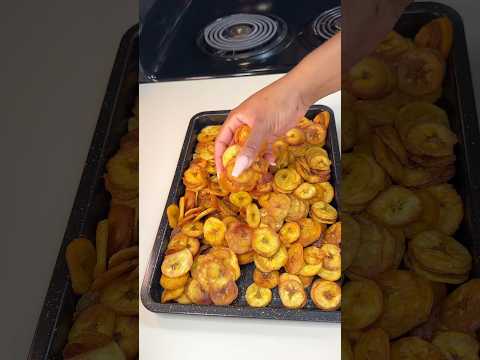
The source video for this recipe. Clear demonstration of the peeling technique for green plantains, which are notoriously difficult to peel compared to ripe ones, plus the soaking and frying process.
2. Crispy Plantain Chip Method
A useful reference for understanding the visual cues of properly fried plantain chips — the color shift from pale yellow to deep gold that signals they're done.
3. Caribbean Snack FundamentalsBroader context on Caribbean cooking techniques and how plantain chips fit into the snack culture of the region. Good background for understanding seasoning variations.
🛠️ Core Equipment
- Heavy-bottomed pot or Dutch oven ↗Thin pots lose temperature rapidly when you add cold food. A [Dutch oven](/kitchen-gear/review/dutch-oven) retains heat between batches so your oil recovers quickly and every chip fries at the same temperature.
- Instant-read kitchen thermometer ↗The frying window is 350-375°F. Below that, chips absorb oil. Above that, they burn before crisping through. Guessing by oil shimmer doesn't cut it — you need a [kitchen thermometer](/kitchen-gear/review/instant-read-thermometer) to stay in range.
- Fine-mesh strainer or slotted spoon ↗Speed matters when pulling chips out of oil. A [fine-mesh strainer](/kitchen-gear/review/fine-mesh-strainer) lets you lift a whole batch at once rather than chasing individual chips with a spoon and overcooking them in the process.
- Sharp chef's knife or mandoline ↗Uniform thickness is the difference between chips that finish at the same time and chips where half are burnt and half are underdone. A [mandoline](/kitchen-gear/review/mandoline-slicer) set to 1/8 inch produces perfect consistency in seconds.
Crispy Homemade Plantain Chips (The 25-Minute Snack That Beats the Bag)
🛒 Ingredients
- ✦2.5 medium green plantains, unpeeled
- ✦3 cups vegetable oil or coconut oil for frying
- ✦3/4 teaspoon sea salt, divided
- ✦1/4 cup filtered water
- ✦1/3 teaspoon garlic powder
- ✦1/8 teaspoon cayenne pepper
- ✦1 tablespoon fresh lime juice
- ✦1/8 teaspoon ground black pepper
👨🍳 Instructions
01Step 1
Rinse the green plantains under cool running water and pat completely dry with paper towels.
02Step 2
Cut off both ends of each plantain with a sharp knife, then score the skin with 3-4 shallow lengthwise cuts, being careful not to pierce the flesh.
03Step 3
Peel away the skin using your fingers or the knife blade, then slice each peeled plantain crosswise into uniform rounds approximately 1/8 to 1/4 inch thick.
04Step 4
Combine the sliced plantains with the filtered water and 1/4 teaspoon sea salt in a large bowl. Let soak for 10-15 minutes to reduce surface starch.
05Step 5
Drain the plantains and spread them across paper towels. Pat each slice firmly until completely dry — no moisture should remain on the surface.
06Step 6
Heat the oil in a heavy-bottomed pot or Dutch oven to 350-375°F (175-190°C), using a kitchen thermometer to monitor temperature.
07Step 7
Working in small batches, carefully lower the dried plantain slices into the hot oil using a slotted spoon or fine-mesh strainer.
08Step 8
Fry for 4-6 minutes per batch, stirring occasionally, until the chips turn deep golden-brown and crispy throughout. Watch the color — pale gold means they're not done yet.
09Step 9
Remove the cooked chips immediately with a fine-mesh strainer and transfer to a plate lined with fresh paper towels.
10Step 10
Season the hot chips right away: sprinkle with the remaining 1/2 teaspoon sea salt, garlic powder, cayenne, and black pepper. Toss gently to coat. Add lime juice if using.
Nutrition Per Serving
Estimates based on standard preparation. Adjustments alter macros.
🔄 Substitutions
Instead of Vegetable oil...
Use Avocado oil
Higher smoke point (520°F vs 400°F) and more neutral flavor. Better choice if you're frying at the high end of the temperature range. Slightly more expensive but worth it for the stability.
Instead of Deep frying...
Use Air frying at 380-400°F for 12-15 minutes, shaking basket halfway
Reduces calories by 30-40% and eliminates most of the oil. The chips will be less uniformly golden and slightly less crispy at the edges, but the texture is still satisfying.
Instead of Sea salt and garlic powder...
Use Nutritional yeast and smoked paprika
Adds savory umami depth with extra B vitamins. Use 1 tablespoon nutritional yeast and 1/4 teaspoon smoked paprika per batch. Works especially well on air-fried versions.
Instead of Deep frying in oil...
Use Baking at 400°F for 20-25 minutes, flipping halfway, with light oil spray
Lowest fat option. Produces a more tender chip rather than a crispy one. Good for meal prep if you prefer a less intense texture.
🧊 Storage & Reheating
In the Fridge
Not recommended — refrigerator humidity destroys the crunch within a few hours.
In the Freezer
Not suitable for freezing. The texture degrades completely upon thawing.
Reheating Rules
If chips have softened, spread in a single layer on a baking sheet and bake at 375°F for 5-8 minutes. They won't fully recover the fresh-fried crunch, but they'll get close.
❓ Frequently Asked Questions
Why do my plantain chips come out soft instead of crispy?
Three possible causes: the slices weren't dry enough before frying, the oil temperature was too low (below 350°F), or you crowded the pot. Any one of these prevents crust formation. The chip absorbs oil instead of shedding it, and you get soft chips. Fix all three before your next batch.
Can I use ripe (yellow) plantains for chips?
Technically yes, but the result is a different product. Yellow plantains have high sugar content that caramelizes quickly — they'll burn before they crisp through. If you use them, lower the oil temperature to 325°F and accept a sweeter, softer chip. For classic crispy chips, green is non-negotiable.
How do I peel green plantains without destroying them?
Score the skin with shallow lengthwise cuts — 3 or 4 is enough — then work your thumbs under each scored section and pop it off. Do not try to peel from the tip like a banana. The skin on green plantains is stiff and fibrous and will fight you. The scored sections come off cleanly.
What oil is best for frying plantain chips?
Any neutral oil with a smoke point above 400°F works. Vegetable oil, canola, and avocado oil are all good choices. Coconut oil adds a subtle sweetness that complements the plantain. Avoid olive oil — its smoke point is too low for sustained frying temperatures.
How do I keep the chips crispy after frying?
Drain them on paper towels in a single layer — never pile them while hot. Stack them and they steam each other soft. Let them cool completely before storing, and keep them in an open container or a bag that's only loosely sealed. Trapped moisture is the enemy.
Can I make these ahead of time for a party?
Yes, but fry them the same day. Plantain chips are at peak crunch within 2-3 hours of frying. If you need to make them more than 4 hours ahead, re-crisp them in a 375°F oven for 5 minutes before serving.
The Science of
Crispy Homemade Plantain Chips (The 25-Minute Snack That Beats the Bag)
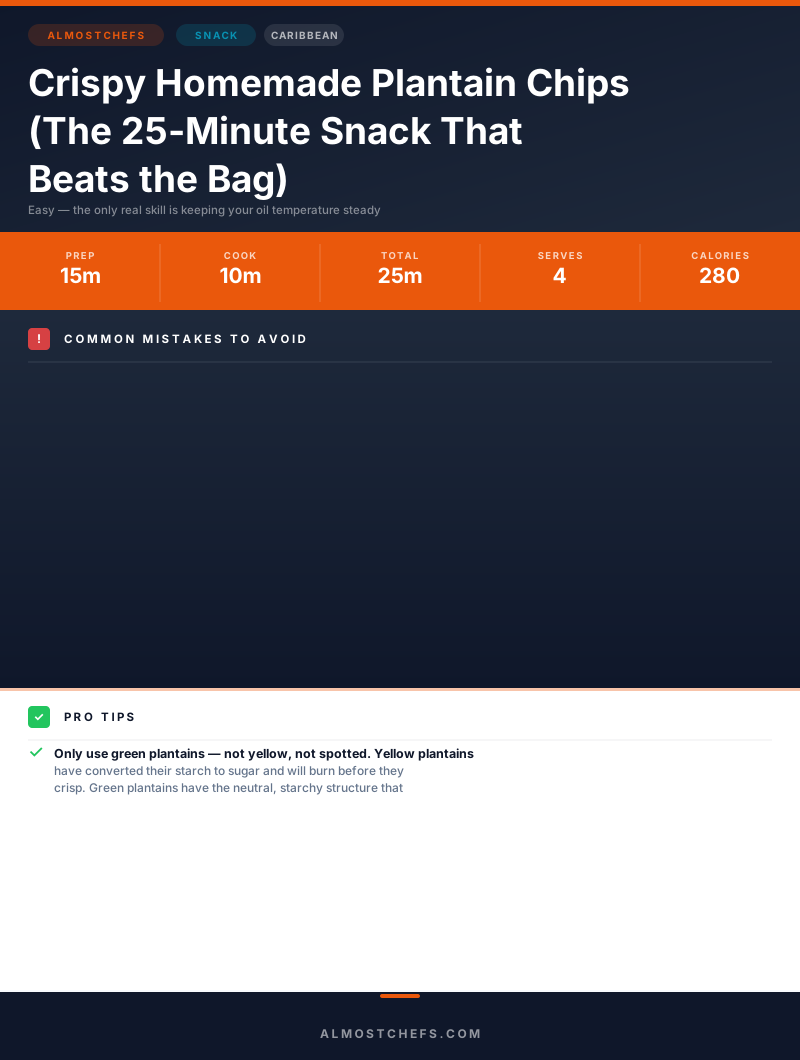
We turned everything on this page into a beautiful, flour-proof PDF cheat sheet. Print it out, stick it to your fridge, and never mess up your crispy homemade plantain chips (the 25-minute snack that beats the bag) again.
*We'll email you the high-res PDF instantly. No spam, just perfectly cooked meals.
AlmostChefs Editorial Team
We translate the internet's most popular cooking videos into foolproof, beginner-friendly written recipes. We analyze multiple methods, test them in our kitchen, and engineer a single "Master Recipe" that gives you the best possible result with the least possible stress.