Classic Piña Colada (The Blender Hack That Actually Works)
A silky tropical cocktail built on fresh pineapple juice, chilled coconut cream, and light rum — blended to frothy perfection in under 10 minutes. We broke down the most popular methods to nail the ratio that delivers creamy texture without the ice chunk problem.
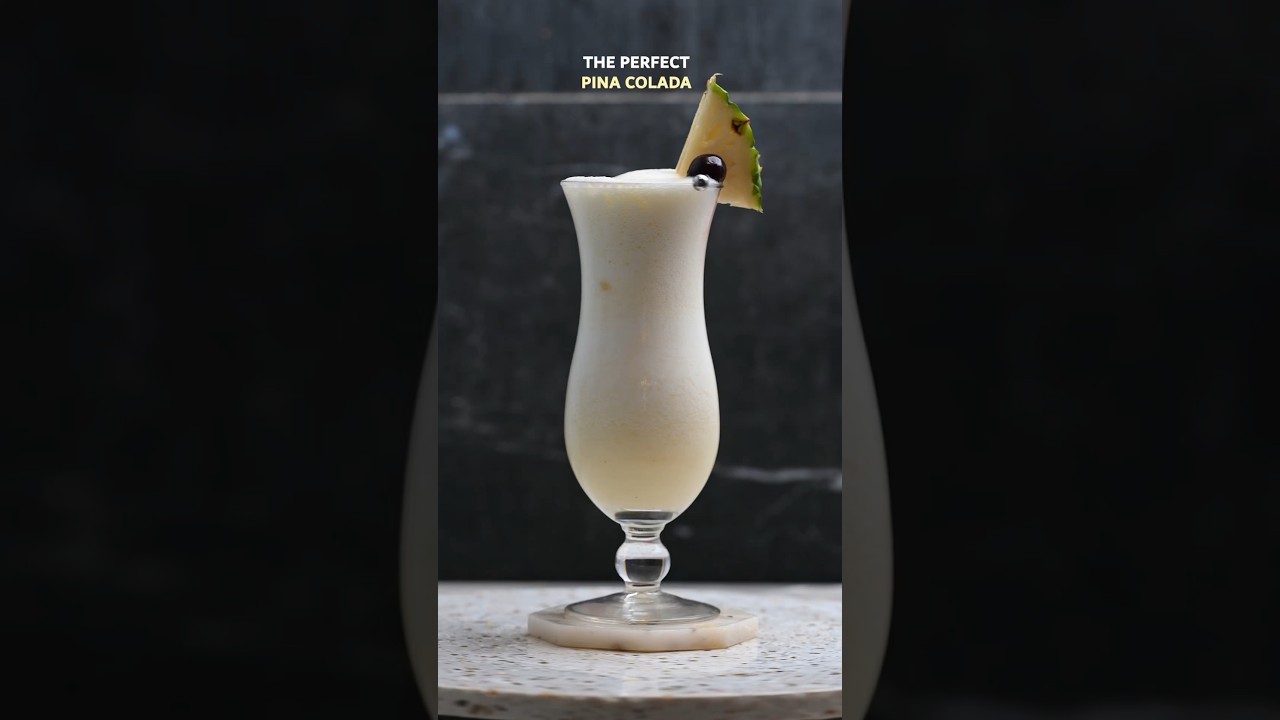
“Every blended tropical cocktail has the same potential failure: a grainy, icy mess that separates before you finish the first sip. The piña colada is deceptively simple — three ingredients, one blender — but the ratio between coconut cream, pineapple juice, and ice determines whether you get a silky vacation drink or a watery, cloying disappointment. We tested every major YouTube method to nail the blend time, fat-to-acid balance, and garnish order that makes the difference.”
Why This Recipe Works
The piña colada has a reputation problem. It's been relegated to the novelty menu, served in plastic cups with paper umbrellas, made with pre-mixed syrup poured over bad ice. The real drink — built on three quality ingredients, properly balanced, properly cold — is one of the best blended cocktails in existence. It just requires understanding what it's actually doing.
The Emulsion Problem
A piña colada is fundamentally an emulsion: fat (coconut cream) suspended in water (pineapple juice) with alcohol acting as a partial emulsifier. The blender does the heavy lifting, but the physics only work if the fat is cold. Warm coconut cream doesn't emulsify — the fat globules coat the blades and stay clumped rather than distributing evenly through the liquid. The result looks blended but separates in thirty seconds.
Chill your coconut cream overnight. Not for an hour. Overnight. The difference is a silky, opaque drink that holds its texture versus a streaky, thin one that turns to pineapple water by the time you sit down.
The Ice Architecture
Ice serves two functions: it chills and it thickens. Both functions have a failure mode. Too little ice and the drink is thin and warm. Too much ice and you get an over-diluted, watery result as the excess melts into the liquid. One cup of crushed ice for two cups of liquid is the ratio that produces the right slushy-but-pourable consistency.
The upgrade: freeze your pineapple juice into ice cubes the night before. Use those instead of water-ice and you lose zero flavor to dilution. Every cube that melts contributes more pineapple rather than diluting what's already there. It's a zero-cost technique that changes the drink's intensity profile entirely.
A high-powered blender processes ice in 45 seconds without friction-heating the liquid. Standard blenders take longer, generate more heat, and produce a thinner, less uniform texture. If you're making piña coladas more than twice a year, it's the equipment worth owning.
The Acid Equation
Coconut cream is rich, sweet, and one-dimensional. It needs acid to function as a component rather than a cloying wall of fat. The lime juice here is structural — not garnish, not optional seasoning. It cuts through the coconut cream, brightens the pineapple, and creates the contrast that makes you want another sip instead of setting the drink down after two.
This is also why fresh pineapple juice matters. Commercial bottled juice is pasteurized and often contains added sugar, which pushes the drink further into the same sweet register as the coconut cream. Fresh juice — or frozen pineapple blended with water and strained — has a natural acidity and brightness that pasteurized juice cannot replicate. The bromelain enzyme that gives raw pineapple its slight bite is destroyed at processing temperatures. That edge is flavor. You want it.
The Virgin Problem
The non-alcoholic version is genuinely harder to balance than the original. Rum contributes more than alcohol — it adds a dry, slightly bitter finish that offsets the coconut cream's richness and prevents the drink from collapsing into sugar water. Remove it and the drink goes flat in a specific way: all sweetness, no tension.
The fix is more lime — an extra half tablespoon minimum — plus a small splash of sparkling water added after blending to introduce a slight effervescence that mimics rum's texture. Neither change is a perfect substitute, but together they restore enough structural tension to make the virgin version worth drinking rather than just tolerating.
One Rule
Serve immediately. The piña colada is the most time-sensitive blended drink in the canon. The emulsion is stable for about fifteen minutes before the fat and liquid begin separating, the ice begins pooling at the bottom, and the drink turns into a layered mess. No amount of stirring fully restores a separated piña colada. Blend to order, pour into cold glasses, and drink fast. That's the entire protocol.
Where Beginners Mess This Up
Before we start, read this. These are the 4 reasons your classic piña colada (the blender hack that actually works) will fail:
- 1
Using warm coconut cream: Room-temperature coconut cream emulsifies poorly with cold pineapple juice. The fat globules stay separate rather than incorporating into a uniform texture. Chill your coconut cream for at least two hours — overnight is better. Cold fat blends into a stable emulsion; warm fat breaks immediately.
- 2
Blending too short or too long: Under-blended drinks have visible ice shards and a chunky texture. Over-blended drinks turn thin and watery as friction heat melts the ice into dilution. Forty-five to sixty seconds on high is the window. Set a timer.
- 3
Using bottled pineapple juice: Commercial pineapple juice is pasteurized, which destroys the bromelain enzyme that gives fresh pineapple its bright, slightly tart edge. The result tastes flat and overly sweet. Fresh-squeezed or blended-then-strained fresh pineapple delivers a flavor bottled juice cannot replicate.
- 4
Skipping the lime: Coconut cream is rich and one-dimensional without acid to cut through it. The lime juice is not optional garnish chemistry — it's structural. Without it, the drink tastes like sweetened sunscreen. Two tablespoons sharpens the entire flavor profile.
The Video Reference Library
Want to see it in action? Here are the exact videos we analyzed and combined to build this foolproof recipe translation:
The source video for this recipe's ratio and blending technique. Clear breakdown of coconut cream temperature and why fresh pineapple juice changes the flavor profile entirely.
🛠️ Core Equipment
- High-powered blenderA weak blender leaves ice chunks and fails to fully emulsify the coconut cream into the juice. You need enough torque to pulverize ice completely within 60 seconds. Under-powered blenders produce uneven texture that separates in the glass.
- Hurricane or tall tropical glassesThe wide base and tapered top trap cold air and slow dilution. Standard rocks glasses warm the drink too fast. Chill your glasses beforehand by filling them with ice water while you blend.
- Cocktail pick or bamboo skewerFor the pineapple chunk garnish. Speared fruit resting across the rim keeps the garnish elevated and prevents it from sinking into the drink. Small detail, significant presentation difference.
Classic Piña Colada (The Blender Hack That Actually Works)
🛒 Ingredients
- ✦2 cups fresh pineapple juice, preferably from ripe fruit
- ✦1 cup full-fat coconut cream, chilled
- ✦1 cup light rum, or omit for non-alcoholic version
- ✦1 cup crushed ice or ice cubes
- ✦4 tablespoons sweetened shredded coconut (unsweetened variety optional)
- ✦2 tablespoons fresh lime juice, squeezed from 1–2 limes
- ✦1 teaspoon vanilla extract
- ✦2 cups fresh pineapple chunks, for garnish
- ✦4 maraschino cherries, for garnish
- ✦4 whole pineapple leaves or coconut strips, for decoration
👨🍳 Instructions
01Step 1
Fill four hurricane or tall glasses with ice water and set aside to chill while you prepare everything else.
02Step 2
Add the fresh pineapple juice to the blender first.
03Step 3
Add the chilled coconut cream, breaking it up slightly with a spoon so it doesn't drop in as one solid block.
04Step 4
Add the fresh lime juice directly into the blender.
05Step 5
Add the light rum if making the alcoholic version. Skip entirely for a virgin piña colada.
06Step 6
Add the vanilla extract and the crushed ice.
07Step 7
Blend on high for 45 to 60 seconds until completely smooth with no visible ice chunks.
08Step 8
Discard the ice water from the prepared glasses. Divide the blended mixture evenly among the four glasses.
09Step 9
Garnish each glass with fresh pineapple chunks speared on a cocktail pick and rested across the rim.
10Step 10
Add a maraschino cherry on top of the pineapple pieces.
11Step 11
Tuck a pineapple leaf or strip of toasted coconut in as a final decorative element.
12Step 12
Insert a straw at an angle and serve immediately.
Nutrition Per Serving
Estimates based on standard preparation. Adjustments alter macros.
🔄 Substitutions
Instead of Light rum...
Use Coconut rum or omit entirely
Virgin version is sweeter and more family-friendly. Coconut rum doubles down on the tropical profile — reduce coconut cream slightly to compensate. For mocktail balance, add a splash of sparkling water to replicate rum's dry finish.
Instead of Full-fat coconut cream...
Use Lite coconut milk
Lighter texture with 30% fewer calories, but the emulsion is less stable and the drink separates faster. Serve immediately and don't let it sit.
Instead of Fresh pineapple juice...
Use Frozen pineapple chunks blended with water, strained
Fresher flavor than bottled juice, higher fiber, and no oxidation. Blend 2 cups frozen pineapple with ½ cup water and strain through a fine-mesh sieve before using.
Instead of Maraschino cherries...
Use Fresh raspberries or dried cranberries
More tart, better color contrast, and no artificial dye. Fresh raspberries look better on camera if that matters to you.
🧊 Storage & Reheating
In the Fridge
Store leftover blended mixture in an airtight container for up to 24 hours. It will separate — stir vigorously or re-blend for 15 seconds before serving.
In the Freezer
Pour into ice cube trays and freeze for up to 1 month. Re-blend the cubes when ready to serve for an instant slushy piña colada.
Reheating Rules
Not applicable — serve cold. If the mixture has been refrigerated, re-blend with a small handful of fresh ice for 20 seconds to restore texture.
❓ Frequently Asked Questions
Why does my piña colada separate in the glass?
Separation happens when the fat in the coconut cream isn't fully emulsified with the pineapple juice. This usually means the coconut cream wasn't cold enough, or you under-blended. Chill the cream before blending and blend for a full 45–60 seconds on high. Also, serve immediately — even a well-blended drink will separate after 15–20 minutes.
Can I make piña coladas ahead of time for a party?
Yes, but with caveats. Blend in batches and store in a pitcher in the freezer. Stir before each pour. Don't make more than 2 hours ahead — beyond that, the texture degrades even frozen. The ice cube method (freeze blended liquid in trays, re-blend to order) works better for large batches.
Do I need a high-powered blender?
For best results, yes. A standard blender can work if you use crushed ice instead of cubes and add the liquid before the ice. But under-powered blenders take longer to break down ice, which means more friction heat and a thinner, more diluted final drink.
What's the difference between coconut cream and cream of coconut?
Coconut cream is unsweetened pressed coconut fat — it's an ingredient. Cream of coconut (like Coco López) is sweetened and stabilized — it's a cocktail mixer. Classic piña colada recipes often use cream of coconut, which is why bar versions taste sweeter. This recipe uses unsweetened coconut cream so you control the sweetness.
Can I skip the rum entirely without adjusting anything else?
Skip it, but add a tablespoon of extra lime juice to compensate for the flavor void rum leaves. Rum contributes a dry, slightly bitter finish that balances the coconut cream's richness. Without it, the drink leans sweet. The lime corrects that.
Why add vanilla extract to a piña colada?
Vanilla rounds out the coconut cream and adds aromatic depth that makes the drink taste more complex without tasting like vanilla. It's a background note, not a flavor. Skip it if you don't have it — the difference is subtle, not structural.
The Science of
Classic Piña Colada (The Blender Hack That Actually Works)
We turned everything on this page into a beautiful, flour-proof PDF cheat sheet. Print it out, stick it to your fridge, and never mess up your classic piña colada (the blender hack that actually works) again.
*We'll email you the high-res PDF instantly. No spam, just perfectly cooked meals.
AlmostChefs Editorial Team
We translate the internet's most popular cooking videos into foolproof, beginner-friendly written recipes. We analyze multiple methods, test them in our kitchen, and engineer a single "Master Recipe" that gives you the best possible result with the least possible stress.