Authentic Beef Pho (The Broth Is the Recipe)
Vietnam's iconic aromatic beef noodle soup built on a deeply flavored broth of charred aromatics, toasted whole spices, and slow-simmered bones. We broke down the most important techniques to give you a restaurant-quality bowl that's genuinely achievable at home.
“Pho is not a noodle soup with nice flavors. It is a study in extraction — pulling every milligram of collagen, mineral, and aromatic compound out of bones and spices over several hours until the broth becomes something entirely different from its parts. Most home attempts fail not because the recipe is wrong, but because the cook pulls the pot too early. The broth needs time. Give it the time and everything else takes care of itself.”
Why This Recipe Works
Pho is not a complex dish. It is a patient one. The ingredient list is short, the technique is simple, and the method has barely changed in a hundred years. What it demands — the one thing that cannot be hacked or abbreviated — is time. Give it the time and a bowl of extraordinary depth appears almost inevitably. Refuse to give it the time and you'll have decent beef noodle soup. Good, but not pho.
The Bone Architecture
Every bowl of pho starts with bones, and not all bones are equal. Knuckle bones are the foundation because they're packed with collagen — the structural protein that, under sustained heat, hydrolyzes into gelatin. That gelatin is what makes a properly made pho broth silky and coating, with a mouthfeel that clings to your lips slightly when you sip from the bowl. Leg bones with marrow add richness and a deep, slightly mineral flavor.
The blanching step — boiling the raw bones for three minutes, draining, rinsing — is non-negotiable. Raw bones release blood proteins that coagulate into a gray, bitter foam. If that foam disperses into your broth before you can skim it, it embeds itself in the liquid permanently. Three minutes in boiling water and a cold rinse starts the whole process clean.
The Charring Principle
The second foundational technique is charring the onion and ginger. Place them directly over a gas flame or directly under a broiler until the surfaces are genuinely, dramatically blackened. Not golden, not toasted — blackened. This is where the intimidation usually stops home cooks, who pull the aromatics too early because they're worried about burning.
The char is the point. The Maillard reaction at these high temperatures converts the onion's natural sugars into dozens of new flavor compounds — the same chemistry that makes a seared steak taste different from a boiled one. The resulting broth carries a faint smokiness and a caramelized depth that is the flavor signature of authentic pho. Charcoal-forward at the start, subtle by the time the broth finishes its long simmer, but unmistakably there.
Spice Architecture
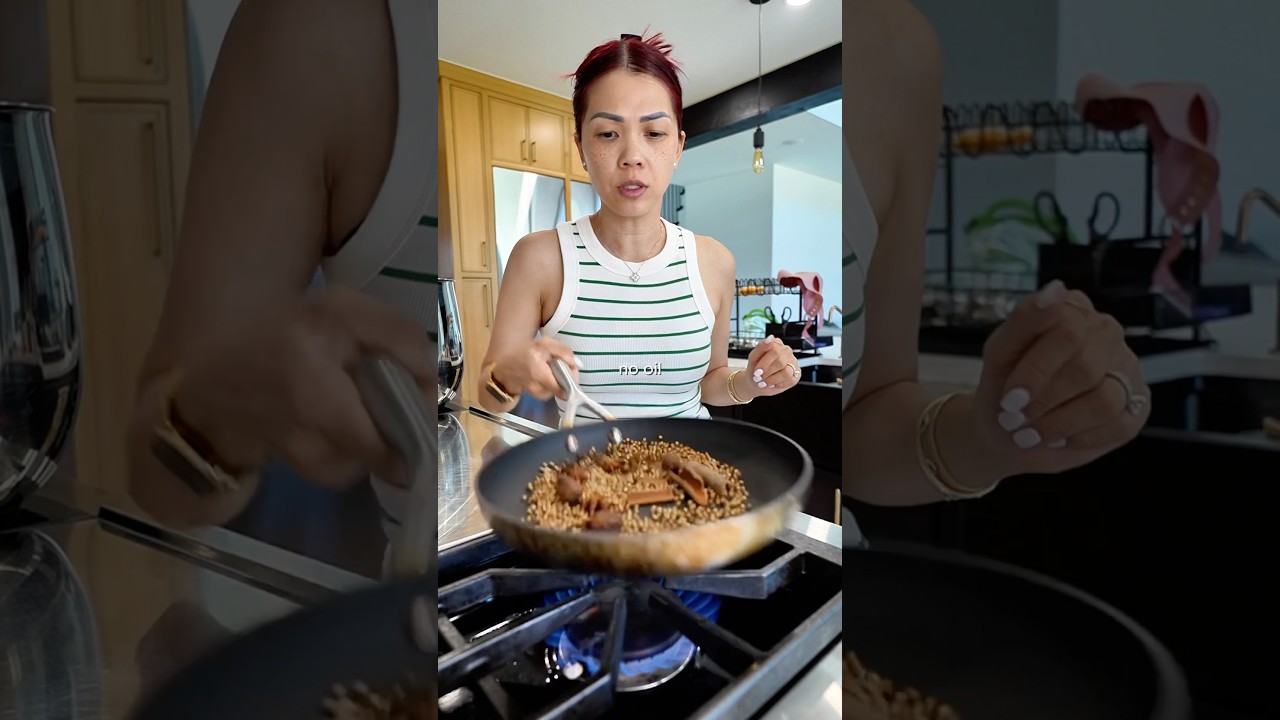
The whole spices — star anise, cinnamon, coriander, cloves — go into a dry cast iron skillet over medium heat for sixty to ninety seconds. Just long enough for the volatile oils to release and the kitchen to fill with their combined aroma. Pull them the moment you smell them. Thirty seconds past that point and you've crossed from toasted to scorched, and scorched spices turn bitter in long broth applications.
Using whole spices rather than ground is deliberate. Ground spices release their compounds immediately and can turn acrid over hours of simmering. Whole spices release slowly, building complexity across the full cooking time. The star anise especially — its anise-licorice character is aggressive when fresh and mellow when it's been steeping for three hours.
The Long Simmer
Once everything is in the large stockpot, the method becomes almost passive. The first thirty minutes require attention — skim the foam as it rises and the broth runs progressively clearer. After that, reduce to a gentle simmer and leave it. Two bubbles per second is about right. A hard boil emulsifies the fat droplets into the broth and the clarity never comes back.
The brisket comes out at the 2.5-to-3-hour mark, sliced against the grain once it cools. The bones continue for another thirty to sixty minutes. By hour four, the gelatin is in the broth and the spices have fully expressed themselves. Strain everything through cheesecloth for the cleanest result, season with fish sauce and rock sugar after straining, and taste carefully before adding anything else.
The Bowl Belongs to the Diner
Pho's genius is its final assembly philosophy: the kitchen provides the broth and the noodles, and the diner builds the bowl. Fresh Thai basil, cilantro, mint, bean sprouts, jalapeño slices, lime, hoisin, and sriracha arrive on the side — not already in the bowl. Everyone adjusts to their own threshold for heat, brightness, and herbaceousness. The cook doesn't need to make that decision for anyone.
Warm your bowls before the broth goes in. A cold bowl drops the temperature immediately, and pho served at anything below near-boiling is a diminished experience. Sixty seconds of hot water in each bowl while you finish the seasoning is the smallest effort with the highest return.
Where Beginners Mess This Up
Before we start, read this. These are the 4 reasons your authentic beef pho (the broth is the recipe) will fail:
- 1
Skipping the blanch on the bones: Raw beef bones release a gray, foamy scum of impurities when they first hit boiling water. If you go straight from raw bones into your main broth, that scum disperses into the liquid and you end up with a murky, slightly bitter base that no amount of skimming will fully fix. Three minutes in boiling water, a cold rinse, and you start clean.
- 2
Under-charring the aromatics: The onion and ginger need to be genuinely blackened — not just browned, not lightly toasted. The char is what creates the smoky, caramelized depth that distinguishes pho broth from any other beef soup. Timid charring produces timid broth. Get it dark.
- 3
Pulling the broth too early: Three hours is the minimum. Four is better. The collagen in the bones needs sustained heat to convert to gelatin, which is what gives the broth its silky body and mouthfeel. A 90-minute pho broth is thin, flat, and forgettable. Time is the ingredient you cannot substitute.
- 4
Over-seasoning before tasting: Fish sauce and rock sugar must be added after straining, not before. Before straining, the broth is still extracting and concentrating. Season a finished, strained broth. Season gradually, tasting as you go. Fish sauce in particular is unforgiving — a tablespoon too many and there is no recovery.
The Video Reference Library
Want to see it in action? Here are the exact videos we analyzed and combined to build this foolproof recipe translation:
The clearest breakdown of the bone blanching, charring, and spice toasting sequence. Excellent close-ups of what properly charred aromatics actually look like versus underdone.
🛠️ Core Equipment
- Large stockpot (8-quart minimum)You're simmering 5 quarts of liquid plus bones and meat for several hours. A pot that's too small forces you to crowd everything and reduces circulation. More space means better extraction and easier skimming.
- Fine-mesh sieve or cheeseclothThe final strain is what separates a clear, jewel-toned broth from a cloudy one. Cheesecloth gives the cleanest result. A fine-mesh sieve is faster but slightly less clear. Both work — cheesecloth wins on aesthetics.
- Heavy skillet for toasting spicesDry-toasting whole spices in a [cast iron skillet](/kitchen-gear/review/cast-iron-skillet) over medium heat releases the volatile oils without burning. The goal is fragrant, not scorched. A thin pan makes it hard to control the heat.
- Gas burner or broiler for charringDirect flame over a gas burner gives the fastest, most even char on onion and ginger. A broiler works but takes longer and chars less dramatically. If using a broiler, go closer to the element and watch carefully.
Authentic Beef Pho (The Broth Is the Recipe)
🛒 Ingredients
- ✦2.5 pounds beef bones (knuckle or leg bones with marrow)
- ✦1.25 pounds beef brisket or chuck roast
- ✦1 large yellow onion, halved
- ✦4-inch piece fresh ginger, halved lengthwise
- ✦5 whole star anise pods
- ✦1 cinnamon stick, 3 inches long
- ✦1 teaspoon coriander seeds
- ✦3 whole cloves
- ✦5 quarts beef broth or water
- ✦3.5 tablespoons fish sauce
- ✦1.5 tablespoons rock sugar or brown sugar
- ✦1 teaspoon salt, plus more to taste
- ✦8 ounces dried rice noodles
- ✦2 cups fresh bean sprouts
- ✦1 cup fresh herbs (Thai basil, cilantro, and mint combined)
- ✦3 medium limes, cut into wedges
- ✦2-3 jalapeños, thinly sliced
- ✦2 tablespoons hoisin sauce
- ✦2 tablespoons sriracha or chili paste
👨🍳 Instructions
01Step 1
Blanch the beef bones in a large pot of boiling water for 3 minutes, then drain and rinse thoroughly under cold running water.
02Step 2
Char the onion halves and ginger pieces directly over a gas flame or under a hot broiler for 2-3 minutes per side until genuinely blackened and caramelized.
03Step 3
Toast the star anise, cinnamon stick, coriander seeds, and cloves in a dry skillet over medium heat for 1-2 minutes, stirring frequently, until fragrant.
04Step 4
Bring the beef broth to a boil in a large stockpot. Add the blanched bones, brisket, charred onion, charred ginger, and toasted spices.
05Step 5
Return to a boil, then reduce heat to a gentle simmer. Skim foam and impurities from the surface frequently during the first 30 minutes.
06Step 6
After 2.5-3 hours, remove the brisket from the broth and set aside to cool. Continue simmering the bones for another 30-60 minutes.
07Step 7
Slice the cooled brisket thinly against the grain. Set aside for serving.
08Step 8
Strain the finished broth through a fine-mesh sieve or cheesecloth-lined colander into a clean pot. Discard all solids.
09Step 9
Stir in the fish sauce, rock sugar, and salt. Taste and adjust — the broth should be deeply savory with a faint sweetness and no single flavor dominating.
10Step 10
Cook the dried rice noodles according to package directions. Drain and rinse with cold water to stop cooking and prevent sticking.
11Step 11
Divide the noodles among four large, warmed bowls.
12Step 12
Ladle the hot broth over the noodles, filling each bowl to about three-quarters full.
13Step 13
Arrange sliced brisket over the noodles in each bowl.
14Step 14
Serve immediately with fresh herbs, lime wedges, sliced jalapeños, hoisin, and sriracha on the side for individual customization.
Nutrition Per Serving
Estimates based on standard preparation. Adjustments alter macros.
🔄 Substitutions
Instead of Beef bones and brisket...
Use Chicken bones and thighs
Produces pho ga — lighter, cleaner flavor with less fat. Reduce cook time to 2-2.5 hours. The aromatic and spice profile stays identical.
Instead of Rice noodles...
Use Buckwheat or kelp noodles
Lower glycemic load and firmer texture. Buckwheat adds a faint nuttiness; kelp noodles are nearly neutral. Same cooking method applies to both.
Instead of Rock sugar...
Use 1 teaspoon honey or monk fruit sweetener
Honey adds subtle caramel notes; monk fruit is neutral. Both provide the slight sweetness that balances the fish sauce without spiking blood sugar.
Instead of Fish sauce...
Use Tamari or coconut aminos (use 2.5 tablespoons)
Accommodates fish allergies while maintaining umami depth. Less pungent aroma, slightly less complexity. Increase quantity to compensate for milder flavor.
🧊 Storage & Reheating
In the Fridge
Store broth and solids separately in airtight containers for up to 4 days. Keep noodles separate and cook fresh for each serving — stored noodles absorb broth and turn to paste.
In the Freezer
The broth freezes beautifully for up to 3 months. Freeze in 1-quart portions for easy reheating. Freeze sliced brisket separately wrapped in portions.
Reheating Rules
Reheat broth on the stovetop over medium heat until it reaches a full simmer before ladling — the bowl must be served at near-boiling temperature or the experience collapses.
❓ Frequently Asked Questions
Why is my pho broth cloudy?
Two likely causes: you skipped the bone blanching step, or you simmered at too hard a boil. A vigorous boil emulsifies fat into the broth and permanently clouds it. The simmer should be gentle — a few lazy bubbles, not a rolling boil. Cheesecloth straining helps but won't rescue broth that boiled hard for hours.
How do I know when the broth is done?
Taste it. A finished pho broth has a silky body (from dissolved gelatin), a deeply savory base, and a complex spice aroma that lingers. A thin broth that tastes mostly of beef stock needs more time. If it's been 4 hours and still tastes flat, check your heat — it may have been simmering too low to extract properly.
Can I use a slow cooker or Instant Pot?
Slow cooker: yes, on high for 8-10 hours. The result is good but lacks the slight reduction you get from open simmering. Instant Pot: 45 minutes at high pressure produces a reasonable broth but the flavor is flatter — the pressurized environment doesn't allow the same aromatic volatilization. Stovetop over several hours is still the gold standard.
Why do I char the onion and ginger?
The char creates Maillard reaction compounds — the same chemistry that makes seared meat taste better than boiled. In aromatics, this produces a smoky, caramelized sweetness that is the unmistakable signature of authentic pho. Without it, the broth tastes clean but one-dimensional.
What cut of beef should I use for the bones?
Knuckle bones and leg bones with marrow are ideal. Knuckle bones are loaded with collagen, which converts to gelatin during the long simmer and gives the broth its body. Marrow bones add richness. Avoid spine bones — too much fat, not enough collagen.
Can I make pho without a full day of cooking?
You can produce a passable version in 2 hours, but it won't have the same depth. The collagen conversion from bones to gelatin takes sustained heat — you can't rush the chemistry. If you're short on time, use a high-quality store-bought bone broth as your base and add the charred aromatics and toasted spices — you lose some depth but the fundamental flavor profile is preserved.
The Science of
Authentic Beef Pho (The Broth Is the Recipe)
We turned everything on this page into a beautiful, flour-proof PDF cheat sheet. Print it out, stick it to your fridge, and never mess up your authentic beef pho (the broth is the recipe) again.
*We'll email you the high-res PDF instantly. No spam, just perfectly cooked meals.
AlmostChefs Editorial Team
We translate the internet's most popular cooking videos into foolproof, beginner-friendly written recipes. We analyze multiple methods, test them in our kitchen, and engineer a single "Master Recipe" that gives you the best possible result with the least possible stress.