Brilliant Homemade Pesto (The 15-Minute Italian Secret)
A vibrant, herbaceous Italian sauce made with fresh basil, toasted pine nuts, garlic, and Parmigiano-Reggiano, blended to silky perfection in a food processor. We analyzed the most common home cook mistakes to build one bulletproof technique that delivers restaurant-quality pesto every time.
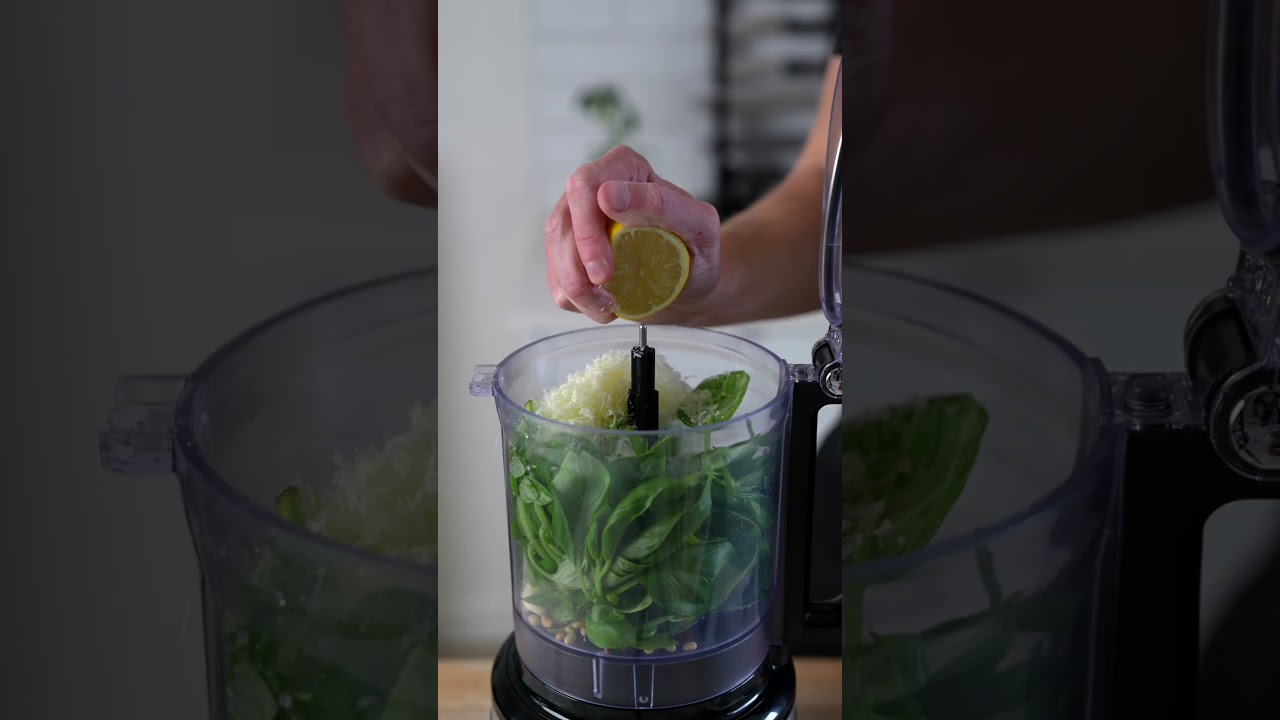
“Every jar of store-bought pesto is a small act of culinary surrender. The real thing takes 15 minutes, uses five core ingredients, and tastes so different from the shelf version that calling them the same sauce is technically incorrect. The gap between great pesto and forgettable pesto comes down to three decisions: whether you toast the pine nuts, whether your basil is bone dry before it hits the processor, and whether you add the oil slow or fast. Get those three right and the rest handles itself.”
Why This Recipe Works
Pesto is the fastest proof that Italian cooking is not about complexity — it's about precision. Five core ingredients, fifteen minutes, zero heat required. And yet most homemade pesto lands somewhere between adequate and disappointing because the technique gets treated as optional. It isn't.
The Emulsification Problem
Pesto is not a blended soup. It is an emulsion — oil and water-based herb solids suspended in a stable, cohesive mass. What makes it silky rather than oily is the slow introduction of fat. When you pour olive oil into a running food processor in a thin, steady stream, the high-speed blades force the oil to break into microscopic droplets that bond to the herb and garlic particles. The result is a sauce that coats pasta. Dump the oil in all at once and the emulsion never forms — you get a layer of green sludge floating in a pool of oil.
This is the same physics that makes mayonnaise work, and the same principle that makes it break.
Why the Nuts Matter More Than You Think
Pine nuts are expensive because they're labor-intensive to harvest, not because they're irreplaceable. What they contribute is a specific kind of creaminess — softer than most nuts, with a mild, buttery flavor that doesn't compete with the basil. That quality doesn't disappear with a substitution; it just shifts. Walnuts bring deeper, more tannic flavor. Sunflower seeds stay neutral. Either works, as long as you toast them.
Toasting is non-negotiable. In a dry skillet over medium heat, the Maillard reaction converts the raw nuts' flat, waxy flavor into something roasted, complex, and aromatic. The window is narrow — three to four minutes — and the finish line smells like warm pastry. Miss it by thirty seconds in either direction and you get raw or burnt. Neither belongs in pesto.
The Basil Variable
Fresh basil is perishable in a way that most produce isn't. Once the leaves are bruised or cut, the cell walls release enzymes that begin breaking down chlorophyll immediately, turning the vivid green into oxidized brown within minutes. Moisture accelerates this. Wet basil in a processor creates steam that speeds the oxidation process and dilutes the emulsion simultaneously.
The fix is simple: wash and dry completely. Bone dry. If you're in a hurry, a salad spinner handles this in thirty seconds. The visual difference between pesto made with wet versus dry basil is dramatic — bright green versus army drab — and the flavor difference is nearly as stark.
The parsley addition isn't traditional, but it's strategic. Parsley has a more stable chlorophyll structure than basil and helps maintain the sauce's color during refrigeration. It also contributes a clean, slightly grassy note that extends the brightness of the basil without competing with it.
The Cheese Decision
Parmigiano-Reggiano pulls double duty: salt and umami. The salt is obvious. The umami is the reason pesto tastes like more than the sum of its parts — glutamates in aged cheese trigger savory receptors that amplify every other flavor in the sauce. This is why the vegan substitutions require more adjustment than just swapping volumes. Nutritional yeast has significant glutamate content (hence its cheese-like flavor), but the mineral sharpness of aged Parmesan is genuinely difficult to replicate without dairy.
Whatever you use, grate it yourself. The cellulose in pre-grated cheese prevents it from incorporating smoothly and leaves a slightly gritty texture in the finished sauce.
Assembly Is the Technique
Unlike most sauces, pesto improves the less you do to it. The ideal texture is chunky enough to have presence on the plate but cohesive enough to cling to pasta without pooling. That window is a matter of seconds in a food processor. Stop early. Check. Stop early again. Once you've processed through it, there's no way back.
Everything in this recipe is reversible except overcooking and over-processing. Avoid both and you have a sauce worth making every week.
Where Beginners Mess This Up
Before we start, read this. These are the 4 reasons your brilliant homemade pesto (the 15-minute italian secret) will fail:
- 1
Wet basil leaves: Water is the enemy of emulsification. If your basil is even slightly damp when it enters the food processor, the excess moisture breaks the oil-herb suspension and you end up with a thin, separated sauce that pools oil on top. Wash the basil, then dry it completely — paper towels or a salad spinner, as long as the leaves are dry to the touch before you start.
- 2
Skipping the pine nut toast: Raw pine nuts taste flat and slightly waxy. Three to four minutes in a dry skillet over medium heat triggers the Maillard reaction, converting their natural sugars into deep, nutty complexity. The difference is not subtle. Do not skip this step, and do not walk away from the pan — pine nuts go from golden to burnt in under sixty seconds.
- 3
Adding the oil too fast: Pesto is an emulsion. Dumping the oil in all at once breaks it into a greasy, separated mess. Stream it slowly — a thin, steady pour while the processor runs — so the oil can bind with the herb solids gradually. Patience here is the difference between silky and oily.
- 4
Over-processing the mixture: A food processor can turn pesto into baby food in seconds. You want texture — visible herb flecks, small nut pieces, a sauce that has body rather than paste. Pulse, don't blend continuously. Stop the machine and check the consistency every few pulses. Once it looks like pesto, it's done.
The Video Reference Library
Want to see it in action? Here are the exact videos we analyzed and combined to build this foolproof recipe translation:
The definitive technique walkthrough covering herb prep, pine nut toasting, and the slow-oil emulsification method. Clear demonstration of the texture checkpoints at each pulse stage.
🛠️ Core Equipment
- Food processorThe tool that makes this recipe achievable in 15 minutes flat. A blender technically works but creates an overly smooth, almost liquid result. The food processor's pulse function lets you control texture precisely — from chunky to silky, you decide when to stop.
- Dry skilletFor toasting the pine nuts without any added fat. A heavy-bottomed pan distributes heat evenly so the nuts toast uniformly rather than burning on the edges while the center stays raw. Cast iron or stainless steel both work.
- Rubber spatulaThe Parmigiano-Reggiano gets folded in by hand after processing, not blended. A spatula lets you incorporate the cheese gently, preserving the texture of the finished sauce without turning it into a uniform paste.
- Glass jar with tight lidFor storage. Glass doesn't absorb odors or stain, and a tight seal slows oxidation. Press a thin layer of olive oil over the surface of the pesto before sealing to prevent the top layer from browning.
Brilliant Homemade Pesto (The 15-Minute Italian Secret)
🛒 Ingredients
- ✦2 cups fresh basil leaves, packed
- ✦1/2 cup fresh flat-leaf parsley
- ✦3 cloves garlic, minced
- ✦1/3 cup pine nuts
- ✦1/2 cup freshly grated Parmigiano-Reggiano cheese
- ✦1/2 cup extra virgin olive oil
- ✦2 tablespoons fresh lemon juice
- ✦1/4 teaspoon sea salt
- ✦1/8 teaspoon black pepper
- ✦1 tablespoon water, as needed for consistency
👨🍳 Instructions
01Step 1
Rinse the basil and parsley thoroughly under cool running water, then pat completely dry with paper towels. Every leaf should be dry to the touch before proceeding.
02Step 2
Toast the pine nuts in a dry skillet over medium heat, stirring frequently, until fragrant and lightly golden — about 3 to 4 minutes. Transfer immediately to a cutting board to cool.
03Step 3
Add the dry basil, parsley, and minced garlic to the bowl of a food processor. Pulse 5 to 6 times until roughly chopped.
04Step 4
Scatter the cooled pine nuts over the herb mixture. Pulse another 3 to 4 times until the nuts are broken into small pieces but still retain visible texture.
05Step 5
With the processor running, drizzle in the extra virgin olive oil in a slow, steady stream. Pulse continuously until you reach a loose, chunky consistency.
06Step 6
Transfer the pesto to a bowl. Fold in the freshly grated Parmigiano-Reggiano with a rubber spatula, stirring gently until evenly combined.
07Step 7
Add the fresh lemon juice and season with sea salt and black pepper to taste. Stir to combine.
08Step 8
If the pesto is too thick, add water one tablespoon at a time, stirring gently after each addition until you reach your desired consistency.
09Step 9
Transfer to a clean glass jar. Press plastic wrap or a thin layer of olive oil directly onto the surface to prevent oxidation. Refrigerate immediately.
Nutrition Per Serving
Estimates based on standard preparation. Adjustments alter macros.
🔄 Substitutions
Instead of Pine nuts...
Use Walnuts or sunflower seeds
Walnuts produce a more robust, earthier pesto with deeper flavor. Sunflower seeds are the most neutral swap — closest to pine nuts in texture. Both are significantly cheaper. Toast either the same way.
Instead of Parmigiano-Reggiano...
Use Nutritional yeast or cashew cream
Nutritional yeast provides savory umami depth without dairy. Start with 3 tablespoons and adjust to taste — it's more concentrated than cheese. Cashew cream adds richness and creaminess but less sharpness. Both are fully vegan.
Instead of Basil only...
Use 50% basil, 50% arugula or spinach
Arugula adds peppery complexity that complements garlic naturally. Spinach keeps the color vivid and adds iron without changing the flavor dramatically. Either blend works well and reduces cost significantly.
Instead of Extra virgin olive oil...
Use Half extra virgin olive oil, half avocado oil
Avocado oil has a lighter mouthfeel and slightly creamy undertone. The blend is more stable at room temperature and has a longer shelf life once opened. Use the same total volume.
🧊 Storage & Reheating
In the Fridge
Store in an airtight glass jar with a thin layer of olive oil pressed onto the surface. Keeps for up to 7 days. The top may darken slightly — this is oxidation, not spoilage. Stir before using.
In the Freezer
Freeze in ice cube trays for portioned use. Once solid, transfer cubes to a zip-lock bag and freeze for up to 3 months. Thaw in the fridge overnight or drop directly into hot pasta.
Reheating Rules
Pesto should not be heated directly — high heat turns the basil brown and destroys the volatile aromatic compounds. Toss with freshly cooked pasta off the heat, using reserved pasta water to loosen the sauce to your preferred consistency.
❓ Frequently Asked Questions
Why is my pesto turning brown?
Oxidation. Basil's chlorophyll reacts with oxygen and darkens rapidly once the leaves are damaged by the processor blades. Prevention: work quickly, add lemon juice, and cover the surface of the finished pesto with plastic wrap or olive oil before storing. It still tastes fine when slightly brown, but if it matters visually, blanch the basil in boiling water for 15 seconds and shock in ice water before processing — it locks the green.
Can I use a blender instead of a food processor?
Technically yes, practically no. A blender creates a much smoother, almost liquid result that lacks the texture that defines good pesto. If a food processor isn't available, a mortar and pestle is the authentic alternative and produces a coarser, more complex sauce. A blender is the last resort.
Do I need to use fresh basil or will dried work?
Dried basil produces an entirely different sauce — dusty, flat, and lacking the bright herbaceous character that makes pesto worth making. There is no substitute for fresh basil here. If you can't get fresh basil, make a different sauce.
How much pasta does this sauce cover?
This batch — about 1 cup of finished pesto — covers roughly 12 ounces of dried pasta (4 servings). Use about 2 to 3 tablespoons per serving, tossed with hot pasta and a splash of starchy pasta water to help it coat evenly.
Why do I fold in the cheese instead of processing it?
Two reasons. First, the fat in Parmigiano-Reggiano can separate under the heat and friction of a running food processor, turning the sauce greasy. Second, folding by hand preserves small flecks of cheese that add texture contrast. Machine-processed cheese disappears into the sauce entirely.
Can I make pesto without garlic?
You can, but you're leaving significant flavor on the table. If raw garlic is too sharp for your palate, roast two or three cloves in their skins at 375°F for 20 minutes first. The roasted garlic contributes sweetness and depth without the raw bite.

The Science of
Brilliant Homemade Pesto (The 15-Minute Italian Secret)
We turned everything on this page into a beautiful, flour-proof PDF cheat sheet. Print it out, stick it to your fridge, and never mess up your brilliant homemade pesto (the 15-minute italian secret) again.
*We'll email you the high-res PDF instantly. No spam, just perfectly cooked meals.
AlmostChefs Editorial Team
We translate the internet's most popular cooking videos into foolproof, beginner-friendly written recipes. We analyze multiple methods, test them in our kitchen, and engineer a single "Master Recipe" that gives you the best possible result with the least possible stress.