Classic Peanut Butter Cookies (The Crosshatch Method, Perfected)
Tender, chewy homemade peanut butter cookies with the signature fork crosshatch pattern. We broke down the most common failures — spreading, crumbling, dryness — and built a foolproof technique around one key insight: temperature control at every stage.
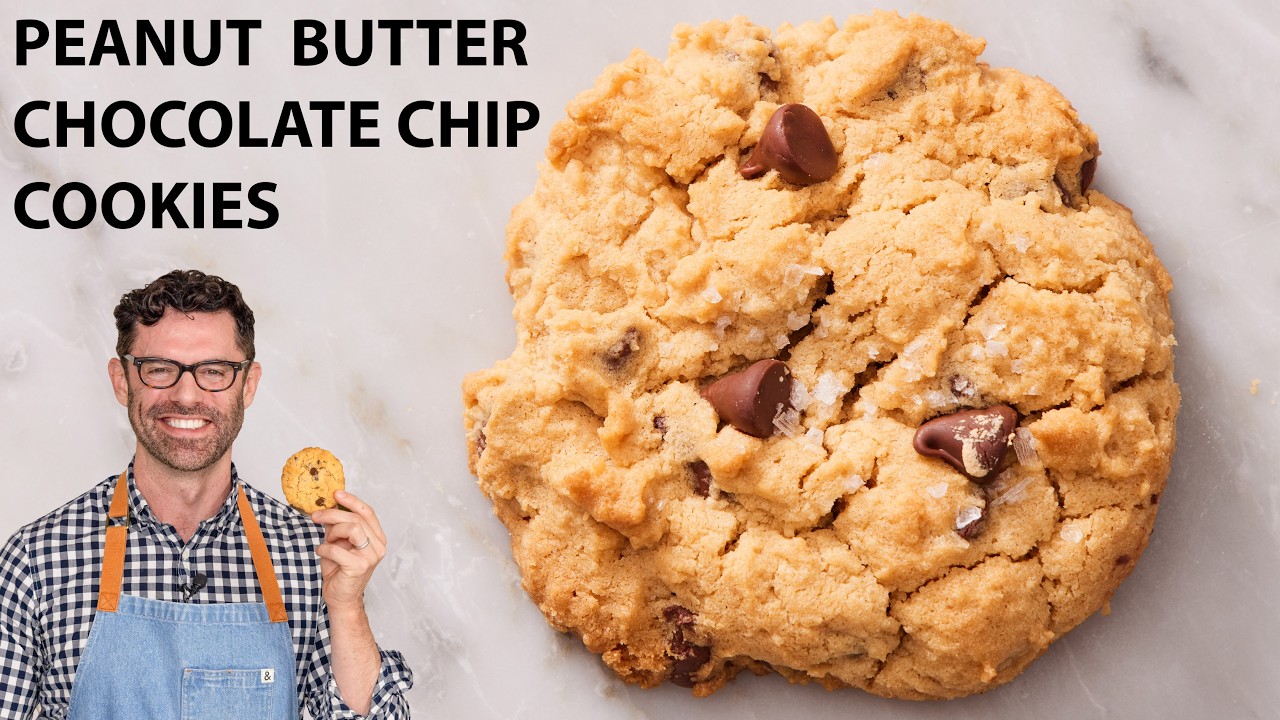
“Peanut butter cookies are one of the most requested cookies in America. They're also one of the most consistently disappointing — too dry, too crumbly, spreads into a flat disc, or has no actual peanut butter flavor despite having an entire cup of the stuff. Every one of those failures has a specific cause. We identified them all and built the fix directly into the method.”
Why This Recipe Works
Peanut butter cookies occupy a strange position in American baking. They're considered beginner territory — short ingredient list, no special equipment, no complicated technique. And yet the failure rate is remarkably high. Dry cookies. Crumbly cookies. Flat cookies. Cookies that taste like sweetened cardboard with a vague peanut suggestion. The gap between a forgettable peanut butter cookie and a genuinely good one is not about skill. It's about understanding three specific physical processes and not fighting them.
The Temperature Problem
This dough is approximately 60% fat by weight between the peanut butter and butter. Fat has one job in baking: it coats flour proteins, preventing gluten formation and creating tenderness. It does that job whether it's soft or liquid — but the timing of when it becomes liquid is everything.
Cold butter and cold peanut butter don't cream together. You get a lumpy, uneven emulsion that bakes into cookies with greasy pockets and inconsistent texture. Room temperature — genuinely room temperature, not "just barely soft" — allows the fats to form a stable, aerated mixture with the sugars that holds together through the entire bake.
Then the reverse problem: the chill. Once the dough is mixed, that fat needs to re-solidify before it goes into the oven. Skip the refrigeration step and you're putting warm fat into a 350°F environment. The fat melts in the first 3 minutes of baking, before the egg proteins and flour structure can set. The cookie spreads sideways into a thin, crispy disc with no real center. The 15-30 minute chill is not optional. It is the only thing standing between your cookies and a puddle.
The Baking Window
Peanut butter cookies have a notoriously narrow baking window — roughly 90 seconds separates underdone from overdone. The problem is that the visual cues are counterintuitive. A properly baked peanut butter cookie looks raw in the center when it's actually done. The edges should be set and faintly golden; the center should still appear glossy and slightly underset. That residual heat from the heavy baking sheet continues cooking the cookies during the mandatory 5-minute pan rest.
If you wait until the center looks set before pulling from the oven, you've already driven out the moisture that gives these cookies their chew. The result is a dry, crumbly cookie that falls apart when you pick it up. Set your timer for 10 minutes. Open the oven. If the edges are golden and the center still looks wet, you're done. Walk away from the oven with confidence.
The Gluten Trap
Peanut butter cookies use a very small amount of flour — just ¾ cup for 24 cookies. That's intentional. The peanut butter itself provides structure through its protein content, and the small flour quantity keeps the crumb tender and cohesive rather than bready. But that small flour quantity also means that gluten develops very quickly once it hits the wet ingredients.
One or two extra stirs with a spatula — the kind you do absentmindedly while looking at your phone — can build enough gluten to turn a tender cookie into something that tastes like a dense cracker. Fold the dry ingredients in with a silicone spatula, count your strokes, and stop the instant no flour streaks remain. The dough should look slightly rough and not entirely smooth. That's exactly right.
The Crosshatch Is Structural
The fork pattern is not decoration. Peanut butter dough is dense and holds its shape — it won't spread and flatten on its own the way a chocolate chip cookie dough does. Without the crosshatch press, you end up with a ball of dough that bakes with a doughy, underdone center while the outside is fully cooked. The fork compresses the dough to a uniform thickness — typically about ½ inch — so heat reaches the center at the same rate it reaches the edges.
Press once, rotate 90 degrees, press again. Dip the fork in granulated sugar between cookies if it sticks. That sugar coating also creates a faint, satisfying crunch on the top surface that contrasts with the tender interior. These details compound. That's the difference between a cookie you eat out of obligation and one you eat four of standing over the cooling rack.
Where Beginners Mess This Up
Before we start, read this. These are the 4 reasons your classic peanut butter cookies (the crosshatch method, perfected) will fail:
- 1
Skipping the chill: Peanut butter dough is high in fat. Fat melts in the oven faster than the structure can set — which means without a 15-30 minute chill, your cookies spread sideways into thin, greasy wafers before the edges can hold their shape. The chill is not optional. It is the difference between a cookie and a puddle.
- 2
Overbaking by 2 minutes: Peanut butter cookies look underdone when they're actually done. The edges should be set and faintly golden; the centers should look glossy and slightly raw. They firm up on the hot pan during the mandatory 5-minute rest. Pull them at 10-12 minutes, not when they look 'cooked' — by then, they're already dried out.
- 3
Overmixing after adding flour: Gluten development is the enemy of a tender cookie. Once flour hits the wet ingredients, every additional stir builds more gluten. Mix only until no dry streaks remain — a few folds with a spatula is all it takes. A stand mixer on medium will build gluten in under 30 seconds.
- 4
Cold peanut butter and butter: Room temperature matters. Cold peanut butter doesn't emulsify with butter — you get a lumpy, greasy batter that bakes unevenly. Let both sit out for at least 15 minutes before starting. The mixture should cream together into a smooth, pale paste without any visible separation.
The Video Reference Library
Want to see it in action? Here are the exact videos we analyzed and combined to build this foolproof recipe translation:
The foundational video for this recipe. Clear breakdown of the creaming stage, dough consistency, and crosshatch technique. Pay close attention to the visual cue for doneness — the center should still look slightly underset.
🛠️ Core Equipment
- Heavy-gauge rimmed baking sheetThin baking sheets heat unevenly and burn the bottoms before the centers set. A heavy-gauge pan distributes heat uniformly across every cookie on the sheet.
- Silicone baking mat or parchment paperPeanut butter cookies are high in fat and will stick aggressively to an unlined pan. Silicone mats also moderate bottom heat, preventing over-browning.
- Cookie scoop (1.5 tablespoon)Uniform size means uniform bake time. If some cookies are twice the size of others, half your batch will be over- or underdone. Consistency is the whole game.
- Wire cooling rackAfter the 5-minute pan rest, cookies need airflow underneath to stop carryover cooking. Leaving them on the hot pan beyond 5 minutes continues to bake the bottoms.
Classic Peanut Butter Cookies (The Crosshatch Method, Perfected)
🛒 Ingredients
- ✦1 cup creamy peanut butter, at room temperature
- ✦4 tablespoons unsalted butter, softened
- ✦¾ cup granulated sugar
- ✦⅜ cup packed brown sugar
- ✦1 large egg, at room temperature
- ✦½ teaspoon vanilla extract
- ✦¾ cup all-purpose flour
- ✦½ teaspoon baking soda
- ✦¼ teaspoon fine sea salt
- ✦Fleur de sel for topping (optional)
👨🍳 Instructions
01Step 1
Let the peanut butter and butter sit at room temperature for 15-20 minutes until they're soft enough to blend without effort.
02Step 2
In a large mixing bowl, cream together the peanut butter and softened butter for 2-3 minutes until the mixture lightens in color and becomes smooth and uniform.
03Step 3
Add the granulated sugar and brown sugar gradually. Beat for 3-4 minutes total until the mixture is fluffy and pale.
04Step 4
Whisk the egg in a small bowl to break the yolk, then add it along with the vanilla extract. Mix on low speed just until incorporated.
05Step 5
In a separate bowl, whisk together the flour, baking soda, and sea salt.
06Step 6
Fold the dry ingredients into the wet mixture using a rubber spatula or wooden spoon, stirring only until no flour streaks remain. Do not overmix.
07Step 7
Cover the dough with plastic wrap and refrigerate for 15-30 minutes.
08Step 8
Preheat the oven to 350°F (175°C). Line two baking sheets with parchment paper or silicone baking mats.
09Step 9
Scoop the dough into 1.5-tablespoon balls and place them 2 inches apart on the prepared baking sheets.
10Step 10
Flatten each ball with the tines of a fork, pressing once in one direction, then rotating the cookie 90 degrees and pressing again to create the classic crosshatch pattern.
11Step 11
Bake for 10-12 minutes until the edges are set and faintly golden. The centers should still look slightly underdone and glossy.
12Step 12
Remove from the oven and let the cookies rest on the hot pan for exactly 5 minutes. They will firm up significantly.
13Step 13
Transfer to a wire cooling rack and cool completely — about 15-20 minutes — before serving or storing.
Nutrition Per Serving
Estimates based on standard preparation. Adjustments alter macros.
🔄 Substitutions
Instead of All-purpose flour...
Use Whole wheat pastry flour
Adds nuttiness and fiber. The texture stays tender if you don't overmix. Avoid regular whole wheat — the coarser grind makes cookies dense and dry.
Instead of Unsalted butter...
Use Coconut oil or ghee
Coconut oil adds a faint coconut note that works surprisingly well with peanut butter. Ghee produces a richer, more butterscotch-adjacent flavor. Both maintain similar texture.
Instead of Granulated and brown sugar...
Use Coconut sugar
Lower glycemic index than refined sugar. Cookies spread slightly less and have a deeper caramel undertone. One-to-one swap by weight, not volume — coconut sugar is denser.
Instead of Granulated and brown sugar...
Use Maple syrup (reduce to ½ cup total, decrease egg to ½ egg)
Results in a chewier, more cake-like cookie. The maple flavor is noticeable but it complements peanut butter well. Don't attempt this without reducing the egg — the extra liquid will cause spreading.
🧊 Storage & Reheating
In the Fridge
Store in an airtight container at room temperature for up to 5 days. The texture actually improves on day two as the moisture redistributes.
In the Freezer
Freeze baked cookies in a single layer, then transfer to a zip-lock bag for up to 3 months. Thaw at room temperature for 20 minutes.
Reheating Rules
10 seconds in the microwave restores the just-baked softness. Don't go longer — 20 seconds turns them into rubber.
❓ Frequently Asked Questions
Why did my peanut butter cookies turn out dry and crumbly?
Two likely causes: overbaking, or too much flour. Pull the cookies when the centers still look slightly underdone — they firm up on the pan. If your dough felt dry before baking, your flour measurement was probably too heavy. Spoon flour into the measuring cup and level it off; don't scoop directly from the bag.
Do I need to refrigerate the dough?
Yes. The dough is high in fat, and warm fat spreads in the oven before the structure can set. The 15-30 minute chill solidifies that fat so the cookies hold their shape. Skipping it produces thin, greasy cookies with crispy edges and no real center.
Can I use natural peanut butter?
Technically yes, but the results are inconsistent. Natural peanut butter separates into oil and paste, and that oil makes the dough unpredictably greasy. If you use it, stir it thoroughly until completely uniform and refrigerate the dough for the full 30 minutes. Commercial creamy peanut butter is more reliable for baking.
Why does the crosshatch pattern matter?
It's not just aesthetic. Peanut butter dough is dense and doesn't spread much on its own. Without flattening, the center stays doughy and underbaked while the outside is done. The fork pattern compresses the dough to a uniform thickness so it bakes evenly top to bottom.
Can I make this dough ahead of time?
Yes — up to 72 hours in the fridge, tightly wrapped. The cold rest actually improves the flavor as the sugars hydrate into the dough. You can also freeze the raw dough balls for up to 2 months; bake directly from frozen, adding 2-3 minutes to the bake time.
How do I know when they're done if the centers look raw?
Look at the edges — they should be set and faintly golden. The top surface should have lost its shiny wet look except right in the center. If you press the edge lightly with your finger and it doesn't leave a deep indent, they're done. Trust the 5-minute pan rest to finish the job.

The Science of
Classic Peanut Butter Cookies (The Crosshatch Method, Perfected)
We turned everything on this page into a beautiful, flour-proof PDF cheat sheet. Print it out, stick it to your fridge, and never mess up your classic peanut butter cookies (the crosshatch method, perfected) again.
*We'll email you the high-res PDF instantly. No spam, just perfectly cooked meals.
AlmostChefs Editorial Team
We translate the internet's most popular cooking videos into foolproof, beginner-friendly written recipes. We analyze multiple methods, test them in our kitchen, and engineer a single "Master Recipe" that gives you the best possible result with the least possible stress.