No-Bake Peanut Butter Balls (The Chocolate Candy You'll Make Every Holiday)
Creamy peanut butter centers coated in dark chocolate — made with natural ingredients, no oven required. We broke down the technique behind why most homemade peanut butter balls crack, bleed, or fall apart at the fork, and fixed every single one.

“Peanut butter balls look simple. They are simple. And yet every holiday season, someone's batch cracks under the chocolate, another person's centers are too soft to dip, and someone else's chocolate coating turns gray and chalky before it's even served. These are not random failures. Each one has a specific cause and a specific fix. We built this recipe around eliminating all of them.”
Why This Recipe Works
Peanut butter balls are one of those recipes that sounds like it can't possibly go wrong. Four ingredients, no oven, twenty minutes. And yet every holiday season produces a fresh wave of batches where the chocolate cracked, the centers were too soft, the coating slid off, or the whole thing ended up looking like a craft project gone wrong in a hot car.
None of these failures are mysterious. They are all physics.
The Dough Is an Oil Management Problem
Natural peanut butter is roughly 50% fat by weight. Add softened butter — another fat — and you have a dough that wants to be liquid at room temperature. The powdered sugar is what holds this together: its fine particles absorb the free-floating oils and bind the mixture into something rollable. This is why you cannot rush the sugar incorporation, and why you cannot substitute coarsely ground sugar — the surface area of powdered sugar is the entire mechanism.
Even with perfect dough, your hands are 98.6°F and will soften the dough as you roll. Work in small batches, keep the dough cold between batches, and get the rolled balls into the refrigerator immediately. A cookie scoop eliminates most of this problem by portioning the dough before you handle it.
Cold Balls, Warm Chocolate — But Not Too Warm
The ideal dipping scenario is: balls that are fully cold and firm, chocolate that is warm enough to be fluid but not so hot that it melts the peanut butter center on contact. The window is narrow but forgiving. Let the melted chocolate sit off heat for 2-3 minutes before you start dipping. If it cools too much during the process, 20 seconds over the double boiler brings it back. What you cannot recover from is chocolate that seized — which happens the instant water enters the bowl.
This is not an exaggeration. A single drop of water from a damp spoon will turn your smooth, glossy chocolate into a grainy, clumped paste. The chemistry: water molecules bond with the sugar particles in chocolate, pulling them away from the fat matrix and causing the whole mixture to clump. Once seized, the only fix is to start over with fresh chocolate. Keep every implement bone dry.
The Coconut Oil Is Doing Real Work
Coconut oil in the chocolate is not optional and not a health trend — it's a functional ingredient. It lowers the melting point of the chocolate slightly, which keeps it fluid long enough to coat each ball evenly before it sets. It also increases the glossiness of the finished coating and improves the snap when bitten. Without it, you get a thicker, duller coating that sets unevenly and breaks messily.
Two tablespoons per 8 ounces of chocolate is the right ratio. More than that and the coating won't fully harden; less than that and you lose the fluidity benefit.
Why Dark Chocolate Is the Correct Choice
Semi-sweet chocolate makes a fine candy. Dark chocolate (70% cacao or higher) makes a better one. The peanut butter center is already very sweet — 2 cups of powdered sugar in 24 balls — and a sweet coating on top of that sweetness tips the whole thing into cloying. The bitterness of dark chocolate creates contrast. Each bite has sweetness, then richness, then a dry, slightly bitter finish that makes you want another one. That's the architecture of a well-made confection. Semi-sweet chocolate just gives you sweetness all the way through.
The antioxidant argument is secondary. The flavor argument is primary.
Chilling Is Not Optional, Either Time
The recipe calls for two chilling windows and both of them matter. The first — 30 minutes after rolling — ensures the balls are firm enough to hold their shape on the fork without deforming into ovals. The second — 15 minutes after coating — allows the chocolate to crystallize properly and bond to the peanut butter surface. Rushing either window produces either deformed centers or soft, smeared coating.
If you want the cleanest finish, refrigerate uncovered for the first 15 minutes of the second chill. A covered container traps moisture that condenses on the chocolate surface before it sets, leaving a spotted or streaked coating. Uncover first, seal once fully hardened. It takes one extra step and produces a noticeably cleaner result.
Where Beginners Mess This Up
Before we start, read this. These are the 4 reasons your no-bake peanut butter balls (the chocolate candy you'll make every holiday) will fail:
- 1
Dough that's too soft to roll: Natural peanut butter has higher oil content than commercial brands. If you skip the chilling step after rolling, the balls flatten under the heat of your hands and deform when you try to dip them. The solution is to roll fast, chill hard, and only dip cold balls into the chocolate.
- 2
Chocolate that seizes or turns grainy: Seized chocolate happens when any water contacts the melting chocolate — including steam from a double boiler that's boiling too hard. Keep the water at a gentle simmer, not a rolling boil, and make sure your bowl sits above — not in — the water. One drop of water turns smooth chocolate into a lumpy paste.
- 3
Cracked chocolate coating: If you dip warm or room-temperature peanut butter balls into hot chocolate, the temperature difference causes the coating to crack as it sets. Always dip cold, chilled balls into chocolate that has cooled slightly — warm but not scorching. The temperature differential should be small, not dramatic.
- 4
Coating that won't stick or slides off: This is a fat problem. Natural peanut butter releases oil over time — if your dough is greasy when you roll it, the chocolate has nothing to bond to. Make sure the powdered sugar is fully incorporated to absorb that oil, and chill the balls a full 30 minutes before dipping.
The Video Reference Library
Want to see it in action? Here are the exact videos we analyzed and combined to build this foolproof recipe translation:
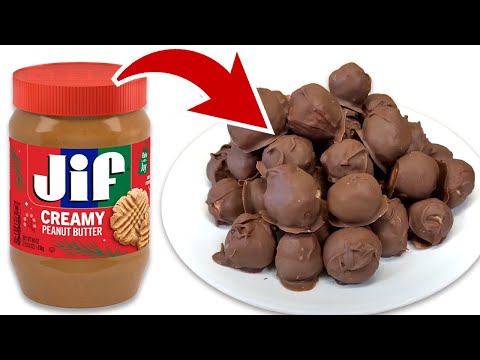
The source video for this recipe's technique. Covers the dough consistency, chilling windows, and chocolate dipping method in practical detail.
2. How to Temper Chocolate at Home
Deep dive into chocolate melting technique — why the double boiler temperature matters and how to prevent seizing and blooming.
3. Holiday Candy Basics — No-Bake ConfectionsCovers the fundamentals of no-bake candy making including chilling times, coating thickness, and storage for gifting.
🛠️ Core Equipment
- Double boiler or heat-safe bowl over saucepan ↗Indirect heat is the only safe way to melt chocolate. Direct heat scorches it instantly. If you don't own a double boiler, any heat-safe bowl set over a saucepan of simmering water works identically.
- Parchment-lined baking sheet ↗Peanut butter balls stick to bare metal and plastic wrap as the chocolate sets. Parchment releases cleanly every time. Non-negotiable.
- Fork or chocolate dipping tool ↗Your fingers melt the chocolate coating before it sets. A fork lets you submerge, lift, and drain without adding heat from your hands. A proper dipping tool gives even more control.
- Cookie scoop or tablespoon measure ↗Uniformly sized balls set at the same rate and look professional. Freehand rolling produces balls that vary enough in size that some are fully set while others are still soft.
No-Bake Peanut Butter Balls (The Chocolate Candy You'll Make Every Holiday)
🛒 Ingredients
- ✦1 cup natural peanut butter, creamy
- ✦1/2 cup unsalted butter, softened
- ✦2 cups powdered sugar
- ✦8 ounces semi-sweet or dark chocolate chips
- ✦2 tablespoons coconut oil
- ✦1/4 teaspoon fine sea salt
- ✦1 teaspoon vanilla extract
- ✦1/4 cup finely chopped roasted peanuts, optional
👨🍳 Instructions
01Step 1
Combine softened butter and natural peanut butter in a mixing bowl. Stir until fully blended and uniform — no streaks.
02Step 2
Gradually fold powdered sugar into the peanut butter mixture, mixing thoroughly until a stiff dough forms that holds its shape when pressed.
03Step 3
Stir in vanilla extract and fine sea salt, incorporating evenly throughout.
04Step 4
Using a tablespoon measure or cookie scoop, portion the dough and roll into balls approximately the size of walnuts. Place each one on a parchment-lined baking sheet.
05Step 5
Refrigerate the peanut butter balls for at least 30 minutes until firm and cold all the way through.
06Step 6
Set up a double boiler with the water at a gentle simmer, not a rolling boil. Add chocolate chips and coconut oil to the bowl and melt together, stirring occasionally, until completely smooth and glossy.
07Step 7
Remove the chocolate from heat and let it cool for 2-3 minutes until warm but not scorching.
08Step 8
Using a fork or dipping tool, pierce each chilled peanut butter ball and submerge it in the warm chocolate, making sure to coat all sides.
09Step 9
Lift each coated ball and hold it over the bowl for a few seconds, letting the excess chocolate drip back in cleanly.
10Step 10
Transfer the coated balls back to the parchment-lined baking sheet, spacing them about an inch apart.
11Step 11
Sprinkle finely chopped roasted peanuts over each ball while the chocolate is still wet, if using.
12Step 12
Refrigerate for at least 15 minutes until the chocolate coating sets completely and hardens.
Nutrition Per Serving
Estimates based on standard preparation. Adjustments alter macros.
🔄 Substitutions
Instead of Powdered sugar...
Use Coconut sugar or monk fruit sweetener blend
Coconut sugar adds subtle caramel notes and has a lower glycemic index. Monk fruit sweetener is nearly neutral in flavor. Either reduces the sugar load without killing the sweetness.
Instead of Semi-sweet chocolate chips...
Use Dark chocolate chips (70% cacao or higher)
More sophisticated and less sweet. The bitterness of dark chocolate balances the peanut butter center better than semi-sweet, and higher cacao content means more antioxidants.
Instead of Unsalted butter...
Use Coconut oil or almond butter
Coconut oil adds MCTs and a faint tropical note. Almond butter keeps the flavor in the nut family while adding fiber and nutrients. Both produce a slightly less rich mouthfeel.
Instead of Peanut butter...
Use Almond butter or sunflower seed butter
Almond butter is denser and slightly less sweet. Sunflower seed butter is the right call for peanut allergies — it behaves almost identically in the dough.
🧊 Storage & Reheating
In the Fridge
Store in an airtight container for up to 2 weeks. Layer with parchment between rows to prevent sticking.
In the Freezer
Freeze in a single layer on parchment until solid, then transfer to a freezer bag. Keeps for up to 3 months. Thaw in the refrigerator — never at room temperature, which causes condensation to ruin the coating.
Reheating Rules
These are served cold or at room temperature. No reheating needed or recommended.
❓ Frequently Asked Questions
Why did my chocolate coating turn gray and dull?
That's called bloom — it happens when chocolate is stored at fluctuating temperatures or when it was melted and cooled too slowly. Fat bloom (gray streaks) means the cocoa butter separated. Sugar bloom (grainy surface) means moisture hit the chocolate. Both are cosmetic, not safety issues, but to prevent them: store at a consistent cool temperature and keep moisture away from the chocolate during melting and storage.
Can I make these without a double boiler?
Yes. Set a heat-safe bowl over a saucepan with an inch of simmering water, making sure the bowl doesn't touch the water. Alternatively, microwave in 20-second bursts at 50% power, stirring between each burst. The microwave method requires more attention — the chocolate can scorch in seconds at full power.
My dough is too sticky to roll. What do I do?
Refrigerate the dough for 20-30 minutes before rolling. Stickiness means the fat in the peanut butter is too warm. Cold dough rolls cleanly. If it's still sticky after chilling, work in 2 tablespoons of additional powdered sugar.
How do I get a smooth chocolate coating without lumps?
Two causes: chocolate seized from water contact, or the chocolate cooled too much before you finished dipping. For seized chocolate, there is no recovery — start fresh. For chocolate that thickened during dipping, warm it briefly over the double boiler and stir until fluid again. Work in smaller batches if the chocolate keeps cooling on you.
Can I use crunchy peanut butter instead of creamy?
You can, but the texture of the center changes significantly. Crunchy peanut butter makes the dough harder to roll into smooth balls and the centers will have a more uneven texture when bitten into. If you like that, go for it. If you want the classic smooth center, stick with creamy.
Do I need the coconut oil in the chocolate?
Yes, and it's doing two jobs. It thins the chocolate to a dippable consistency and it helps the coating set with a glossy finish rather than a matte one. Without it, the coating is thicker, sets slower, and doesn't snap as cleanly when bitten. A tablespoon of neutral vegetable shortening works as a substitute.

The Science of
No-Bake Peanut Butter Balls (The Chocolate Candy You'll Make Every Holiday)
We turned everything on this page into a beautiful, flour-proof PDF cheat sheet. Print it out, stick it to your fridge, and never mess up your no-bake peanut butter balls (the chocolate candy you'll make every holiday) again.
*We'll email you the high-res PDF instantly. No spam, just perfectly cooked meals.
AlmostChefs Editorial Team
We translate the internet's most popular cooking videos into foolproof, beginner-friendly written recipes. We analyze multiple methods, test them in our kitchen, and engineer a single "Master Recipe" that gives you the best possible result with the least possible stress.