Crowd-Pleasing Pasta Salad (The Make-Ahead Method That Actually Works)
A tangy, herb-forward pasta salad with whole wheat rotini, crisp summer vegetables, and a fresh garlic vinaigrette. We broke down the most popular approaches to fix the two universal failures: bland pasta and a watery dressing that tastes like nothing by the time it hits the table.
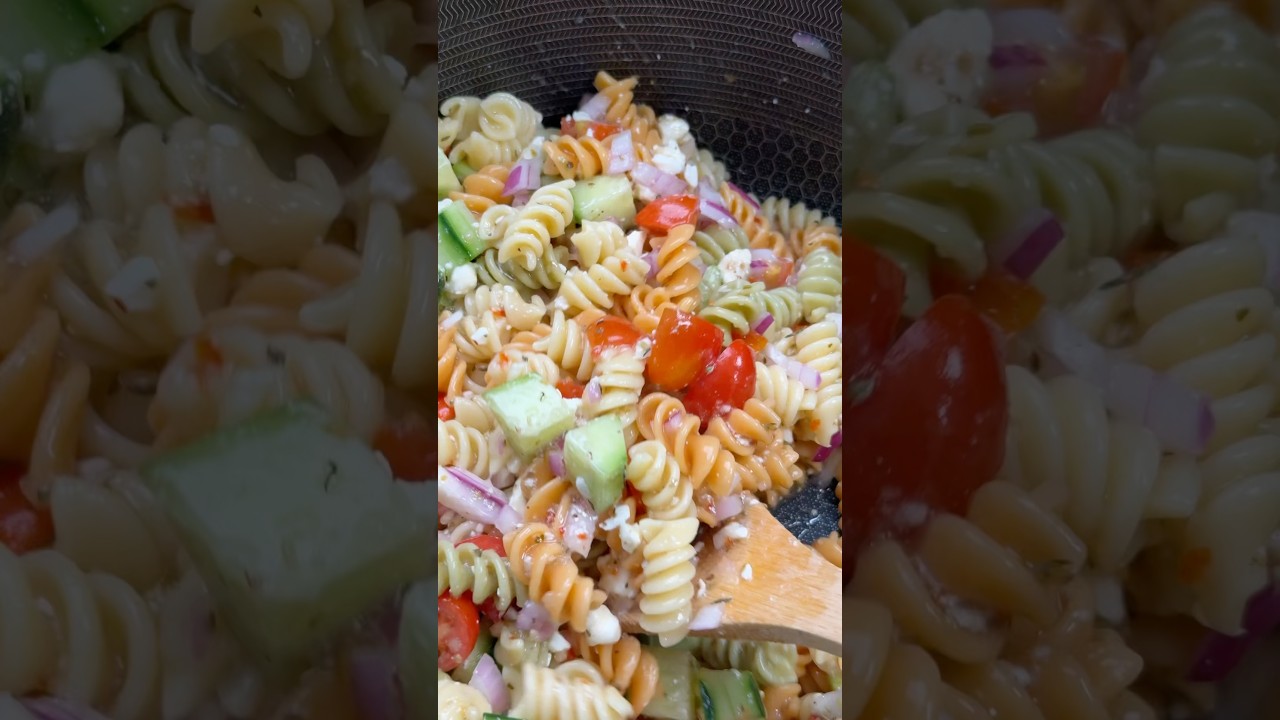
“Pasta salad is the dish everyone brings to a potluck and nobody's excited about. Limp noodles, underdressed vegetables, and a dressing that pools in the bottom of the bowl like a warning. The fix is simpler than you think: dress the pasta while it's still warm, and build the vinaigrette from scratch. Do those two things, and you're making a salad people actually ask about.”
Why This Recipe Works
Pasta salad has a credibility problem. It shows up at every summer gathering, gets picked at politely, and leaves in a mostly full bowl. The issue is never the ingredients — it's the sequence. Most versions dress cold pasta with a bottled dressing, fold in cold vegetables, and call it done. What you get is a dish where every component is working independently instead of as a system.
The correction is a timing problem, not a recipe problem.
The Warm Pasta Principle
Starch is the key. When pasta finishes cooking and you drain it, the surface is coated in a thin layer of gelatinized starch — tacky, porous, and briefly receptive to absorbing whatever you put on it. This window lasts about three minutes. If you dress the pasta in that window, the vinaigrette gets pulled into the noodle. The garlic, the acid, the herbs — they become part of the pasta, not a coating sitting on top of it.
Miss that window and you're tossing cold, sealed noodles with a dressing that has nowhere to go. The result sits in a pool at the bottom of the bowl. This is why restaurant pasta salads taste different from home versions made with identical ingredients. The professionals dress warm.
A large heavy-bottomed pot matters here too — not for the dressing, but for even cooking. Crowded pasta sticks, cooks unevenly, and produces the gummy, clumped texture that makes people avoid the dish entirely. A full gallon of water for 8 ounces of pasta is the minimum. It sounds like excess. It isn't.
Vinaigrette as Infrastructure
A 3:1 ratio of oil to acid is the classical vinaigrette baseline, and this recipe holds to it. Three tablespoons of olive oil against two tablespoons of vinegar plus one tablespoon of lemon juice creates a dressing that's bright without being punishing — aggressive enough to penetrate the whole wheat pasta, balanced enough that you can eat a full portion without your jaw seizing.
The garlic needs to be minced, not pressed, not powdered. Raw garlic pressed through a garlic press releases allicin compounds at a concentration that tastes sharp and medicinal in a cold application. Minced garlic releases those same compounds more slowly, and the refrigerator rest mellows them further into something savory rather than harsh.
Fresh herbs belong in the dressing, not scattered on top as garnish. Basil and parsley stirred into the vinaigrette and then refrigerated for 30 minutes infuse the entire dish with herby fragrance. Herbs added as a garnish right before serving perfume only the surface.
The Vegetable Lineup
Cherry tomatoes, cucumber, corn, bell pepper, red onion. This is not an arbitrary selection. Each vegetable brings a different texture — burst-able, crisp, tender, yielding, sharp — so no two bites read the same. The kalamata olives contribute brine and fat-soluble flavor compounds that round out the vinaigrette's acidity. The mozzarella provides dairy richness that softens the overall sharpness of the dish.
The red onion deserves special attention. Slice it thin and soak it in cold water for ten minutes before adding. This pulls out the volatile sulfur compounds responsible for the sharp, lingering raw onion burn without removing the crunch or color. It's a thirty-second extra step that meaningfully improves the finished dish.
Make-Ahead Is a Feature
This salad is genuinely better on day two. The pasta absorbs more dressing overnight. The garlic mellows. The dried oregano blooms fully. The acid softens the harder vegetable edges into something cohesive rather than a collection of individual components sharing a bowl.
Make it the night before, hold the mozzarella, and add it 30 minutes before serving. Pull it from the refrigerator ten minutes early. Toss once, check the seasoning — you'll almost always want another small pinch of salt and a splash of vinegar after the overnight rest — and serve it at room temperature, not cold. Cold mutes everything. Room temperature is where the flavors actually live.
Where Beginners Mess This Up
Before we start, read this. These are the 4 reasons your crowd-pleasing pasta salad (the make-ahead method that actually works) will fail:
- 1
Dressing cold pasta: Cold pasta is sealed. Its starches have set and its surface has hardened enough to repel liquid. When you toss cold pasta with vinaigrette, the dressing slides off into the bowl. Warm pasta is porous — it actively absorbs oil, acid, and aromatics. Dress it within two minutes of draining and the pasta itself becomes the flavor delivery system, not just a vehicle for toppings.
- 2
Rinsing the pasta too aggressively: A brief cool rinse to halt cooking is fine. Blasting pasta under cold water until it's ice cold removes the starch coating that helps dressing cling. Rinse to room temperature, not to refrigerator temperature, then dress immediately.
- 3
Under-salting the pasta water: Whole wheat pasta in particular has an earthy bitterness that disappears when the pasta is cooked in properly salted water. If you salt after the fact, you're seasoning the surface. If you salt the boiling water until it tastes faintly of the sea, you're seasoning the interior of every strand.
- 4
Skipping the 30-minute rest: Fresh garlic in raw vinaigrette is sharp and harsh right out of the bowl. Thirty minutes in the refrigerator mellows the garlic, fuses the herbs into the dressing, and allows the vegetables to release just enough moisture to integrate with the oil-acid base. Served immediately, this salad is aggressive. Rested, it's balanced.
The Video Reference Library
Want to see it in action? Here are the exact videos we analyzed and combined to build this foolproof recipe translation:
The primary reference for this recipe. Clear demonstration of the warm-pasta dressing technique and how to balance acid in a fresh vinaigrette.
🛠️ Core Equipment
- Large heavy-bottomed potYou need enough water volume to cook pasta without it clumping. A full gallon of water for 8 ounces of pasta is the minimum. Small pots crowd the pasta and produce uneven, sticky noodles.
- Large mixing bowlThe bowl needs to be at least twice the volume of the finished salad. Folding in vegetables and cheese requires room to move without compressing everything into mush.
- WhiskVinaigrette is an emulsion — oil and vinegar don't want to combine. Vigorous whisking forces them into a temporary suspension that coats pasta evenly instead of separating into oily and acidic puddles.
- ColanderFast, complete draining is essential. Pasta that sits in residual water continues to cook and dilutes the dressing when you toss it. Shake the colander hard to expel trapped water before transferring.
Crowd-Pleasing Pasta Salad (The Make-Ahead Method That Actually Works)
🛒 Ingredients
- ✦8 ounces whole wheat rotini pasta
- ✦2 cups cherry tomatoes, halved
- ✦1 medium yellow bell pepper, diced
- ✦1 cup English cucumber, cut into half-moons
- ✦1 cup fresh corn kernels (frozen is acceptable)
- ✦1/2 cup red onion, thinly sliced
- ✦1/2 cup kalamata olives, pitted and halved
- ✦1/2 cup diced fresh mozzarella
- ✦3 tablespoons extra virgin olive oil
- ✦2 tablespoons red wine vinegar
- ✦1 tablespoon fresh lemon juice
- ✦2 cloves garlic, minced
- ✦2 tablespoons fresh basil, chopped
- ✦1 tablespoon fresh parsley, finely chopped
- ✦1 teaspoon dried oregano
- ✦1/2 teaspoon sea salt
- ✦1/4 teaspoon black pepper
- ✦1/4 teaspoon red pepper flakes
👨🍳 Instructions
01Step 1
Bring a large pot of heavily salted water to a rolling boil over high heat.
02Step 2
Add the whole wheat rotini and cook according to package directions until al dente, about 9-11 minutes, stirring occasionally.
03Step 3
While the pasta cooks, whisk together the olive oil, red wine vinegar, lemon juice, and minced garlic in a small bowl until emulsified.
04Step 4
Add the basil, parsley, dried oregano, sea salt, black pepper, and red pepper flakes to the vinaigrette and stir to combine.
05Step 5
Drain the pasta in a colander and rinse briefly under cool water until it reaches room temperature. Shake hard to remove excess water.
06Step 6
Transfer the pasta to a large mixing bowl immediately. Pour the vinaigrette over the warm pasta and toss thoroughly for 1-2 minutes until every piece is coated.
07Step 7
Add the cherry tomatoes, bell pepper, cucumber, corn, and red onion to the bowl. Toss to distribute evenly.
08Step 8
Fold in the kalamata olives and fresh mozzarella with a rubber spatula, using gentle strokes to keep the cheese intact.
09Step 9
Taste and adjust seasoning — additional salt, black pepper, or a splash more vinegar if it needs brightness.
10Step 10
Cover and refrigerate for at least 30 minutes, or up to 24 hours.
11Step 11
Remove from the refrigerator 10 minutes before serving. Toss once more, check seasoning, and serve.
Nutrition Per Serving
Estimates based on standard preparation. Adjustments alter macros.
🔄 Substitutions
Instead of Whole wheat rotini...
Use Chickpea or lentil-based pasta
Firmer texture that holds up better overnight. Higher protein and fiber. Slightly nuttier flavor that pairs well with strong-flavored olives and vinaigrette.
Instead of Fresh mozzarella...
Use Crumbled feta cheese
Sharper, saltier, and more assertive. Reduces saturated fat by 30-40%. Adjust the salt in the vinaigrette downward because feta contributes significant sodium.
Instead of Kalamata olives...
Use Green olives or sun-dried tomatoes packed in oil
Green olives are milder and less salty. Sun-dried tomatoes add concentrated umami and depth that works particularly well in a make-ahead version.
Instead of Red wine vinegar...
Use Apple cider vinegar
Slightly sweeter and more complex. Use raw apple cider vinegar for a subtly different flavor profile. The substitution is 1:1.
🧊 Storage & Reheating
In the Fridge
Store covered in an airtight container for up to 3 days. The flavor improves through day 2. By day 3, the vegetables soften noticeably — still good, but not the best version.
In the Freezer
Do not freeze. The vegetables lose their texture completely and the emulsified dressing breaks on thawing.
Reheating Rules
This dish is served cold or at room temperature. No reheating required or recommended. If it's been in the refrigerator, pull it out 10 minutes before eating and re-toss.
❓ Frequently Asked Questions
Why does my pasta salad taste bland even after I seasoned it?
Almost certainly the pasta water wasn't salted enough. Pasta absorbs seasoning during cooking — surface seasoning after the fact hits your tongue as a sharp salty note rather than background depth. Salt your water generously before you add the pasta, not after.
Can I make this the night before?
Yes, and you should. The overnight rest is when the garlic mellows, the herbs integrate, and the vinaigrette fully saturates the pasta. Just hold the mozzarella until 30 minutes before serving, since it releases water as it sits.
My dressing separated in the bowl. Is it ruined?
No. Oil and vinegar always separate when left to sit — this is basic chemistry, not a failure. Give it a vigorous whisk or shake before tossing with the pasta. Emulsions are temporary by nature.
Can I use regular pasta instead of whole wheat?
Absolutely. Regular rotini, penne, or fusilli all work. Cooking time decreases by 2-3 minutes — start tasting at 7 minutes. The dressing quantities stay the same.
Why is the pasta gummy after refrigerating?
You rinsed it under cold water for too long, removing the surface starch, or you didn't dress it while it was still warm. Cold, uncoated pasta clumps as it chills. The dressing is what keeps the strands separate — it needs to be applied immediately after draining.
How do I keep the vegetables from getting soggy?
Cut vegetables into uniform, not-too-small pieces so they retain structure. The cucumber and corn hold up best; tomatoes soften fastest. If you're making this more than 8 hours ahead, add the tomatoes and cucumber in the last hour before serving.
The Science of
Crowd-Pleasing Pasta Salad (The Make-Ahead Method That Actually Works)
We turned everything on this page into a beautiful, flour-proof PDF cheat sheet. Print it out, stick it to your fridge, and never mess up your crowd-pleasing pasta salad (the make-ahead method that actually works) again.
*We'll email you the high-res PDF instantly. No spam, just perfectly cooked meals.
AlmostChefs Editorial Team
We translate the internet's most popular cooking videos into foolproof, beginner-friendly written recipes. We analyze multiple methods, test them in our kitchen, and engineer a single "Master Recipe" that gives you the best possible result with the least possible stress.