Bright & Foolproof Pasta Primavera (Spring Vegetables Done Right)
Tender pasta tossed with crisp-blanched spring vegetables, a silky garlic-olive oil emulsion, fresh lemon, and basil. We broke down every step — blanching order, pasta water science, and sauce timing — so your primavera never turns soggy or bland again.
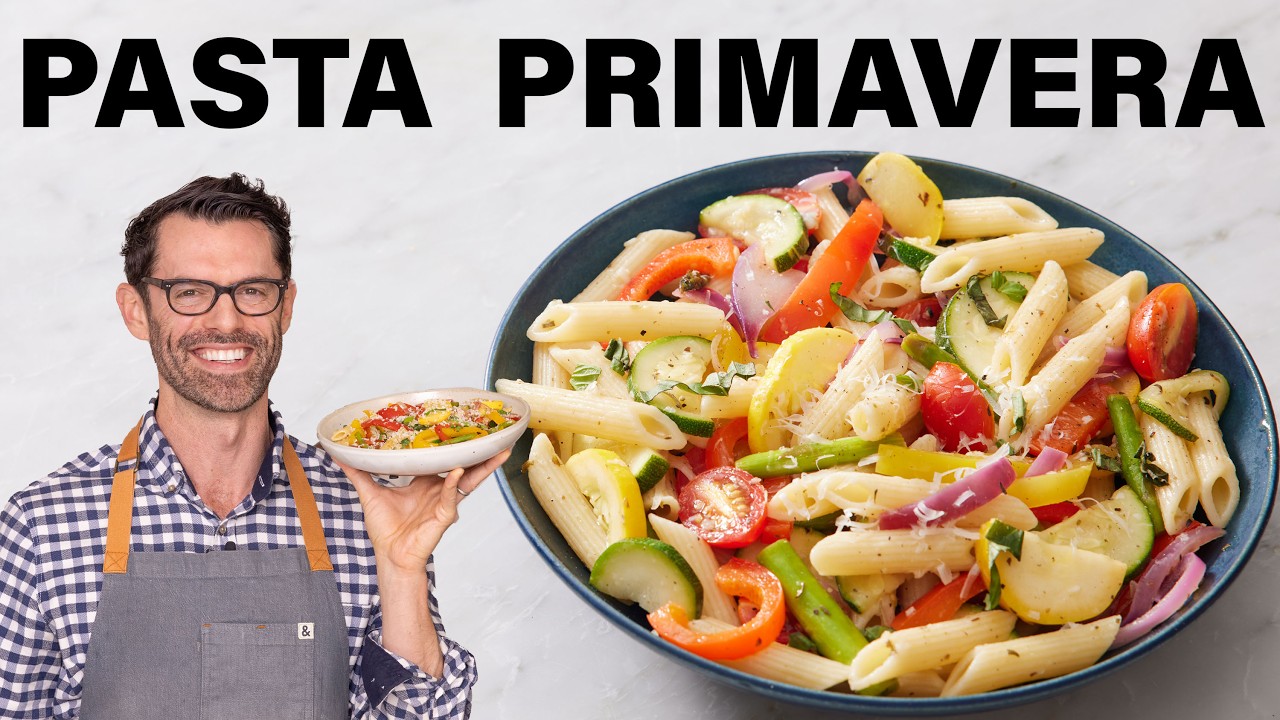
“Pasta Primavera has a reputation for being simple. It also has a reputation for arriving at the table looking like a pile of gray, waterlogged vegetables floating in broken oil. The difference between those two outcomes is knowing exactly when to blanch, when to stop, and how pasta water turns a thin pan sauce into something that actually clings. We tested every step so you don't have to guess.”
Why This Recipe Works
Pasta Primavera is a dish that looks simple on paper and reveals its engineering only when you get it wrong. The sauce breaks. The vegetables go gray. The pasta soaks up all the liquid and arrives at the table dry. None of these failures are random — they each trace back to a specific, fixable step that most recipes gloss over with the word "toss."
The Blanching Problem
The defining technique in this dish is blanching, and it has two parts: the boil and the stop. Most cooks handle the boil correctly. Almost nobody handles the stop correctly.
Boiling water raises vegetable temperature to 212°F in 2-3 minutes. But when you pull a piece of broccoli out of that water and drop it into a colander, it doesn't stop cooking. The residual heat inside the vegetable continues driving the internal temperature upward for another 2-3 minutes. That's why broccoli that looks bright green on the slotted spoon arrives at the table looking like it survived a siege.
The ice bath is not optional. It drops the surface temperature below 50°F in under 30 seconds, halting enzyme activity and locking the vegetable at whatever state it was in when you pulled it. The result: vivid color, structural integrity, and that specific crisp-tenderness that makes spring vegetables worth eating.
The other blanching failure is cooking all vegetables together. Broccoli and carrots need 2-3 minutes. Asparagus needs 2. Zucchini and cherry tomatoes don't need blanching at all — they're soft enough to finish in the pan. Treating all vegetables identically means the slower ones are undercooked and the faster ones are mush. Blanch by category, not by convenience.
The Pasta Water Science
Pasta cooking water looks like nothing. It is, in fact, a mild starch solution — water that has absorbed 2-3% starch from the pasta surface during the 10-12 minute cook. That starch is the key to why the sauce in a properly made pasta primavera clings to every strand instead of pooling at the bottom of the bowl.
When you add starchy pasta water to a pan with fat (olive oil, butter) and cream, the starch molecules act as emulsifiers. They surround fat droplets and suspend them uniformly in the liquid, creating a cohesive sauce that coats the pasta. Add plain water instead and the fat separates immediately. The sauce breaks, the oil pools, and you have what looks like pasta salad left out in the rain.
Reserve 1.5 cups before draining. You'll use 0.75 cup in the pan and keep the rest in case the sauce needs thinning at the table.
The Garlic Window
Garlic goes in first, alone, in the fat. This is not tradition — it's flavor physics. Raw garlic contains an enzyme called alliinase that converts alliin into allicin, the compound responsible for that sharp, pungent bite. Heat deactivates the enzyme quickly. High heat destroys it fast and converts the remaining sugars into bitter compounds. Medium heat — about 2 minutes in warm olive oil and butter — lets the allicin form, then slowly mellows it into the sweet, nutty, complex base that makes the whole dish taste intentional.
Let the garlic sit too long, or use heat that's too high, and it turns the color of old mustard and tastes like carbon. This is permanent damage. Start over.
The Emulsification Window
The final toss — pasta into the pan, pasta water in, everything off the heat — is where the dish comes together or falls apart. You have roughly 2 minutes while the pasta is hot and the starch is active. Toss continuously and aggressively with a wide skillet or tongs. The motion is what drives the emulsification — static heat produces a broken, greasy sauce.
Lemon juice goes in at the very end of this window, off the heat. Citric acid reacts with chlorophyll in green vegetables under heat to produce pheophytin — a yellow-brown compound. Off the heat, the reaction is minimal. Add lemon to a hot pan and your snap peas turn the color of a late October lawn.
This is a dish where timing is everything, and the timing is straightforward: blanch, toast, build the sauce, toss, acid, cheese. Get the sequence right and the rest takes care of itself.
Where Beginners Mess This Up
Before we start, read this. These are the 4 reasons your bright & foolproof pasta primavera (spring vegetables done right) will fail:
- 1
Skipping the ice bath: Blanching without an immediate ice bath does nothing. The vegetables keep cooking from residual heat for 2-3 minutes after you pull them out. Skip the ice bath and your broccoli goes from bright green and crisp to army-drab and mushy before it ever hits the pan. Fill the bowl before you start — not after.
- 2
Forgetting to reserve pasta water: The starchy pasta water is the only thing that emulsifies the olive oil and cream into a cohesive sauce. Regular water breaks the emulsion instantly. Most cooks remember this step about 10 seconds after they've already poured the water down the drain. Set a measuring cup next to the colander before you even turn on the burner.
- 3
Overcrowding the pan when sautéing vegetables: Too many vegetables in one pan drops the temperature immediately. Instead of browning and concentrating flavor, the vegetables steam in their own moisture and turn soft. Work in batches if your pan isn't large enough, or use the widest skillet you own.
- 4
Adding lemon juice too early: Citric acid in lemon juice interacts with heat to turn green vegetables yellow. Add the lemon at the very end — off the heat — to preserve the color and keep the brightness from cooking off into sourness.
The Video Reference Library
Want to see it in action? Here are the exact videos we analyzed and combined to build this foolproof recipe translation:
The reference video that covers the blanching technique, garlic timing, and pasta water emulsification in real time. Watch the sauce come together in the final 2 minutes.
🛠️ Core Equipment
- Large heavy skillet or sauté panWidth is everything here. A 12-inch or larger skillet gives vegetables room to sauté rather than steam. A cramped pan with straight sides traps moisture and kills caramelization.
- Large stockpotYou need at least 4-6 quarts of water for pasta to move freely. Crowded pasta cooks unevenly and sticks together. The same pot doubles for blanching.
- Large bowl for ice bathThis is non-negotiable. Fill it with cold water and a full tray of ice before anything goes on the stove. You need it ready the second vegetables come out of the boiling water.
- Fine-mesh sieve or colanderFor draining blanched vegetables quickly without losing them into the sink. Speed of transfer directly into the ice bath determines whether your vegetables stay vibrant.
Bright & Foolproof Pasta Primavera (Spring Vegetables Done Right)
🛒 Ingredients
- ✦1 pound linguine or fettuccine pasta
- ✦4 cups fresh spring vegetables (zucchini, bell peppers, broccoli florets, snap peas, carrots)
- ✦1 bunch fresh asparagus, cut into 2-inch pieces
- ✦1.5 cups cherry tomatoes, halved
- ✦4 cloves garlic, minced
- ✦3.5 tablespoons extra virgin olive oil
- ✦2.5 tablespoons unsalted butter
- ✦0.5 cup vegetable broth
- ✦0.33 cup heavy cream
- ✦2.5 tablespoons fresh lemon juice
- ✦0.5 cup freshly grated Parmesan cheese
- ✦0.25 cup fresh basil, chopped
- ✦0.25 cup toasted pine nuts
- ✦0.25 teaspoon red pepper flakes
- ✦Salt and freshly ground black pepper to taste
👨🍳 Instructions
01Step 1
Fill a large bowl with cold water and a full tray of ice. Set it next to the stove before turning on any burners.
02Step 2
Bring a large pot of well-salted water to a rolling boil. Add the linguine and cook for 10-12 minutes until just al dente, stirring occasionally.
03Step 3
While the pasta cooks, blanch the broccoli, carrots, and snap peas in boiling salted water for 2-3 minutes until bright and crisp-tender. Transfer immediately to the ice bath with a slotted spoon.
04Step 4
Blanch the asparagus separately for 2 minutes until tender-crisp. Transfer to the ice bath, then drain all blanched vegetables thoroughly and pat dry.
05Step 5
Cut the zucchini and bell peppers into consistent bite-sized pieces. Leave them raw — they'll finish cooking in the pan.
06Step 6
Before draining the pasta, scoop out 1.5 cups of pasta cooking water and set aside. Drain the pasta.
07Step 7
Warm the olive oil and butter together in a large skillet over medium heat until the butter melts and just begins to foam.
08Step 8
Add the minced garlic and stir constantly for about 2 minutes until fragrant and light golden. Do not let it brown past pale gold — burnt garlic is bitter and cannot be fixed.
09Step 9
Pour in the vegetable broth and cream. Bring to a gentle simmer and cook for 2 minutes.
10Step 10
Add all blanched vegetables, raw zucchini and bell peppers, cherry tomatoes, and red pepper flakes. Toss gently for 3-4 minutes until everything is heated through and coated.
11Step 11
Add the drained pasta directly to the skillet. Pour in 0.75 cup of the reserved pasta water. Remove from heat and toss vigorously for 2 minutes until the sauce emulsifies and clings to every strand.
12Step 12
Add the fresh lemon juice and toasted pine nuts. Toss gently to combine.
13Step 13
Season generously with salt and freshly ground black pepper.
14Step 14
Divide into bowls. Top with Parmesan, fresh basil, and a drizzle of extra virgin olive oil. Serve immediately.
Nutrition Per Serving
Estimates based on standard preparation. Adjustments alter macros.
🔄 Substitutions
Instead of Heavy cream...
Use Greek yogurt or cashew cream
Greek yogurt adds a slightly tangy note and cuts saturated fat significantly. Add it off the heat to prevent curdling. Cashew cream (blended soaked cashews) is richer and dairy-free.
Instead of Regular pasta...
Use Whole wheat, chickpea, or legume-based pasta
Whole wheat is earthier and holds its texture well. Chickpea pasta adds protein and is naturally gluten-free. Both absorb sauce slightly differently — taste for doneness one minute early.
Instead of Pine nuts...
Use Walnuts, almonds, or sunflower seeds
Walnuts add mild bitterness and omega-3s. Sliced almonds stay crunchy longer. Sunflower seeds are the budget option and hold up well. Toast all of them the same way.
Instead of Parmesan cheese...
Use Nutritional yeast or aged pecorino Romano
Nutritional yeast delivers umami with no dairy and adds B vitamins. Use 2 tablespoons where you'd use 0.5 cup Parmesan. Pecorino is sharper and saltier — reduce added salt accordingly.
🧊 Storage & Reheating
In the Fridge
Store in an airtight container for up to 3 days. The pasta absorbs sauce over time, so leftovers will be drier than freshly made.
In the Freezer
Not recommended. The vegetables lose texture when frozen and thawed, and the emulsified sauce breaks on reheating.
Reheating Rules
Add 2-3 tablespoons of water or broth per serving in a covered skillet over low heat. Toss gently until warmed through. Microwave makes the pasta gummy and the vegetables limp.
❓ Frequently Asked Questions
Why do my vegetables turn gray and mushy?
Two causes: blanching too long or skipping the ice bath. Broccoli and snap peas need only 2-3 minutes in boiling water — set a timer. The ice bath stops all cooking the moment you pull them out. Without it, carryover heat continues cooking the vegetables for several minutes in the colander.
Can I skip blanching and just sauté everything?
You can, but the results are different. Raw broccoli and carrots need 6-8 minutes in the pan to soften, which means overcooked garlic, a broken sauce, and collapsed cherry tomatoes by the time the hard vegetables are done. Blanching lets you control each vegetable independently.
Why is my sauce oily instead of creamy?
The emulsion broke. This happens when you add pasta to a very hot pan without the pasta water, or when you don't toss vigorously enough. Fix it: pull the pan off the heat, add a big splash of starchy pasta water, and toss aggressively for 60-90 seconds. The starch rebinds the fat and liquid.
What vegetables work best in pasta primavera?
Dense vegetables that benefit from blanching: broccoli, carrots, green beans, snap peas, asparagus. Quick-cooking vegetables that go in raw: zucchini, bell peppers, cherry tomatoes, spinach. The rule is density — hard vegetables need pre-cooking, soft ones don't.
Can I make this vegan?
Yes. Replace the butter with additional olive oil, swap the cream for cashew cream or full-fat coconut milk, and use nutritional yeast instead of Parmesan. The sauce will be slightly less rich but structurally the same — the pasta water emulsification still works.
Why does my pasta primavera taste flat?
Three usual suspects: under-salted pasta water, lemon added too early (its brightness cooks off), or not enough Parmesan at the end. Taste before serving and adjust with salt, a squeeze more lemon, and an extra handful of cheese. Primavera lives or dies on seasoning.
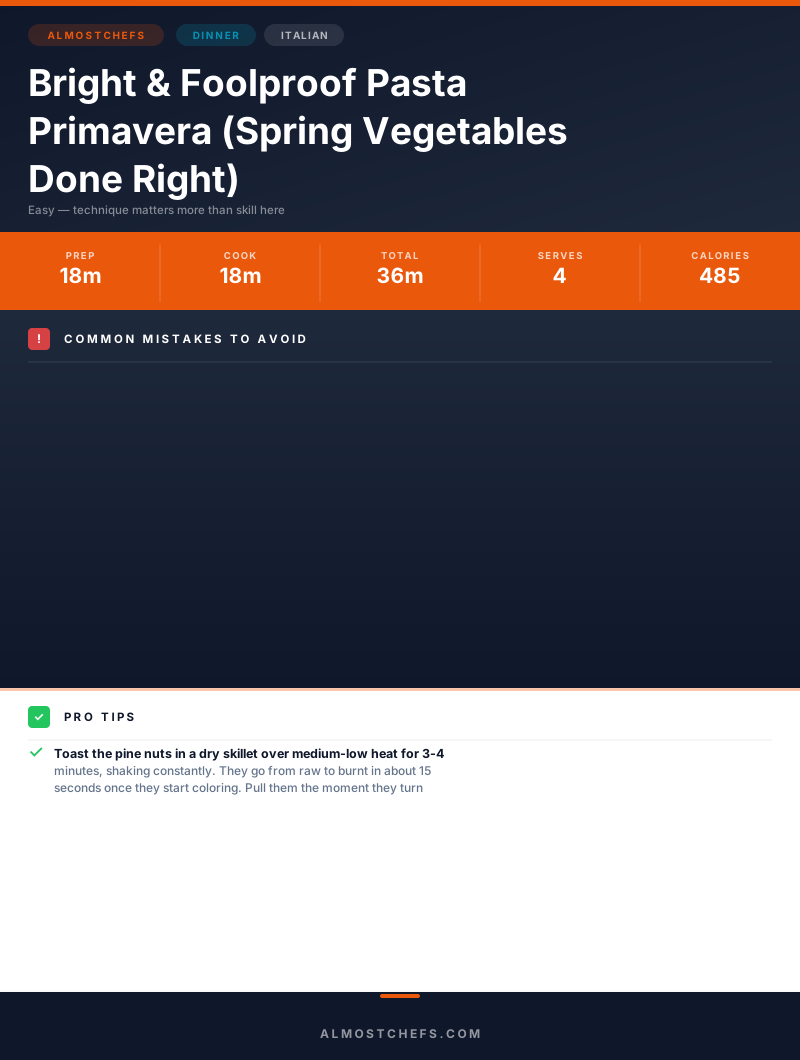
The Science of
Bright & Foolproof Pasta Primavera (Spring Vegetables Done Right)
We turned everything on this page into a beautiful, flour-proof PDF cheat sheet. Print it out, stick it to your fridge, and never mess up your bright & foolproof pasta primavera (spring vegetables done right) again.
*We'll email you the high-res PDF instantly. No spam, just perfectly cooked meals.
AlmostChefs Editorial Team
We translate the internet's most popular cooking videos into foolproof, beginner-friendly written recipes. We analyze multiple methods, test them in our kitchen, and engineer a single "Master Recipe" that gives you the best possible result with the least possible stress.