Quick Indian White Sauce Pasta (With 3 Core Failure Points)
A creamy, comforting Indian-style béchamel pasta with aromatic ginger, garlic, and green chilies. We analyzed the most common failure points in white sauce pasta to build one foolproof technique that delivers a silky, lump-free sauce every single time.
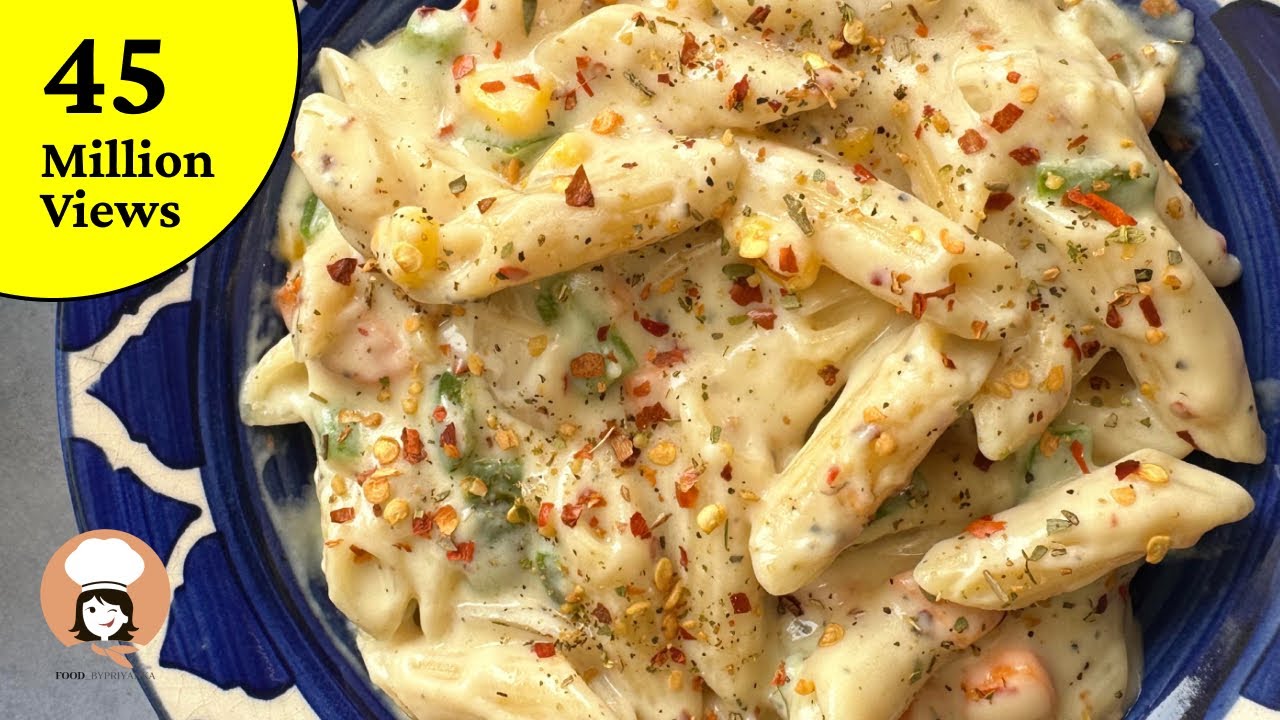
“White sauce pasta should be one of the easiest things you can make. It almost never is. The sauce breaks, clumps form, the pasta soaks up all the cream and turns into a gluey brick. The fix is not a better recipe — it's understanding two things: why lumps happen and exactly when to pull the pasta off heat. Once you know those two things, this dish takes 40 minutes and comes out right every time.”
Why This Recipe Works
Indian-style white sauce pasta occupies a specific niche: it is neither Italian nor traditionally Indian, but a third thing entirely — a dish that emerged from the subcontinental appetite for comfort food that is creamy, mild, and deeply satisfying without being heavy. The béchamel base is classic French technique. The aromatics are Indian. The result is something that belongs entirely to its own category.
The Roux Problem
Everything in this dish depends on getting the roux right, and almost every failure can be traced back to the roux. A roux is flour cooked in fat until the raw starch is eliminated — but the cooking window is narrow. Undercook it and the sauce tastes like paste. Overcook it until it browns and you've built a flavor profile that fights the cream. You want the roux pale golden and smelling faintly nutty: that's the window. Thirty seconds on either side is the margin.
The reason you cook the flour in fat at all, rather than dissolving it in milk directly, is gelatinization control. When starch granules hit hot fat, they coat in fat molecules that separate them from each other. When you then add milk, each starch granule hydrates individually rather than clumping together. This is what prevents lumps. Pour milk onto raw flour and you get paste with chunks. Build the roux first and you get velvet.
Why the Indian Aromatics Work Here
Ginger, garlic, and green chilies have no place in a classical French béchamel. They belong here because this dish was never trying to be French. The aromatics are sautéed first in the base oil before the butter and flour are added, which means their volatile compounds have already been driven into the fat and distributed evenly through the sauce by the time the cream is incorporated. You don't taste them as distinct elements — you taste a sauce that has depth you can't quite identify.
The green chilies in particular are doing something specific: they add a grassy, herbaceous lift that cuts through the richness of the cream. Without them, cream-heavy sauces can feel cloying by the third bite. This is true of a lot of Indian cream cooking — the aromatics are doing structural work, not just flavor work.
The Cheese-Addition Sequence
Parmesan goes in last, off heat, for a reason that has nothing to do with tradition and everything to do with protein chemistry. Cheese proteins denature at sustained high temperatures, causing the emulsion to break. What you see when that happens is sauce that looks greasy, grainy, or curdled — small clumps of protein floating in separated fat. Pulling the pan off heat before folding in the cheese means the proteins melt slowly and evenly into the sauce rather than seizing up.
A fine-mesh sieve for draining the pasta and a heavy-bottomed saucepan for the béchamel are the two pieces of equipment worth caring about here. Everything else is technique.
Pasta Water as a Tool
Most home cooks drain pasta and throw away the water without thinking about it. That water is a tool. Pasta releases starch as it cooks, and that starchy water thickens sauces without diluting flavor. Reserve a cup before you drain every time. When the pasta hits the sauce and begins absorbing cream, the sauce will tighten. A tablespoon or two of pasta water loosens it back to the right consistency without washing out the flavor you built over 20 minutes of careful cooking.
This dish takes 40 minutes. It requires your full attention for about 10 of them — the 10 minutes you're standing at the stove whisking the sauce. The other 30 minutes are prep and pasta. The investment is small. The gap between a good version and a mediocre one is almost entirely about those 10 minutes at the stove and whether you stay focused.
Where Beginners Mess This Up
Before we start, read this. These are the 4 reasons your quick indian white sauce pasta (with 3 core failure points) will fail:
- 1
Adding milk too fast: The roux (butter and flour paste) can only absorb liquid at a certain rate. Pour the milk in a steady stream while whisking, not all at once. The moment liquid hits unincorporated flour faster than the whisk can work, lumps form and there is no recovering them short of a blender.
- 2
Walking away from the sauce: Béchamel requires continuous stirring for the full 8-10 minutes of thickening. Stop stirring and the bottom layer scorches, lending a bitter flavor that permeates the entire sauce. Medium heat, constant movement — no exceptions.
- 3
Rinsing the cooked pasta: Rinsing washes away the surface starch that helps the sauce cling to every piece. Drain the pasta but do not rinse. If it starts sticking together, toss it with a small drizzle of olive oil to buy yourself time.
- 4
Adding cheese over direct heat: Parmesan added to a sauce that's still on the burner seizes and turns grainy. Pull the pan completely off heat first, then fold in the cheese. The residual heat melts it smoothly without breaking the emulsion.
The Video Reference Library
Want to see it in action? Here are the exact videos we analyzed and combined to build this foolproof recipe translation:
The source video for this recipe. Clear technique on building the roux and incorporating milk without lumps. Pay close attention to the milk-adding speed.
🛠️ Core Equipment
- Large heavy-bottomed saucepanEven heat distribution prevents the béchamel from scorching on the bottom. Thin pans create hot spots that burn the flour before the sauce can thicken properly.
- Balloon whiskA flat spatula won't reach the corners and edges where lumps form. A balloon whisk moves through the sauce in all directions simultaneously, which is what keeps the texture smooth.
- Large pot for pastaPasta needs room to move in heavily salted water. A crowded pot drops temperature when you add the pasta, which slows cooking and results in uneven texture.
- Fine-mesh sieve or colanderFor draining the pasta quickly. Reserve a cup of pasta water before draining — it's the best tool for loosening a sauce that thickens too much after the pasta is added.
Quick Indian White Sauce Pasta (With 3 Core Failure Points)
🛒 Ingredients
- ✦400g penne or fusilli pasta
- ✦4 tablespoons unsalted butter
- ✦2 tablespoons all-purpose flour
- ✦2.5 cups whole milk
- ✦0.75 cup heavy cream
- ✦6 cloves garlic, minced
- ✦1 medium yellow onion, finely diced
- ✦2 green chilies, finely chopped
- ✦1 teaspoon fresh ginger, minced
- ✦0.75 cup grated Parmesan cheese
- ✦0.5 cup corn kernels (fresh or frozen)
- ✦0.5 cup diced red bell pepper
- ✦0.5 teaspoon freshly ground black pepper
- ✦0.25 teaspoon freshly grated nutmeg
- ✦2 tablespoons extra virgin olive oil
- ✦Salt to taste
👨🍳 Instructions
01Step 1
Bring a large pot of heavily salted water to a rolling boil over high heat.
02Step 2
Add the pasta and cook according to package directions until al dente, approximately 9-11 minutes. Before draining, reserve 1 cup of pasta water. Drain without rinsing.
03Step 3
While the pasta cooks, heat 2 tablespoons of olive oil in a large saucepan over medium heat. Add the diced onion and sauté until softened and translucent, about 4-5 minutes.
04Step 4
Stir in the minced garlic, fresh ginger, and chopped green chilies. Cook until fragrant, approximately 1-2 minutes.
05Step 5
Add the butter and allow it to melt completely over medium heat.
06Step 6
Sprinkle the flour over the melted butter and whisk constantly to form a smooth paste. Cook for 1-2 minutes to eliminate the raw flour taste.
07Step 7
Gradually pour in the milk in a thin, steady stream while whisking continuously. Do not stop whisking.
08Step 8
Increase heat to medium and continue stirring until the sauce thickens enough to coat the back of a spoon, about 8-10 minutes.
09Step 9
Stir in the heavy cream, corn kernels, and diced bell pepper. Combine thoroughly.
10Step 10
Season with salt, black pepper, and nutmeg. Taste and adjust.
11Step 11
Remove the pan completely from heat. Fold in the grated Parmesan until fully melted and incorporated.
12Step 12
Add the cooked pasta to the sauce and toss gently until all pieces are well coated. Add reserved pasta water 1-2 tablespoons at a time if the sauce is too thick.
13Step 13
Serve immediately while hot. Drizzle with a touch of olive oil if desired.
Nutrition Per Serving
Estimates based on standard preparation. Adjustments alter macros.
🔄 Substitutions
Instead of Heavy cream...
Use Greek yogurt or cashew cream
Greek yogurt adds a slight tang and reduces saturated fat. Cashew cream is fully dairy-free. Both maintain creaminess. Add off-heat to prevent curdling.
Instead of All-purpose flour...
Use Cornstarch
Use 1 tablespoon cornstarch instead of 2 tablespoons flour. Creates a slightly glossier, lighter sauce. Whisk into cold milk first to prevent clumping.
Instead of Penne pasta...
Use Whole wheat or chickpea pasta
Nuttier, firmer texture with significantly more fiber and protein. Chickpea pasta in particular holds up well in cream sauces and adds a subtle earthiness.
Instead of Regular milk...
Use Unsweetened oat milk
Works surprisingly well in béchamel — oat milk has enough body to thicken properly. Slightly sweeter flavor. Use the same quantity.
🧊 Storage & Reheating
In the Fridge
Store in an airtight container for up to 2 days. The sauce will thicken as it cools.
In the Freezer
Not recommended — béchamel separates upon thawing and the pasta texture degrades significantly.
Reheating Rules
Add 2-3 tablespoons of milk and reheat gently over low heat, stirring continuously. Microwave works but requires stirring every 30 seconds to prevent uneven heating.
❓ Frequently Asked Questions
Why does my white sauce always have lumps?
Lumps form when milk is added too quickly to the roux. The flour can't incorporate fast enough and clumps around unhydrated flour particles. Fix: add the first quarter of the milk in a very slow stream while whisking hard, then gradually increase the pour rate as the roux hydrates.
Can I make the sauce ahead of time?
You can make the béchamel base up to a day ahead and refrigerate it. Reheat gently with a splash of milk before adding the pasta. Do not add the cheese until you're ready to serve — it gets grainy when reheated.
Why is my sauce too thin even after 10 minutes?
Two likely causes: heat was too low, or the milk-to-flour ratio was off. Béchamel needs sustained medium heat to trigger the starch gelatinization that thickens it. If it's still thin, mix 1 teaspoon of cornstarch with 2 tablespoons of cold milk and whisk it in.
Is this dish spicy?
At the level in this recipe, the green chilies add aroma and a very mild warmth rather than heat. It's a dish designed to be comfortable for people who don't typically eat spicy food. Adjust chilies freely — remove entirely for no heat, double for genuine warmth.
What pasta shape works best?
Short, ridged pasta — penne, rigatoni, fusilli — is ideal. The ridges and hollows catch and hold the creamy sauce. Long pasta like spaghetti works but delivers less sauce per bite and tends to clump.
Can I add protein to this dish?
Yes. Grilled chicken sliced over the top is the most common addition. Pan-seared shrimp also works well. Add the protein last, after the pasta is sauced, to avoid overcooking it in the residual heat.
The Science of
Quick Indian White Sauce Pasta (With 3 Core Failure Points)
We turned everything on this page into a beautiful, flour-proof PDF cheat sheet. Print it out, stick it to your fridge, and never mess up your quick indian white sauce pasta (with 3 core failure points) again.
*We'll email you the high-res PDF instantly. No spam, just perfectly cooked meals.
AlmostChefs Editorial Team
We translate the internet's most popular cooking videos into foolproof, beginner-friendly written recipes. We analyze multiple methods, test them in our kitchen, and engineer a single "Master Recipe" that gives you the best possible result with the least possible stress.