Pasta and Eggs, Done Right (The 15-Minute Dinner You've Been Sleeping On)
A fast, Italian-style pasta tossed with silky scrambled eggs, sharp Pecorino Romano, and garlic-infused olive oil. We broke down the most-watched YouTube methods to find the one technique that keeps the eggs creamy instead of rubbery every single time.
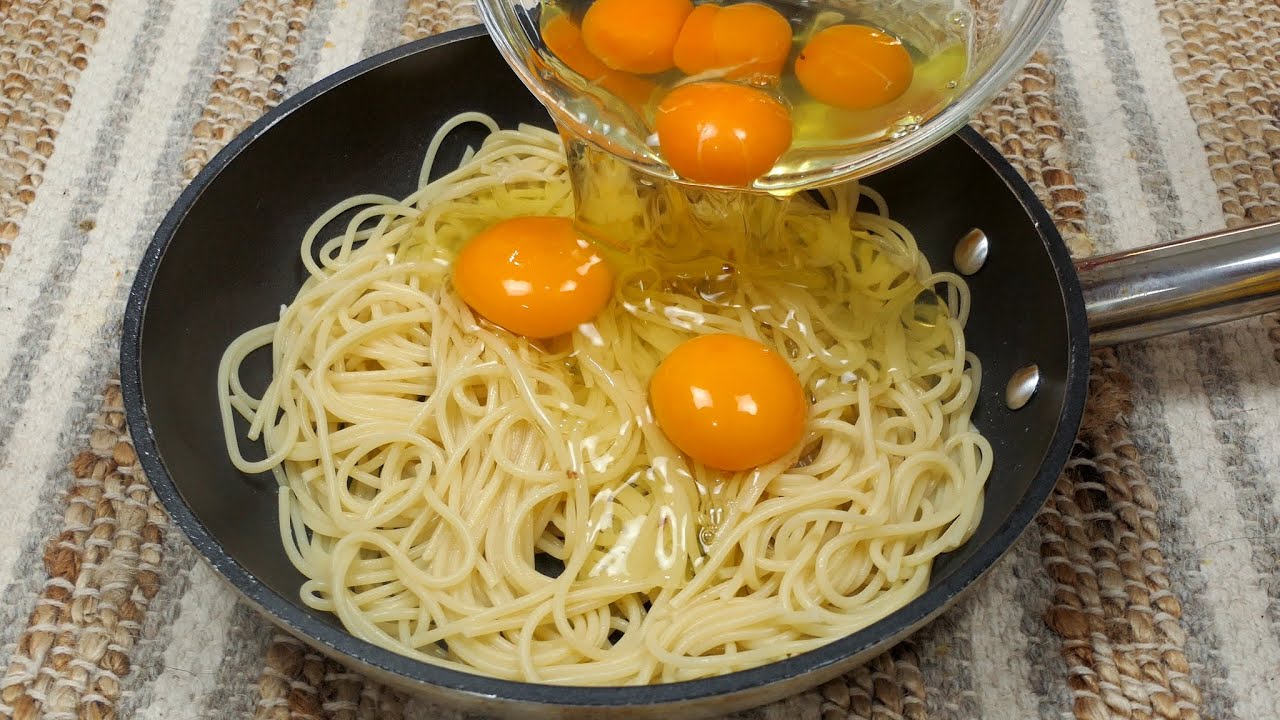
“Pasta and eggs is not a lazy meal. It is a precision technique dressed in peasant clothing. Done wrong, you get rubbery scrambled eggs clinging to overcooked noodles. Done right, you get a dish that is silky, savory, and deeply satisfying in a way that takes people completely off guard. The difference between the two comes down to one thing: heat control in the final thirty seconds.”
Why This Recipe Works
Pasta and eggs is the dish Italians make when there is nothing in the house. It is the culinary equivalent of a jazz standard — three chords, infinite interpretation, and a completely unforgiving audience when you play it sloppy. Most people who make it at home end up with something between a scrambled egg situation and a gummy pasta clump. The version that actually works is built around one central insight: eggs are not an ingredient you add to pasta. They are a sauce you construct through controlled application of heat.
The Emulsification Problem
What you are building when you toss egg over pasta is an emulsion — a stable suspension of fat (from the olive oil and egg yolk), protein (from the egg white), and starch-laden water. When this works, it coats every strand in a glossy, cohesive film that clings without clumping. When it fails, the fat separates, the eggs scramble into dry chunks, and the whole dish tastes like something went wrong because something did.
The starch in the reserved pasta water is the emulsifying agent. It creates a molecular bridge between the fat-soluble compounds in the olive oil and yolk and the water-soluble components in the egg white. Without it, oil and egg sit separately on the pasta like two strangers on a bus. This is why pasta pots that come with integrated strainers are actually counterproductive here — people drain automatically and forget to reserve the water. Scoop your water out first, then drain. Make this a reflex.
The Heat Window
Eggs cook at 145°F. A freshly boiled pot of pasta sits at around 200°F when it hits the pan. This means you have roughly 45 to 90 seconds of working time between "perfect silky coating" and "rubbery scrambled eggs on noodles" — and that window closes faster than most people expect because they underestimate how much residual heat a stainless skillet holds after you pull it off the burner.
The technique that eliminates this problem entirely is simple: turn off the heat before the eggs go in. Not low. Off. The pasta is hot enough to gently cook the eggs through contact heat alone, and tossing with tongs keeps the eggs moving so no single spot overcooks. If after 90 seconds of tossing the mixture still looks underdone, return to low heat for 15-second intervals, tossing continuously. But in most kitchens, the pasta does all the work the moment it hits the pan.
The Cheese Factor
Pecorino Romano is not a garnish in this dish. It is a structural component. Grated finely and whisked directly into the beaten eggs before they ever touch the pan, it dissolves into the sauce during emulsification, adding saltiness, umami, and body that no amount of post-plate sprinkling can replicate. The reason freshly grated cheese matters here is physical: commercial pre-grated cheese is coated with powdered cellulose to prevent clumping in the bag. That same coating prevents proper melting in the pan, creating a sauce with a slightly grainy, separated texture. A microplane grater produces feather-light strands that melt almost instantly. Box graters work. Pre-grated cheese does not.
The Garlic Foundation
Three cloves of thinly sliced garlic in three tablespoons of olive oil, cooked to pale gold over medium heat — this is the flavor architecture the entire dish rests on. Not brown. Not raw. Golden, which means the sharp, acrid sulfur compounds have converted to mellower, sweeter aromatic molecules without tipping into the bitterness that comes from any degree of browning. Two minutes at medium heat in a wide pan. Watch it. The moment you smell it properly, it is 15 seconds from ruined.
The red pepper flakes go in with the garlic because fat-soluble capsaicin needs the olive oil to bloom and distribute. Adding pepper flakes at the end just makes the dish spottily hot. Adding them early infuses the entire oil base, which then coats every strand of pasta uniformly.
Pasta and eggs is not complicated food. But it is precise food — and there is a difference. The precision here is not technical; it is attentional. You need to be present for four minutes. Not checking your phone, not walking away to set the table. Standing over the pan, tossing, watching, adjusting. That's the whole skill. Master it once and you have a dinner that takes 25 minutes and impresses people every single time.
Where Beginners Mess This Up
Before we start, read this. These are the 4 reasons your pasta and eggs, done right (the 15-minute dinner you've been sleeping on) will fail:
- 1
Scrambling the eggs directly in the pan: Pouring beaten eggs into a hot pan with the burner still on is how you get dry, rubbery chunks. The residual heat from the pasta and the pan is sufficient to cook the eggs gently. Kill the heat before the eggs go in. Every time.
- 2
Not salting the pasta water properly: Pasta and eggs has exactly four flavor components. If the pasta itself is bland, there is nothing to save it. The water should taste like mild seawater — roughly one tablespoon of kosher salt per quart. Undersalted pasta is the foundational error that no amount of cheese fixes.
- 3
Skipping the pasta water: Reserved pasta water is not optional here. The starch it carries emulsifies the eggs, olive oil, and cheese into a cohesive sauce rather than a greasy puddle with egg bits floating in it. You need at least half a cup reserved before you drain.
- 4
Using cold eggs: Cold eggs hit the hot pasta and seize up before they can coat the strands. Take the eggs out of the fridge at least 15 minutes before cooking. Room temperature eggs move slowly and coat evenly.
The Video Reference Library
Want to see it in action? Here are the exact videos we analyzed and combined to build this foolproof recipe translation:
The source video that sparked interest in this dish for millions of viewers. Demonstrates the off-heat egg technique clearly and explains why pasta water is non-negotiable for the sauce.
A comprehensive breakdown of pasta water salinity, proper drain timing, and why the starch content of your pasta water determines your sauce texture.
Explains the science behind emulsification in egg-based pasta sauces — why temperature management is the only real skill separating carbonara from a scrambled egg disaster.
🛠️ Core Equipment
- 12-inch stainless steel or carbon steel skilletEven heat distribution is essential for the garlic base. Nonstick pans work but don't develop the fond that adds depth. A well-seasoned carbon steel pan is the ideal compromise.
- Large pasta potPasta needs room to move. Crowded pasta sticks and cooks unevenly. Use at least four quarts of water for eight ounces of pasta.
- Fine-mesh sieve or colanderFor draining. But more importantly — reserve your pasta water before you drain. Pouring everything down the sink is the most common and most irreversible pasta mistake.
- Microplane or box graterPre-grated cheese is coated in cellulose powder that prevents clumping on the shelf but also prevents proper melting in the pan. Freshly grated Pecorino dissolves into the sauce. Pre-grated clumps.
Pasta and Eggs, Done Right (The 15-Minute Dinner You've Been Sleeping On)
🛒 Ingredients
- ✦8 oz spaghetti or linguine
- ✦4 large eggs, room temperature
- ✦2 oz Pecorino Romano, freshly grated (about 3/4 cup)
- ✦3 cloves garlic, thinly sliced
- ✦3 tablespoons extra-virgin olive oil
- ✦1/4 teaspoon red pepper flakes
- ✦1/2 teaspoon kosher salt, plus more for pasta water
- ✦1/4 teaspoon freshly ground black pepper
- ✦2 tablespoons fresh flat-leaf parsley, roughly chopped
- ✦1 tablespoon unsalted butter (optional, for added richness)
👨🍳 Instructions
01Step 1
Remove eggs from the refrigerator and set on the counter. Bring a large pot of water to a rolling boil. Add one tablespoon of kosher salt per quart of water — the water should taste distinctly salty.
02Step 2
Cook the spaghetti or linguine in the boiling salted water according to package directions until al dente — firm with just a faint resistance at the center. Pasta for this dish should err on the firmer side since it will continue cooking briefly in the pan.
03Step 3
While the pasta cooks, crack the eggs into a bowl. Add the grated Pecorino Romano, black pepper, and a pinch of salt. Whisk vigorously until fully combined and slightly aerated — about 60 seconds. Set aside.
04Step 4
Before draining the pasta, use a ladle or measuring cup to scoop out at least 3/4 cup of pasta water. Set it aside. Then drain the pasta.
05Step 5
In a 12-inch skillet over medium heat, add the olive oil. Add the sliced garlic and red pepper flakes. Cook for 2-3 minutes, stirring frequently, until the garlic is lightly golden and fragrant. Do not let it brown — golden is the target. Remove from heat.
06Step 6
Add the drained pasta to the skillet. Toss to coat the strands in the garlic oil. Add 1/4 cup of reserved pasta water and toss again. The pan should be warm but not actively cooking — if it feels very hot, wait 30 seconds.
07Step 7
Pour the egg and cheese mixture over the pasta. Using tongs, toss continuously for 60-90 seconds, lifting the pasta and folding it through the eggs. Add pasta water one tablespoon at a time if the mixture looks tight or begins to clump.
08Step 8
Add the butter if using and toss for another 20 seconds until it melts into the sauce.
09Step 9
Plate immediately. Top with additional grated Pecorino Romano, fresh parsley, and a crack of black pepper. Serve hot.
Nutrition Per Serving
Estimates based on standard preparation. Adjustments alter macros.
🔄 Substitutions
Instead of Pecorino Romano...
Use Parmigiano-Reggiano
Less sharp, more nutty. Still works beautifully. Avoid pre-grated versions of either — the cellulose coating actively fights emulsification.
Instead of Spaghetti...
Use Linguine, bucatini, or rigatoni
Wider, ridged shapes catch more egg sauce. Bucatini's hollow center traps flavor. Avoid thin angel hair — it overcooks in seconds and won't stand up to tossing.
Instead of Extra-virgin olive oil...
Use Unsalted butter
All butter produces a richer, more Franch-leaning result. A 50/50 split of olive oil and butter is the sweet spot for most palates.
Instead of Eggs...
Use This dish has no viable egg substitute
The egg is structural — it IS the sauce. There is no workaround that preserves the dish's character. This is not a vegan-adaptable recipe.
🧊 Storage & Reheating
In the Fridge
Technically possible in an airtight container for up to 1 day, but the texture degrades significantly. The eggs firm up and the pasta absorbs all the sauce. Only store if you have no other option.
In the Freezer
Do not freeze. Eggs in pasta become grainy and watery upon thawing.
Reheating Rules
If you must reheat, add a tablespoon of water or broth to the container, cover loosely, and microwave at 50% power in 30-second bursts, tossing between each. Manage expectations — it will not taste the same.
❓ Frequently Asked Questions
Why do my eggs always scramble instead of forming a sauce?
The pan is too hot when the eggs go in. Kill the heat completely before adding the egg mixture, and rely on the residual heat from the pasta and pan. Continuous tossing also helps — static contact is what causes eggs to seize on one spot.
Can I add vegetables to this?
Yes, but add them to the garlic oil phase. Spinach wilts directly in the pan in about 90 seconds. Cherry tomatoes can be blistered for 3-4 minutes before the garlic goes in. Avoid watery vegetables like zucchini unless you sauté them separately first — excess moisture breaks the egg sauce.
What pasta shape works best?
Long strands like spaghetti or linguine work best because tossing long pasta coats each strand individually. Short ridged shapes like rigatoni trap more sauce but are harder to toss evenly. Avoid thin pasta — it overcooks too easily.
Is this the same as carbonara?
It uses the same off-heat egg emulsification technique, but carbonara is more specific: it requires guanciale, Pecorino Romano, eggs plus egg yolks only, and black pepper — no garlic, no parsley, no butter. Pasta and eggs is the peasant ancestor of carbonara. Simpler. Faster. No less satisfying.
Why does restaurant pasta taste better than mine?
Two reasons that apply directly to this dish. First, restaurant pasta water is heavily seasoned — most home cooks undersalt dramatically. Second, restaurants finish pasta in the pan with the sauce rather than serving it on a plate. Thirty seconds of tossing in a hot pan with a splash of pasta water makes every dish taste more cohesive.
Do I need to use room temperature eggs?
Yes. Cold eggs are denser and hit the pasta like a thermal shock. They seize before they can emulsify. Room temperature eggs are more fluid, coat the strands faster, and have a wider window between raw and overcooked. It takes 15 minutes on the counter and it matters every time.

The Science of
Pasta and Eggs, Done Right (The 15-Minute Dinner You've Been Sleeping On)
We turned everything on this page into a beautiful, flour-proof PDF cheat sheet. Print it out, stick it to your fridge, and never mess up your pasta and eggs, done right (the 15-minute dinner you've been sleeping on) again.
*We'll email you the high-res PDF instantly. No spam, just perfectly cooked meals.
AlmostChefs Editorial Team
We translate the internet's most popular cooking videos into foolproof, beginner-friendly written recipes. We analyze multiple methods, test them in our kitchen, and engineer a single "Master Recipe" that gives you the best possible result with the least possible stress.