Pappadeaux Mardi Gras Pasta Copycat (Shrimp, Crab & Andouille Done Right)
Gulf shrimp, sweet lump crab, and smoky andouille sausage in a Cajun cream sauce over linguine — the full Pappadeaux experience built in 45 minutes at home. We broke down the searing, deglazing, and layering techniques that make the restaurant version taste like it costs twice what it does.

“The Pappadeaux Mardi Gras Pasta has a cult following for one reason: it tastes like the bayou and a steakhouse had a child. Shrimp with real snap. Crab that stays in lumps. Andouille that bleeds smoky fat into the sauce. Most copycat attempts get one of those three right and fumble the other two. The difference is sequence: you're not making a pasta sauce, you're building four separate flavor layers and combining them at the last possible moment.”
Why This Recipe Works
The Pappadeaux Mardi Gras Pasta is not a complex dish. It is a precise one. Four components — sausage, vegetables, cream sauce, and seafood — each cooked separately and combined at the last possible moment. The restaurant version tastes exceptional not because of secret ingredients but because the kitchen has stations: someone cooking the pasta, someone building the sauce, someone searing the shrimp. At home, you do it in sequence, and the temptation to shortcut by collapsing those steps into one pan is exactly why most home versions taste like a cream soup with pasta in it.
The Andouille Foundation
Andouille does two things in this dish: it provides its own flavor and it builds the flavor base for everything else. The half-moon slices need to spend 4-5 minutes in a wide skillet over real heat until the edges are properly browned and the fat has rendered into the pan. That fat — smoky, deeply flavored pork fat — is the foundation of the entire sauce. Removing the sausage and leaving the fat behind is the most important step in the recipe. You are not discarding anything. You are banking flavor for later.
The fond that builds on the bottom of the pan during this sear is equally critical. Those browned bits are Maillard reaction products — the same chemistry that makes roasted meat taste different from boiled meat. They dissolve completely when you deglaze with white wine, transforming a simple cream sauce into something with genuine depth and memory.
The Cream Sauce Architecture
Cajun cooking is built on the holy trinity: onion, bell pepper, and celery. This recipe uses onion and bell pepper (two colors, for sweetness balance) as its aromatic foundation, cooked in the andouille fat until they're soft and slightly caramelized. The garlic goes in last because it burns faster than everything else and contributes bitterness if it overcooks.
The spice toast — 30 seconds of Cajun seasoning and smoked paprika in hot fat before any liquid — is not ceremonial. Fat-soluble flavor compounds in dried spices need fat to become bioavailable and evenly distributed. Spices added directly to liquid taste flat and uneven. Spices toasted in fat taste three-dimensional.
The wine deglaze is where you capture everything. Pour the wine, scrape the bottom with a wooden spoon, and watch the sauce turn the color of concentrated flavor. Let it reduce by half. Then add the stock. Then add the cream. In that order — the wine needs to cook off before dairy goes in, or you get a sauce that tastes simultaneously sharp and flat.
The Shrimp Problem
Home cooks add shrimp to the sauce. Restaurant cooks don't. That is the entire difference.
Shrimp cooked in a cream sauce are poached. The temperature is too low and too wet to generate surface caramelization. The result is uniformly grey, slightly rubbery shrimp with no flavor development on the exterior. Shrimp cooked in a separate skillet — hot, dry, with butter — sear. The outside caramelizes in the first 90 seconds. The interior finishes in the second 90 seconds. By the time they hit the cream sauce, they're pink, snapped tight, and flavored in a way that poaching cannot replicate.
Pat them dry. Season them. A separate skillet, high heat, two minutes per side. This is non-negotiable.
The Crab Rule
Lump crab meat is already cooked. This is not a technicality — it fundamentally changes how you handle it. Every second of heat past the moment it's warmed through destroys its texture. The lumps shred. The sweetness cooks off. What remains is something closer to canned tuna than the delicate, sweet crab that makes this dish worth making.
Fold the crab in gently, after the shrimp, after the sausage, after the sauce is off or nearly off its highest heat. Use a rubber spatula and a light hand. The goal is warm crab, not cooked crab.
The Final Toss
The pasta finishes in the sauce — not to completion, but to absorption. Two minutes of gentle tossing lets the linguine drink the Cajun cream and become part of the dish rather than a vehicle for it. Reserved pasta water is your insurance: a few tablespoons loosens a sauce that's gotten too tight and adds starch that helps everything bind. Lemon juice goes in at the end, after the heat is reduced, because acid in a hot cream sauce can cause it to break. Parmesan goes in at the same time — not before, or it can seize in the heat.
This is a dish where sequence is everything. Get the sequence right, and it's as good as anything you've had in the restaurant.
Where Beginners Mess This Up
Before we start, read this. These are the 4 reasons your pappadeaux mardi gras pasta copycat (shrimp, crab & andouille done right) will fail:
- 1
Searing shrimp in the sauce pan: If you add the shrimp directly to the cream sauce, you poach them — and poached shrimp are rubbery, pale, and flavorless. Shrimp need high, dry heat in a separate skillet to develop caramelized exterior flavor before they go into the sauce. Two minutes per side in hot butter. That's it. That's the whole secret.
- 2
Overcooking the crab: Lump crab meat is already cooked. It needs zero heat to be edible. Every second it spends in a hot pan, it loses moisture and breaks into shreds. Fold it in gently at the absolute end, after the heat is off or dramatically reduced, and let residual warmth bring it up to temperature. Treat it like a garnish, not an ingredient.
- 3
Skipping the deglazing step: The browned fond left in the pan after cooking the andouille is concentrated savory flavor. Pouring wine into that pan and scraping it up is not optional — it doubles the sauce's depth. Skip it and your cream sauce tastes like cream sauce. Do it right and it tastes like a restaurant.
- 4
Draining the pasta too early: Pasta cooked to the package instructions and then held dry will seize up and glue together. Pull it two minutes early, drain it, and let it finish cooking in the sauce. This also lets the linguine absorb the Cajun cream, so every strand is flavored all the way through rather than just coated on the outside.
The Video Reference Library
Want to see it in action? Here are the exact videos we analyzed and combined to build this foolproof recipe translation:
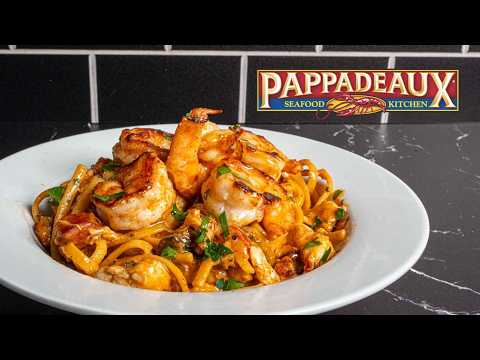
The foundational reference video that breaks down the Pappadeaux technique step by step, including the critical separate-pan shrimp sear and the deglazing sequence.
2. Cajun Cream Sauce Fundamentals
Deep dive into building a proper Cajun cream sauce — the right cream ratio, seasoning timing, and how to prevent the sauce from breaking when you add citrus.
3. Louisiana Pasta TechniquesCovers the holy trinity (onion, bell pepper, celery) foundation of Louisiana cooking and how it applies to pasta dishes derived from Cajun tradition.
🛠️ Core Equipment
- Large wide skillet (12-inch minimum) ↗You need surface area to brown the andouille without steaming it and to toss a full pound of pasta in the sauce without ingredients flying over the edge. A small skillet forces the sausage to pile up and steam instead of sear.
- Separate small skillet for shrimp ↗The shrimp absolutely must cook in isolation from the sauce. A dedicated pan with high heat gives you the Maillard reaction on the shrimp exterior that makes them taste seared instead of stewed.
- Large pasta pot (8-quart minimum) ↗A pound of linguine needs room to move. Crowded pasta sticks, cooks unevenly, and the starch concentration in the water gets too high. Use more water than you think you need.
- Wooden spoon or flat-edged spatula ↗For scraping the fond off the bottom of the pan when you deglaze with wine. A silicone spatula works too. You want to get every bit of that browned residue into the sauce.
Pappadeaux Mardi Gras Pasta Copycat (Shrimp, Crab & Andouille Done Right)
🛒 Ingredients
- ✦1 pound linguine pasta
- ✦1 pound large shrimp, peeled and deveined
- ✦8 ounces fresh lump crab meat
- ✦8 ounces andouille sausage, sliced into half-moons
- ✦5 tablespoons unsalted butter, divided
- ✦1 medium yellow onion, finely diced
- ✦1 red bell pepper, cut into small dice
- ✦1 yellow bell pepper, cut into small dice
- ✦5 cloves garlic, minced
- ✦1/2 cup dry white wine
- ✦3/4 cup chicken or seafood stock
- ✦1 cup heavy cream
- ✦2.5 teaspoons Cajun seasoning
- ✦1 teaspoon smoked paprika
- ✦1/4 teaspoon red pepper flakes
- ✦1/2 cup grated Parmesan cheese
- ✦3 tablespoons fresh lemon juice
- ✦3 tablespoons fresh Italian parsley, chopped
- ✦Salt and freshly ground black pepper to taste
👨🍳 Instructions
01Step 1
Bring a large pot of heavily salted water to a rolling boil. Cook the linguine until 2 minutes shy of al dente per the package instructions. Drain and set aside, reserving 1 cup of pasta water.
02Step 2
Heat 2 tablespoons of butter in a large wide skillet over medium-high heat. Add the sliced andouille and cook for 4-5 minutes, stirring occasionally, until the edges develop a deep brown color and the fat has rendered into the pan.
03Step 3
Remove the sausage with a slotted spoon, leaving the rendered fat in the skillet. Add 1 tablespoon of butter, then add the diced onion and bell peppers. Sauté for 5-6 minutes until softened and slightly translucent.
04Step 4
Add the minced garlic and cook for 1-2 minutes until fragrant. Add the Cajun seasoning, smoked paprika, and red pepper flakes. Toast the spices for 30 seconds, stirring constantly.
05Step 5
Pour in the white wine and scrape up every browned bit from the bottom of the pan with a wooden spoon. Simmer for 2-3 minutes until the wine reduces slightly.
06Step 6
Add the stock and increase heat slightly. Pour in the heavy cream while whisking gently. Simmer for 1-2 minutes until the sauce comes together smooth and begins to thicken slightly.
07Step 7
In a separate skillet, heat the remaining 2 tablespoons of butter over medium-high heat. Pat the shrimp dry with paper towels, season with salt and pepper, and sear for 2 minutes per side until just pink and opaque.
08Step 8
Transfer the seared shrimp and browned andouille to the cream sauce. Gently fold in the lump crab meat, being careful not to break up the lumps.
09Step 9
Add the drained linguine to the skillet and toss gently for 2-3 minutes, letting the pasta finish cooking and absorb the sauce. Add reserved pasta water a few tablespoons at a time if the sauce gets too thick.
10Step 10
Add the lemon juice and Parmesan. Toss once more to combine. Taste and adjust seasoning with salt, pepper, or additional Cajun seasoning.
11Step 11
Divide into bowls, garnish generously with fresh parsley, and serve immediately.
Nutrition Per Serving
Estimates based on standard preparation. Adjustments alter macros.
🔄 Substitutions
Instead of Heavy cream...
Use Half-and-half or 3/4 cup heavy cream mixed with 1/4 cup Greek yogurt
Slightly lighter mouthfeel but still rich. The Greek yogurt adds a subtle tang that plays well against the sweet crab. Avoid skim milk — the sauce won't thicken.
Instead of Linguine...
Use Whole wheat linguine or chickpea pasta
Whole wheat adds a nuttier flavor that pairs surprisingly well with andouille. Chickpea pasta adds protein and has a firmer texture. Both work — cook per package instructions and finish in the sauce.
Instead of Unsalted butter...
Use 3.5 tablespoons olive oil plus 1.5 tablespoons butter
Reduces saturated fat and adds a subtle fruity note. Keeps the richness without losing the searing ability. Full olive oil substitution makes the sauce feel flat.
Instead of Cajun seasoning...
Use 1 tsp paprika, 1/2 tsp cayenne, 1/2 tsp garlic powder, 1/2 tsp onion powder, 1/4 tsp dried thyme, pinch of salt
Homemade blend lets you control heat level independently. Commercial blends vary wildly in sodium — making your own avoids a dish that tastes like a salt lick.
🧊 Storage & Reheating
In the Fridge
Store in an airtight container for up to 2 days. The pasta will absorb remaining sauce overnight — add a splash of cream or stock when reheating.
In the Freezer
Not recommended. Cream-based sauces break on freezing and the shrimp become rubbery. This dish is best made fresh.
Reheating Rules
Reheat gently in a skillet over low heat with 2-3 tablespoons of chicken stock or cream, stirring frequently. Never microwave — the shrimp will turn to rubber and the sauce will separate.
❓ Frequently Asked Questions
Can I use pre-cooked shrimp?
Technically yes, but the texture will be noticeably different. Pre-cooked shrimp are already past their peak texture — adding them to a hot sauce cooks them a second time and turns them rubbery. If you must use pre-cooked, fold them in at the very end with the crab, off heat.
What wine should I use for deglazing?
Any dry white you'd drink — sauvignon blanc, pinot grigio, or an unoaked chardonnay. Avoid anything labeled 'cooking wine,' which has added salt and tastes nothing like actual wine. The cheap bottle rule: if you wouldn't drink it, don't cook with it.
My sauce broke and looks greasy. What happened?
The heat got too high after you added the cream. Cream sauces break when they boil hard — the fat separates from the liquid. To rescue it, remove from heat, add 2 tablespoons of cold butter, and whisk vigorously. This often brings it back together.
Can I substitute crawfish for shrimp?
Yes, and in Louisiana they'd argue crawfish tails are more authentic here than shrimp. Use the same weight, treat them identically, and sear briefly the same way. The flavor is sweeter and earthier — excellent.
Is this actually what Pappadeaux serves?
Close, but no copycat is identical. The restaurant uses a proprietary Cajun seasoning blend and likely a commercial cream base with additives that give it a specific body. This version replicates the flavor profile and technique without access to their kitchen — and in most blind tests, people can't tell the difference.
How do I keep the pasta from soaking up all the sauce before serving?
Don't toss the pasta in the sauce until just before you serve it. If you're cooking for a crowd and need to hold it, keep the sauce and pasta separate, toss together in the skillet right before plating, and add a splash of pasta water to loosen if needed.
The Science of
Pappadeaux Mardi Gras Pasta Copycat (Shrimp, Crab & Andouille Done Right)
We turned everything on this page into a beautiful, flour-proof PDF cheat sheet. Print it out, stick it to your fridge, and never mess up your pappadeaux mardi gras pasta copycat (shrimp, crab & andouille done right) again.
*We'll email you the high-res PDF instantly. No spam, just perfectly cooked meals.
AlmostChefs Editorial Team
We translate the internet's most popular cooking videos into foolproof, beginner-friendly written recipes. We analyze multiple methods, test them in our kitchen, and engineer a single "Master Recipe" that gives you the best possible result with the least possible stress.