Classic Tuscan Panzanella (Day-Old Bread, Tomato Water Dressing)
Authentic Tuscan panzanella uses the tomato's own expelled juice — drawn out by salting and resting — combined with vinaigrette as the dressing. Day-old bread is mandatory. The 15-20 minute rest after assembly is the technique. Everything else is mise en place.
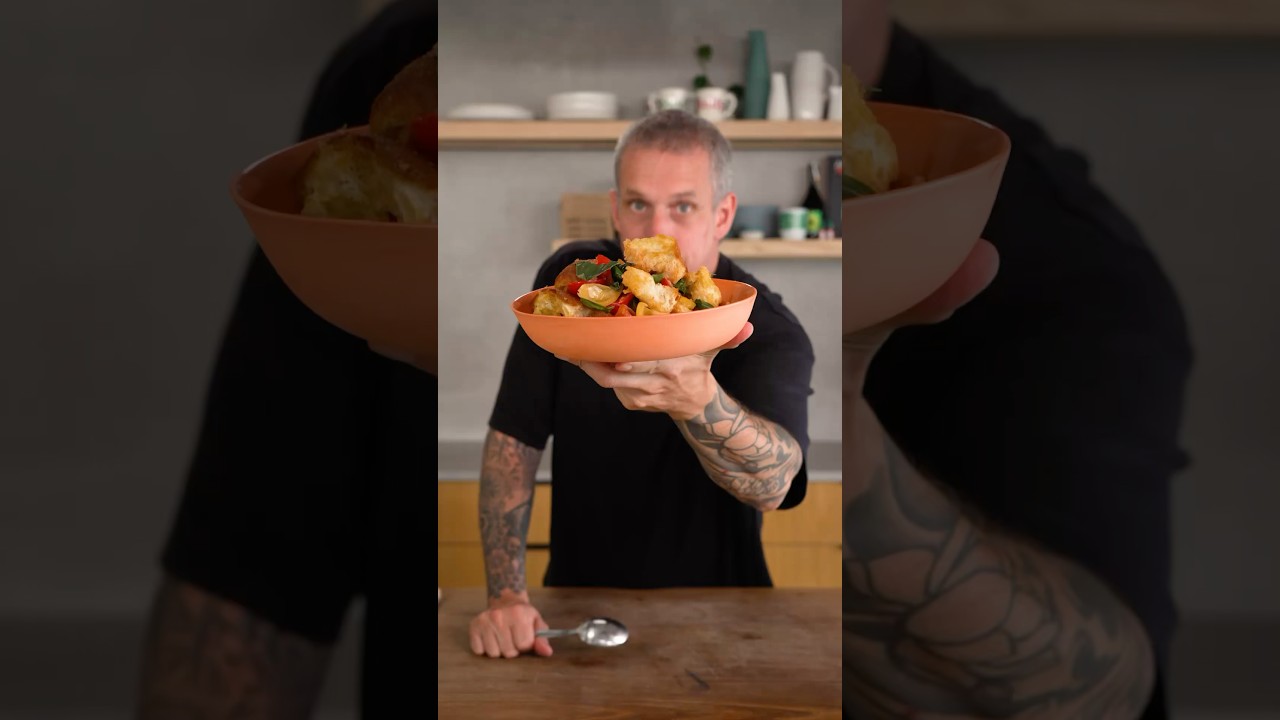
“Panzanella is not a salad with croutons in it. It is a bread dish with vegetables in it. That distinction is everything. The bread is supposed to be soft, vinaigrette-soaked, and slightly collapsed — not crunchy cubes floating on top of tomatoes. Get that wrong and you've made a mediocre salad. Get it right and you've made one of the most satisfying things Italy ever invented.”
Why This Recipe Works
Panzanella is a peasant dish built on a principle that reads as counterintuitive in the era of crouton salads: stale bread that has been deliberately softened is more interesting to eat than crunchy bread. The Tuscans arrived at this conclusion because they had leftover bread, peak-summer tomatoes, and no refrigeration. The result was a dish that turned two problems into one solution, and it has been copied poorly for centuries since.
The Bread Is the Point
Most versions of panzanella in the United States treat the bread as a textural garnish — something crispy on top of a tomato salad. This is incorrect, and it explains why most American panzanella is forgettable. In the Florentine tradition, the bread is the base. The tomatoes, cucumbers, and onions exist in service of the bread. Everything liquid in this dish — the vinaigrette, the tomato juice, the mozzarella brine — gets absorbed into the bread during the rest period. The final texture should be dense, soft, and intensely flavored at the center of each cube, with a slightly firmer exterior.
This means the bread quality matters more than the tomato quality. A bad tomato produces less juice and less flavor, but a bad bread — fresh, too soft, wrong crumb structure — dissolves into paste before it can absorb anything. Use a firm, open-crumb loaf. Ciabatta is ideal. A day-old sourdough works well. Standard sandwich bread does not work at all.
The Tomato Water Dressing
The technique that elevates this recipe from a vinaigrette-soaked bread salad to a genuine panzanella is the tomato water step. Halving the cherry tomatoes and tossing them with salt in a colander for 10 minutes draws out their cell liquid — concentrated tomato juice with natural glutamates, pectin, and sugars. That liquid goes directly into the vinaigrette before the bread gets dressed.
The difference is significant. Straight vinaigrette is sharp, oily, and one-dimensional by the time it has soaked into bread for 15 minutes. Vinaigrette built with tomato water has body, sweetness, and the kind of savory depth that makes you eat the salad too fast. This is not extra work — it takes 10 minutes of passive time while the oven preheats.
Vinaigrette Absorption Timing
Toast the bread in the oven at 400°F rather than in a dry pan. Oven toasting dehydrates the bread more thoroughly and evenly than stovetop toasting — every cube becomes uniformly dry through the center, which creates uniform absorption capacity. A rimmed baking sheet ensures even heat distribution without hot spots that char some cubes while leaving others pale.
Pour the vinaigrette over warm (not hot, not cold) bread and the absorption happens in 10-15 minutes. Cold bread takes twice as long. The Dijon mustard in the vinaigrette is not a flavor choice — it is an emulsification choice. Without it, the olive oil and vinegar separate immediately and the bread absorbs them unevenly: greasy patches here, sharp-acid patches there. With the mustard whisked in, you get a cohesive dressing that distributes uniformly.
The Mandatory Rest
After all the vegetables go in, the salad needs 15-20 minutes at room temperature before it reaches the table. This is not resting in the passive sense. The tomatoes are actively releasing juice during those 20 minutes. That juice — concentrated, sweet, slightly acidic — gets absorbed by the bread alongside the vinaigrette. It's a second round of flavor infusion that you cannot replicate by dressing the salad more heavily. Skip the rest and you have vegetables sitting on top of vinaigrette-soaked bread. Wait through the rest and you have a unified dish.
The herbs go in last, right before serving. Basil in contact with acid turns black within minutes. It also turns bitter. Add the torn basil and parsley at the absolute last moment — fold them in gently and serve immediately.
Seasoning More Than You Think Is Right
Bread absorbs salt. A properly seasoned vinaigrette that tastes correct on its own will taste under-seasoned once the bread has absorbed it. Season aggressively. Taste the assembled salad before the final rest and again immediately before serving. Adjust with vinegar first (for brightness), then salt (for depth). The finished dish should taste punchy and bright, not starchy and bland. Bland panzanella is always an under-seasoning problem, not a technique problem.
A sharp chef's knife and a cast iron skillet are the only equipment decisions that actually matter here. Everything else is a bowl and a whisk. The technique is patience.
Where Beginners Mess This Up
Before we start, read this. These are the 4 reasons your classic tuscan panzanella (day-old bread, tomato water dressing) will fail:
- 1
Not soaking the bread long enough: Ten minutes is the minimum. The bread cubes need to fully absorb the vinaigrette before the vegetables go in — otherwise the dressing coats the vegetables instead of penetrating the bread. You want bread that is soft and saturated at the core, not just damp on the surface. Fifteen minutes is better. Twenty is ideal.
- 2
Using fresh bread: Fresh bread dissolves. Day-old bread (or bread you've deliberately dried out in a 300°F oven for 10 minutes) has lost enough moisture to absorb vinaigrette without disintegrating. Fresh bread turns into a paste within five minutes of contact with liquid. This is not the texture you want.
- 3
Adding the herbs too early: Basil turns black and bitter the moment it hits acid. Tear the basil and add it right before serving — not during the soak phase, not during the vegetable toss. Same rule applies to the parsley. Fresh herbs are a finish, not an ingredient.
- 4
Serving it immediately: Panzanella needs the full 15-20 minute rest at room temperature after assembly. This is not optional resting time — it's active cooking. The tomatoes release juice, the bread absorbs it, the garlic mellows, and the whole thing becomes a unified dish instead of a pile of separate ingredients.
The Video Reference Library
Want to see it in action? Here are the exact videos we analyzed and combined to build this foolproof recipe translation:
The foundational walkthrough of authentic Tuscan panzanella technique. Focuses on bread preparation and vinaigrette absorption timing — the two steps most home cooks get wrong.
🛠️ Core Equipment
- Large cast iron or stainless skilletFor toasting the bread cubes. You need dry, even heat — not steam. A [cast iron skillet](/kitchen-gear/review/cast-iron-skillet) distributes heat without creating hot spots that burn some cubes while leaving others pale.
- Large mixing bowlBig enough that you can fold the vegetables in without crushing them against the sides. Panzanella needs gentle handling during assembly.
- Small whisk and bowl for the vinaigretteEmulsifying the Dijon mustard into the oil and vinegar before it hits the bread ensures even distribution. Pouring straight olive oil on bread creates greasy patches.
- Sharp chef's knifeRipe tomatoes bruise when pressed with a dull blade. A [sharp knife](/kitchen-gear/review/chefs-knife) cuts cleanly, keeping the tomato flesh intact and reducing excess liquid in the bowl.
Classic Tuscan Panzanella (Day-Old Bread, Tomato Water Dressing)
🛒 Ingredients
- ✦8 ounces day-old crusty bread, cut into 1-inch cubes
- ✦1 pound ripe cherry tomatoes, halved
- ✦1 medium English cucumber, diced
- ✦1 red bell pepper, chopped
- ✦1 small red onion, thinly sliced
- ✦1 cup fresh basil leaves, torn
- ✦1/4 cup fresh parsley, chopped
- ✦1/4 cup extra-virgin olive oil
- ✦3 tablespoons red wine vinegar
- ✦2 tablespoons balsamic vinegar
- ✦3 cloves garlic, minced
- ✦1 teaspoon Dijon mustard
- ✦1 teaspoon sea salt
- ✦1/2 teaspoon ground black pepper
- ✦1/4 teaspoon red pepper flakes
- ✦2 ounces fresh mozzarella, torn into small pieces
- ✦2 tablespoons capers, rinsed
👨🍳 Instructions
01Step 1
Preheat oven to 400°F. Toss bread cubes with 2 tablespoons olive oil and spread on a baking sheet in a single layer. Toast 8-10 minutes until golden and fully dried through — they must be crisp to the core, not just golden on the surface.
02Step 2
While the bread toasts, halve the cherry tomatoes and toss with 1/2 teaspoon of the sea salt in a colander set over a bowl. Let drain for 10 minutes — this draws out the tomato water.
03Step 3
Whisk together the remaining olive oil, both vinegars, tomato liquid, minced garlic, Dijon mustard, remaining sea salt, black pepper, and red pepper flakes until the mixture emulsifies slightly.
04Step 4
Transfer warm toasted bread to a large mixing bowl. Pour the vinaigrette over the warm bread cubes and toss gently to coat. Let the bread absorb the dressing for 10-15 minutes, tossing once halfway through.
05Step 5
Add the drained cherry tomatoes, diced cucumber, chopped bell pepper, and thinly sliced red onion to the soaked bread. Fold everything together with a gentle hand.
06Step 6
Add the capers and torn mozzarella. Toss once more lightly.
07Step 7
Let the assembled salad rest at room temperature for 15-20 minutes, stirring once or twice. This is not optional.
08Step 8
Just before serving, fold in the torn basil and chopped parsley. Taste and adjust salt, pepper, or vinegar.
Nutrition Per Serving
Estimates based on standard preparation. Adjustments alter macros.
🔄 Substitutions
Instead of Day-old crusty bread...
Use Whole wheat or sprouted grain bread
Slightly nuttier flavor and better fiber. May require slightly less soaking time as whole grain bread absorbs liquid faster than white.
Instead of Red wine vinegar and balsamic vinegar...
Use Apple cider vinegar
Tangier and more complex. Use 4 tablespoons total instead of 5. Balsamic's sweetness is lost, so consider adding half a teaspoon of honey to compensate.
Instead of Fresh mozzarella...
Use Crumbled feta
Sharper, saltier, and tangier. Reduce the capers by half if using feta to avoid oversalting the dish. No need to tear — just crumble directly over the top.
Instead of Red onion...
Use Shallots
Milder and slightly sweeter. Slice thin and skip the macerating step — shallots don't have the same aggressive bite that requires taming.
🧊 Storage & Reheating
In the Fridge
Store in an airtight container for up to 24 hours. The bread continues to soften — this is desirable up to a point. Beyond 18 hours the texture deteriorates.
In the Freezer
Do not freeze. The tomatoes and soaked bread will turn to waterlogged mush on thawing. This dish does not freeze.
Reheating Rules
Do not reheat. Panzanella is a room-temperature dish. If it's been refrigerated, pull it 20 minutes before serving and let it come back to room temperature. Cold panzanella tastes flat.
❓ Frequently Asked Questions
Why is my panzanella soggy instead of satisfyingly soft?
Either the bread was too fresh, or you soaked it too long past the point of assembly. Day-old bread soaked for 10-15 minutes should be soft and saturated, not disintegrating. If the bread is dissolving rather than holding its shape, you used fresh bread or over-soaked it. The fix: always start with properly dried bread.
Can I make panzanella ahead of time?
Partially. You can toast the bread, make the vinaigrette, and prep all the vegetables up to a day ahead. Store them separately. Assemble no more than 30-45 minutes before serving to hit the ideal texture window. Full assembly more than 2 hours ahead produces mushy bread.
Do I have to use both red wine vinegar and balsamic?
The combination does something neither vinegar does alone. Red wine vinegar provides sharpness and acidity; balsamic adds body and a faint sweetness that rounds the dressing. Using only red wine vinegar produces a flat, harsh dressing. Only balsamic makes it cloying. The ratio matters — if you adjust, keep the red wine vinegar dominant.
What kind of bread works best?
A firm, open-crumb Italian or French loaf — ciabatta, sourdough, or a Tuscan-style pane sciocco (unsalted bread). Dense sandwich bread doesn't work; it gets gluey. Heavily seeded or flavored breads compete with the vinaigrette. Neutral, sturdy, and day-old is the standard.
Why does my panzanella taste bland?
Under-seasoning, under-ripe tomatoes, or not enough resting time. Bread absorbs salt aggressively. Season more than feels comfortable. Use the ripest tomatoes you can find — they generate the juice that the bread needs to absorb during the rest. And let the assembled salad sit the full 15-20 minutes before serving.
Is panzanella served warm, cold, or room temperature?
Room temperature, always. The olive oil solidifies slightly in the fridge and the tomato flavors go flat. Cold panzanella is a waste of good bread and good tomatoes. Pull it from the fridge 20 minutes before eating.

The Science of
Classic Tuscan Panzanella (Day-Old Bread, Tomato Water Dressing)
We turned everything on this page into a beautiful, flour-proof PDF cheat sheet. Print it out, stick it to your fridge, and never mess up your classic tuscan panzanella (day-old bread, tomato water dressing) again.
*We'll email you the high-res PDF instantly. No spam, just perfectly cooked meals.
AlmostChefs Editorial Team
We translate the internet's most popular cooking videos into foolproof, beginner-friendly written recipes. We analyze multiple methods, test them in our kitchen, and engineer a single "Master Recipe" that gives you the best possible result with the least possible stress.