Copycat Panera Tomato Soup (Better Than the Original)
A velvety, restaurant-quality tomato soup made with San Marzano tomatoes, tempered Greek yogurt, and a balsamic finish that Panera's version can't touch. We rebuilt this from the ground up to deliver the same creamy comfort with a cleaner ingredient list and a technique that actually explains why the soup stays silky instead of breaking.
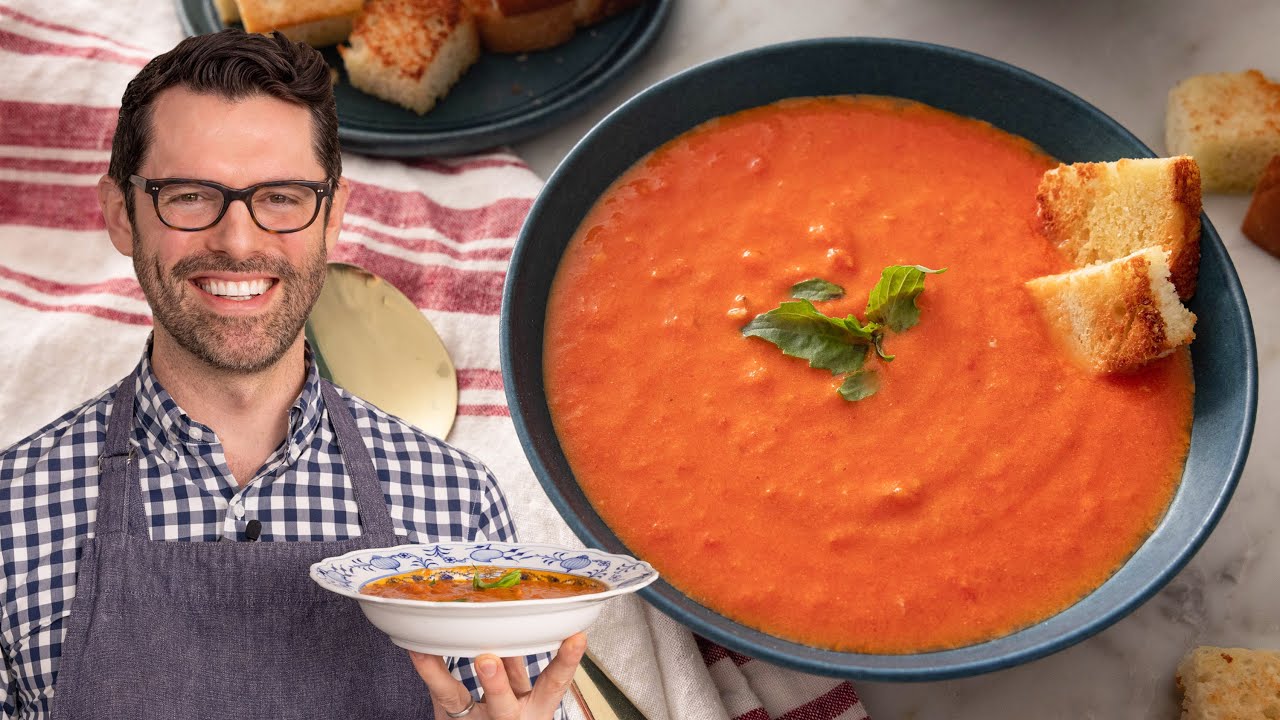
“Panera charges you $9 for tomato soup that comes out of a bag. That's not speculation — their 'You Pick Two' soups are shipped in pre-made pouches to every location. The good news: the reason it tastes so good is fully replicable at home, and once you understand the two techniques that make the difference (caramelizing the tomato paste and tempering the dairy), you'll never pay restaurant prices for tomato soup again.”
Why This Recipe Works
Panera's tomato soup is genuinely good. It's also genuinely a pouch of pre-made soup heated on-site, which means the thing you're paying $9 for is a supply chain product, not a kitchen product. Understanding this is actually the key to replicating it at home — because the soup was designed to taste great after being cooked, chilled, shipped, stored, and reheated. That means the flavor is robust and the technique is scalable. Both work in your favor.
The Tomato Paste Problem
Most tomato soup recipes treat tomato paste as a thickener. It isn't. It's a flavor accelerator, and like all flavor accelerators, it needs heat to work.
Two minutes in hot olive oil before any liquid enters the pot is the difference between a soup that tastes like tomatoes and a soup that tastes like something a restaurant made. The heat triggers the Maillard reaction in the paste's concentrated sugars and proteins, converting them into hundreds of new aromatic compounds. The paste will darken from bright red to a deep rust and start to stick to the bottom of the pot. That's not burning — that's flavor. Scrape it up when the liquid goes in.
Why San Marzano Tomatoes
The DOP certification on San Marzano tomatoes is not marketing. It indicates specific growing conditions in volcanic soil near Naples that produce tomatoes with measurably lower acidity and higher natural sugar content than standard plum tomatoes. In a recipe this simple, with nowhere to hide, that difference is audible. San Marzano tomatoes produce a soup that needs less sweetener to balance and less simmering time to mellow the sharp edges. Use them.
If the price is prohibitive, fire-roasted canned tomatoes are the next best option. The roasting process mimics what the slow simmer does to standard tomatoes, pre-mellowing the acidity before it even hits your pot.
The Dairy Architecture
The recipe uses two dairy components deliberately. The heavy cream provides fat-based richness and that signature velvety coating on the palate. The Greek yogurt adds a subtle tang and enough protein to give the soup some body without making it heavy. Together they produce a more complex mouthfeel than cream alone.
The order of operations matters: yogurt first, tempered carefully, then cream added off high heat with the burner on its lowest setting. After the dairy goes in, the soup should never boil again. Boiling breaks the emulsion. Broken emulsion means greasy, grainy soup. A Dutch oven holds residual heat well enough that you barely need to run the burner at all once the dairy is incorporated — the stored heat in the pot does the gentle finishing work.
The Balsamic Finish
One tablespoon of balsamic vinegar added after blending is the most counterintuitive step in this recipe. The soup doesn't taste like balsamic vinegar afterward. What it tastes like is more itself — the tomato flavor is louder, the sweetness has more dimension, and the whole pot coheres in a way that's hard to explain until you taste it side by side with a batch made without it.
This is the principle of flavor amplification. A small amount of acid introduced at the end of cooking doesn't change the flavor profile — it raises the volume on all the existing flavors. Salt works the same way, which is why properly salted food tastes like more food, not salty food.
Make this once. You will not go back to the $9 pouch.
Where Beginners Mess This Up
Before we start, read this. These are the 4 reasons your copycat panera tomato soup (better than the original) will fail:
- 1
Skipping the tomato paste caramelization: Most home cooks dump tomato paste straight into liquid without cooking it first. Two minutes in hot oil converts the paste's raw, slightly bitter compounds into deep, concentrated umami. This step is responsible for a third of the soup's flavor complexity. Skip it and the soup tastes flat no matter how long you simmer it.
- 2
Adding cold cream directly to hot soup: Cold dairy added to a hot, acidic liquid breaks — the proteins seize and you get grainy, curdled soup instead of velvet. You must temper the Greek yogurt first by whisking it with a ladle of hot soup before incorporating it. The heavy cream is more forgiving but still benefits from being added off direct high heat.
- 3
Under-simmering the base: Canned tomatoes are acidic and sharp straight out of the can. The 20-25 minute simmer is not optional padding — it's the window during which the acidity mellows, the broth reduces and concentrates, and the whole pot becomes cohesive instead of tasting like separate ingredients in water.
- 4
Blending at full speed immediately: Hot soup expands when blended. Fill an upright blender more than halfway and you will wear it. Use an immersion blender directly in the pot, or let the soup cool slightly and blend in batches with the lid held down with a towel. The immersion blender is the right tool for this job.
The Video Reference Library
Want to see it in action? Here are the exact videos we analyzed and combined to build this foolproof recipe translation:
The source video for this recipe. Demonstrates the tomato paste caramelization and tempering technique in real time with clear visual cues for when the soup is ready to blend.
🛠️ Core Equipment
- Heavy-bottomed pot or Dutch ovenEven heat distribution prevents the tomato base from scorching on the bottom while you simmer. A thin pot will burn the tomato paste caramelization step and make cleanup miserable.
- Immersion blenderLets you blend directly in the pot without transferring hot liquid to a countertop blender. Faster, safer, and produces a consistent smooth texture. A [immersion blender](/kitchen-gear/review/immersion-blender) is the single most useful tool for any pureed soup.
- Fine-mesh sieve (optional)If you want Panera's ultra-smooth, seed-free texture, run the blended soup through a sieve before adding the dairy. Not required but makes a noticeable difference in mouthfeel.
- LadleEssential for the tempering step. You need to transfer hot soup to the yogurt bowl slowly and precisely — pouring directly from the pot makes it too easy to add too much too fast.
Copycat Panera Tomato Soup (Better Than the Original)
🛒 Ingredients
- ✦2 tablespoons olive oil
- ✦1 large yellow onion, diced
- ✦4 cloves garlic, minced
- ✦2 tablespoons tomato paste
- ✦2 cans (28 oz each) San Marzano tomatoes, crushed
- ✦3 cups low-sodium vegetable or chicken broth
- ✦1 cup heavy cream
- ✦1/2 cup Greek yogurt
- ✦1 tablespoon honey or maple syrup
- ✦2 teaspoons dried basil
- ✦1 teaspoon dried oregano
- ✦1/2 teaspoon red pepper flakes
- ✦1 bay leaf
- ✦1 teaspoon sea salt
- ✦1/2 teaspoon black pepper
- ✦1/4 teaspoon garlic powder
- ✦1 tablespoon balsamic vinegar
- ✦2 tablespoons fresh basil, chopped (for garnish)
👨🍳 Instructions
01Step 1
Heat olive oil in a large heavy-bottomed pot over medium heat. Add diced onion and sauté for 5-7 minutes until softened and translucent.
02Step 2
Add the minced garlic and cook for 1-2 minutes, stirring constantly, until fragrant.
03Step 3
Add the tomato paste directly to the pot and cook, stirring frequently, for 2 full minutes. The paste should deepen in color and begin to stick slightly to the bottom.
04Step 4
Pour in the crushed San Marzano tomatoes with all their juices and add the broth. Stir well to lift any fond from the bottom of the pot.
05Step 5
Add the bay leaf, dried basil, dried oregano, red pepper flakes, sea salt, black pepper, and garlic powder. Stir to combine.
06Step 6
Bring to a gentle boil, then reduce heat to low and simmer uncovered for 20-25 minutes, stirring occasionally.
07Step 7
Remove the bay leaf. Using an immersion blender, blend the soup directly in the pot until completely smooth.
08Step 8
Stir in the balsamic vinegar.
09Step 9
In a small bowl, add the Greek yogurt. Ladle approximately 1/4 cup of hot soup into the bowl and whisk vigorously until fully combined. Repeat with a second ladle.
10Step 10
Pour the tempered yogurt mixture back into the pot, stirring continuously in slow circles to incorporate evenly.
11Step 11
Reduce heat to its lowest setting. Slowly pour in the heavy cream while stirring. Do not let the soup boil after this point.
12Step 12
Heat gently for 3-4 minutes, stirring occasionally, until the soup reaches serving temperature. Taste and adjust salt, pepper, and sweetener.
13Step 13
Ladle into bowls and garnish with fresh basil, a crack of black pepper, and a thread of olive oil.
Nutrition Per Serving
Estimates based on standard preparation. Adjustments alter macros.
🔄 Substitutions
Instead of Heavy cream...
Use Half heavy cream, half Greek yogurt (1/2 cup each)
Slightly tangier result with meaningfully better nutrition — reduces saturated fat and adds protein. The texture difference is barely perceptible once blended.
Instead of San Marzano canned tomatoes...
Use Fresh heirloom tomatoes (4 lbs, halved and roasted at 400°F for 45 minutes)
Seasonal summer swap that produces more vibrant, fresh tomato flavor. Roasting compensates for the lower lycopene concentration in fresh tomatoes by concentrating the sugars.
Instead of Low-sodium vegetable broth...
Use Homemade bone broth or chicken stock
Richer, deeper base flavor. Bone broth adds collagen that gives the finished soup a slightly more luxurious body. Use the same volume.
Instead of Honey or maple syrup...
Use Coconut sugar or monk fruit sweetener (2 teaspoons)
Lower glycemic index options that still round out the tomato acidity. Monk fruit provides clean sweetness with zero calories and no bitter aftertaste.
🧊 Storage & Reheating
In the Fridge
Store in an airtight container for up to 5 days. The flavor improves on day two as the acidity continues to mellow.
In the Freezer
Freeze in individual portions for up to 3 months. Leave headspace in containers — the soup expands. Freeze before adding the cream if possible, then add cream fresh when reheating for best texture.
Reheating Rules
Reheat gently in a pot over low heat, stirring frequently. Do not boil — the dairy will break. Add a splash of broth if the soup has thickened too much in the fridge.
❓ Frequently Asked Questions
Why did my soup turn grainy or curdled?
The dairy broke. This happens when cold yogurt hits hot soup directly, or when the soup boils after the cream is added. Fix it by blending the soup again with an immersion blender — the agitation re-emulsifies the fat in most cases. Prevent it by always tempering the yogurt and keeping heat low after adding cream.
Can I make this vegan?
Yes. Replace the heavy cream with full-fat coconut milk and the Greek yogurt with cashew cream (blend 1/2 cup raw cashews with 1/2 cup water until smooth). Use vegetable broth. The coconut milk adds a faint sweetness that actually works well with the tomato base.
What's the difference between this and regular tomato soup?
The Panera-style version uses significantly more cream than a standard tomato soup, which gives it that signature velvety weight. The tomato paste caramelization step adds a depth that most home recipes skip. And the balsamic vinegar finish is what makes people ask why it tastes different from every other tomato soup they've had.
Do I have to use an immersion blender?
No, but it's the easiest approach. If using a countertop blender, let the soup cool for 10 minutes first, fill the blender no more than halfway, remove the center cap of the lid and hold a folded towel over it to vent steam, and blend in batches. Never seal a full blender of hot liquid.
Can I use fresh tomatoes instead of canned?
Yes, with caveats. Fresh tomatoes vary wildly in acidity and sweetness depending on season and variety. Summer heirloom tomatoes roasted in the oven will outperform canned San Marzano. Winter grocery-store tomatoes will not. Canned San Marzano are more consistent year-round than off-season fresh tomatoes.
Why does the restaurant version taste different every time?
Because it's reheated from a shipped pouch at each location, and the heat-up process varies. Some locations burn it slightly, some serve it before it's hot enough, and the pouch itself loses some volatile flavor compounds in transit. Your homemade version, made fresh, will be more consistent than anything coming out of a Panera kitchen.
The Science of
Copycat Panera Tomato Soup (Better Than the Original)
We turned everything on this page into a beautiful, flour-proof PDF cheat sheet. Print it out, stick it to your fridge, and never mess up your copycat panera tomato soup (better than the original) again.
*We'll email you the high-res PDF instantly. No spam, just perfectly cooked meals.
AlmostChefs Editorial Team
We translate the internet's most popular cooking videos into foolproof, beginner-friendly written recipes. We analyze multiple methods, test them in our kitchen, and engineer a single "Master Recipe" that gives you the best possible result with the least possible stress.