Copycat Panda Express Orange Chicken (Better Than the Original)
Crispy fried chicken coated in a glossy, citrus-forward orange glaze made with real orange juice and zest — not artificial flavoring. We reverse-engineered the Panda Express formula and fixed every problem with it: the sauce-to-chicken ratio, the coating that stays crunchy, and the glaze that actually clings.
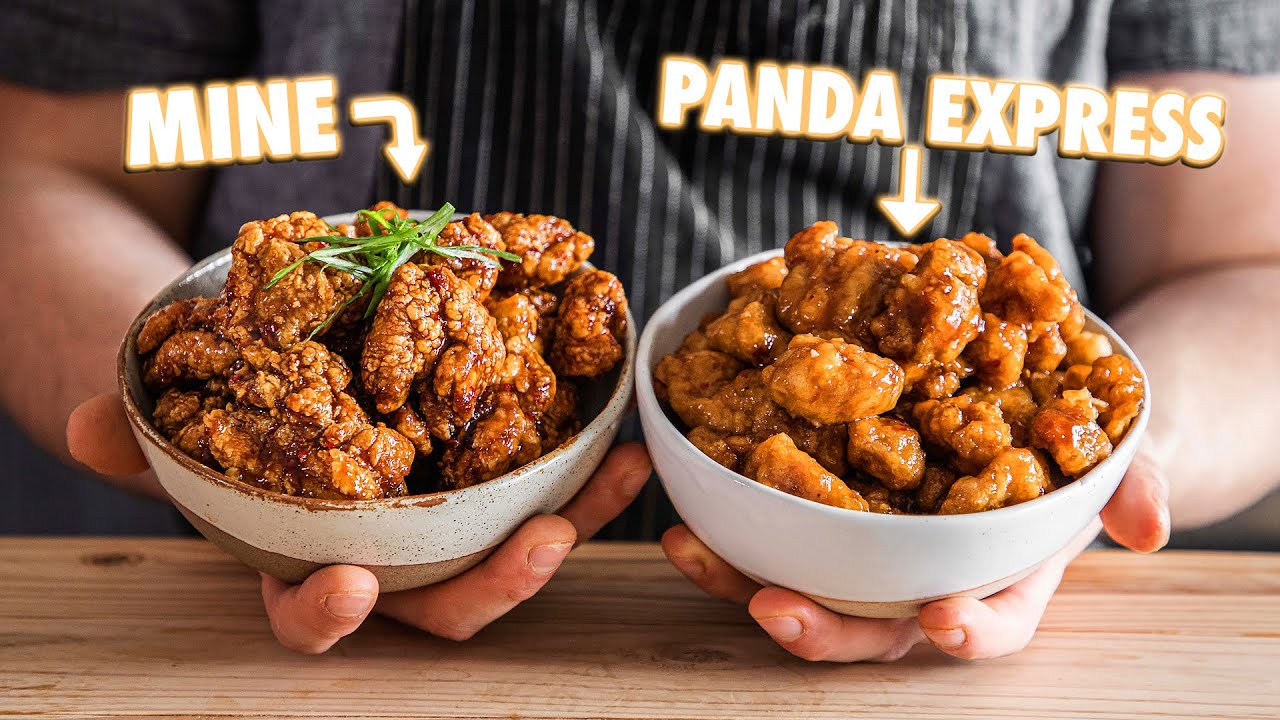
“Panda Express sells 100 million pounds of orange chicken every year. Most people who try to make it at home end up with soggy breading and a watery sauce that slides off the chicken instead of coating it. The fixes are not complicated — they are just specific. Real orange zest over extract. Cornstarch-heavy coating over flour-heavy. Slurry added at the right moment. We worked backwards from the restaurant version to build a home recipe that's actually better.”
Why This Recipe Works
Panda Express didn't invent orange chicken. Chinese-American cooks had been working with citrus-glazed proteins for decades before the chain turned it into a billion-dollar menu item in 1987. What Panda Express did was engineer a specific texture-to-flavor ratio that triggers something close to compulsion — the crunch-to-glaze contrast is tuned to a frequency that is very hard to replicate at home. Most copycat recipes miss it. Here is why, and here is how to not miss it.
The Coating Ratio
Standard fried chicken recipes lean on flour as the primary coating. Chinese-American takeout inverts that ratio — cornstarch dominates, flour plays a supporting role. The reason is structural. Cornstarch granules swell differently than flour proteins when they hit hot oil. They create a thinner, more rigid shell with less interior moisture, which means the crust shatters on bite rather than yielding. The flour adds just enough structural integrity to prevent the coating from crumbling entirely.
The ratio here is 2:1 cornstarch to flour. Go higher on the cornstarch and the coating gets brittle and pale. Go higher on the flour and you get something closer to a Southern fried chicken profile — good, but not what we're making. The cayenne in the coating is not for heat. At half a teaspoon across two pounds of chicken, it's below perceptible threshold. It's there to add a baseline warmth that makes the sweet sauce read as more complex than it is.
The Oil Temperature Problem
Home cooks almost universally fry at too low a temperature. At 320–330°F, the coating slowly absorbs oil while the chicken cooks through. The result is dense, greasy, and heavy — technically cooked but texturally wrong. At 360–375°F, the surface water in the coating vaporizes instantly, pushing outward and creating the fissured, cratered surface that traps sauce without getting saturated.
The batch frying rule exists entirely to protect this temperature. Two pounds of cold chicken contains enough thermal mass to drop your oil temperature by 30–40 degrees if you add it all at once. That 40-degree swing is the difference between golden and pale, crunchy and soggy. A wire rack between batches keeps finished pieces from steaming each other while you work through the rest.
The Sauce Architecture
The Panda Express orange sauce is sweeter and more one-dimensional than what you're going to make here, because they're working at industrial scale with flavor concentrates. The home version has four flavor layers that the restaurant version collapses into one: fresh citrus from the juice, volatile aromatic brightness from the zest, acidity from the rice vinegar, and heat from the ginger, garlic, and red pepper flakes.
The zest is doing more work than most people realize. Orange peel contains concentrated essential oils — limonene, linalool, and about fifty other aromatic compounds — that don't survive pasteurization or concentrate processing. A microplane across two naval oranges releases all of that into your sauce in a way that a cup of bottled juice never could. This is the single most impactful upgrade you can make to any orange chicken recipe.
The cornstarch slurry controls viscosity. The sauce needs to be thick enough to coat each chicken piece in a glossy shell without pooling at the bottom of the bowl. The test: when you dip a spoon and run your finger across the back, the line should hold clean. Thin sauce produces wet, sad orange chicken. Thick sauce produces the glossy, lacquered finish that makes people reach back into the bowl.
Timing the Assembly
Orange chicken has a three-minute window between perfect and ruined. The moment the fried chicken contacts the sauce, moisture migration begins — the coating starts absorbing liquid and softening from the outside in. At one minute post-toss, the exterior is still crackling. At five minutes, you have orange-flavored mush with a formerly crispy memory.
This is why restaurant versions come out of the wok and onto your tray in under sixty seconds. Replicate that urgency. Have the serving platter ready. Have the garnishes prepped. Toss, coat, plate, eat. The dish does not hold.
Where Beginners Mess This Up
Before we start, read this. These are the 4 reasons your copycat panda express orange chicken (better than the original) will fail:
- 1
Overcrowding the pan: Frying too many pieces at once drops the oil temperature dramatically. The coating absorbs oil instead of crisping it out, and you get pale, greasy chicken. Work in batches — no more than a single layer at a time. The patience is the technique.
- 2
Using bottled orange juice: Bottled orange juice is pasteurized and has had most of its volatile aromatic compounds cooked off. It tastes flat compared to fresh-squeezed. The orange flavor in this dish lives in those aromatics and in the zest. Skip the carton.
- 3
Adding the chicken before the sauce thickens: If you toss the chicken into the sauce while it's still thin, the coating gets waterlogged and softens within minutes. The slurry must go in first, the sauce must thicken fully, and only then does the chicken go in. The order is not optional.
- 4
Skipping the sesame oil at the end: Sesame oil is a finishing oil — it burns off and loses its flavor when cooked at high heat. Adding it after the sauce comes off the heat is what gives the dish its restaurant-style depth. Add it early and you've wasted it.
The Video Reference Library
Want to see it in action? Here are the exact videos we analyzed and combined to build this foolproof recipe translation:
The source video for this recipe. Clear breakdown of the coating technique and sauce reduction timing. Watch the moment when the sauce hits the right viscosity before the chicken goes in — that visual cue is what you're aiming for.
🛠️ Core Equipment
- Large wok or heavy skilletA wok's curved walls let you toss chicken without losing pieces and the high, sloped sides manage oil splatter during frying. A [cast iron skillet](/kitchen-gear/review/cast-iron-skillet) works as a flat-bottomed alternative with excellent heat retention.
- Instant-read thermometerOil temperature control is everything in batch frying. You want 350–375°F. Below 350 and the coating absorbs oil; above 375 and the outside burns before the inside cooks. A thermometer removes the guesswork entirely.
- Wire rack over a sheet panPaper towels trap steam under the fried chicken, which softens the coating from below. A [wire rack](/kitchen-gear/review/wire-cooling-rack) lets air circulate on all sides and keeps the crust intact while you finish subsequent batches.
- Microplane zesterOrange zest is where 60% of the citrus flavor lives. A [microplane](/kitchen-gear/review/microplane-zester) removes only the fragrant outer layer without the bitter white pith underneath. A box grater tears the zest and bruises it.
Copycat Panda Express Orange Chicken (Better Than the Original)
🛒 Ingredients
- ✦2 pounds boneless, skinless chicken breasts, cut into 1 to 1.5-inch pieces
- ✦1 cup cornstarch
- ✦1/2 cup all-purpose flour
- ✦2 teaspoons salt
- ✦1 teaspoon white pepper
- ✦1/2 teaspoon cayenne pepper
- ✦3 large eggs
- ✦3 tablespoons vegetable oil, plus more for frying
- ✦1 cup fresh orange juice (from approximately 3 large navel oranges)
- ✦2 tablespoons orange zest
- ✦1/4 cup rice vinegar
- ✦1/3 cup honey or pure maple syrup
- ✦2 tablespoons soy sauce
- ✦1 tablespoon fresh ginger, minced
- ✦4 garlic cloves, minced
- ✦1/2 teaspoon red pepper flakes
- ✦2 teaspoons sesame oil
- ✦1 tablespoon cornstarch mixed with 2 tablespoons cold water (slurry)
- ✦2 green onions, thinly sliced, for garnish
- ✦1 teaspoon sesame seeds, for garnish
👨🍳 Instructions
01Step 1
Cut the chicken breasts into bite-sized pieces, approximately 1 to 1.5 inches. Pat completely dry with paper towels.
02Step 2
In a shallow bowl, whisk together the cornstarch, flour, salt, white pepper, and cayenne pepper until fully combined.
03Step 3
In a separate bowl, beat the eggs lightly until homogeneous. Set both bowls side by side.
04Step 4
Working in batches, dip each chicken piece into the beaten egg, let excess drip off, then press firmly into the cornstarch mixture. Shake off loose coating and set on a plate. Let coated pieces rest 5 minutes before frying.
05Step 5
Heat 1 inch of vegetable oil in a large wok or heavy skillet over medium-high heat to 360°F.
06Step 6
Fry the chicken in batches — no more than a single layer at a time — for 4-5 minutes per side until deeply golden and cooked through. Transfer to a wire rack. Do not stack pieces.
07Step 7
In a separate saucepan, combine the fresh orange juice, orange zest, rice vinegar, honey, soy sauce, ginger, garlic, and red pepper flakes. Bring to a simmer over medium heat.
08Step 8
Simmer the sauce for 3-4 minutes, stirring occasionally, until the raw garlic and ginger aroma cooks off and the liquid reduces slightly.
09Step 9
Whisk the cornstarch slurry again to recombine, then pour it into the simmering sauce while stirring continuously. Cook for 1-2 minutes until the sauce coats the back of a spoon and holds a line when you run your finger through it.
10Step 10
Remove the saucepan from heat. Stir in the sesame oil.
11Step 11
Add the fried chicken to the sauce and toss gently until every piece is evenly coated. Work quickly — the coating softens if it sits in the sauce too long.
12Step 12
Transfer to a serving platter, garnish with sliced green onions and sesame seeds, and serve immediately over steamed rice.
Nutrition Per Serving
Estimates based on standard preparation. Adjustments alter macros.
🔄 Substitutions
Instead of All-purpose flour and cornstarch coating...
Use Almond flour and cornstarch in 1:1 ratio
Slightly nuttier flavor. Maintains crispiness well. Reduces refined carbohydrates and lowers glycemic impact. Good choice if you're managing blood sugar.
Instead of Honey or maple syrup...
Use Allulose or monk fruit sweetener in equal amounts
No bitter aftertaste with allulose. Significantly lower blood sugar impact. The sauce thickens and glazes nearly identically. Best option for low-sugar eating patterns.
Instead of Regular soy sauce...
Use Tamari or coconut aminos
Tamari is gluten-free and nearly identical in flavor. Coconut aminos are lower in sodium and slightly sweeter — reduce any added sweetener by a teaspoon if using.
Instead of Vegetable oil...
Use Avocado oil
Higher smoke point than vegetable oil, more stable at frying temperatures, and a better anti-inflammatory profile. No flavor difference in the finished dish.
🧊 Storage & Reheating
In the Fridge
Store chicken and sauce separately in airtight containers for up to 3 days. Combined leftovers keep for 2 days but the coating softens significantly.
In the Freezer
Freeze the fried, unsauced chicken pieces on a sheet pan until solid, then transfer to a freezer bag for up to 2 months. Reheat in a 400°F oven for 10 minutes, then toss with freshly made sauce.
Reheating Rules
Reheat fried chicken on a wire rack in a 400°F oven for 8-10 minutes to restore crispiness. The microwave turns the coating into paste — avoid it.
❓ Frequently Asked Questions
Why does my orange chicken sauce taste flat?
You're almost certainly using bottled orange juice. Pasteurized juice has lost most of its volatile aromatic compounds — the ones that make orange smell like orange. Fresh-squeezed juice plus a generous amount of zest is what gives the sauce its brightness. The zest is not optional decoration.
Can I air fry the chicken instead of pan frying?
Yes, with caveats. Air fry at 400°F for 12-14 minutes, flipping halfway, and spray liberally with oil before cooking. The result is less golden and has a slightly different texture than pan-fried, but it works. Expect the coating to be crisper and drier rather than shatteringly crunchy.
How do I keep the chicken crispy after adding the sauce?
Two things: make sure the sauce is fully thickened before the chicken goes in, and serve immediately. The cornstarch coating begins absorbing moisture the moment it contacts the sauce. This is a dish that needs to go from wok to table in under five minutes.
My coating keeps falling off during frying. What's happening?
Either the chicken was wet before coating, the coating wasn't pressed on firmly enough, or the oil wasn't hot enough when the chicken went in. Dry the chicken thoroughly, press the coating on with real pressure, and confirm your oil is at 360°F before each batch.
Can I use chicken thighs instead of breasts?
Yes — and they're arguably better. Thighs have more fat content, which means more flavor and a more forgiving cook time. Cut them into the same 1 to 1.5-inch pieces and follow the recipe exactly. Internal temperature target is the same: 165°F.
Is this actually healthier than Panda Express?
Meaningfully, yes. Fresh orange juice instead of concentrate, real ginger and garlic instead of powder, and the ability to control sweetness and sodium puts you well ahead. The modified version using almond flour and allulose drops calories to around 420 and reduces sugar by nearly half compared to the restaurant version.
The Science of
Copycat Panda Express Orange Chicken (Better Than the Original)
We turned everything on this page into a beautiful, flour-proof PDF cheat sheet. Print it out, stick it to your fridge, and never mess up your copycat panda express orange chicken (better than the original) again.
*We'll email you the high-res PDF instantly. No spam, just perfectly cooked meals.
AlmostChefs Editorial Team
We translate the internet's most popular cooking videos into foolproof, beginner-friendly written recipes. We analyze multiple methods, test them in our kitchen, and engineer a single "Master Recipe" that gives you the best possible result with the least possible stress.