Fluffy Whole Grain Pancakes (The 25-Minute Breakfast That Actually Fills You Up)
Homemade pancakes made with whole wheat flour and Greek yogurt for real protein and better blood sugar stability. We broke down the technique so you get golden, fluffy stacks every time — no mix required, no mysterious flat results.
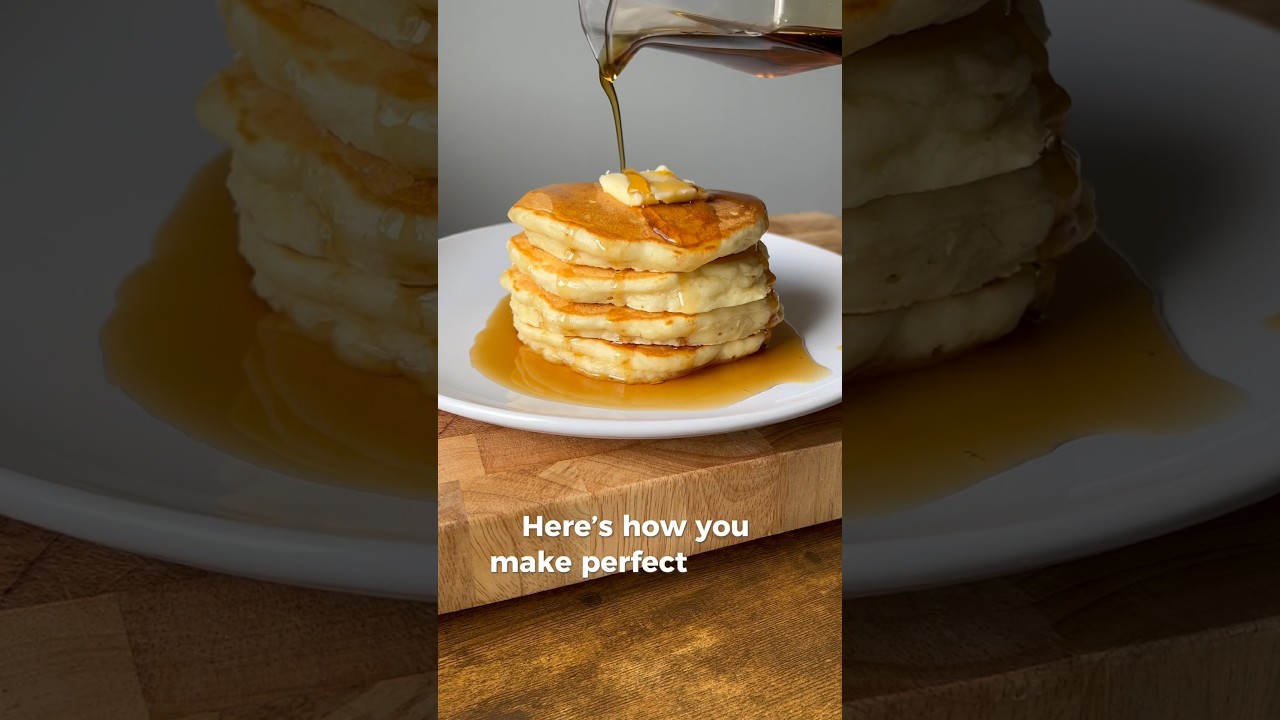
“Most people don't have a pancake recipe. They have a pancake ritual — dump, stir, pour, flip, wonder why they're flat. The problem is almost never the ingredients. It's the batter consistency, the griddle temperature, and the one step everyone skips: the rest. These pancakes use whole wheat flour and Greek yogurt not as a health compromise but because they actually taste better — nuttier, more complex, and filling enough to not crash before noon.”
Why This Recipe Works
Pancakes have a reputation for simplicity that has done enormous damage to their average quality. The recipe looks forgiving — flour, eggs, milk, fat — so people assume technique doesn't matter. It does. Every flat, dense, rubbery pancake in existence was produced by someone who ignored at least one of the three laws: don't overmix, rest the batter, and get the griddle temperature right before the first pour.
The Leavening System
This recipe uses both baking powder and baking soda, and both are doing specific jobs. Baking powder is double-acting — it releases carbon dioxide first when it meets liquid and again when it hits heat. This gives you lift in two phases. Baking soda requires an acid to activate, which is where the Greek yogurt earns its place. The yogurt's lactic acid triggers the baking soda immediately upon contact, creating a third wave of gas bubbles that punches the batter upward.
Remove either leavening agent and the system degrades. Use only baking powder and you lose the yogurt-acid reaction. Use only baking soda without sufficient acid and the batter tastes metallic. Together, they produce a pancake that rises noticeably higher than any single-leavening recipe and holds that height after the flip.
Why Whole Wheat Works Here
Whole wheat flour has a reputation for making baked goods dense and heavy. That reputation comes from recipes that replace 100% of the all-purpose flour without adjusting hydration or mixing technique. In a 1:2 ratio with all-purpose flour — which is what this recipe uses — the whole wheat contributes nuttiness, fiber, and a more complex flavor without the structural penalty. The bran particles that make whole wheat heavier than white flour are present in small enough concentration that the leavening system easily compensates.
The rest period is especially important when whole wheat is involved. The bran particles have sharp edges that can puncture gluten strands during aggressive mixing. Five minutes of undisturbed rest lets those particles hydrate and soften, and lets the leavening build its bubble network without interference from a spoon.
The Griddle Temperature Problem
Most home stovetops run hotter on the outer burner ring than in the center, and most home cooks ignore this entirely. A flat griddle spanning two burners solves this, but a single wide skillet works if you preheat it long enough — at least 3-4 minutes — to equilibrate the heat across the surface.
The water droplet test is not optional. If the water sizzles and sits, the surface is too cold and you'll get pale, dense pancakes that take four minutes per side to cook through. If the water vaporizes instantly without skittering, the surface is too hot and you'll burn the exterior before the center sets. The correct behavior: water beads up, dances for 2-3 seconds, then evaporates. That's the Leidenfrost point, and it corresponds to roughly 375°F — the exact temperature where the Maillard reaction produces golden-brown color on a pancake surface in under 90 seconds.
What Greek Yogurt Actually Does
The substitution note exists for a reason, but understanding why Greek yogurt is in this recipe in the first place will help you decide whether to swap it. Its acid content activates the baking soda. Its thickness keeps the batter from spreading too thin before it sets. Its protein contributes to the tender but structured crumb that distinguishes a real pancake from the flat disc that comes out of boxed mix.
Full-fat Greek yogurt produces richer, more tender pancakes. Non-fat Greek yogurt still handles the chemistry but produces a slightly less pillowy result. Either works — what doesn't work is thinning the yogurt out with extra milk to hit a looser batter consistency. If the batter looks too thick to you, trust it. Thick batter produces tall pancakes. Thin batter produces crepes.
The One Flip Rule
Flip the pancake once, when the bubbles across the surface have mostly popped and left open craters, and the edges have lost their glossy wet look. These two signals happen simultaneously and tell you the batter has set enough to hold together on the flip. A wide, thin-edged spatula slides cleanly underneath without tearing the surface.
After the flip, cook for 60-90 seconds and remove. The second side always cooks faster than the first because the internal temperature is already elevated. Pull it 15 seconds before you think it's done — carryover heat finishes the job on the plate. The center should be fully cooked but still slightly moist. If it's dry all the way through, you went 30 seconds too long.
Where Beginners Mess This Up
Before we start, read this. These are the 4 reasons your fluffy whole grain pancakes (the 25-minute breakfast that actually fills you up) will fail:
- 1
Overmixing the batter: Stir until just combined with a few visible lumps. Overmixing develops gluten strands that make pancakes dense and rubbery instead of tender. The lumps hydrate during the rest period and disappear in the pan — leave them alone.
- 2
Skipping the batter rest: Five to ten minutes of rest lets the baking powder and baking soda activate and lets the flour fully hydrate. Batter poured straight from the bowl produces flat, dense pancakes. Rested batter rises noticeably higher with a more even, airy crumb.
- 3
Wrong griddle temperature: Too cool and the pancakes spread thin and pale before the inside sets. Too hot and the exterior burns before the center cooks through. The correct temperature: a droplet of water should skitter and evaporate immediately on contact. Medium to medium-high, consistently maintained.
- 4
Flipping more than once: Flip exactly once, when bubbles form across the surface and the edges look set and matte rather than glossy and wet. A second flip deflates the steam structure inside and gives you a denser pancake.
The Video Reference Library
Want to see it in action? Here are the exact videos we analyzed and combined to build this foolproof recipe translation:
The source video behind this recipe. Covers batter consistency, griddle temperature calibration, and the visual cues for the perfect flip. Watch the bubble formation sequence closely — that's the detail most written recipes fail to describe.
🛠️ Core Equipment
- Flat griddle or wide non-stick skilletA flat surface lets you cook 3-4 pancakes simultaneously without the sloped sides of a regular pan forcing the batter into uneven shapes. Consistent contact with the heat source means consistent browning.
- Wide, thin-edged spatulaA thick spatula tears the pancake surface on the flip. A wide, thin spatula slides cleanly underneath the entire pancake in one motion, preserving the structure.
- Ladle or 1/4-cup measuring cupPortion control isn't about uniformity for aesthetics — it's about cook time. If one pancake is twice the diameter of another, they can't share a batch. A consistent scoop means every pancake finishes at the same time.
- Two mixing bowlsWet and dry must be combined at the last moment. Mixing them too early activates the leavening before the batter hits the griddle. Keep them separate until you're ready to cook.
Fluffy Whole Grain Pancakes (The 25-Minute Breakfast That Actually Fills You Up)
🛒 Ingredients
- ✦1 cup all-purpose flour
- ✦1/2 cup whole wheat flour
- ✦2 teaspoons baking powder
- ✦1/4 teaspoon baking soda
- ✦1/4 teaspoon sea salt
- ✦1/4 teaspoon ground cinnamon
- ✦Pinch of nutmeg, optional
- ✦1 cup unsweetened milk
- ✦1/2 cup plain Greek yogurt
- ✦2 large eggs, room temperature
- ✦3 tablespoons unsalted butter, melted
- ✦1 tablespoon honey or maple syrup
- ✦1/2 teaspoon vanilla extract
- ✦Butter or coconut oil for the griddle
👨🍳 Instructions
01Step 1
Whisk together the all-purpose flour, whole wheat flour, baking powder, baking soda, sea salt, cinnamon, and nutmeg in a large mixing bowl until evenly combined.
02Step 2
In a separate bowl, whisk together the milk, Greek yogurt, eggs, melted butter, honey, and vanilla extract until smooth and fully blended.
03Step 3
Pour the wet ingredients into the dry ingredients and fold together with a spatula until just combined. Stop when a few small lumps remain.
04Step 4
Let the batter rest at room temperature for 5-10 minutes without touching it.
05Step 5
Heat a griddle or non-stick skillet over medium to medium-high heat. Test the temperature: a droplet of water should immediately skitter and evaporate on contact.
06Step 6
Lightly coat the cooking surface with butter or coconut oil, just enough to prevent sticking.
07Step 7
Pour 1/4 cup of batter per pancake onto the griddle, spacing them at least 2 inches apart to allow for spreading.
08Step 8
Cook undisturbed until bubbles form across the entire surface and the edges look set and matte rather than glossy, approximately 1-2 minutes.
09Step 9
Flip each pancake once with a wide spatula and cook until the second side is golden brown, about 1-2 minutes more.
10Step 10
Transfer finished pancakes to a plate in a 200°F oven to keep warm while you cook remaining batches.
11Step 11
Repeat with remaining batter. Serve immediately with fresh berries, maple syrup, or a spoonful of plain Greek yogurt.
Nutrition Per Serving
Estimates based on standard preparation. Adjustments alter macros.
🔄 Substitutions
Instead of All-purpose flour (1 cup)...
Use 1/2 cup all-purpose + 1/2 cup oat flour
Slightly nuttier, denser, and more filling with a better nutritional profile. Oat flour adds beta-glucans that support blood sugar stability. The batter may need a splash more milk to reach the right consistency.
Instead of Greek yogurt...
Use Unsweetened applesauce (1/2 cup)
Dairy-free option that maintains moisture. Slightly lighter, less tangy, and the pancakes rise a bit less dramatically. The flavor is milder overall.
Instead of Unsalted butter...
Use Extra virgin coconut oil (2.5 tablespoons)
Subtle coconut aroma and slightly crisper edges. Solid at room temperature — melt it fully before adding to the wet ingredients or it will seize when it hits the cold yogurt.
Instead of Whole wheat flour...
Use Buckwheat flour (1/2 cup)
Earthier, more pronounced nutty flavor and a slightly denser crumb. Naturally gluten-free and higher in minerals. The batter will look darker than expected — that's normal.
🧊 Storage & Reheating
In the Fridge
Stack cooled pancakes with parchment between each one and store in an airtight container for up to 3 days.
In the Freezer
Freeze in a single layer on a baking sheet first, then transfer to a zip-lock bag for up to 2 months. The individual freeze prevents them from sticking together.
Reheating Rules
Toast directly from frozen in a toaster or toaster oven for 2-3 minutes. The toaster restores the exterior crispness that microwaving destroys. If you must microwave, 30-second intervals with a damp paper towel draped over the top.
❓ Frequently Asked Questions
Why are my pancakes flat even when I follow the recipe?
Two likely causes. First, your baking powder is expired — test it in hot water and replace it if it doesn't bubble aggressively. Second, you're skipping the rest period or overmixing the batter. Overmixing builds gluten that prevents the leavening from lifting the structure.
Can I make the batter the night before?
You can mix the dry and wet ingredients separately and refrigerate both overnight, but don't combine them until right before cooking. Once combined, the leavening starts activating immediately. Pre-mixed batter loses most of its lift by morning.
Why does Greek yogurt make better pancakes than plain milk?
Greek yogurt is thicker and more acidic than milk. The acid reacts with baking soda to create additional carbon dioxide bubbles, improving lift. The protein content also contributes to a more tender crumb. Buttermilk does the same job, but Greek yogurt is easier to keep on hand.
My pancakes are cooked on the outside but raw in the middle. What went wrong?
Your griddle is too hot. The exterior sets and browns before the heat can reach the center. Lower to medium heat and be patient — a properly cooked pancake takes the full 1-2 minutes per side. If they're browning in under a minute, the temperature is too high.
Can I use this batter for waffles?
Yes, with one adjustment: add an extra tablespoon of melted butter or oil to the wet ingredients. Waffles need slightly more fat to crisp against the iron plates. The batter rest is still important and perhaps even more critical for waffle lift.
Do I really need both baking powder and baking soda?
Yes. Baking powder provides the initial lift when the batter hits heat. Baking soda reacts with the yogurt's acidity to create a second wave of lift during cooking. Together they produce a taller, fluffier result than either achieves alone.
The Science of
Fluffy Whole Grain Pancakes (The 25-Minute Breakfast That Actually Fills You Up)
We turned everything on this page into a beautiful, flour-proof PDF cheat sheet. Print it out, stick it to your fridge, and never mess up your fluffy whole grain pancakes (the 25-minute breakfast that actually fills you up) again.
*We'll email you the high-res PDF instantly. No spam, just perfectly cooked meals.
AlmostChefs Editorial Team
We translate the internet's most popular cooking videos into foolproof, beginner-friendly written recipes. We analyze multiple methods, test them in our kitchen, and engineer a single "Master Recipe" that gives you the best possible result with the least possible stress.