Restaurant-Quality Pan-Seared Fish (Gordon Ramsay's Method, Simplified)
A perfectly seared white fish fillet with a creamy Greek yogurt sauce, capers, and seasonal vegetables. We broke down Gordon Ramsay's core technique — dry fish, ripping-hot pan, don't touch it — into a foolproof weeknight method that delivers restaurant results without the culinary school background.

“Most home cooks ruin fish before it even hits the pan. They skip drying it, they use a cold skillet, and then they move it every 30 seconds wondering why it's sticking. Gordon Ramsay's approach to pan-seared fish isn't complicated — it's disciplined. Dry fish. Hot oil. Leave it alone. This recipe takes that principle and builds a complete plate around it: a creamy Greek yogurt sauce, capers, mushrooms, green beans, and a butter finish that makes the whole thing taste like you spent twice as long cooking it.”
Why This Recipe Works
Pan-searing fish is not a technique — it's a test of patience. The fish doesn't care about your schedule. It releases when it's ready, not when you're anxious. Every classic Gordon Ramsay fish dish starts from the same principle: create the conditions for a perfect crust, then get out of the way. This recipe is built entirely around that discipline.
The Dry Surface Problem
Water and high heat are enemies. When a wet fillet hits a hot pan, the surface temperature of the oil drops sharply as the water evaporates. During that window — which can last 60 to 90 seconds — the fish is steaming, not searing. The proteins bond to the pan surface before any crust can form. By the time the surface is actually dry enough to brown, you're already past the point where a clean release is possible.
Drying the fish is not optional prep. It is the first cooking step. Paper towels, firm pressure, two passes minimum. If the fillets look even slightly damp after drying, go again. The seasoning should adhere to a surface that looks almost papery before anything touches heat.
The Pan Temperature Equation
A properly heated cast iron skillet or heavy stainless pan does something a non-stick pan physically cannot: it holds its temperature when cold protein hits it. Thin non-stick pans lose heat the moment food touches them and take 30 to 60 seconds to recover. During that recovery window, you're steaming again. The mass of cast iron or heavy stainless absorbs the temperature drop and recovers instantly, maintaining the sear throughout.
The visual test: shimmer. Still oil is cold oil. Rippling oil is warm. Oil that moves in fast, undulating waves when you tilt the pan is ready. If it starts smoking before the fish goes in, pull it off heat for 15 seconds. You want intense, not chaotic.
The Sauce Architecture
The yogurt sauce is built in a specific sequence for a specific reason. Onions first — they create the aromatic base and contribute natural sweetness that balances the Dijon. Mushrooms second — they need high heat to brown properly, and browning converts their glutamates into the savory backbone of the entire sauce. Broth and green beans third, to build volume and cook the vegetables through without losing their color or texture.
The yogurt comes last, off heat, because dairy proteins are fragile. The same heat that sears fish perfectly will curdle Greek yogurt in under a minute. Off heat, the residual warmth of the pan and vegetables is enough to integrate the sauce fully without breaking it. This is not a shortcut — it's the only sequence that works.
The Butter Finish
The final pat of cold unsalted butter is a French technique called monter au beurre — mounting butter. Cold butter, stirred into a warm sauce off direct heat, emulsifies into the liquid and creates a glossy, velvety texture that no amount of olive oil or cream can replicate. It also rounds out the acidity of the lemon and mustard, softening any sharp edges without dulling the brightness of the sauce.
Use cold butter. Room temperature butter melts on contact instead of emulsifying, and you get a greasy film instead of a sauce. One small pat per portion, placed directly on each fillet just before serving. That's all it takes.
Why This Version Works on a Weeknight
The original Ramsay technique uses heavy cream, wine, and herbs that require sourcing. This version replaces cream with Greek yogurt (lower saturated fat, added protein, same richness) and wine with vegetable broth (reduced sodium, no alcohol cooking-off time). The swap doesn't compromise the structure — it makes the dish faster without making it simpler. The result is a plate that looks and tastes expensive but requires exactly one skillet and fifty minutes. That's the entire point.
Where Beginners Mess This Up
Before we start, read this. These are the 4 reasons your restaurant-quality pan-seared fish (gordon ramsay's method, simplified) will fail:
- 1
Not drying the fish before searing: Surface moisture is the enemy of a crispy sear. If there's water on the fillet when it hits the oil, the pan temperature drops immediately and the fish steams instead of sears. Pat every surface completely dry with paper towels and let the seasoning sit for 2-3 minutes before the fish goes anywhere near the heat.
- 2
Adding fish to a cold or warm pan: The oil needs to be at full shimmering heat before the fish touches it. A warm pan produces a pale, soft exterior that sticks and tears when you try to flip it. A properly hot pan creates an immediate Maillard crust that releases cleanly on its own schedule — which is 4 to 5 minutes in, not when you get impatient.
- 3
Moving the fish while it sears: The fillet will tell you when it's ready to flip. Press it gently — if it releases cleanly from the pan, it's ready. If it resists, it needs another minute. Forcing the flip tears the crust you just built. Set it down, step back, and trust the heat.
- 4
Adding the yogurt sauce over direct heat: Greek yogurt breaks and curdles when it hits a screaming-hot pan. Always remove the skillet from heat before stirring in the yogurt mixture. Residual heat is more than enough to warm and integrate the sauce without destroying its texture.
The Video Reference Library
Want to see it in action? Here are the exact videos we analyzed and combined to build this foolproof recipe translation:
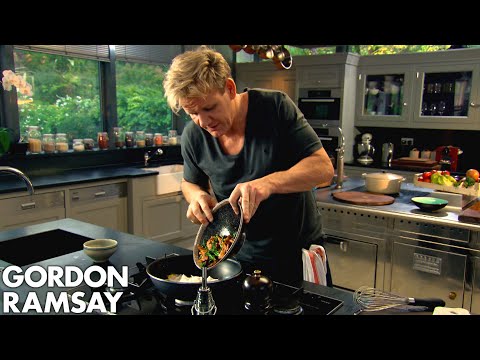
🛠️ Core Equipment
- Large stainless steel or cast iron skilletYou need a pan that gets extremely hot and holds that heat when cold fish hits it. Non-stick pans can't reach searing temperatures safely. A [cast iron skillet](/kitchen-gear/review/cast-iron-skillet) is ideal — it distributes heat evenly and retains it through the entire sear.
- Fish spatulaThin, flexible, and angled specifically to slide under delicate fillets without tearing them. A regular spatula is too thick and rigid — it destroys the crust you worked to build.
- Paper towelsNon-negotiable for drying the fish. This is the single most important prep step in the entire recipe and costs nothing.
- Small whisk or forkFor emulsifying the Greek yogurt, lemon juice, and Dijon before they hit the pan. Pre-mixing prevents streaks of undissolved mustard in the finished sauce.
Restaurant-Quality Pan-Seared Fish (Gordon Ramsay's Method, Simplified)
🛒 Ingredients
- ✦4 white fish fillets (6 oz each, such as halibut or cod)
- ✦3 tablespoons extra virgin olive oil
- ✦2 medium yellow onions, finely diced
- ✦4 cloves garlic, minced
- ✦8 oz mixed mushrooms, sliced
- ✦2 cups fresh green beans, trimmed and halved
- ✦1 cup low-sodium vegetable broth
- ✦1/2 cup Greek yogurt
- ✦2 tablespoons fresh lemon juice
- ✦1 tablespoon Dijon mustard
- ✦2 tablespoons fresh parsley, chopped
- ✦1 tablespoon fresh dill, chopped
- ✦Sea salt to taste
- ✦Freshly cracked black pepper to taste
- ✦1/2 teaspoon smoked paprika
- ✦2 tablespoons unsalted butter
- ✦1 tablespoon capers, drained
👨🍳 Instructions
01Step 1
Pat the fish fillets completely dry with paper towels on all sides. Season generously with sea salt, pepper, and smoked paprika and let the seasoning adhere for 2-3 minutes.
02Step 2
Heat 2 tablespoons of olive oil in a large stainless steel or cast iron skillet over medium-high heat until the surface shimmers visibly, about 2 minutes.
03Step 3
Lay the fish fillets skin-side down into the hot skillet. Do not move them. Sear undisturbed for 4-5 minutes until the skin is golden and crispy and the flesh is opaque halfway up the sides.
04Step 4
Flip the fillets carefully and cook the second side for 3-4 minutes until the flesh flakes easily when pressed. Transfer to a warm plate and tent loosely with foil.
05Step 5
Add the remaining tablespoon of olive oil to the same skillet and reduce to medium heat. Add the diced onions and sauté until soft and translucent, about 5 minutes.
06Step 6
Add the minced garlic and cook until fragrant, about 1 minute. Add the sliced mushrooms and cook for 4-5 minutes until they release their moisture and begin to brown at the edges.
07Step 7
Add the green beans and vegetable broth. Bring to a gentle simmer and cook for 6-7 minutes until the beans are tender but still have bite.
08Step 8
Whisk the Greek yogurt, fresh lemon juice, and Dijon mustard together in a small bowl until completely smooth.
09Step 9
Remove the skillet from heat entirely. Stir in the yogurt mixture, capers, parsley, and dill. Season with salt and pepper to taste.
10Step 10
Nestle the fish fillets back into the vegetable sauce and let them warm through for 1-2 minutes.
11Step 11
Finish each fillet with a small pat of cold unsalted butter and a final scatter of fresh parsley. Serve directly from the skillet.
Nutrition Per Serving
Estimates based on standard preparation. Adjustments alter macros.
🔄 Substitutions
Instead of White fish fillets (halibut, cod)...
Use Salmon fillets
Salmon is more forgiving — higher fat content means more room for error on timing. Sear skin-side down for 5-6 minutes. The yogurt sauce pairs beautifully with its richness.
Instead of Greek yogurt...
Use Heavy cream
Richer, more classic French preparation. Add the cream on low heat (not off heat) and reduce by one-third before finishing. Higher calorie but silkier texture.
Instead of Vegetable broth...
Use Dry white wine
Adds acidity and depth that the broth can't match. Use the same quantity and let it reduce by half before adding the green beans. Elevates the dish significantly.
Instead of Green beans...
Use Asparagus or broccolini
Asparagus cooks faster — reduce the simmer time to 4 minutes. Broccolini is more forgiving on timing. Both hold up well in the sauce.
🧊 Storage & Reheating
In the Fridge
Store fish and sauce separately if possible, in airtight containers, for up to 2 days. The fish loses its crust once stored — that's the tradeoff.
In the Freezer
Not recommended. Fish texture degrades significantly after freezing and thawing, and the yogurt sauce separates.
Reheating Rules
Reheat the sauce gently in a skillet over low heat with a splash of broth. Warm the fish separately in a 275°F oven for 8-10 minutes to avoid rubbery texture. Combine just before serving.
❓ Frequently Asked Questions
Why does my fish always stick to the pan?
Two reasons: the pan wasn't hot enough, or the fish wasn't dry enough. Both cause the same problem — the fish steams instead of sears, and the proteins bond to the pan surface before a crust forms. Fix: shimmer-hot oil, bone-dry fillets, and don't touch it for at least 4 minutes.
Can I use frozen fish fillets?
Yes, but thaw them completely in the fridge overnight and then dry them obsessively with paper towels. Frozen fish retains more water than fresh, which works against the sear. Press down firmly with paper towels and let them air-dry uncovered for 10 minutes before seasoning.
My yogurt sauce turned grainy. What happened?
The pan was still on heat when you added it. Greek yogurt breaks above 160°F — the whey separates from the proteins and you get a grainy, curdled mess. Pull the pan fully off the burner, wait 30 seconds, then stir in the yogurt mixture. Residual heat is enough.
Can I make this dish dairy-free?
Replace the Greek yogurt with full-fat coconut yogurt and use olive oil instead of the butter finish. The sauce will be slightly thinner and carry a faint coconut undertone, but the overall structure holds. Cashew cream also works and is more neutral-tasting.
What's the best fish to use if halibut isn't available?
Cod is the closest substitute — similar texture, mild flavor, holds up to the sauce. Striped bass and sea bass are excellent if budget allows. Tilapia works in a pinch but has less structural integrity and can fall apart during the flip.
Do I need to debone the fillets before cooking?
Run your fingertips along the center line of each fillet before seasoning. You'll feel any pin bones. Use fish tweezers or needle-nose pliers to pull them straight out along the direction they point. Takes 30 seconds and prevents an unpleasant dining experience.

The Science of
Restaurant-Quality Pan-Seared Fish (Gordon Ramsay's Method, Simplified)
We turned everything on this page into a beautiful, flour-proof PDF cheat sheet. Print it out, stick it to your fridge, and never mess up your restaurant-quality pan-seared fish (gordon ramsay's method, simplified) again.
*We'll email you the high-res PDF instantly. No spam, just perfectly cooked meals.
AlmostChefs Editorial Team
We translate the internet's most popular cooking videos into foolproof, beginner-friendly written recipes. We analyze multiple methods, test them in our kitchen, and engineer a single "Master Recipe" that gives you the best possible result with the least possible stress.