Silky Palak Paneer (The Spinach Curry You've Been Getting Wrong)
A North Indian classic built on blanched spinach purée, golden-fried paneer, and a spice-bloomed tomato base. We broke down the technique failures that turn this dish into gray mush and rebuilt it from the ground up — creamy, vibrant, and vegetarian.
“Palak paneer has two failure modes and most home cooks hit both. The first is gray-green spinach from skipping the blanch-and-shock step. The second is rubbery paneer from either overcooking it in the sauce or not frying it first. Fix those two things and every other element falls into place. This recipe is built around exactly that.”
Why This Recipe Works
Palak paneer is North India's most exported vegetarian dish, and it is also, in most Western home kitchens, an exercise in disappointment. The spinach goes gray. The paneer goes rubbery. The sauce is either watery or tastes like it came from a jar. None of this is inevitable. Every single failure mode has a specific technical cause and a specific fix.
The Color Problem
Spinach contains chlorophyll, the same pigment that makes grass green. Chlorophyll is chemically unstable at high temperatures — it degrades from vivid green to olive to gray in a matter of minutes. Blanching in salted boiling water for two to three minutes stops the enzymatic browning process. But if you don't halt cooking immediately with an ice bath, the residual heat in the leaves keeps working after you pull them from the water.
Most recipes say "blanch and drain." The ice bath step gets treated as optional. It is not optional. It is the entire reason restaurant palak paneer is that deep, almost electric green while home versions look like canned peas.
The blender matters too. Cheap blenders leave fibrous strands no matter how long you run them. If you've ever wondered why your spinach purée has texture where the restaurant's doesn't, it's not the spinach — it's the machine. A high-powered blender run for a full 60-90 seconds on high produces a purée that's genuinely silky. Anything less leaves you finishing the work in the pan, which means more heat, which means more color loss.
The Paneer Problem
Paneer is a fresh acid-set cheese with no aging and no melting point. This gives it unique structural properties — it holds its shape under heat — but also means it's porous and absorbs liquid aggressively. Drop raw paneer cubes into simmering sauce and they turn spongy within minutes, swelling with the spinach liquid and losing the clean, milky density that makes good palak paneer satisfying.
Two minutes per side in hot ghee solves this. The Maillard reaction creates a thin golden crust that acts as a moisture barrier, keeping the interior firm and slightly springy while the exterior develops nutty, caramelized depth. This is not a cosmetic step. It is structural. The crust is why the paneer survives the final fold into the sauce without dissolving.
The Spice Architecture
Indian cooking has a sequencing logic that most non-Indian recipes describe but don't explain. Whole spices — cumin seeds — go into hot fat first because their aromatic compounds are fat-soluble and heat-activated simultaneously. Ground spices — turmeric, chili, garam masala — go in after the aromatics but before the wet ingredients, bloomed in the residual fat for 45 seconds. Liquid comes last.
If you add ground spices to wet tomatoes, you're dissolving them in water instead of infusing them in fat. The result is spice that sits on top of the dish's flavor rather than running through it. The 45-second bloom step seems small. The flavor difference is not.
The Tomato Reduction
The tomatoes need 6-8 minutes of active reduction before the spinach purée goes in. This is not impatience time — it's chemistry time. Fresh tomatoes are mostly water with a pH around 4.5. Extended heat drives off the water, concentrates the natural sugars, and tempers the acidity into something rounded and savory. You'll know it's done when the mixture darkens noticeably and the ghee starts pooling around the edges of the pan. That oil separation tells you the water content has dropped enough for the fat to separate out — the same principle as the oil ring on a properly cooked tomato sauce.
Add the spinach purée to underdone tomatoes and the whole sauce tastes sharp and thin, like a smoothie dressed up with spices.
The Cream Finish
This is where most attempts fail at the final moment. Cream and yogurt contain proteins that denature and curdle when hit with high heat and acid together. The pan must be completely off the heat. The cream should be at room temperature. And it needs to go in as a slow stream while you stir continuously — the same motion you'd use to emulsify a vinaigrette.
Done correctly, the cream disappears into the sauce and transforms it from a thick vegetable curry into something silky and restaurant-caliber. Done incorrectly, you get white beads floating in green liquid. There's no recovery from a broken cream finish — which is why this step gets its own paragraph.
Where Beginners Mess This Up
Before we start, read this. These are the 4 reasons your silky palak paneer (the spinach curry you've been getting wrong) will fail:
- 1
Skipping the ice bath after blanching: Blanching the spinach stops the enzymatic activity that causes browning, but if you don't halt the cooking immediately with cold water, the residual heat keeps working and you get khaki-colored purée instead of vivid green. The color isn't just aesthetic — it signals that the chlorophyll is intact and the flavor hasn't gone flat.
- 2
Adding paneer directly to the sauce without frying: Raw paneer cubes dropped into simmering sauce absorb moisture and become spongy instead of creamy. Two minutes per side in hot ghee creates a golden crust that seals the exterior, so the paneer holds its structure and adds textural contrast against the silky sauce.
- 3
Blooming spices in the wrong medium: Ground spices — turmeric, chili powder, garam masala — need fat and heat to release their fat-soluble aromatic compounds. Adding them directly to a wet tomato base dilutes them before they can bloom. The correct sequence: dry heat, then fat, then spices, then liquid.
- 4
Adding cream before removing from heat: Cream and yogurt curdle when exposed to high heat and acid simultaneously. The sauce must come off the flame before the cream goes in — stirred in slowly in a thin stream, not dumped in cold from the fridge. This is the step that separates a smooth, luxurious finish from a broken, grainy one.
The Video Reference Library
Want to see it in action? Here are the exact videos we analyzed and combined to build this foolproof recipe translation:
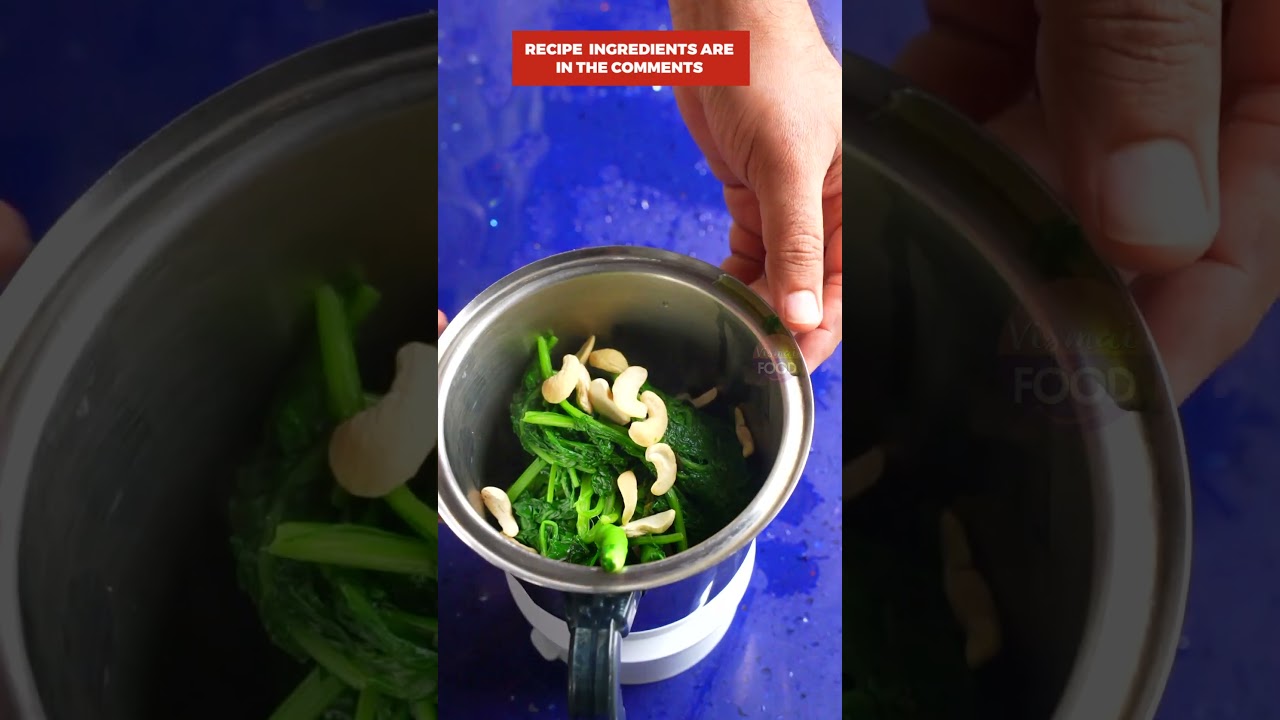
The foundational reference for this recipe — covers blanching technique, spice blooming order, and the cream-finishing step. Clear close-ups of the color you're targeting at each stage.
🛠️ Core Equipment
- High-powered blenderPalak paneer lives or dies on its purée. A low-powered blender leaves fibrous spinach strands that no amount of stirring will smooth out. You need sustained high-speed blending for 60-90 seconds to achieve the silky, restaurant-quality consistency.
- Heavy-bottomed sauté pan or Dutch ovenEven heat distribution matters during the long tomato reduction — thin pans create hot spots that scorch the base while the center stays undercooked. A [Dutch oven](/kitchen-gear/review/dutch-oven) is ideal for the dual task of frying paneer and building the sauce.
- Fine-mesh sieveFor draining the blanched spinach quickly. The faster you drain and cool the spinach, the more of that vivid green color you preserve. Every extra second in hot water is color lost.
- Heavy skilletA [cast iron skillet](/kitchen-gear/review/cast-iron-skillet) is the best tool for frying paneer. It holds heat evenly at high temperature and gives the cubes a proper golden crust without sticking, provided the pan is properly preheated.
Silky Palak Paneer (The Spinach Curry You've Been Getting Wrong)
🛒 Ingredients
- ✦500g fresh spinach leaves, washed and roughly chopped
- ✦250g paneer cheese, cut into 2cm cubes
- ✦2 medium yellow onions, finely diced
- ✦5 cloves garlic, minced
- ✦1 tablespoon fresh ginger, minced
- ✦3 medium tomatoes, roughly chopped
- ✦3 tablespoons ghee or vegetable oil, divided
- ✦1/2 cup heavy cream or plain yogurt
- ✦1/2 cup vegetable stock or water
- ✦1 teaspoon cumin seeds
- ✦1 teaspoon garam masala
- ✦1/2 teaspoon ground turmeric
- ✦3/4 teaspoon red chili powder
- ✦2 tablespoons unsalted butter
- ✦1 to 2 green chilies, finely minced (optional)
- ✦Salt and freshly ground black pepper to taste
👨🍳 Instructions
01Step 1
Bring a large pot of salted water to a rolling boil. Add the chopped spinach and blanch for 2-3 minutes until bright green and just tender.
02Step 2
Drain the spinach through a fine-mesh sieve and immediately submerge in ice water for 60 seconds. Drain again, then transfer to a high-powered blender with 1/4 cup cold water or vegetable stock.
03Step 3
Blend on high speed for 60-90 seconds until completely smooth. The purée should be vivid green with no visible fiber. Set aside.
04Step 4
Heat 1 tablespoon of ghee in a skillet over medium-high heat. Fry the paneer cubes in a single layer for 1-2 minutes per side until light golden. Work in batches to avoid crowding. Transfer to a paper towel-lined plate.
05Step 5
In a large heavy-bottomed pan or Dutch oven, heat the remaining 2 tablespoons of ghee over medium heat. Add the cumin seeds and let them sizzle for 30-45 seconds until fragrant and slightly darkened.
06Step 6
Add the diced onions and sauté for 5-7 minutes, stirring frequently, until translucent with golden-brown edges.
07Step 7
Add the minced garlic and ginger. Cook for 1 minute, stirring constantly, until the raw smell disappears.
08Step 8
Reduce heat slightly. Add the turmeric, chili powder, and garam masala. Stir continuously for 45 seconds to bloom the spices in the fat.
09Step 9
Add the chopped tomatoes and increase heat to medium-high. Simmer for 6-8 minutes, stirring occasionally, until the tomatoes break down completely and the mixture darkens and thickens.
10Step 10
Add the spinach purée to the tomato-spice base. Stir to combine and cook for 2-3 minutes.
11Step 11
Pour in the vegetable stock and bring to a gentle simmer. Reduce heat to medium-low and cook uncovered for 8-10 minutes to let the flavors meld.
12Step 12
Gently fold in the fried paneer cubes and green chilies if using. Simmer for 3-4 minutes until the paneer is warmed through.
13Step 13
Remove the pan from heat entirely. Stir in the cream or yogurt in a slow, steady stream while stirring. The sauce should become silky and luxurious immediately.
14Step 14
Stir in the butter until fully melted and incorporated. Taste and adjust salt and black pepper. Serve immediately in warm bowls, optionally garnished with fresh cilantro and a drizzle of cream.
Nutrition Per Serving
Estimates based on standard preparation. Adjustments alter macros.
🔄 Substitutions
Instead of Paneer cheese...
Use Extra-firm tofu or cashew paneer
Press tofu for at least 30 minutes before frying — excess moisture causes dangerous spattering in hot ghee. Cashew paneer holds up well but won't brown the same way.
Instead of Heavy cream...
Use Full-fat Greek yogurt or cashew cream
Yogurt adds a pleasant tang but must be at room temperature before adding or it will curdle. Cashew cream (soaked cashews blended with water) is the most stable dairy-free option.
Instead of Ghee...
Use Extra-virgin olive oil or coconut oil
Olive oil changes the flavor profile subtly — more herbaceous, less nutty. Coconut oil adds mild sweetness. Neither browns the paneer quite as beautifully as ghee.
Instead of Fresh spinach...
Use Fresh Swiss chard or kale
Kale requires 30 extra seconds of blanching and produces a darker, more mineral-forward purée. Remove the thick stems entirely or the blender won't produce a smooth result.
🧊 Storage & Reheating
In the Fridge
Store in an airtight container for up to 3 days. The flavors deepen overnight — this is one of those dishes that's genuinely better the next day.
In the Freezer
Freeze without the paneer for up to 2 months — paneer texture degrades after freezing. Make a fresh batch of fried paneer and fold it into reheated sauce.
Reheating Rules
Add 2-3 tablespoons of water or vegetable stock, cover, and reheat on very low heat. Do not microwave — it separates the cream and turns the spinach gray.
❓ Frequently Asked Questions
Why did my spinach turn gray?
You either skipped the ice bath or waited too long before blending. The chlorophyll in spinach is heat-sensitive and continues degrading as long as the leaves stay warm. Blanch, shock in ice water immediately, drain fast, and blend cold.
Can I skip frying the paneer?
Technically yes, but the texture will suffer. Unfried paneer absorbs liquid from the sauce and becomes soft and spongy instead of maintaining its structure. The two-minute fry is what keeps each cube distinct in the finished dish.
My sauce broke when I added the cream — what happened?
Either the pan was still on high heat, the cream was cold straight from the fridge, or you added it too fast. The pan must be off heat, the cream should be at room temperature, and it needs to go in as a slow stream while you stir continuously.
Can I make this vegan?
Yes. Replace paneer with pressed extra-firm tofu, ghee with coconut oil, cream with full-fat coconut milk, and butter with a plant-based alternative. The result is different but genuinely good — coconut milk pairs well with the spice profile.
How spicy is this?
At 3/4 teaspoon chili powder it's mild-to-medium — a pleasant warmth, not heat. For more heat, add an extra chili or increase the chili powder to 1 teaspoon. For a milder dish, substitute Kashmiri chili powder, which gives deep red color with almost no heat.
Why do I cook the tomatoes so long?
Raw tomatoes have a sharp, acidic flavor that competes with the spinach. The 6-8 minute simmer breaks down the cell structure, concentrates the sugars, and cooks off the excess liquid. When the mixture darkens and the ghee separates at the edges, the tomatoes are done. Rushing this step produces a thin, sour sauce.
The Science of
Silky Palak Paneer (The Spinach Curry You've Been Getting Wrong)
We turned everything on this page into a beautiful, flour-proof PDF cheat sheet. Print it out, stick it to your fridge, and never mess up your silky palak paneer (the spinach curry you've been getting wrong) again.
*We'll email you the high-res PDF instantly. No spam, just perfectly cooked meals.
AlmostChefs Editorial Team
We translate the internet's most popular cooking videos into foolproof, beginner-friendly written recipes. We analyze multiple methods, test them in our kitchen, and engineer a single "Master Recipe" that gives you the best possible result with the least possible stress.