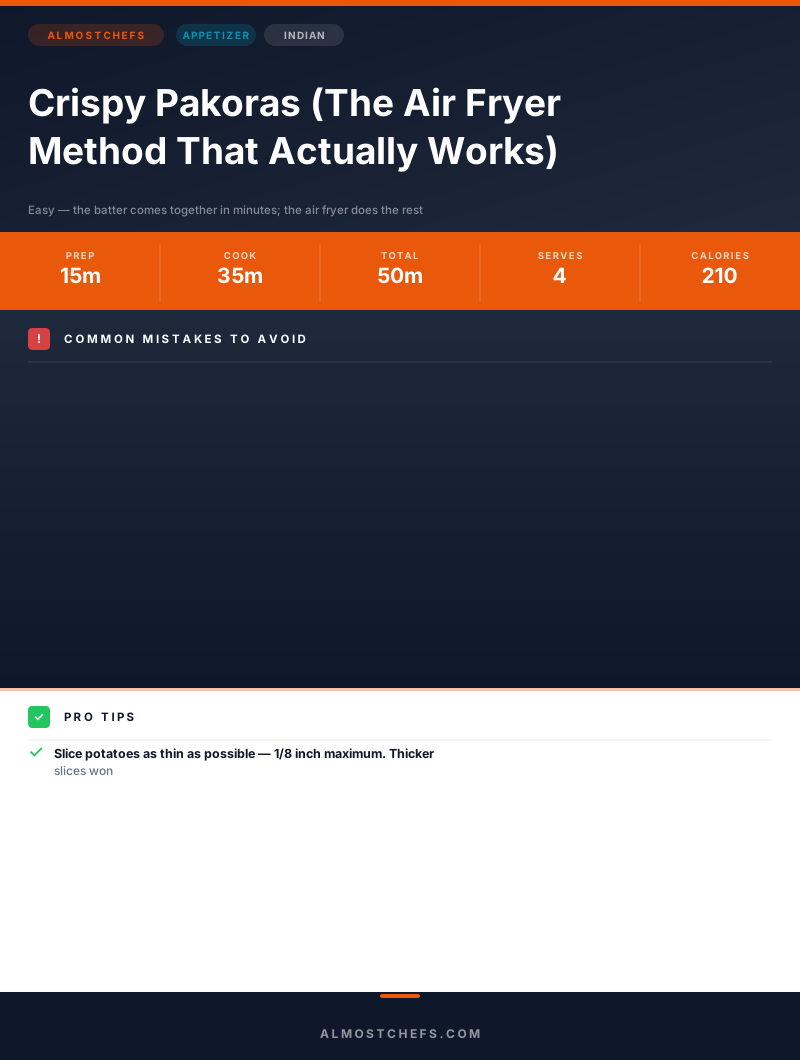
Crispy Pakoras (The Air Fryer Method That Actually Works)
Spiced chickpea flour fritters loaded with onion, potato, spinach, and bell pepper — air-fried to a deep golden crunch without a drop of hot oil. We broke down every major technique to build one method that delivers authentic pakora texture with far less fat and zero grease-spatter cleanup.

“Every street stall in India has a pakora vendor who makes it look effortless. At home, most people end up with soggy fritters, a stovetop covered in oil, and vegetables that fall out of the batter before they even hit the basket. The difference between a crispy, cohesive pakora and a sad, greasy pile comes down to three things: batter thickness, vegetable prep, and not crowding the basket. We tested every shortcut so you don't have to.”
Why This Recipe Works
Pakoras are the most democratic food in India. Every region has a version. Every street corner has a vendor. Every grandmother has the recipe memorized without ever writing it down. The formula is deceptively simple: spiced chickpea batter, whatever vegetables are available, and hot oil. The execution is where most home cooks quietly fail.
The Batter Is the Foundation
Chickpea flour — besan — behaves nothing like wheat flour. It's denser, earthier, and has no gluten network to hold it together. What gives pakora batter its structural integrity is starch gelatinization: as the batter heats, the chickpea starches absorb moisture and swell, locking the coating to the vegetable. But this only works if the batter is thick enough to create a substantial layer in the first place.
Think of it this way: thin batter cooks off in seconds, leaving a papery shell that shatters on contact. Thick batter builds a layered crust that stays cohesive from the outside in. The test is simple — scoop some batter on a spoon and turn the spoon sideways. It should hold for two full seconds before beginning to slide. If it runs immediately, add more chickpea flour.
The whole wheat flour is a structural addition, not a filler. Its gluten network bridges the gap between chickpea starch granules, giving the batter elasticity that pure besan lacks. The result: a crust that flexes slightly instead of shattering, which is what keeps it attached to the vegetables through the cooking process.
What the Air Fryer Actually Does
Forget the marketing language about "guilt-free frying." The air fryer works by blasting superheated air at high velocity across every exposed surface simultaneously. The effect is the same as deep-frying: rapid surface moisture evaporation followed by Maillard browning. The difference is that deep oil conducts heat far more efficiently than air, which is why oil-fried pakoras have a denser, crunchier crust. Air-fried pakoras have a slightly lighter texture — less dense, equally crispy.
The trade-off is worthwhile on two fronts. First, the calorie reduction is significant: traditional deep-frying absorbs roughly 8-25% of the oil by weight into the fritter. Brushed oil on an air-fried pakora accounts for a fraction of that. Second, cleanup. There is no contest.
A good air fryer with adequate basket surface area is the only equipment variable that actually matters here. The circulating fan needs clear lanes to work. Overcrowding doesn't just slow cooking — it fundamentally changes the cooking mechanism from dry-heat frying to wet-heat steaming.
The Spice Architecture
Cumin seeds, not ground cumin. The seeds pop and bloom in the batter during cooking, releasing their volatile oils in concentrated bursts that you encounter unevenly — a bite with a whole toasted seed tastes different from the one next to it, and that variation is the point. Uniform spicing is for sauces. Whole spices in fritters are architectural.
Asafoetida deserves special attention because most Western recipes omit it as "optional." It isn't. Raw asafoetida smells aggressively like sulfur and overripe garlic. Cooked asafoetida tastes like the savory background note that makes you ask "what is that?" after the first bite. Its primary compound, ferulic acid, converts during high-heat cooking into compounds that mimic and amplify the flavors of garlic and onion. It is, functionally, a flavor multiplier.
Vegetable Selection and Prep
The onion and potato combination is not accidental. Onion provides moisture and sweetness; potato provides starchy body that helps the batter cling. Together, they give each pakora structural weight so it doesn't fall apart when handled. The spinach adds visual color and iron. The bell pepper adds snap and mild sweetness that cuts through the chickpea earthiness.
Every vegetable should be as dry as possible before it enters the batter. Spinach is the main culprit — even after rough chopping, leaf spinach retains significant surface moisture that immediately dilutes batter. Spread it on a kitchen towel for five minutes before using. Potatoes should be sliced thin and patted dry. The drier the vegetables, the thicker the batter stays, and the crispier the final fritter.
Serve them immediately. Pakoras are a sprint, not a marathon — the window between perfect and soft is about ten minutes. Time accordingly.
Where Beginners Mess This Up
Before we start, read this. These are the 4 reasons your crispy pakoras (the air fryer method that actually works) will fail:
- 1
Batter too thin: A runny batter slides right off the vegetables and pools at the bottom of the air fryer basket. The batter should cling heavily to a spoon and fall in slow, thick ribbons. If it drips like water, add chickpea flour a tablespoon at a time until it holds. This is the most common pakora failure and the easiest to prevent.
- 2
Crowding the basket: Pakoras need hot circulating air on all sides to go crispy. If pieces are touching, they steam each other instead of frying. The moisture has nowhere to escape and you get a soft, doughy exterior. Work in batches — a single layer with visible space between each piece is non-negotiable.
- 3
Not shaking the basket halfway through: The bottom of each pakora sits against hot metal the entire cook time. Without a mid-cook shake, the bottom browns aggressively while the top stays pale. Shake at the 7-minute mark, every time, without exception.
- 4
Skipping the baking soda: Baking soda reacts with the moisture in the vegetables to create tiny gas bubbles in the batter. This is what gives pakoras their characteristic interior lightness against a crispy shell. Leaving it out produces a dense, doughy fritter that tastes like fried paste.
The Video Reference Library
Want to see it in action? Here are the exact videos we analyzed and combined to build this foolproof recipe translation:

The technique walkthrough that informed this recipe. Clear close-ups of batter consistency and the exact golden-brown color you're aiming for before pulling the basket.
2. Indian Street-Style Fritters at Home
Covers the full range of pakora fillings — onion, potato, paneer, and cauliflower — with notes on adjusting spice levels for different heat tolerances.
3. Air Fryer Indian Snacks GuideBroad overview of adapting traditional Indian deep-fried snacks for the air fryer. Good reference for understanding how batter hydration changes between appliances.
🛠️ Core Equipment
- Air fryer ↗The circulating hot air mimics the effect of deep-frying by rapidly evaporating surface moisture from all sides simultaneously. A [good air fryer](/kitchen-gear/review/air-fryer) with a wide basket lets you cook more in fewer batches. Smaller models require three batches for this recipe.
- Large mixing bowl ↗Pakora batter is thick and needs vigorous folding to coat every vegetable piece evenly. A bowl that's too small causes batter to spill when you work in the vegetables and leads to uneven coating.
- Pastry brush ↗A light coat of oil on the basket and on the pakoras themselves is what triggers the browning reaction. A [silicone pastry brush](/kitchen-gear/review/pastry-brush) lets you apply just enough oil without soaking the fritters — critical for keeping the calorie count in check.
- Cookie scoop or two spoons ↗Consistent portion size means consistent cook time. Irregularly-sized pakoras mean some are done at 12 minutes and some need 16 — and you'll lose track of which is which. A cookie scoop eliminates the guesswork.
Crispy Pakoras (The Air Fryer Method That Actually Works)
🛒 Ingredients
- ✦1 cup chickpea flour (besan)
- ✦1/2 cup whole wheat flour
- ✦1 medium red onion, thinly sliced
- ✦2 medium russet potatoes, cut into 1/8-inch thick slices
- ✦1 cup fresh spinach, roughly chopped
- ✦1 medium red bell pepper, cut into 1-inch squares
- ✦1/4 cup fresh cilantro, finely chopped
- ✦2 tablespoons ginger-garlic paste
- ✦1 green chili pepper, minced
- ✦1 teaspoon cumin seeds
- ✦1 teaspoon turmeric powder
- ✦1 teaspoon red chili powder
- ✦1/2 teaspoon asafoetida (hing)
- ✦1 teaspoon sea salt, or to taste
- ✦1/2 teaspoon black pepper
- ✦3/4 cup water, approximately
- ✦2 tablespoons avocado oil or coconut oil for brushing
- ✦1/4 teaspoon baking soda
👨🍳 Instructions
01Step 1
Combine chickpea flour, whole wheat flour, cumin seeds, turmeric powder, red chili powder, asafoetida, sea salt, and black pepper in a large mixing bowl and whisk until evenly blended.
02Step 2
Stir in the ginger-garlic paste and minced green chili pepper, mixing until the spices are evenly distributed throughout.
03Step 3
Gradually add water while whisking continuously until you have a thick batter that clings heavily to a spoon and falls in slow ribbons — about 3/4 cup total.
04Step 4
Add the baking soda, then fold in the sliced onions, potato slices, spinach, bell pepper, and cilantro using a spatula until every piece is generously coated. Fold for about 2 minutes — thoroughness matters here.
05Step 5
Preheat your air fryer to 380°F for 5 minutes.
06Step 6
Brush the air fryer basket lightly with oil to prevent sticking.
07Step 7
Using a cookie scoop or two spoons, portion the batter-coated vegetables into golf ball-sized clumps. Arrange in a single layer with space between each piece. Do not crowd.
08Step 8
Air fry at 380°F for 12-14 minutes, shaking the basket at the 7-minute mark, until the exterior is deep golden brown and crispy all over.
09Step 9
Transfer cooked pakoras to a paper towel-lined plate and season immediately with a pinch of additional sea salt if desired.
10Step 10
Let the air fryer return to temperature for 2 minutes before loading the next batch. A cold basket means the first minute of your next batch is wasted heat recovery.
11Step 11
Repeat with remaining batter until all portions are cooked.
12Step 12
Serve immediately with tamarind chutney or mint yogurt sauce. Pakoras do not hold — they soften within 10 minutes of coming out of the basket.
Nutrition Per Serving
Estimates based on standard preparation. Adjustments alter macros.
🔄 Substitutions
Instead of Chickpea flour (besan)...
Use 3/4 cup chickpea flour + 1/4 cup ground flax seeds
Adds omega-3 fatty acids and extra fiber. Nuttier flavor that works well with the cumin and turmeric. Texture remains crispy.
Instead of Russet potatoes...
Use Cauliflower florets + 1 medium zucchini, sliced
Lower glycemic index, higher fiber. Flavor is more delicate. Cauliflower pakoras are common in their own right — this isn't a compromise, it's a variation.
Instead of Whole wheat flour...
Use Oat flour or sprouted spelt flour
Oat flour adds beta-glucans for gut health. Sprouted spelt improves digestibility. Both produce comparable texture with a slightly earthier flavor.
Instead of Avocado oil...
Use Grass-fed ghee, brushed on
Richer, more buttery flavor. Adds fat-soluble vitamins. Changes the character from neutral to distinctly dairy-forward — excellent if that's the direction you want.
🧊 Storage & Reheating
In the Fridge
Store in an airtight container for up to 2 days. They will soften significantly but can be re-crisped.
In the Freezer
Freeze cooked pakoras in a single layer on a baking sheet, then transfer to a freezer bag for up to 1 month.
Reheating Rules
Re-crisp in the air fryer at 375°F for 4-5 minutes straight from the fridge, or 7-8 minutes from frozen. Do not microwave — it turns them into soft, chewy discs.
❓ Frequently Asked Questions
Why are my pakoras soggy instead of crispy?
Three likely causes: batter was too thin, basket was overcrowded, or you didn't preheat the air fryer. All three result in steaming instead of frying. Fix the batter consistency first — it should cling heavily and not drip. Then work in strict single-layer batches with space between each piece.
Can I deep-fry these instead of air frying?
Yes. Heat neutral oil to 350°F in a heavy pot and fry in batches for 3-4 minutes, turning once, until deep golden. The result is slightly crispier and richer than the air fryer version. Drain on paper towels and season immediately.
What vegetables work best in pakoras?
Onion and potato are the classics for a reason — onion softens and sweetens, potato provides starchy body. Beyond those: cauliflower florets, sliced eggplant, whole spinach leaves, and paneer are all excellent. Avoid high-moisture vegetables like zucchini unless you squeeze out the water first.
My batter keeps falling off the vegetables. What went wrong?
The batter is too thin, or the vegetables were wet when you folded them in. Thicken the batter with an extra tablespoon of chickpea flour and pat all vegetables completely dry before folding. The batter should hold its shape when you scoop it — not pour.
Is the asafoetida (hing) really necessary?
It's not mandatory, but it's doing real work. Asafoetida has a powerful onion-garlic character that reads as background savory depth in the finished fritter. Without it, pakoras taste good. With it, they taste authentically Indian. If you can't find it, increase the ginger-garlic paste by half a teaspoon.
Can I make the batter ahead of time?
Mix the dry ingredients and spices up to 24 hours ahead and store covered. Add water, vegetables, and baking soda only immediately before cooking. Pre-mixed wet batter draws moisture from the vegetables and thins over time, and pre-added baking soda loses its leavening power.
The Science of
Crispy Pakoras (The Air Fryer Method That Actually Works)
We turned everything on this page into a beautiful, flour-proof PDF cheat sheet. Print it out, stick it to your fridge, and never mess up your crispy pakoras (the air fryer method that actually works) again.
*We'll email you the high-res PDF instantly. No spam, just perfectly cooked meals.
AlmostChefs Editorial Team
We translate the internet's most popular cooking videos into foolproof, beginner-friendly written recipes. We analyze multiple methods, test them in our kitchen, and engineer a single "Master Recipe" that gives you the best possible result with the least possible stress.