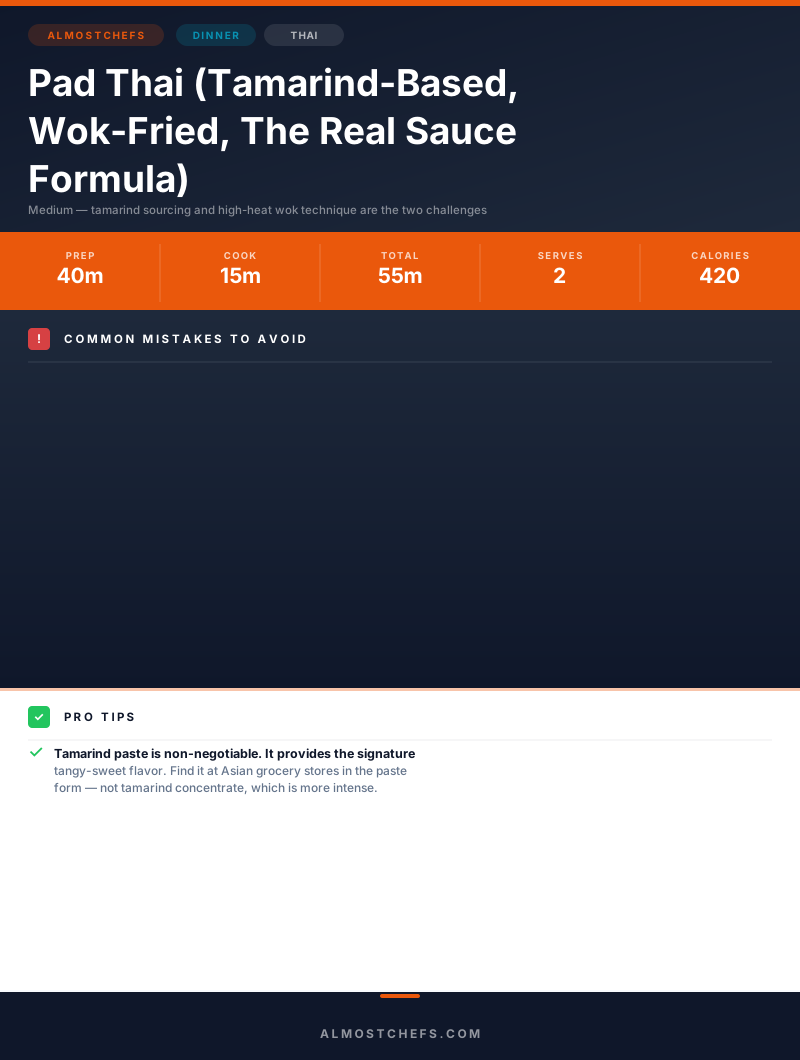
Pad Thai (Tamarind-Based, Wok-Fried, The Real Sauce Formula)
Pad Thai built on the correct sauce — real tamarind paste, fish sauce, and palm sugar — with rice noodles soaked in room-temperature water and wok-fried on the highest heat possible. The tamarind is non-negotiable.

“Every pad thai that doesn't taste like the restaurant version is missing one of two things: real tamarind paste, or enough heat. The tamarind is what gives pad thai its characteristic sweet-sour backbone — it's not ketchup, it's not lime juice, and it's not approximated by anything else without losing the identity of the dish. The heat is what produces wok hei — the charred, slightly smoky quality that comes from food moving quickly over a surface that's hotter than most home stovetops want to go. Get both right and everything else follows.”
Why This Recipe Works
Pad Thai is a dish that consistently disappoints when made at home because two essential elements are typically compromised: the tamarind and the heat. Understanding what each does makes clear why there are no acceptable substitutions.
Tamarind paste is not interchangeable with anything. Tamarind is the pod fruit of the Tamarindus indica tree, and its paste is a concentrated solution of tartaric acid, natural sugars, and hundreds of flavor compounds including organic acids, pyrazines, and thiazoles. The flavor profile is simultaneously sour, sweet, slightly fruity, and deeply savory — a complexity that no single substitute can replicate. Lime juice provides sourness but lacks the sweetness and savory depth. Ketchup provides sweetness and tomato-based acidity but lacks the fruit character. The hybrid substitution (lime plus ketchup) produces a functional approximation of the sweet-sour balance but a noticeably different flavor. Real tamarind paste is available at any Asian grocery store, costs a few dollars, and keeps in the refrigerator for months. There is no reason to substitute it.
The wok technique is about heat physics. A carbon steel wok or cast iron pan at maximum heat develops a surface temperature of 400°F or higher. When rice noodles contact this surface, the starch on the noodle exterior undergoes Maillard browning and partial gelatinization simultaneously — producing the slightly charred, complex flavor associated with wok hei (wok breath). At the same time, the sauce caramelizes rapidly on the noodle surface and the high heat evaporates moisture quickly, concentrating the flavors. At medium heat, none of this happens: the moisture from the noodles evaporates slowly, the noodles steam in a humid microclimate, and the sauce remains thin and watery rather than being absorbed and concentrated.
Room-temperature water soaking is a structural technique. Dried rice noodles need to be rehydrated before wok cooking, but the level of rehydration must be precise. Hot water fully rehydrates the noodles — by the time they've sat for 30 minutes, they're fully soft and will break into short segments during wok tossing. Room-temperature water partially rehydrates them — they're pliable enough to bend without cracking but still have structural integrity. This partial hydration means the noodles finish cooking during the 2-3 minutes they spend in the wok, absorbing the sauce as they complete their rehydration.
The egg technique requires split-second timing. The eggs are scrambled in a cleared half of the wok and removed from heat at approximately 70% doneness — still slightly wet. When the noodles are added and everything is tossed together, the eggs continue cooking in the residual heat and coat the noodles rather than becoming identifiable egg chunks. The window is narrow: fully scrambled eggs in the wok will be overcooked and rubbery by the time the noodles are done. Undercooked eggs remain too wet and don't integrate. Watch the eggs and add the noodles when they've lost their raw look but are still creamy.
Serve immediately. Pad Thai doesn't improve with resting — the noodles continue absorbing moisture and soften. Have toppings (peanuts, lime, cilantro) ready before cooking begins.
Where Beginners Mess This Up
Before we start, read this. These are the 3 reasons your pad thai (tamarind-based, wok-fried, the real sauce formula) will fail:
- 1
Noodles are mushy and clumped: Noodles were soaked in hot water or overcooked in the wok. Use room-temperature water for soaking — the noodles should be pliable but still slightly firm after 30 minutes. They finish cooking in the wok. If already mushy from soaking, they'll break down completely during stir-frying.
- 2
Dish tastes flat — missing the restaurant flavor: Tamarind paste was skipped or substituted, or the wok wasn't hot enough. Real tamarind paste is the primary flavor component. The heat level matters because insufficient heat produces steamed noodles instead of wok-fried ones. Get the wok to smoking before adding anything.
- 3
Everything sticks to the pan: Wok wasn't hot enough, or noodles were added before the oil was smoking. A properly preheated wok creates a thin layer of polymerized oil on the surface that acts as non-stick. Cold or warm oil absorbs into the food and produces sticking.
The Video Reference Library
Want to see it in action? Here are the exact videos we analyzed and combined to build this foolproof recipe translation:
Weissman's complete pad thai with the tamarind sauce formula, the egg technique, and the high-heat wok method adapted for home stovetops.
Systematic testing of tamarind substitute options, noodle soaking methods, and protein order of operations.
Babish's technique-focused walkthrough covering the scrambled egg integration and the final toss sequence.
🛠️ Core Equipment
- Carbon steel wok or 12-inch cast iron skilletA wok concentrates heat at the bottom and allows tossing food up the sides. Cast iron maintains heat under the shock of cold noodles. Nonstick pans cannot handle the high heat needed for proper stir-frying and will produce steamed noodles.
- Tongs or two heat-resistant spatulasFor tossing noodles constantly during cooking. Pad Thai requires continuous movement to prevent sticking and ensure even cooking.
- Small bowl for pre-mixed sauceThe sauce must be added in one quick pour during wok cooking. Pre-mixing ensures you're not measuring individual ingredients while noodles are cooking and burning.
Pad Thai (Tamarind-Based, Wok-Fried, The Real Sauce Formula)
🛒 Ingredients
- ✦8 oz dried flat rice noodles (pad thai width)
- ✦2 tablespoons tamarind paste (not concentrate)
- ✦2 tablespoons fish sauce
- ✦1 tablespoon soy sauce
- ✦2 tablespoons brown sugar or palm sugar
- ✦1 tablespoon rice vinegar
- ✦2 tablespoons vegetable oil, divided
- ✦8 oz shrimp (peeled, deveined) or extra-firm tofu, cubed
- ✦3 cloves garlic, minced
- ✦2 large eggs
- ✦1 cup bean sprouts
- ✦3 green onions, cut into 1-inch pieces
- ✦1/4 cup roasted peanuts, roughly chopped
- ✦1 lime, cut into wedges
- ✦Fresh cilantro for garnish
- ✦Dried red chili flakes for serving
👨🍳 Instructions
01Step 1
Soak the rice noodles in room-temperature water for 30 minutes until pliable but still slightly firm. Drain and set aside.
02Step 2
Make the sauce: whisk together tamarind paste, fish sauce, soy sauce, brown sugar, and rice vinegar in a small bowl. Taste — it should be a balance of sweet, sour, salty, and savory.
03Step 3
Heat 1 tablespoon oil in a wok or large skillet over the highest heat setting until smoking. Add the shrimp or tofu and cook 2-3 minutes until golden. Remove and set aside.
04Step 4
Add remaining oil to the wok. Add garlic and cook 15 seconds until fragrant. Push to one side. Crack eggs into the empty side and scramble quickly until just barely set — about 30 seconds.
05Step 5
Add the drained noodles to the wok. Pour the sauce over the noodles immediately and toss constantly with tongs or two spatulas for 2-3 minutes until the noodles absorb the sauce and turn glossy.
06Step 6
Return the shrimp or tofu to the wok. Add bean sprouts and green onions. Toss for 30 seconds — just enough to wilt the sprouts slightly while keeping their crunch.
07Step 7
Serve immediately, topped with chopped peanuts, lime wedges, fresh cilantro, and chili flakes.
Nutrition Per Serving
Estimates based on standard preparation. Adjustments alter macros.
🔄 Substitutions
Instead of Tamarind paste...
Use 2 tablespoons lime juice + 1 tablespoon ketchup
Not authentic but approximates the sweet-sour balance. The flavor profile will be different but functional.
Instead of Fish sauce...
Use Soy sauce + 1/2 teaspoon sugar
Loses umami depth. For vegetarian version, use mushroom soy sauce for more complexity.
Instead of Rice noodles...
Use Linguine or fettuccine
Not traditional but works in a pinch. Cook al dente — they need some bite to survive the wok.
Instead of Shrimp...
Use Chicken breast, sliced thin
Cook 3-4 minutes until no longer pink. Slice thin for quick, even cooking.
Instead of Bean sprouts...
Use Shredded cabbage
Adds similar crunch and holds up better to heat. Texture difference is noticeable but acceptable.
🧊 Storage & Reheating
In the Fridge
Store in an airtight container for up to 2 days. Noodles will absorb remaining sauce and soften.
In the Freezer
Not recommended — rice noodles become mushy when frozen and reheated.
Reheating Rules
Hot wok or skillet with a splash of water and a drizzle of oil. Toss over high heat for 2 minutes. Microwave produces gummy texture.
❓ Frequently Asked Questions
Why is my pad thai mushy?
Two common causes: soaking noodles in hot water (use room temperature — noodles should still be slightly firm after soaking), or overcrowding the wok (too much food drops the temperature and steams everything). The noodles finish cooking in the wok — they need to go in with some firmness.
What are the best rice noodles for pad thai?
Look for dried flat rice noodles labeled 'pad thai noodles' or 'rice sticks' — approximately 1/4 inch wide. Brands like Three Elephants or Erawan are reliable. Avoid thin vermicelli or wide ho fun noodles — the width matters for the right sauce-to-noodle ratio and texture.
Can I make pad thai vegetarian?
Yes. Replace fish sauce with soy sauce or mushroom soy sauce for additional umami. Use extra-firm tofu as the protein — press and cube it, then fry until golden before the noodles. The tamarind, sugar, and lime balance still produce excellent pad thai.
Why does my pad thai taste nothing like restaurant pad thai?
Two main reasons: missing real tamarind paste (substitutes don't replicate the characteristic sweet-sour-fruity flavor), and insufficient heat (restaurants cook over very high flame producing wok hei). Also consider: dried shrimp and preserved radish are traditional ingredients most home recipes skip — both add significant umami depth.
Do I need a wok?
A wok is ideal — its shape keeps food moving at high temperature and concentrates heat. A large 12-inch cast iron or stainless steel skillet works as a substitute. Avoid nonstick — it can't handle the high heat needed for proper stir-frying without degrading.
The Science of
Pad Thai (Tamarind-Based, Wok-Fried, The Real Sauce Formula)
We turned everything on this page into a beautiful, flour-proof PDF cheat sheet. Print it out, stick it to your fridge, and never mess up your pad thai (tamarind-based, wok-fried, the real sauce formula) again.
*We'll email you the high-res PDF instantly. No spam, just perfectly cooked meals.
AlmostChefs Editorial Team
We translate the internet's most popular cooking videos into foolproof, beginner-friendly written recipes. We analyze multiple methods, test them in our kitchen, and engineer a single "Master Recipe" that gives you the best possible result with the least possible stress.