Easy Homemade Pad See Ew (Better Than Takeout in 30 Minutes)
A classic Thai stir-fry with chewy wide rice noodles coated in dark soy sauce, tender chicken, and crisp Chinese broccoli. We broke down the high-heat technique and sauce ratios from the most-watched YouTube methods to give you a foolproof weeknight version that actually tastes like the real thing.
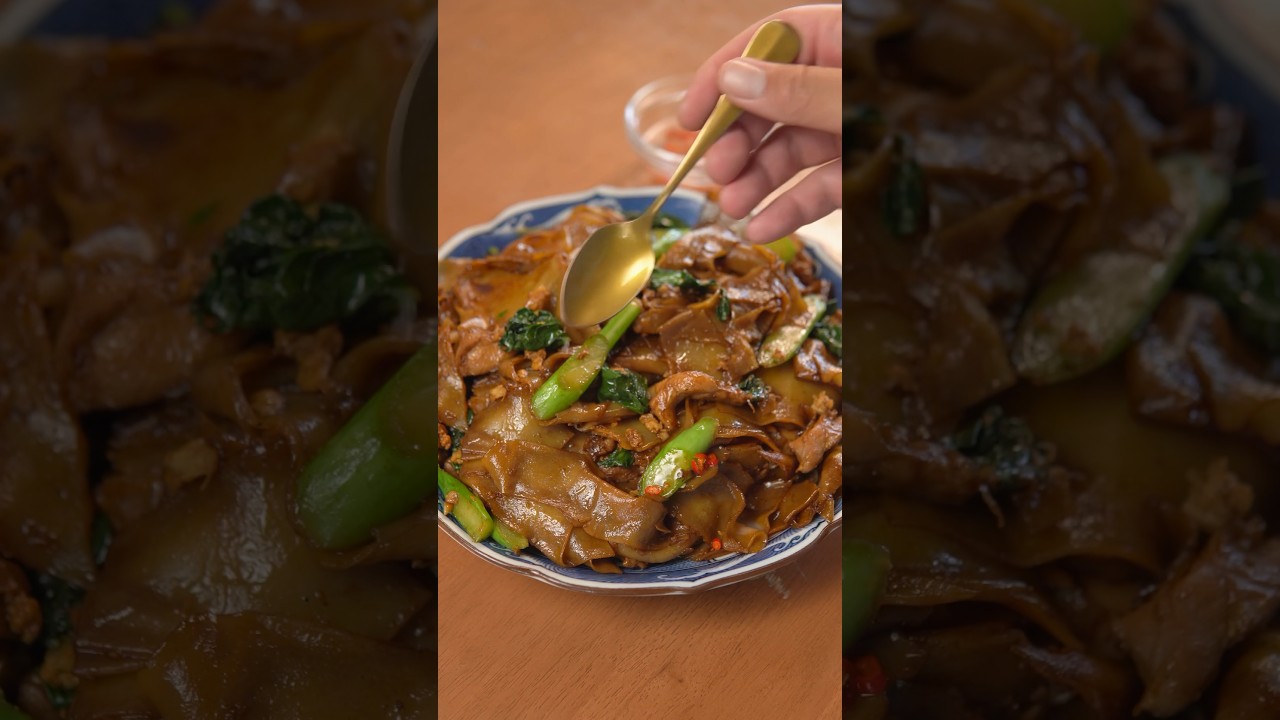
“Pad See Ew is one of the most ordered Thai dishes in the world, and one of the most consistently disappointing when made at home. The noodles turn gummy. The sauce pools at the bottom. The chicken steams instead of sears. None of these are ingredient problems — they're technique problems. Fix the heat, dry your protein, and stop crowding the wok, and you'll never order delivery again.”
Why This Recipe Works
Pad See Ew is deceptively simple to describe and deceptively easy to ruin. Wide rice noodles. Dark soy sauce. Chinese broccoli. One pan. Thirty minutes. On paper, nothing about this dish should be difficult. In practice, most home versions produce gummy noodles in a watery brown pool that tastes vaguely of soy and defeat. The dish isn't hard. The technique just has zero margin for error.
Heat Is the Entire Recipe
There is no version of good Pad See Ew that happens at medium heat. The entire structure of the dish — the slight char on the noodles, the caramelized protein, the sauce that coats rather than pools — depends on violent, sustained high temperature. Restaurant woks run at 60,000 to 100,000 BTU. Home burners average 10,000 to 15,000. This is not a solvable gap. You cannot simply "turn it up."
What you can do is work with the heat you have more intelligently. Preheat a carbon steel wok until it genuinely smokes before anything touches it. Cook in batches small enough that adding cold ingredients doesn't crash the temperature. Work fast. Keep ingredients moving. Accept that you'll get 70% of the way to wok hei and understand that 70% of wok hei still beats 100% of everything cooked at medium heat.
The Sauce Logic
Pad See Ew uses two different soy sauces, and they are not interchangeable. Regular soy sauce delivers salt and bright umami. Dark soy sauce — aged longer, thicker in consistency, slightly sweet from molasses — is responsible for the deep mahogany color and the way the sauce clings to the noodles rather than running off. Using only one produces either a pale, flat dish or an aggressively salty one. You need both, in the right ratio.
Pre-mixing the sauce before the garlic goes in is not a suggestion. Once the garlic hits a smoking wok, you have about 30 seconds before it crosses from fragrant to acrid. Stopping to measure four different liquids while the aromatics burn is how you end up with bitter garlic underneath otherwise good noodles. Mix the sauce. Set it next to the stove. Add it all at once when the moment comes.
The Noodle Window
Rice noodles exist in a very narrow window between underdone and destroyed. Underdone noodles are chalky and snap under pressure. Over-soaked noodles dissolve into paste the moment they hit the pan. The target during the soak is firm flexibility — they should bend in a full arc without snapping, but resist when you press them between your fingers. They will finish cooking in the sauce and continue softening from residual heat after you plate them.
The instinct to stir constantly once the noodles hit the wok is counterproductive. Let them sit on the hot surface for 60 to 90 seconds before moving them. That contact time is when the slight char develops — the textural contrast between the chewy interior and the slightly caramelized exterior that makes the dish feel restaurant-quality rather than homemade. Stir them too soon and you get steamed noodles. Leave them alone and you get Pad See Ew.
Staging the Protein
Wet chicken does not brown. It steams — slowly, joylessly, turning the same uniform gray from surface to center with no Maillard reaction, no crust, no flavor development. Patting the protein dry with paper towels takes twelve seconds and changes the result dramatically. The surface moisture evaporates in under a minute of wok contact rather than slowly steaming the meat from the outside in.
Cook the protein separately and remove it before the broccoli goes in. Every minute it sits in a crowded wok with vegetables releasing water is a minute it's losing the crust you just built. It goes back in at the very end, when the sauce is already coating the noodles, and heats through in the final toss. This is the difference between a dish where the chicken tastes like part of the meal versus a dish where it tastes like an afterthought.
Sesame oil goes on at the end, off the heat. It is a finishing oil. Heat destroys its aromatic compounds almost immediately. Adding it to a hot wok is the equivalent of pouring expensive perfume into a campfire.
Where Beginners Mess This Up
Before we start, read this. These are the 4 reasons your easy homemade pad see ew (better than takeout in 30 minutes) will fail:
- 1
Soaking the noodles too long: Rice noodles should be pliable but still firm when they go into the wok — they finish cooking in the sauce. Soak them until they bend without snapping, roughly 8-10 minutes in warm water. Over-soaked noodles turn to mush the moment they hit the heat and become one inseparable clump.
- 2
Not drying the protein before searing: Surface moisture is the enemy of browning. Wet chicken doesn't sear — it steams, turning gray and rubbery instead of developing the caramelized crust that gives the dish its depth. Pat the slices dry with paper towels before they touch the wok. Every time.
- 3
Cooking on insufficient heat: Pad See Ew is a wok dish. It needs violent, sustained high heat to char the noodles slightly and evaporate the sauce rapidly so it coats rather than pools. A low-heat sauté produces limp noodles in a watery puddle. Use the highest flame your stove allows and preheat the wok until it smokes.
- 4
Adding everything to the wok at once: Every ingredient in this dish has a different cook time. Crowding the wok drops the temperature instantly, turning a high-heat stir-fry into a braise. Cook the protein separately, set it aside, then work through aromatics, vegetables, and noodles in stages. This is the one step that separates acceptable Pad See Ew from great Pad See Ew.
The Video Reference Library
Want to see it in action? Here are the exact videos we analyzed and combined to build this foolproof recipe translation:
The source video for this recipe. Clear breakdown of sauce ratios, noodle texture cues, and how to stage a home stovetop to approximate wok hei. Watch before your first attempt.
🛠️ Core Equipment
- Carbon steel wok or large cast iron skilletThe only pan that holds enough heat when you add cold ingredients. Stainless and non-stick lose temperature too quickly, which kills the char you're trying to build. A [carbon steel wok](/kitchen-gear/review/carbon-steel-wok) is the closest you'll get to a restaurant result at home.
- Wok spatula or long-handled wooden spoonYou need to move ingredients continuously against a searingly hot surface without burning your hands. A flat-edged wok spatula lets you scrape the bottom and toss in one motion. Standard spatulas are too short and too narrow.
- Small mixing bowl for sauce prepThe sauce goes in all at once — not ingredient by ingredient. Pre-mixing and whisking until the sugar dissolves means you're not fumbling with four separate bottles while the garlic burns.
- Paper towelsFor drying the protein. Non-negotiable. See failure point two.
Easy Homemade Pad See Ew (Better Than Takeout in 30 Minutes)
🛒 Ingredients
- ✦8 oz wide rice noodles (pad thai noodles)
- ✦3 tablespoons regular soy sauce
- ✦2 tablespoons dark soy sauce
- ✦10 oz boneless, skinless chicken breast or large shrimp, thinly sliced
- ✦4 cloves garlic, minced fine
- ✦3 cups fresh Chinese broccoli (gai lan), cut into 2-inch pieces
- ✦3 tablespoons vegetable oil, divided
- ✦1.5 tablespoons oyster sauce
- ✦2 teaspoons fish sauce
- ✦1.5 teaspoons granulated sugar
- ✦0.25 teaspoon white pepper
- ✦0.25 cup chicken broth or water
- ✦0.5 teaspoon sesame oil
- ✦Red chili flakes or fresh Thai chilies, to taste
👨🍳 Instructions
01Step 1
Soak the dried rice noodles in a bowl of warm water for 8-10 minutes until pliable but still slightly firm, then drain thoroughly and set aside.
02Step 2
Whisk together the regular soy sauce, dark soy sauce, oyster sauce, fish sauce, sugar, white pepper, and chicken broth in a small bowl until the sugar fully dissolves. Set the sauce aside.
03Step 3
Pat the sliced chicken or shrimp completely dry with paper towels to remove all surface moisture.
04Step 4
Heat a [wok](/kitchen-gear/review/carbon-steel-wok) or large heavy skillet over the highest heat your stove allows until it begins to smoke. Add 1.5 tablespoons of vegetable oil and swirl to coat.
05Step 5
Add the protein in a single layer and cook undisturbed for 2-3 minutes until the edges turn opaque. Stir and cook for another 2-3 minutes until cooked through and lightly browned.
06Step 6
Transfer the cooked protein to a clean plate. Wipe out the wok with a paper towel if excess oil remains.
07Step 7
Return the wok to high heat, add the remaining 1.5 tablespoons of oil, then immediately add the minced garlic. Stir constantly for 30 seconds until fragrant but not browned.
08Step 8
Add the Chinese broccoli and toss continuously for 2-3 minutes until the florets brighten and the stalks are tender-crisp.
09Step 9
Push the broccoli to the sides of the wok and add the drained noodles to the center. Let them sit undisturbed for 1-2 minutes to develop a slight char on the bottom.
10Step 10
Pour the entire sauce mixture over the noodles. Return the cooked protein to the wok and toss everything together for 2-3 minutes until the noodles are evenly coated and the sauce has mostly absorbed.
11Step 11
Continue tossing for another 1-2 minutes, keeping ingredients moving to prevent sticking and ensure even sauce distribution.
12Step 12
Taste and adjust with additional soy sauce or fish sauce if needed.
13Step 13
Remove from heat. Drizzle sesame oil over the top and fold in gently — sesame oil is a finishing oil, not a cooking oil. Heat destroys its flavor.
14Step 14
Divide between bowls and top with chili flakes or fresh chilies. Serve immediately.
Nutrition Per Serving
Estimates based on standard preparation. Adjustments alter macros.
🔄 Substitutions
Instead of Wide rice noodles...
Use Brown rice noodles or whole wheat noodles
Slightly earthier, nuttier flavor with a chewier texture. Brown rice noodles require slightly less soaking time — check at 6 minutes. Increases fiber content meaningfully.
Instead of Chicken breast...
Use Extra-firm tofu or tempeh, pressed and cubed
Press tofu for at least 30 minutes to remove moisture before cooking — the same logic as drying chicken. Absorbs the sauce well and provides comparable protein. Adds subtle fermented notes with tempeh.
Instead of Dark soy sauce...
Use Low-sodium dark soy sauce or coconut aminos
Coconut aminos adds subtle sweetness and cuts sodium by up to 40%. The color will be slightly lighter and the flavor marginally less intense. Adjust sugar down slightly to compensate for coconut aminos' natural sweetness.
Instead of Chinese broccoli (gai lan)...
Use Bok choy, broccolini, or kale
Broccolini is the closest substitute in texture and cook time. Bok choy adds sweetness. Kale adds earthiness and needs an extra 1-2 minutes in the wok. All three work. None are exact replacements.
🧊 Storage & Reheating
In the Fridge
Store in an airtight container for up to 3 days. The noodles will absorb remaining sauce overnight and firm up slightly — this is normal.
In the Freezer
Not recommended. Rice noodles become grainy and mushy after freezing and thawing. Make only what you'll eat within a few days.
Reheating Rules
Add a tablespoon of water or broth to the container, cover loosely, and microwave on medium power for 90 seconds. Stir halfway through. High power dries the noodles out. Alternatively, reheat in a hot wok with a splash of water and constant tossing for 2-3 minutes.
❓ Frequently Asked Questions
Why are my noodles sticking together?
Two causes: over-soaked noodles that turned too soft before the wok, or insufficient heat that caused them to steam rather than fry. Keep the soak time to 8-10 minutes and make sure the wok is genuinely smoking before the noodles go in. Tossing immediately and continuously once the sauce is added also prevents clumping.
What is dark soy sauce and can I skip it?
Dark soy sauce is aged longer than regular soy sauce, giving it a thicker consistency, deeper color, and mild molasses-like sweetness. It's what gives Pad See Ew its characteristic dark coating on the noodles. Skipping it leaves you with pale, flat noodles that taste like soy-flavored pasta. It's worth buying a bottle — it's inexpensive and lasts for months.
Can I make this vegetarian?
Yes. Swap the chicken for pressed extra-firm tofu or tempeh, replace the fish sauce with additional soy sauce plus a small squeeze of lime, and use vegetarian oyster sauce (mushroom-based). The result is genuinely good — the sauce carries the dish and tofu absorbs it well.
What is wok hei and do I need it?
Wok hei is the smoky, slightly charred flavor that comes from cooking over an extremely high-output flame — the kind found in commercial kitchens, not home stoves. You can approximate it by preheating your wok until it genuinely smokes, cooking in smaller batches, and using a carbon steel wok that retains heat better than other materials. Perfect wok hei at home isn't realistic, but you can get close.
Can I use fresh rice noodles instead of dried?
Yes, and it's actually preferable. Fresh wide rice noodles (the kind sold in refrigerated sheets at Asian grocery stores) skip the soaking step entirely and produce a silkier texture. Separate them carefully before adding to the wok — they stick together in the package. Add them directly to the hot pan after the garlic and broccoli.
Why does my sauce pool at the bottom instead of coating the noodles?
Heat is too low, or there's too much liquid in the wok. High heat evaporates the excess liquid rapidly, causing the sauce to concentrate and cling to the noodles. At lower heat, the sauce just sits in a puddle. Ensure the wok is smoking before the sauce goes in and toss aggressively immediately after adding it.
The Science of
Easy Homemade Pad See Ew (Better Than Takeout in 30 Minutes)
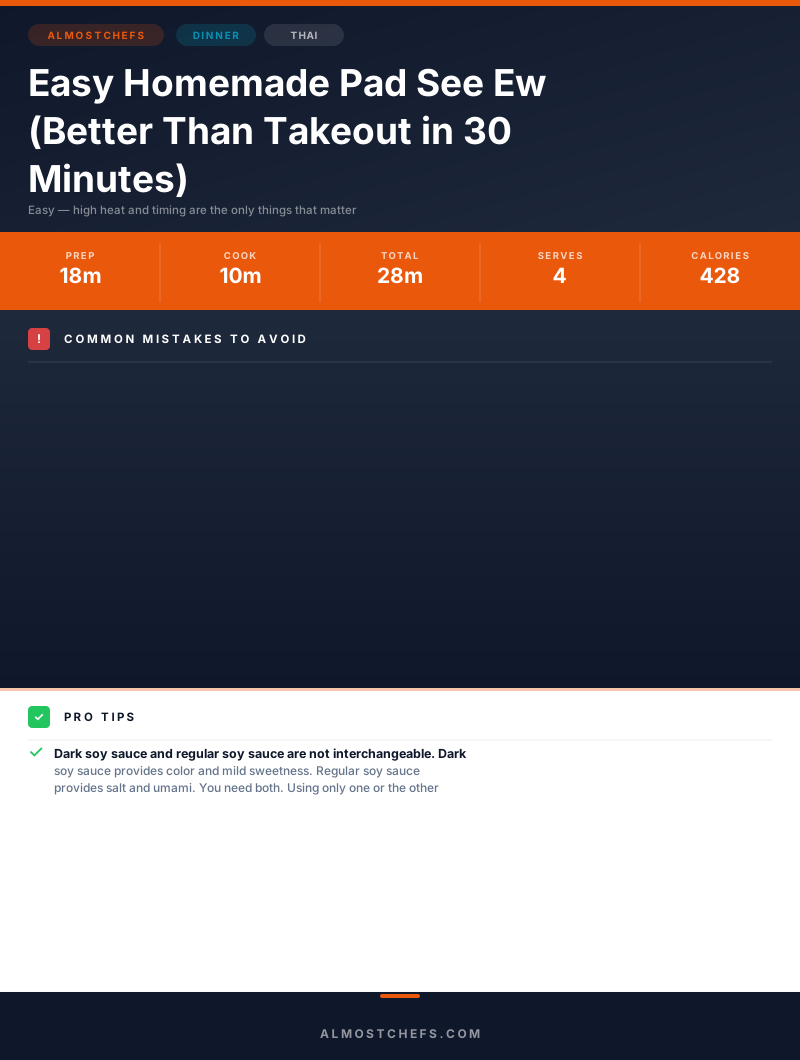
We turned everything on this page into a beautiful, flour-proof PDF cheat sheet. Print it out, stick it to your fridge, and never mess up your easy homemade pad see ew (better than takeout in 30 minutes) again.
*We'll email you the high-res PDF instantly. No spam, just perfectly cooked meals.
AlmostChefs Editorial Team
We translate the internet's most popular cooking videos into foolproof, beginner-friendly written recipes. We analyze multiple methods, test them in our kitchen, and engineer a single "Master Recipe" that gives you the best possible result with the least possible stress.