Creamy Overnight Oats (The No-Cook Breakfast That Actually Fills You Up)
Old-fashioned rolled oats soaked overnight in milk, Greek yogurt, and chia seeds, layered with fresh berries and nuts. We broke down the ratio science so you get thick, creamy oats every time — not a watery bowl of regret.
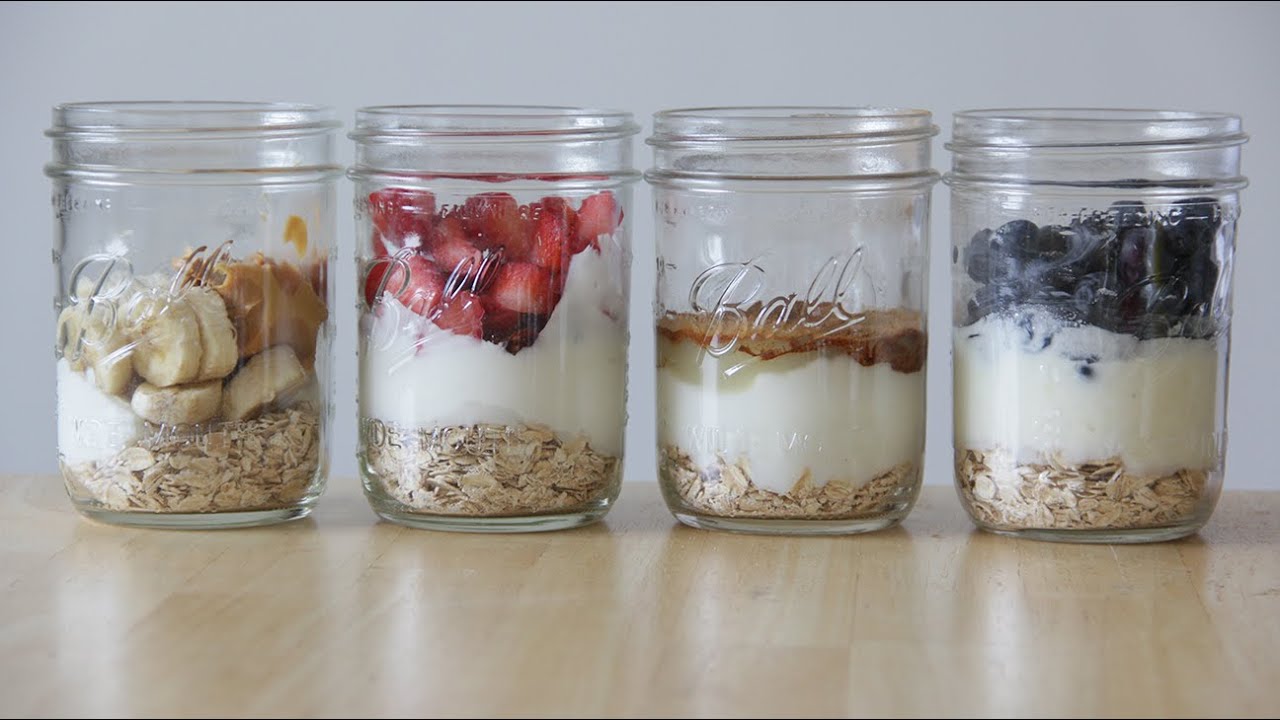
“Most overnight oats recipes produce either a brick of congealed oat paste or a thin, flavorless slurry. The difference is ratios. Oats, milk, yogurt, and chia seeds each absorb at different rates, and if you just dump them together without understanding the math, you get inconsistent results every morning. We ran the numbers so you don't have to.”
Why This Recipe Works
Overnight oats built its reputation on convenience. Eight minutes of assembly the night before, zero effort in the morning, four breakfasts ready in the refrigerator. That's the pitch. The problem is that convenience turned it into a recipe people stop thinking about — dump the oats in a jar, pour some milk, add whatever's in the fridge, hope for the best. The results range from passable to actively unpleasant, and nobody stops to ask why.
The Ratio Problem
Overnight oats is a hydration problem masquerading as a recipe. Every component absorbs liquid at a different rate. Old-fashioned rolled oats absorb roughly 1:1 by volume. Greek yogurt contributes its own moisture as it warms and loosens overnight. Chia seeds — the ingredient most recipes treat as optional texture — absorb 9 to 10 times their weight in liquid and gel aggressively in the first two hours. Add them without accounting for their behavior and you'll wake up to what is functionally a spoonable pudding.
The working ratio is 1/2 cup oats to 1/2 cup milk to 1/4 cup yogurt per serving, with exactly one tablespoon of chia seeds. That combination produces thick, creamy, spoonable oats after 8-12 hours. Deviate from that base and you need to understand which direction you're going and why.
Why Rolled Oats and Nothing Else
Old-fashioned rolled oats are steamed and pressed flat during processing, which partially breaks down the starch structure. That's what allows them to hydrate in cold liquid overnight without cooking. Quick oats are cut smaller and processed more aggressively — they hydrate faster and degrade completely within hours. Instant oats are already essentially cooked; they turn to paste.
Steel-cut oats go the other direction: they're barely processed and require 10-12 hours minimum soak time with a firmer, chewier result. They work if that's what you prefer, but the creamy texture people expect from overnight oats is a rolled oat product. A good measuring setup matters more than most recipes admit — oat volume is inconsistent across brands, and weighing 45g per serving removes that variable entirely.
The Chia Seed Function
Chia seeds in overnight oats aren't garnish. They serve three structural roles. First, they thicken the base into a cohesive mass that doesn't separate into liquid and solids by morning. Second, they add 3-4 grams of fiber per tablespoon, which is part of why overnight oats with chia keep you full longer than plain oats. Third, they create a slightly gelatinous mouthfeel that smooths out the texture between the oat grains.
The critical step is thorough stirring before refrigerating. Chia seeds that sit undisturbed at the bottom of the jar clump into a single gel mass rather than distributing evenly. Break up any clumps during the stir, check the bottom of the jar specifically, and the morning texture will be consistent throughout.
Toppings Are Architecture, Not Decoration
The sequence of what goes in the night before versus the morning before matters. Banana is the only fresh fruit that survives overnight in the jar — it softens slightly and browns at the edges, but it holds structure and its sugars leach into the oat base in a way that improves the overall flavor. Fresh berries collapse and bleed into the oats, making the whole jar purple and waterlogged by morning. Nuts go in the morning or they turn soft.
The coconut flakes stay crisp if added right before eating. The ground flaxseed, by contrast, should go in the night before — it needs time to hydrate or it has an unpleasant gritty texture when eaten raw.
The Morning Stir
This step gets cut from most recipes as though it's obvious. It is not. Overnight, the heavier ingredients — oats, chia, banana slices — settle toward the bottom of the jar while the milk and some of the yogurt liquid migrate upward. The top looks thin, the bottom is dense. A vigorous stir in the morning redistributes everything, breaks up any gelled chia clusters, and produces the uniform, creamy consistency you were promised.
Add milk only after stirring. Assess the real consistency first, then adjust with milk one tablespoon at a time. Most people add too much milk before stirring and end up with soup.
Overnight oats is not complicated. It just requires understanding what each ingredient is doing and why the order and ratios exist. Get those right and eight minutes of prep produces four mornings that actually work.
Where Beginners Mess This Up
Before we start, read this. These are the 4 reasons your creamy overnight oats (the no-cook breakfast that actually fills you up) will fail:
- 1
Using quick oats instead of old-fashioned rolled oats: Quick oats are pre-cut and over-processed. They absorb liquid too fast and turn to mush within a few hours. Old-fashioned rolled oats hold their structure overnight, giving you creamy-tender texture with actual body. This is a non-negotiable ingredient swap.
- 2
Wrong liquid-to-oat ratio: The standard ratio is 1:1 oats to milk, plus yogurt on top. More milk than that produces soup. Less produces cement. The chia seeds absorb an additional 9-10x their weight in liquid, so if you add them without accounting for the extra absorption, your morning oats will be impenetrably thick.
- 3
Not stirring before refrigerating: Dry oats at the bottom of the jar will never fully hydrate, even after 12 hours. Every component must be in contact with the liquid from the start. Stir until no dry pockets remain — check the bottom corners of the jar specifically.
- 4
Adding all toppings the night before: Fresh berries and nuts added the night before turn soggy and soft by morning. Banana is the only fruit that can go in the night before (and even then, it will brown slightly). Everything else goes on right before eating.
The Video Reference Library
Want to see it in action? Here are the exact videos we analyzed and combined to build this foolproof recipe translation:
The source video that breaks down the overnight oat method clearly, including the ratios, the topping timing, and how to adjust consistency in the morning.
🛠️ Core Equipment
- Wide-mouth mason jars (16 oz)The wide mouth allows easy layering, stirring, and eating directly from the jar. Narrow jars make thorough stirring nearly impossible and you end up with a dry oat core at the bottom.
- Digital kitchen scaleOat density varies significantly between brands. Weighing 45g per serving is more reliable than a volume measurement and ensures consistent results across all four jars.
- Long-handled cocktail spoon or chopstickYou need to reach the bottom of a narrow jar to fully incorporate the chia seeds and oats. A regular dessert spoon won't get there without making a mess.
Creamy Overnight Oats (The No-Cook Breakfast That Actually Fills You Up)
🛒 Ingredients
- ✦2 cups old-fashioned rolled oats
- ✦2 cups unsweetened milk (dairy or almond milk)
- ✦1 cup plain Greek yogurt
- ✦4 tablespoons raw chia seeds
- ✦4 tablespoons pure honey or maple syrup
- ✦2 teaspoons vanilla extract
- ✦1 teaspoon ground cinnamon
- ✦1/4 teaspoon sea salt
- ✦1 medium banana, sliced thin
- ✦1.5 cups fresh mixed berries (blueberries, strawberries, raspberries)
- ✦1/2 cup raw almonds or walnuts, roughly chopped
- ✦4 tablespoons unsweetened coconut flakes
- ✦4 tablespoons ground flaxseed (optional, for additional fiber)
👨🍳 Instructions
01Step 1
Set out four clean wide-mouth mason jars or meal prep containers with tight-fitting lids.
02Step 2
Add 1/2 cup of rolled oats to each jar as the base layer.
03Step 3
Pour 1/2 cup of milk into each jar, then spoon in 1/4 cup of Greek yogurt per jar.
04Step 4
Add 1 tablespoon of chia seeds to each jar. Sprinkle in 1/4 teaspoon cinnamon and a small pinch of salt.
05Step 5
Drizzle 1 tablespoon of honey or maple syrup into each jar and add 1/2 teaspoon vanilla extract.
06Step 6
Stir each jar thoroughly until all ingredients are fully combined and no dry oats remain at the bottom.
07Step 7
Layer the sliced banana evenly across all four jars. Seal with lids.
08Step 8
Refrigerate for at least 8 hours, up to 12 hours. Do not stir again until morning.
09Step 9
In the morning, remove a jar and stir vigorously to recombine.
10Step 10
If the consistency is too thick, add milk one tablespoon at a time until it reaches your preferred texture.
11Step 11
Top with 1/4 cup fresh mixed berries, 2 tablespoons chopped nuts, and 1 tablespoon coconut flakes immediately before eating.
Nutrition Per Serving
Estimates based on standard preparation. Adjustments alter macros.
🔄 Substitutions
Instead of Greek yogurt...
Use Coconut yogurt or cashew cream
Maintains creaminess with a slightly less tangy flavor. Reduces protein by approximately 5g per serving. Best dairy-free option for texture.
Instead of Honey or maple syrup...
Use Mashed ripe banana or unsweetened applesauce
Sweetness is more subtle and complex. Reduces refined sugar by 8-10g per serving. Thickens the base slightly — account for this when adjusting morning consistency.
Instead of Rolled oats...
Use Steel-cut oats
Requires 10-12 hours of soaking minimum. Produces a firmer, chewier result rather than creamy. Lower glycemic response than rolled oats — useful if blood sugar management is a priority.
Instead of Almonds or walnuts...
Use Sunflower seeds or pumpkin seeds
Comparable protein and healthy fat content. Neutral flavor that works with any topping combination. The right call for tree nut allergies without sacrificing nutritional density.
🧊 Storage & Reheating
In the Fridge
Store sealed jars for up to 4 days. Do not add fresh fruit toppings until the morning you plan to eat each jar. The oat base holds well; the toppings do not.
In the Freezer
Not recommended. Frozen oats change texture significantly on thaw — the cell structure breaks down and you get mealy, watery results.
Reheating Rules
Remove lid and microwave for 45-60 seconds. Stir well, add a splash of milk if needed, then top with fresh fruit and nuts. Do not microwave the toppings.
❓ Frequently Asked Questions
Can I use quick oats instead of rolled oats?
Technically yes, but the results are noticeably worse. Quick oats over-absorb liquid and turn to mush within a few hours. Old-fashioned rolled oats retain structure overnight, giving you a creamy texture that holds up through the morning. If rolled oats are unavailable, use them — but reduce soaking time to 4-6 hours.
Why are my overnight oats too thick in the morning?
The chia seeds are likely the culprit. They absorb 9-10x their weight in liquid and do most of that work in the first 2-3 hours. If your oats sit for 12 hours and you used the full tablespoon of chia per serving, expect thick results. Add milk one tablespoon at a time in the morning until you reach your preferred consistency.
Can I make just one serving instead of four?
Yes — divide all ingredients by four. The ratios remain the same: 1/2 cup oats, 1/2 cup milk, 1/4 cup yogurt, 1 tablespoon chia seeds per jar. The technique doesn't change.
Do overnight oats need to be eaten cold?
No. Microwave without the lid for 45-60 seconds, stir, add a splash of milk, then top with fresh fruit. The warm version is especially good in winter with cinnamon and banana. Just don't microwave the fresh berries or nuts — add those after heating.
Why do my oats taste bland even when I follow the recipe?
Salt is usually the missing variable. A pinch of sea salt per jar isn't optional seasoning — it activates the sweetness in the oats and amplifies the vanilla and cinnamon. Without it, everything tastes flat. Also check the age of your cinnamon. Ground spices lose potency after 6 months. If yours has been in the cabinet for two years, use more.
How long do prepped jars actually keep in the fridge?
The oat base holds well for 4 days. Day one and day two are ideal — the oats are hydrated but still have texture. Day three is still good. Day four is acceptable but the texture softens noticeably. Beyond four days, the Greek yogurt starts to affect the flavor and the oats become waterlogged.

The Science of
Creamy Overnight Oats (The No-Cook Breakfast That Actually Fills You Up)
We turned everything on this page into a beautiful, flour-proof PDF cheat sheet. Print it out, stick it to your fridge, and never mess up your creamy overnight oats (the no-cook breakfast that actually fills you up) again.
*We'll email you the high-res PDF instantly. No spam, just perfectly cooked meals.
AlmostChefs Editorial Team
We translate the internet's most popular cooking videos into foolproof, beginner-friendly written recipes. We analyze multiple methods, test them in our kitchen, and engineer a single "Master Recipe" that gives you the best possible result with the least possible stress.