Classic Osso Buco (Slow-Braised Veal Shanks, Saffron Gremolata)
Cross-cut veal shanks tied with kitchen twine, seared hard in a Dutch oven, then braised low and slow in white wine, San Marzano tomatoes, and aromatics until the collagen dissolves and the marrow loosens. Finished with lemon-parsley gremolata for brightness. The science behind why the sear and the tie both matter.
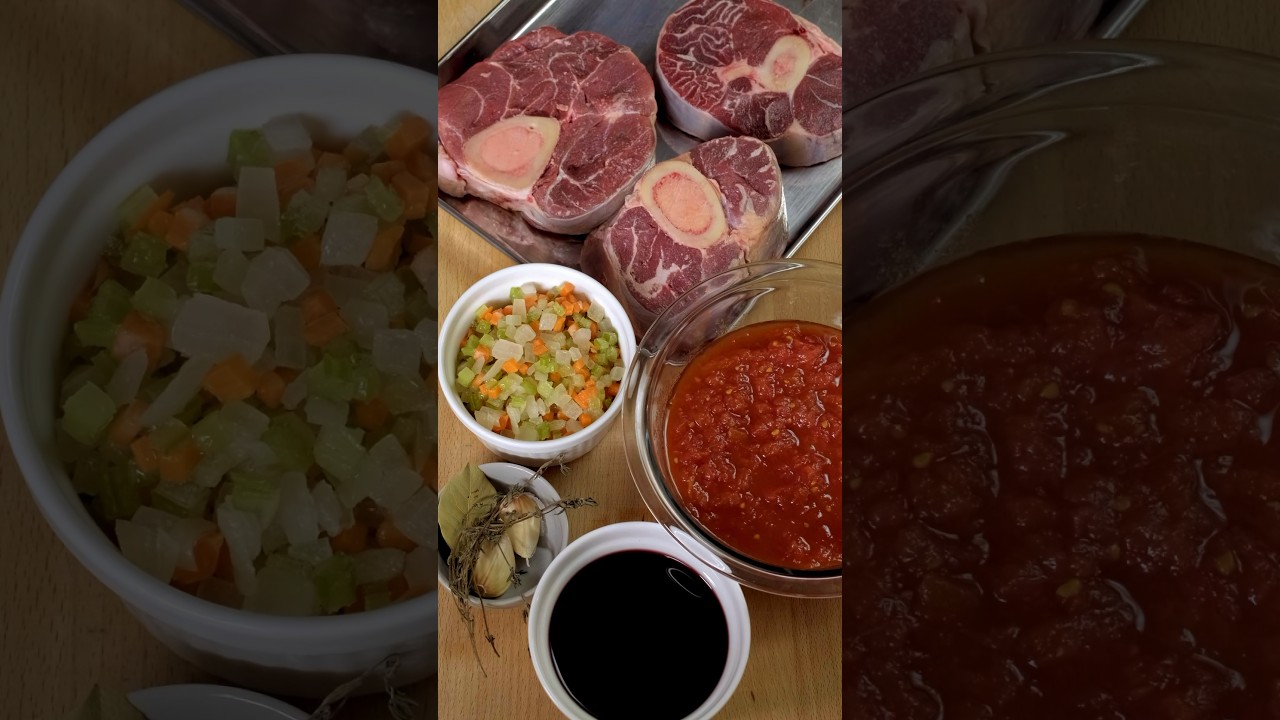
“Osso buco is the argument for patience in cooking. Three hours of low oven heat dissolves collagen into gelatin, turns tough connective tissue into something silky, and transforms a cut that would be inedible at 45 minutes into one of the most satisfying meals in the Italian repertoire. The technique isn't complicated. It's just uncompromising about time.”
Why This Recipe Works
Osso buco is one of a small category of dishes where time is the primary active ingredient. The technique is not complicated. The hardware is basic. The outcome — collagen-rich braising liquid that coats a spoon, meat that yields under a fork without effort, marrow that has softened in the bone — is entirely a product of sustained low heat applied to the right cut for the right duration. Understanding what is happening inside the pot during those three hours explains why every technical decision in this recipe was made the way it was.
Collagen Is the Point
Veal shanks are cross-sectioned from the front leg — a hard-working muscle with a high concentration of collagen in the connective tissue and a pocket of marrow at the center of each bone. Collagen is a tough, fibrous protein that makes meat inedible when undercooked and extraordinary when cooked properly for long enough.
At temperatures between 160°F and 180°F, collagen begins converting to gelatin. This conversion is a slow, time-dependent process — it cannot be accelerated by raising the temperature, because higher temperatures cause the muscle fibers to contract and squeeze out moisture, producing tough, dry meat. The window is specific: low enough that the muscle fibers stay relaxed, high enough that the collagen conversion proceeds at a useful rate. At 325°F in a covered Dutch oven, the braising liquid holds at approximately 170–180°F — right in the conversion zone — for the entire three hours.
The result is a self-thickening sauce. As collagen dissolves, the braising liquid becomes progressively more viscous and silky. By the end of three hours, the liquid that was once wine and broth has been transformed into something that coats a spoon and clings to risotto — not because of added starch or reduction, but because of dissolved gelatin. This is the defining characteristic of a properly braised osso buco and what separates it from a stew.
The Sear Builds the Sauce
The three minutes per side that each shank spends in very hot olive oil are not about cooking the interior. They are about building the flavor foundation for the braising liquid. The Maillard reaction between the amino acids and reducing sugars on the seared surface produces hundreds of aromatic compounds that dissolve into the wine and broth during the long braise. The fond — the dark residue left on the bottom of the Dutch oven — is the most concentrated expression of those compounds.
Deglazing with white wine and scraping every bit of that fond into the liquid is one of the most important technical steps in the recipe. Leaving it on the bottom of the pot means that three hours of oven heat will continue to cook it from beneath, eventually producing bitter, burnt notes in the sauce. Incorporating it completely means those flavors are distributed through the entire braise and become part of the complex, layered sauce.
The Rice Flour Decision
Rice flour is specified over all-purpose flour for one reason: it produces a lighter crust on the shank surface that doesn't leave a pasty, starchy residue in the braising liquid. All-purpose flour, when browned, can make the sauce slightly cloudy and gummy over three hours of cooking. Rice flour and cornstarch avoid this — the coating browns cleanly, falls away into the liquid in small amounts, and contributes to body without overwhelming the texture.
Why the Twine Is Non-Negotiable
The crosspiece of meat in a raw shank holds its disc shape because collagen in the connective tissue keeps it under tension. That tension disappears over three hours as the collagen dissolves. Without the twine, the meat separates from the bone and falls into the braising liquid in pieces — still delicious, but structurally lost. Tying the shank before searing preserves the shape through the entire process and allows each piece to be plated as a cohesive disc over risotto rather than as a pile of braised meat scraps.
The Soffritto and Tomato Paste
The aromatic base — onion, carrot, celery — is not filler. These vegetables soften and their sugars caramelize into the fat left from searing, picking up residual fond and becoming the flavor substrate for everything that follows. Adding the tomato paste and cooking it for two minutes in the oil before the wine goes in is a specific technique: direct heat caramelizes the paste's sugars and removes the raw, metallic edge that canned tomato paste always carries. The paste goes from bright fire-engine red to a deeper brick-red color. That visual change indicates the Maillard reaction has processed the surface — the paste's flavor is now richer and more complex.
San Marzano tomatoes are specified because their lower acid content and higher natural sweetness produce a rounder, less sharp tomato flavor in the braising liquid than domestic varieties. The difference over three hours of braising is significant. The San Marzano's gentler acidity allows the wine, beef broth, and collagen to contribute more prominently to the final flavor profile rather than being dominated by tomato tartness.
The Gremolata Is Structural Flavor
Gremolata — lemon zest, flat-leaf parsley, raw garlic — is often treated as a garnish that can be skipped without consequence. This is wrong. The fat content of a properly braised osso buco is substantial: olive oil, rendered collagen, marrow fat from the bone. Without counterpoint, the dish eats as richly as it should but finishes heavy, with flavors that blur together under accumulated fat.
The lemon zest provides citrus aromatics that cut through the fat and reset the palate between bites. The raw garlic adds a sharp, present note that contrasts with the mellow, long-cooked garlic already in the braise. The parsley adds chlorophyll freshness that the oven has entirely eliminated from every other component. Together, these three ingredients make the braise taste brighter and lighter than it actually is — not by changing the chemistry of the dish, but by providing contrast that allows the palate to keep perceiving flavor rather than becoming saturated.
It is added at service, not during cooking, because all three of its active components are volatile. Heat destroys the citrus aromatics, turns parsley grey and bitter, and converts raw garlic punch into mellow sweetness. Gremolata's entire purpose depends on being raw and fresh against a cooked, rich background.
Where Beginners Mess This Up
Before we start, read this. These are the 5 reasons your classic osso buco (slow-braised veal shanks, saffron gremolata) will fail:
- 1
Skipping the kitchen twine: The crosspiece of meat in a veal shank holds together under raw tension. At three hours in braising liquid, the collagen breaks down completely and that tension disappears — the meat falls away from the bone in chunks and the presentation collapses. Tying the shank before searing holds it in a disc shape throughout the braise and at service. This takes 30 seconds and is non-negotiable.
- 2
Undersearing — pale, not deeply browned: The sear is not about cooking the meat. It is about building the braising liquid. The Maillard reaction on the surface of the shank produces hundreds of flavor compounds that dissolve into the wine and broth during the three-hour braise. A pale sear produces a pale, thin braising liquid. A deep, hard sear — 3–4 minutes per side in very hot oil — produces the mahogany fond that becomes the sauce.
- 3
Braising at too high a temperature: Collagen converts to gelatin at 160–180°F over sustained time. Braising at 350°F or higher pushes the liquid past a simmer into a boil, which makes the meat fibers contract, squeeze out moisture, and turn tough. At 325°F, the liquid barely trembles — connective tissue dissolves slowly, muscle fibers relax, and the result is fall-from-the-bone tender without being stringy or dry.
- 4
Skipping the fond deglaze: The fond — the browned protein residue on the bottom of the Dutch oven after the sear — is the most concentrated flavor in the pan. Deglazing with white wine and scraping the fond up before adding the other liquids incorporates it completely into the braise. Leave it on the bottom and it burns during the long cook and produces bitter notes in the finished sauce.
- 5
Adding the gremolata too early: Gremolata is a raw condiment — lemon zest, parsley, garlic. It provides citrus brightness that acts as structural counterpoint to the richness of the braise. Add it during cooking and the volatile aromatic oils dissipate under heat, the parsley turns grey, and the garlic loses its raw punch. It goes on at service, not in the pot.
The Video Reference Library
Want to see it in action? Here are the exact videos we analyzed and combined to build this foolproof recipe translation:
The primary reference for this recipe. Covers tying, searing, vegetable soffritto, wine deglaze, and the full three-hour braise with an explanation of why each step matters.
🛠️ Core Equipment
- Dutch ovenA heavy [Dutch oven](/kitchen-gear/review/dutch-oven) provides the thermal mass to sear shanks without temperature drop, holds even heat during the three-hour braise, and goes from stovetop to oven without transition. Thin pots produce temperature spikes that make the braising liquid boil rather than simmer, toughening the meat.
- Kitchen twineTies the shank crosspiece in place to preserve the disc shape through the long braise. Without it, the collagen breakdown that makes osso buco tender also causes the shank to fall apart structurally.
- Instant-read thermometerFor verifying braising liquid temperature is holding at 165–180°F inside the oven — the gelatin conversion zone. If it reads above 200°F, reduce oven temperature. The thermometer is the only reliable way to know what's happening inside a covered pot.
- Wide, flat tongsVeal shanks are heavy, unwieldy, and sear on multiple sides. Wide tongs give purchase on the thick cut without piercing the surface and releasing the juices being built.
Classic Osso Buco (Slow-Braised Veal Shanks, Saffron Gremolata)
🛒 Ingredients
- ✦3 pounds beef or veal shanks, cut into 2-inch thick cross-sections
- ✦1/4 cup rice flour or cornstarch (for dusting)
- ✦4 tablespoons extra-virgin olive oil
- ✦3 medium carrots, cut into 1-inch pieces
- ✦3 celery stalks, cut into 1-inch pieces
- ✦2 large yellow onions, diced
- ✦6 cloves garlic, minced (4 for braise, 2 for gremolata)
- ✦1 cup dry white wine
- ✦2 cups low-sodium beef broth
- ✦1 can (28 oz) crushed San Marzano tomatoes
- ✦2 tablespoons tomato paste
- ✦2 bay leaves
- ✦4 fresh thyme sprigs
- ✦1 teaspoon dried oregano
- ✦1/2 teaspoon red pepper flakes
- ✦1 teaspoon sea salt
- ✦1/2 teaspoon black pepper
- ✦1/4 cup fresh flat-leaf parsley, finely chopped (for gremolata)
- ✦Zest of 1 lemon (for gremolata)
- ✦Kitchen twine for tying
👨🍳 Instructions
01Step 1
Tie each shank around its circumference with kitchen twine to hold the meat against the bone in a disc shape during braising.
02Step 2
Pat shanks completely dry with paper towels. Season generously with salt and pepper on all cut surfaces. Dust lightly with rice flour on all sides, shaking off excess.
03Step 3
Preheat oven to 325°F. Heat 3 tablespoons of olive oil in a large Dutch oven over high heat until shimmering and just below smoke point.
04Step 4
Sear shanks in batches of 2, without crowding, for 3–4 minutes per side until deeply browned on all cut surfaces. Remove to a plate.
05Step 5
Reduce heat to medium. Add remaining tablespoon of oil and sauté onion, carrot, and celery for 6–8 minutes until softened and beginning to caramelize at the edges.
06Step 6
Add 4 cloves of minced garlic and tomato paste. Cook, stirring constantly, for 2 minutes until the tomato paste darkens slightly and the garlic is fragrant.
07Step 7
Pour in the white wine and scrape up all the fond from the bottom of the pot. Simmer for 2 minutes to burn off the alcohol.
08Step 8
Add crushed tomatoes, beef broth, bay leaves, thyme sprigs, oregano, red pepper flakes, salt, and pepper. Stir to combine.
09Step 9
Return shanks to the pot, nestling them in a single layer. The liquid should come approximately two-thirds up the sides of the shanks — not covering them.
10Step 10
Bring to a simmer on the stovetop, then cover tightly and transfer to the 325°F oven. Braise for 2.5–3 hours until the meat is tender and beginning to pull away from the bone.
11Step 11
While shanks finish, make the gremolata: combine chopped parsley, lemon zest, and the remaining 2 minced garlic cloves in a small bowl.
12Step 12
Remove twine from shanks before serving. Plate each shank over risotto or polenta, spoon braising liquid over generously, and finish with a heaping teaspoon of gremolata on top.
Nutrition Per Serving
Estimates based on standard preparation. Adjustments alter macros.
🔄 Substitutions
Instead of Veal shanks...
Use Beef shanks
More widely available and less expensive. Slightly firmer texture and stronger flavor. Add 30–45 minutes to the braise time. The dish is different but equally satisfying.
Instead of Dry white wine...
Use Dry vermouth or additional beef broth
Vermouth adds herbaceous complexity. Additional broth produces a richer, meatier sauce without the wine's acidity. Neither is an exact substitute — choose based on the flavor profile you want.
Instead of San Marzano tomatoes...
Use High-quality domestic crushed tomatoes
Add a pinch of sugar to offset the higher acidity of non-San Marzano varieties. The difference in the finished dish is noticeable but not catastrophic.
Instead of Rice flour...
Use Cornstarch or all-purpose flour
All-purpose flour leaves a slightly heavier crust. Cornstarch produces identical results to rice flour. Either works.
🧊 Storage & Reheating
In the Fridge
Store shanks submerged in braising liquid in a covered container for up to 4 days. The liquid gels when cold and reheats into a rich, cohesive sauce.
In the Freezer
Freeze shanks in braising liquid for up to 3 months. Thaw overnight in the refrigerator and reheat gently in a covered pot over low heat.
Reheating Rules
Reheat covered in a 300°F oven for 20–25 minutes or gently on the stovetop over low heat. Add a splash of broth if the liquid has reduced too much during storage.
❓ Frequently Asked Questions
Why do I need to tie the shanks?
The crosspiece of meat in a raw shank holds its shape under tension from the connective tissue. After three hours of braising, that collagen dissolves completely and the meat would fall away from the bone in chunks without the twine. The tie preserves the disc shape for presentation and even cooking throughout the braise.
Can I make osso buco in a slow cooker?
Yes, with modifications. Sear the shanks and build the braise on the stovetop as instructed, then transfer everything to a slow cooker on low for 6–8 hours. You won't get quite the same texture from the braising liquid — slow cookers don't allow evaporation — so reduce the liquid on the stovetop after cooking if it's too thin.
What's the difference between veal and beef shanks here?
Veal is more tender with a more delicate flavor and requires less braising time. Beef shanks are firmer, more intensely flavored, and need an additional 30–45 minutes of braising. Both are correct for this recipe — veal is more traditional, beef is more accessible and less expensive.
What should I serve with osso buco?
Saffron risotto (risotto alla Milanese) is the traditional accompaniment — the creaminess of the risotto and the saffron's slight bitterness complement the richness of the braise. Creamy polenta is equally good. Plain white rice works but is a step down in the overall eating experience.
Can I skip the gremolata?
Technically yes, but the dish will taste heavier and one-dimensional. The citrus zest and raw garlic in gremolata provide brightness that cuts through the fat-rich braising sauce and creates flavor contrast that makes the dish feel complete. It is not decorative — it is doing structural flavor work.
The Science of
Classic Osso Buco (Slow-Braised Veal Shanks, Saffron Gremolata)
We turned everything on this page into a beautiful, flour-proof PDF cheat sheet. Print it out, stick it to your fridge, and never mess up your classic osso buco (slow-braised veal shanks, saffron gremolata) again.
*We'll email you the high-res PDF instantly. No spam, just perfectly cooked meals.
AlmostChefs Editorial Team
We translate the internet's most popular cooking videos into foolproof, beginner-friendly written recipes. We analyze multiple methods, test them in our kitchen, and engineer a single "Master Recipe" that gives you the best possible result with the least possible stress.